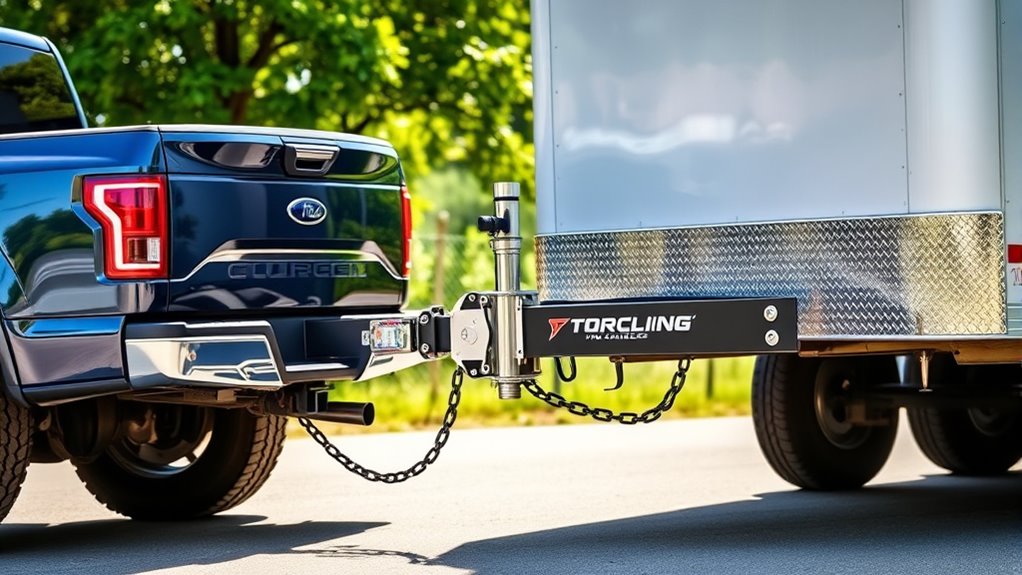

If you’re towing a trailer, a weight distribution hitch is highly recommended for safer, more stable trips. It spreads the trailer’s load across your vehicle’s axles, improving handling, reducing sway, and preventing the rear of your vehicle from sagging. Proper setup ensures suitable leverage and load sharing, making towing less stressful and safer. If you want to keep your journey smooth and secure, there’s more to learn about how to get it just right.
Key Takeaways
- A weight distribution hitch helps balance trailer tongue weight for safer, more stable towing.
- It reduces trailer sway and improves vehicle handling during towing.
- Proper setup ensures load is evenly distributed, preventing excessive sag or overload.
- Not all trailers or vehicles require one; it’s essential for heavy or uneven loads.
- Using a weight distribution hitch enhances safety, comfort, and vehicle component longevity.
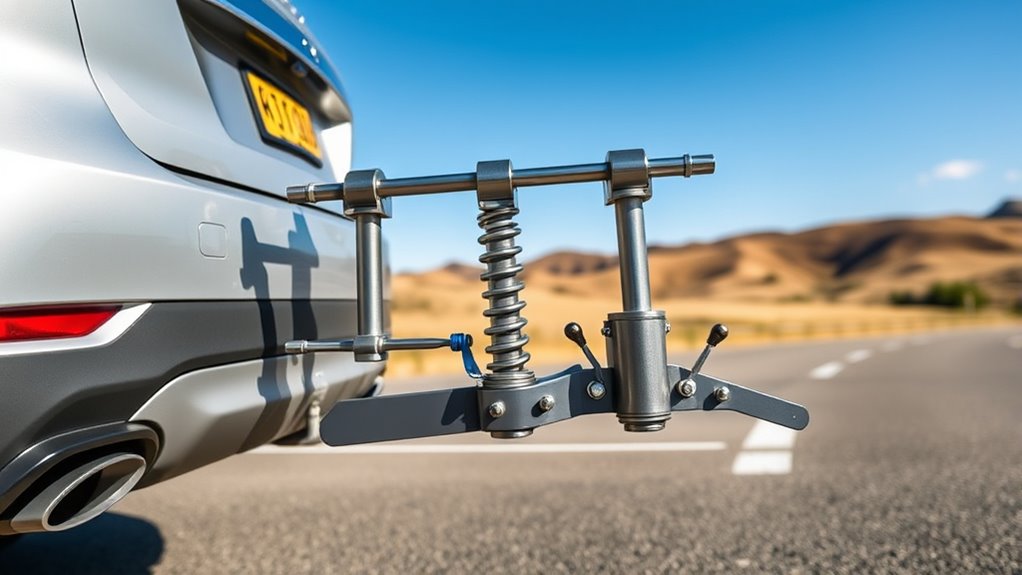
A well-matched hitch setup ensures that the weight of the trailer’s tongue doesn’t rest solely on the rear axle of your vehicle. Instead, it transfers some of this load to the front axle and the trailer’s axles, creating a balanced and secure connection. This balance not only reduces trailer sway but also improves steering and braking, making your trip safer and more comfortable. Without a proper weight distribution hitch, the uneven load can cause your vehicle to sag at the back, leading to poor handling and increased tire wear. It can also make your vehicle more prone to sway, especially in crosswinds or when passing larger vehicles. Proper weight distribution is essential for maintaining optimal vehicle performance and safety during towing. When setting up your hitch, it’s essential to follow the manufacturer’s instructions carefully. An improper hitch setup can negate the benefits it offers. For example, if the weight distribution bars are too loose or too tight, they won’t provide the necessary leverage to evenly spread the load. On the other hand, a correct setup will keep your trailer level and stable, regardless of road conditions. You should also check that your trailer’s load is properly distributed before hitching up, ensuring the tongue weight is within recommended limits. This adjustment is crucial because too little weight on the tongue can cause trailer sway, while too much can overload your vehicle’s rear suspension.

CURT 17063 Round Bar Weight Distribution Hitch with Sway Control, 14,000 lb
- Level Towing for Better Control: Distributes weight for smoother ride
- Integrated Lubrication System: Easy access grease zerks for maintenance
- Heavy-Duty Towing Capacity: Rated for 10,000-14,000 lb GTW
As an affiliate, we earn on qualifying purchases.
As an affiliate, we earn on qualifying purchases.
Frequently Asked Questions
Can Weight Distribution Hitches Be Used With All Trailer Types?
Weight distribution hitches aren’t compatible with all trailer types. You need to take into account compatibility concerns, especially with smaller or lightweight trailers that may not require or support such hitches. For larger, heavier trailers like RVs or livestock trailers, a weight distribution hitch can improve stability and safety. Always check your trailer’s specifications and consult your vehicle’s manufacturer to ensure the hitch suits your trailer type and towing setup.
How Do I Choose the Right Weight Distribution Hitch?
Choosing the right weight distribution hitch is essential; it’s like finding the perfect puzzle piece for a flawless fit. You need to check hitch compatibility with your trailer and vehicle, ensuring they match weight capacities and mounting options. Follow installation tips carefully—align bars properly and tighten all components. Trust your instincts, but also consult your trailer and hitch manufacturer’s guidelines to guarantee safe, smooth towing every time.
Are Weight Distribution Hitches Compatible With All Vehicle Models?
Weight distribution hitches aren’t compatible with all vehicle models. You need to take into account vehicle compatibility before hitch installation to guarantee safety and proper function. Check your vehicle’s towing capacity and hitch specifications, and consult your owner’s manual or a professional. Not all vehicles support these hitches, so verifying compatibility helps you avoid installation issues and guarantees safer towing. Always match the hitch to your vehicle for optimal performance.
What Maintenance Is Required for Weight Distribution Hitches?
You should regularly inspect your weight distribution hitch for proper maintenance. Check hitch lubrication to guarantee smooth operation and prevent rust, applying grease if needed. Also, verify bolt torque periodically and tighten bolts to the manufacturer’s specifications to keep everything secure. This simple upkeep helps your hitch perform safely and effectively, reducing the risk of accidents and ensuring your towing experience remains smooth and reliable.
Do Weight Distribution Hitches Improve Towing Safety in All Conditions?
Weight distribution hitches critically boost towing safety, defying safety myths that they’re unnecessary. They evenly distribute the load, preventing dangerous sway and instability, especially during high-speed or challenging conditions. Proper hitch installation is essential for maximum effectiveness. While they greatly improve safety, no device can eliminate all risks—always drive cautiously and check your equipment. You’ll find that a well-installed weight distribution hitch makes towing safer in almost every scenario.

Fastway Connect™ Weight Distribution Hitch
- Heavy-duty steel chains: Connects hitch to trailer for load distribution
- Easy adjustment system: Change chain links for quick setup
- Enhanced towing stability: Improves braking, steering, and control
As an affiliate, we earn on qualifying purchases.
As an affiliate, we earn on qualifying purchases.
Conclusion
Thinking about safer towing? A weight distribution hitch could be just what you need to evenly spread the load and improve control. It’s like giving your vehicle a helping hand, making every trip smoother and safer. So, do you want to imagine yourself confidently towing, knowing your setup is optimized? Investing in a weight distribution hitch might just be the upgrade that turns your towing experience from stressful to secure. Isn’t that worth considering?
hitch setup and installation kit
As an affiliate, we earn on qualifying purchases.
As an affiliate, we earn on qualifying purchases.
CURT 17063 Round Bar Weight Distribution Hitch with Sway Control, 14,000 lb
- Level Towing for Better Control: Distributes weight for smoother ride
- Integrated Lubrication System: Easy access grease zerks for maintenance
- Heavy-Duty Towing Capacity: Rated for 10,000-14,000 lb GTW
As an affiliate, we earn on qualifying purchases.
As an affiliate, we earn on qualifying purchases.