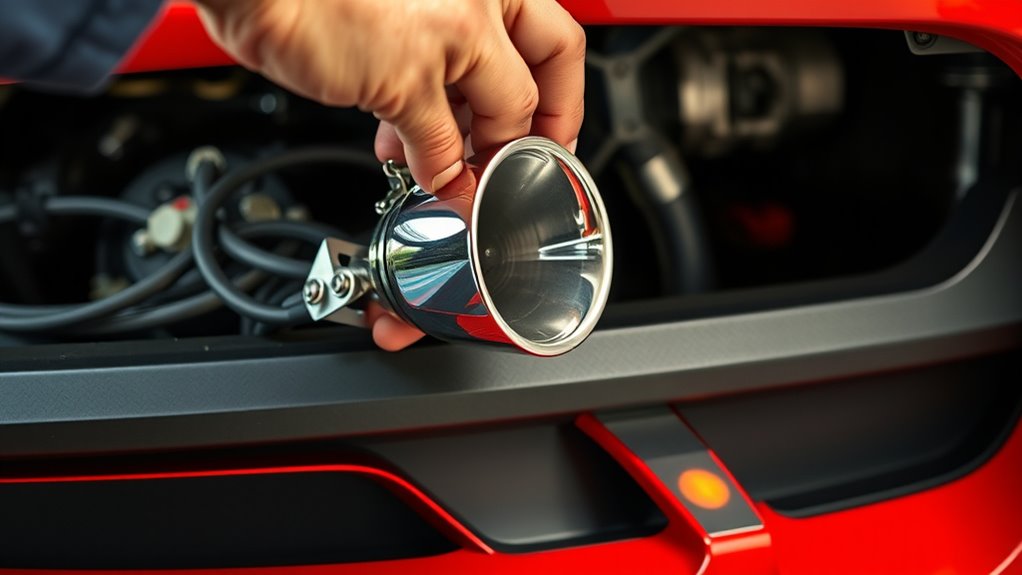

To upgrade to a louder car horn, start by disconnecting your vehicle’s battery, then locate and remove the existing horn. Mount the new, higher-decibel horn in the same position, ensuring it’s secure. Connect the wiring properly, paying attention to polarity, and test the horn for sound and function. Make sure the noise level complies with local laws to avoid issues. For step-by-step guidance and safety tips, keep exploring this process further.

Get business pricing on garage and car supplies
- Business-only prices and quantity discounts
- Tax-exempt purchasing
- Multiple users, one account, clear invoices
Key Takeaways
- Disconnect the vehicle’s battery, locate the current horn, and remove mounting bolts and wiring before installing the new louder horn.
- Ensure the aftermarket horn is compatible with your vehicle’s electrical system and meets legal decibel limits.
- Mount the new horn securely in the same position as the original, using provided mounting hardware if available.
- Connect wiring correctly, paying attention to polarity, and test the horn to verify proper operation and sound level.
- Regularly inspect and maintain the horn, ensuring it remains clean, unobstructed, and compliant with local noise regulations.
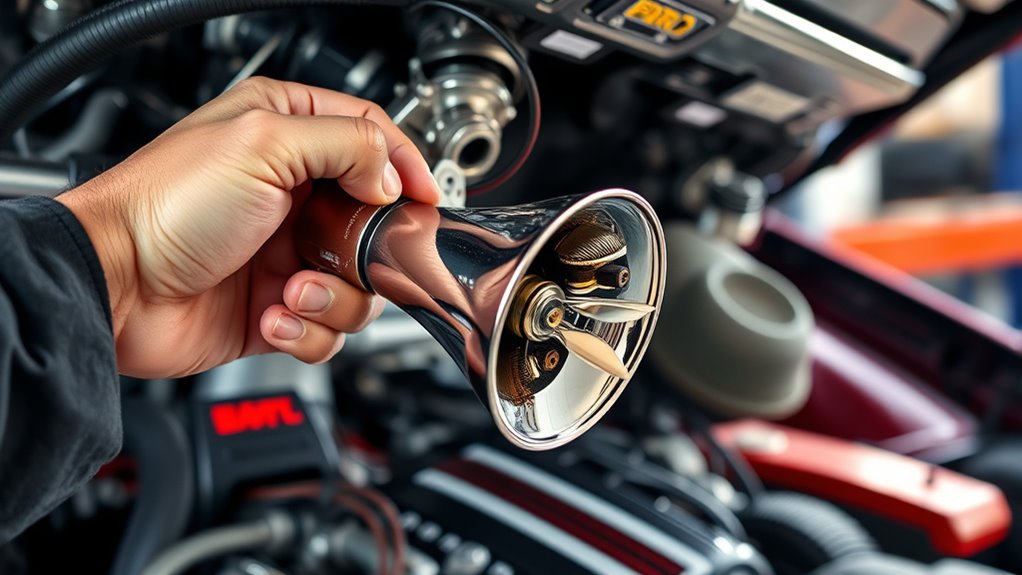
Upgrading your car horn is a simple way to enhance your vehicle’s safety and guarantee you’re heard in critical moments. In busy traffic or noisy environments, a louder horn can be the difference between avoiding an accident and being overlooked. When considering a louder horn, it’s essential to pay attention to sound decibel levels, which measure how loud the horn is. The goal is to select a horn that’s sufficiently loud to alert others without crossing legal limits or causing unnecessary noise pollution.
Upgrading your car horn boosts safety by ensuring you’re heard without exceeding legal noise limits.
First, you need to understand the importance of vehicle safety. A loud, clear horn helps you communicate effectively, especially in emergency situations. If your current horn isn’t loud enough to cut through traffic noise, it might not serve its purpose when it’s needed most. Upgrading to a higher decibel level horn ensures that your warnings are heard, reducing the risk of accidents. Most standard horns produce around 100-110 decibels, but some aftermarket options can reach 130 decibels or more. Just be cautious—excessively loud horns might not only annoy others but could also be illegal in some areas. Research your local regulations to find a suitable decibel range that enhances safety without legal issues.
Installing a louder horn is straightforward, but it does require some basic knowledge of your vehicle’s electrical system. First, disconnect your car’s battery to prevent any electrical mishaps. Then, locate your existing horn, which is usually mounted behind the grille or bumper. Remove the mounting bolts and disconnect the wiring. Attach the new, louder horn in the same position, ensuring it’s securely mounted. Connect the wiring, making sure the positive and negative terminals are correctly aligned to avoid damage or malfunction. Some horns come with their own wiring harness, simplifying the installation process. Once installed, reconnect your battery and test the new horn to verify it functions properly and produces the desired volume.
Additionally, it’s helpful to understand that some aftermarket horns utilize advanced technology like high-quality sound mechanisms to produce a clearer, more attention-grabbing tone. Keep in mind that a louder horn alone isn’t enough; it should be part of a thorough approach to vehicle safety. Regularly check your horn’s functionality and sound level to ensure it remains effective. If you’re unsure about handling the installation yourself, consulting a professional mechanic is a wise choice. They can ensure the upgrade complies with local noise regulations and that your new horn operates reliably. Upgrading your horn boosts your vehicle’s safety profile, making sure you’re heard clearly in critical moments, and helps you navigate busy roads with greater confidence.
As an affiliate, we earn on qualifying purchases.
Frequently Asked Questions
Can Louder Horns Cause Legal Issues or Fines?
Louder horns can lead to legal issues or fines if they violate noise ordinances in your area. You might face legal penalties if your horn exceeds the permitted decibel levels or causes disturbances, especially in residential zones. Always check local regulations before upgrading your horn, and verify your new one complies with noise laws to avoid fines or other legal trouble. Staying within legal limits keeps you safe and compliant.
How Do I Choose the Right Loudness Level?
You should choose a loudness level that balances visibility and legality, like a horn with 110-120 decibels—louder than city traffic but not deafening. Think of sound frequency as the pitch; a higher frequency cuts through noise better, making your horn more effective without being overly disruptive. Consider decibel comparison to familiar sounds, like a chainsaw or subway, ensuring you stay safe and compliant while standing out when needed.
Will Upgrading My Horn Affect My Car’s Electrical System?
Upgrading your horn can impact your car’s electrical system if it’s not compatible or if you don’t verify electrical compatibility. You might need a higher amp fuse or additional wiring to handle increased power. Always guarantee fuse protection is adequate to prevent electrical damage. If you choose a horn that matches your vehicle’s electrical specs, you’ll avoid issues and ensure reliable operation without stressing your system.
Are There Specific Tools Required for Installation?
You’ll need basic tools like screwdrivers, pliers, and a wire stripper for installation. An interesting fact is that 85% of car horn upgrades involve wiring issues, so a wiring diagram is essential. Make sure you have an installation kit that includes the necessary connectors and relay. These tools help guarantee a safe, straightforward process, and following the wiring diagram prevents electrical problems.
How Often Should I Test My New Horn?
You should test your new horn weekly to guarantee it functions properly. Regular horn maintenance involves sound testing to confirm it produces a loud, clear sound without distortion. Each time you perform a sound test, check for any signs of wear or electrical issues. Consistent testing helps you catch problems early, keeping your horn reliable for safety. Make it a routine part of your vehicle maintenance schedule.
As an affiliate, we earn on qualifying purchases.
Conclusion
Upgrading your car horn not only boosts safety but also enhances your vehicle’s presence on the road. Did you know that louder horns can reduce accidents by up to 20%? By following the simple installation steps, you guarantee better alertness and peace of mind during drives. Remember, a louder horn can be a vital tool in avoiding hazards and making your driving experience safer and more confident. So go ahead, upgrade and enjoy the added security!
As an affiliate, we earn on qualifying purchases.
As an affiliate, we earn on qualifying purchases.
Fall Picks
fall essentials
As an affiliate, we earn on qualifying purchases.