TL;DR

Get business pricing on garage and car supplies
- Business-only prices and quantity discounts
- Tax-exempt purchasing
- Multiple users, one account, clear invoices
The Open R1 project has released a fully open reproduction pipeline for DeepSeek-R1, including data generation, training, and evaluation scripts. This allows researchers to replicate and build upon DeepSeek-R1’s capabilities, advancing AI reasoning and problem-solving research.
The Open R1 project has officially released an open-source reproduction of DeepSeek-R1’s training and evaluation pipeline, enabling researchers worldwide to replicate and extend the model’s reasoning capabilities. This development marks a significant step toward democratizing advanced AI models that excel in mathematics, coding, and scientific reasoning.
The project provides scripts and tools for data generation, model training, and evaluation, aligning with DeepSeek-R1’s original methodology. It includes datasets like Mixture-of-Thoughts, CodeForces-CoTs, and Math-220k, which are used to distill models with reasoning and problem-solving skills. The repository emphasizes community collaboration, with instructions for setting up the environment, training models on high-performance hardware, and contributing further improvements.
As of the latest update, the project has completed the first step of its plan: reproducing the reasoning dataset Mixture-of-Thoughts, which contains 350,000 verified reasoning traces across math, coding, and science tasks. The team has also provided recipes for training a 7-billion-parameter model that mirrors DeepSeek-R1’s reasoning capabilities, with further steps planned to replicate the reinforcement learning pipeline used to create R1-Zero.
Implications for AI Research and Community Collaboration
This open reproduction enables wider access to high-quality reasoning datasets and models, fostering transparency and collaborative development in AI. By allowing researchers to reproduce DeepSeek-R1’s training pipeline, the project accelerates innovation in areas such as mathematical reasoning, code generation, and scientific problem-solving. It also lowers barriers for academic and independent researchers to experiment with advanced AI models without proprietary restrictions, potentially leading to new breakthroughs and applications.
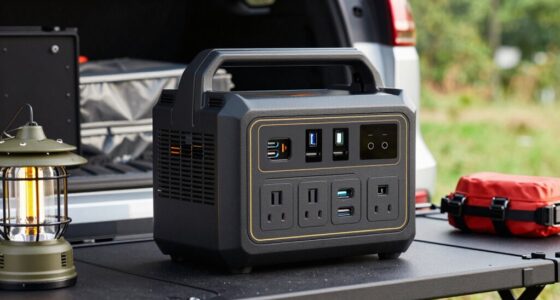
high performance AI training hardware
As an affiliate, we earn on qualifying purchases.
As an affiliate, we earn on qualifying purchases.
Background on DeepSeek-R1 and Open-Source Initiatives
DeepSeek-R1 is a high-performance AI model developed by DeepSeek, notable for its reasoning and problem-solving abilities across multiple domains. Prior to this open release, access to the model and its training processes was limited, with much of the development kept proprietary. The recent push toward open-sourcing parts of the pipeline follows broader trends in AI toward transparency and community-driven innovation, exemplified by projects like OpenAI’s GPT-2 and Meta’s LLaMA.
The current release of Open R1 aims to democratize access, enabling researchers to reproduce, evaluate, and improve upon DeepSeek-R1’s capabilities. The project is structured into multiple stages, starting with data reproduction, followed by model training and reinforcement learning, with the goal of creating an accessible, high-performance reasoning AI ecosystem.
“Our goal is to build the missing pieces of the R1 pipeline so everyone can reproduce and build on top of it.”
— Deep Seek Team
As an affiliate, we earn on qualifying purchases.
Remaining Challenges and Unanswered Questions
While the reproduction pipeline is now available, it is still in early stages. Details about the exact performance parity with the original DeepSeek-R1 model, especially in reinforcement learning and fine-tuning, are not yet fully confirmed. Additionally, the community’s ability to replicate results depends on hardware availability and technical expertise, which may vary.
Further updates are expected as more datasets and training recipes are released, but the full capabilities and limitations of the open-reproduced models remain to be validated through community testing.
As an affiliate, we earn on qualifying purchases.
Upcoming Steps for Community Engagement and Model Development
The project team plans to release additional datasets, training configurations, and evaluation benchmarks in the coming months. They aim to facilitate community-led experiments to test the models’ reasoning, problem-solving, and generalization abilities. The next milestone is to demonstrate the open pipeline’s ability to reproduce the reinforcement learning process used in DeepSeek-R1, specifically creating R1-Zero-like models. Researchers and developers are encouraged to contribute to the repository, improve training scripts, and share results.
As an affiliate, we earn on qualifying purchases.
Key Questions
Can I use the open pipeline to train my own DeepSeek-R1-like models?
Yes, the repository provides scripts and datasets for training models similar to DeepSeek-R1, assuming you have suitable hardware and technical expertise.
What datasets are included in the open reproduction effort?
The project includes datasets like Mixture-of-Thoughts (reasoning traces), CodeForces-CoTs (competitive programming solutions), and Math-220k (mathematical reasoning traces).
Will this open-source pipeline match the performance of the original DeepSeek-R1?
It is still under evaluation. The team aims to replicate the performance, but community testing and further tuning are needed to confirm parity.
What are the hardware requirements for reproducing DeepSeek-R1?
Reproducing the full training pipeline requires high-performance GPUs, such as multiple H100s, with support for CUDA 12.4 and advanced training frameworks like DeepSpeed or DDP.
Source: Hacker News
Fall Picks
fall essentials
As an affiliate, we earn on qualifying purchases.