
TL;DR
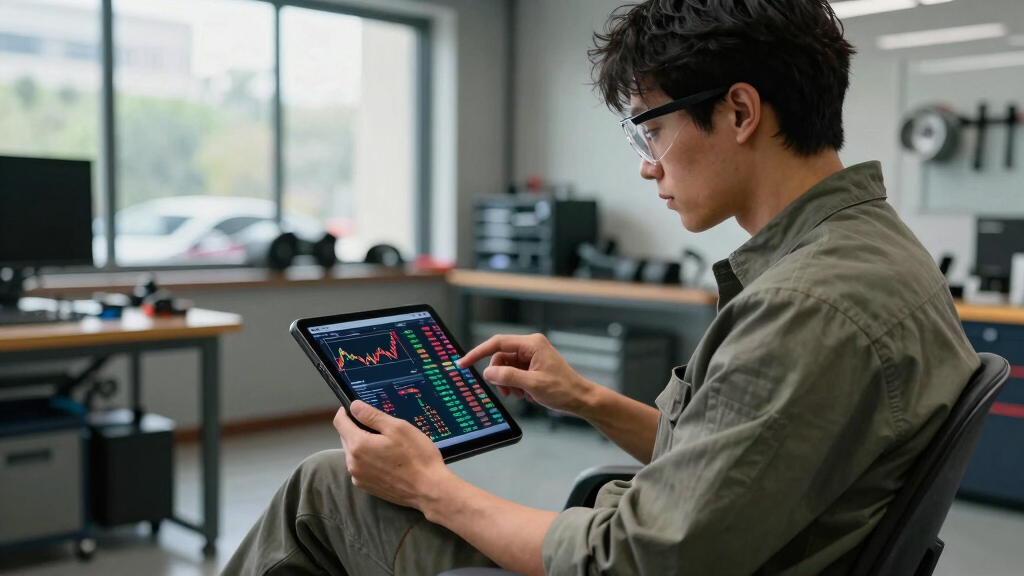
Forezai has launched TradingAgents, a system where multiple LLMs form a committee to independently decide on paper-trades. This development aims to automate and improve trading decision processes using AI. The initiative is in early stages, with details still emerging.
Forezai has introduced TradingAgents, a system where a committee of large language models (LLMs) autonomously decides on paper-trades, marking a novel application of AI in financial decision-making.
The TradingAgents system involves multiple LLMs working collaboratively to evaluate market data and generate trade decisions without human intervention. Forezai claims this approach can enhance trading efficiency and reduce human bias.
According to Forezai, the system operates by having each LLM analyze market conditions independently, then reaching a consensus on simulated trades, or ‘paper-trades.’ The process aims to simulate real trading decisions to test AI-driven strategies.
Forezai has not disclosed specific technical details about the models used or the decision-making process but emphasizes that the system is designed to complement human traders by providing automated, data-driven insights.
Why It Matters
This development is significant because it represents a step toward fully automated AI-driven trading decision processes, potentially transforming how trading strategies are tested and executed. If successful, it could lead to more efficient, unbiased, and scalable trading systems.
For traders and financial institutions, the ability to deploy autonomous AI committees for paper-trades offers a new tool for strategy development and risk assessment, possibly reducing costs and increasing speed.

Paper Trading Boss Battles — Beginner Mode: Stock Market for Beginners: A Gamified Guide to Paper Trading and Investing for Teens
As an affiliate, we earn on qualifying purchases.
As an affiliate, we earn on qualifying purchases.
Background
AI applications in trading have been evolving, with machine learning models increasingly used for predictive analytics and automation. However, the use of multiple LLMs forming a decision-making committee is a novel approach. Forezai’s announcement builds on prior efforts to automate trading strategies, pushing toward more autonomous systems.
Previous developments include algorithmic trading and AI-assisted decision tools, but the concept of a committee of LLMs making independent yet collaborative decisions on paper-trades is new and still in experimental stages.
“TradingAgents leverages the collective intelligence of multiple LLMs to simulate and evaluate trading strategies, aiming to improve decision quality and efficiency.”
— Forezai spokesperson
“Using a committee of LLMs for paper-trades is an innovative step that could redefine how automated trading strategies are developed and tested.”
— Thorsten Meyer, AI analyst
AI-Assisted Trading for Retail Traders: A Disciplined Framework for Probability, Risk Control, and Structured Decision-Making
As an affiliate, we earn on qualifying purchases.
As an affiliate, we earn on qualifying purchases.
What Remains Unclear
It is still unclear how well the system performs in live trading environments or how it compares to existing automated trading tools. Details about the models’ architecture, decision accuracy, and risk management protocols remain undisclosed.
Algorithmic Trading with Python: Build, Backtest, and Automate Strategies with Code, Data, and Real-World Market Tools
As an affiliate, we earn on qualifying purchases.
As an affiliate, we earn on qualifying purchases.
What’s Next
Forezai plans to pilot the TradingAgents system in controlled environments, with potential expansion into live trading after further testing. Monitoring how the system performs and its integration with existing trading platforms will be key milestones.

INVESTING WITH CLAUDE: How to Build an Agent That Analyzes Your Portfolio, Stocks, ETFs, and Cryptoassets, Interprets News and Signals, and Helps You Make Decisions with a Disciplined Process
As an affiliate, we earn on qualifying purchases.
As an affiliate, we earn on qualifying purchases.
Key Questions
How do the TradingAgents decide on paper-trades?
The system involves multiple LLMs analyzing market data independently and reaching a consensus on simulated trades, though specific algorithms are not publicly detailed.
Can TradingAgents replace human traders?
Currently, the system is designed for testing and strategy development, not full automation of live trading. Its role is to assist and augment human decision-making.
What are the risks of using AI-driven committees for trading?
Potential risks include reliance on imperfect models, unforeseen biases, and lack of comprehensive risk management protocols, which are still being evaluated.
Source: Thorsten Meyer AI