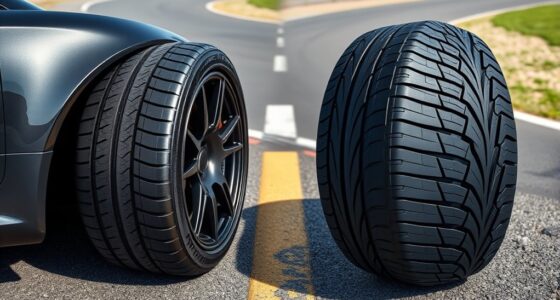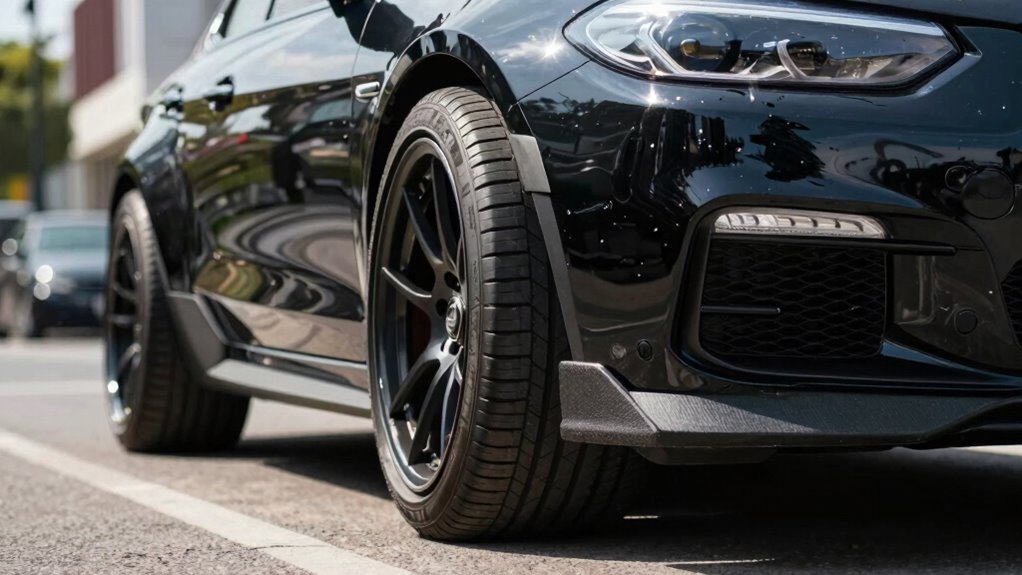
Before adding wider tires to your street car, you need to check if your wheels can handle the increased width and select the right tire size for your vehicle’s specs and driving style. Installs should be done professionally to guarantee proper fit and balance, while also considering wheel alignment to prevent uneven wear. Wider tires can improve traction and handling, but may impact your speedometer and fuel economy. Keep exploring to discover more tips for a safe, performance-enhancing upgrade.

Get business pricing on garage and car supplies
- Business-only prices and quantity discounts
- Tax-exempt purchasing
- Multiple users, one account, clear invoices
Key Takeaways
- Verify wheel compatibility and consider upgrading wheels to support wider tires safely.
- Ensure proper tire size selection to match vehicle specs and driving performance goals.
- Have professional mounting and balancing done to prevent vibrations and uneven wear.
- Perform wheel alignment after installation to maintain handling and tire longevity.
- Be aware of potential impacts on speedometer accuracy, fuel economy, and vehicle aesthetics.

Wider tires are becoming increasingly popular among street car enthusiasts because they offer better traction, improved handling, and a more aggressive look. But before you swap out your current tires for larger ones, it’s important to understand what’s involved. The process isn’t just about popping on bigger tires and hitting the road; it requires careful planning, especially around tire installation and wheel alignment. If you overlook these steps, you could end up with handling issues, uneven tire wear, or even damage to your suspension.
When you choose wider tires, the first thing to contemplate is whether your current wheels can handle the increased width. Not all rims are compatible with wider tires, so you might need to upgrade your wheels as well. Once you’ve selected the appropriate tires and wheels, the tire installation process becomes vital. Proper mounting and balancing are essential to guarantee your new tires function correctly and don’t cause vibrations or uneven wear down the line. Many shops offer professional tire installation services, which are worth investing in to guarantee everything is fitted correctly.
However, just installing wider tires isn’t enough. Because they alter the overall diameter and width of your wheels, your car’s suspension geometry needs adjustment to maintain ideal handling. That’s where wheel alignment comes into play. A proper wheel alignment ensures that your tires contact the road evenly, which maximizes grip and prolongs tire life. Misalignment can cause your wider tires to wear unevenly or lead to pulling to one side when you drive. After installing wider tires, it’s a good idea to have a professional check and adjust your alignment to match the new setup. Additionally, tire compatibility should be carefully considered to ensure safe operation and optimal performance. It’s also beneficial to understand how vehicle specifications can influence the suitability of wider tires for your particular model.
Keep in mind that wider tires can also impact your car’s speedometer and odometer readings, since the rolling circumference changes. This isn’t a major concern but is worth noting if you rely heavily on precise speed readings. Additionally, wider tires may slightly affect your fuel economy because of increased rolling resistance. Be prepared for these minor trade-offs, and make sure your vehicle’s suspension and brake components are in good shape to handle the increased grip and weight. It’s also important to consider suspension adjustments and ensure your vehicle’s other components are capable of supporting the new setup. Furthermore, understanding the tire technology used in your new tires can help you select options that best suit your driving style and conditions. Properly researching tire performance features can lead to a more satisfying driving experience with your wider tires.
As an affiliate, we earn on qualifying purchases.
Frequently Asked Questions
Will Wider Tires Improve Fuel Efficiency?
Wider tires typically won’t improve fuel efficiency; in fact, they often decrease it. They increase rolling resistance, which makes your engine work harder, and can lead to more tire noise. Additionally, wider tires can improve handling dynamics, offering better grip and stability. However, the trade-off is increased fuel consumption. If fuel economy matters most, sticking to narrower tires is usually the better choice for your street car.
How Do Wider Tires Affect Ride Comfort?
Think of your ride like a vintage radio; wider tires can make it feel bumpier, like static on the airwaves. They often reduce ride comfort because they increase tire noise and can make the suspension work harder. While wider tires improve road grip, especially in turns, you might notice a harsher ride. To balance comfort and performance, consider tire pressure and shock absorbers.
Are Wider Tires Compatible With Stock Suspension?
Wider tires can be compatible with your stock suspension if you check rim compatibility and guarantee proper tire sealing. You might need to upgrade your rims to handle the increased width, preventing issues like rim damage or poor sealing. Proper tire sealing is essential to avoid leaks, especially with wider tires. Always verify the fitment and clearance to maintain safe handling and comfort without compromising your suspension’s integrity.
Do Wider Tires Require Different Wheel Sizes?
Do wider tires always need different wheel sizes? Not necessarily, but wheel compatibility and offset adjustments are vital. You might need larger wheels to fit the wider tires without rubbing or clearance issues. Check if your current wheels can handle the increased width, or if you’ll need to upgrade to wheels with the proper offset to guarantee safe, ideal fitment. Always verify specifications before making changes.
How Do Wider Tires Impact Tire Wear?
Wider tires can cause uneven tire wear if not properly aligned, affecting tire grip and longevity. You might notice increased road noise as the wider contact patch generates more sound. To minimize wear issues, make sure your suspension and alignment are correct, and choose tires suited for your driving style. Regular rotations help distribute wear evenly, maintaining ideal tire grip and reducing noise over time.
professional tire mounting and balancing service
As an affiliate, we earn on qualifying purchases.
As an affiliate, we earn on qualifying purchases.
Conclusion
Before you swap out your tires, remember—wider isn’t always better; it’s like adding weight to your wings, potentially grounding your ride. Think of your car as a dancer—wider tires can change its rhythm, affecting grip and comfort. So, weigh the trade-offs carefully. With the right balance, you’ll have a car that grips the road like a vise and handles like a dream, turning every drive into a smooth, confident glide through life’s twists and turns.
wheel alignment service for wider tires
As an affiliate, we earn on qualifying purchases.
As an affiliate, we earn on qualifying purchases.
high performance tires for street cars
As an affiliate, we earn on qualifying purchases.
As an affiliate, we earn on qualifying purchases.
Fall Picks
fall essentials
As an affiliate, we earn on qualifying purchases.