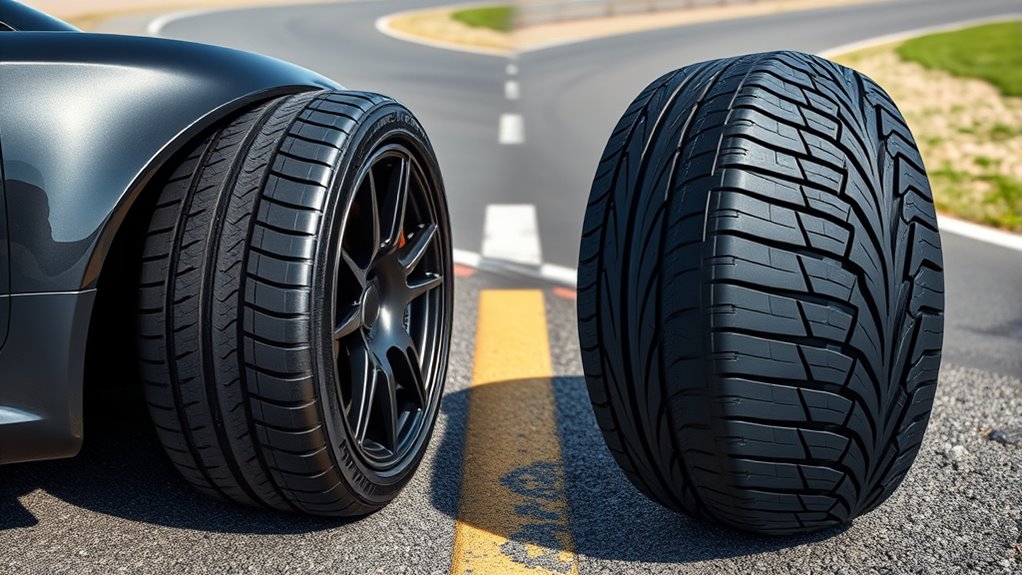

Choosing the right tires considerably impacts your vehicle’s handling, safety, and efficiency. Performance tires deliver better grip, responsiveness, and high-speed stability but tend to wear out faster and may reduce fuel economy. All-season tires offer longer tread life and smoother rides in varied weather but sacrifice some handling precision. Understanding how these differences affect your driving style helps you make an informed choice; explore further to see how much tires truly influence your vehicle’s overall performance.
Play games included with Prime
Start a Prime free trial and play with Amazon Luna on your devices.
As an affiliate, we earn on qualifying purchases.
Key Takeaways
- Performance tires enhance handling, grip, and braking at high speeds due to softer rubber compounds and specialized tread patterns.
- All-season tires provide reliable traction across various weather conditions but generally offer less high-speed responsiveness.
- Softer performance tires wear out faster, affecting long-term durability and increasing replacement frequency.
- Higher rolling resistance in performance tires can reduce fuel efficiency compared to all-season tires.
- The choice of tire significantly impacts driving experience, safety, and cost, depending on driving style and conditions.

Are performance tires better suited for high-speed driving than all-season tires? The answer depends on what you prioritize in your driving experience. Performance tires are designed to deliver exceptional grip, handling, and responsiveness, especially at higher speeds. They typically feature softer rubber compounds and specialized tread patterns that maximize contact with the road, giving you superior control on twisty roads or during spirited driving. However, this focus on performance often comes with trade-offs, particularly when it comes to tire longevity and fuel efficiency. Because performance tires use softer compounds, they tend to wear out faster than all-season tires, meaning you might find yourself replacing them more frequently. If you’re someone who drives aggressively or enjoys pushing your vehicle to its limits, this shorter lifespan might be an acceptable compromise for the enhanced handling. Conversely, if your daily commute involves long distances or you prefer a more economical option, all-season tires are generally more durable and provide longer tire longevity, saving you money over time.
Fuel efficiency is another key factor to weigh when choosing between the two. Performance tires, with their softer rubber and increased grip, often have higher rolling resistance, which can lead to slightly decreased fuel efficiency. This means your vehicle works a bit harder to maintain speed, especially on highways or during steady-state cruising. Over time, this increased resistance can marginally increase your fuel costs. All-season tires, on the other hand, are engineered to balance grip and rolling resistance, often resulting in better fuel economy. They’re designed to perform adequately across a variety of weather conditions without sacrificing too much efficiency, making them a practical choice if you want to stretch your fuel dollar further. Additionally, the tread design of all-season tires is optimized for diverse climates, ensuring reliable traction year-round.
In terms of overall impact on your vehicle’s performance, performance tires give you a noticeable edge in handling and braking at high speeds, thanks to their specialized construction and tread design. But that edge comes at the expense of tire longevity and potentially higher fuel consumption. All-season tires prioritize versatility and durability, providing dependable performance year-round with lower maintenance costs. When choosing between the two, think about your driving style, the conditions you encounter most frequently, and your budget. If your driving involves frequent high-speed maneuvers and you value sharp handling, performance tires are worth the investment. But if you’re looking for a low-maintenance, cost-effective solution that handles a variety of weather conditions, all-season tires may be the smarter choice.
performance tires for sports cars
As an affiliate, we earn on qualifying purchases.
As an affiliate, we earn on qualifying purchases.
Frequently Asked Questions
How Do Tire Compounds Differ Between Performance and All-Season Tires?
You’ll notice that performance tires use a specialized tire compound composition with softer rubber blends, which enhance grip and handling at high speeds. In contrast, all-season tires feature rubber blends designed for durability and versatility across various weather conditions, making them more resistant to wear. These rubber blend differences directly impact traction, ride comfort, and longevity, so choosing the right tires depends on your driving needs and climate.
What Impact Do Tire Tread Patterns Have on Vehicle Handling?
Imagine your tires as the dance floor for your car’s moves. Tread patterns directly influence handling, grip, and cornering. Aggressive designs improve performance but may increase tire noise and reduce tread durability over time. Conversely, smoother patterns offer quieter rides and longer tread life, but might compromise grip. Your choice impacts how confidently you handle curves and how long your tires last, making tread pattern a vital performance factor.
Are Performance Tires Suitable for Everyday Driving?
Performance tires can be suitable for everyday driving if you prioritize handling and aesthetics. However, you might notice increased tire noise, especially on rough roads, which can affect comfort. They often boost your vehicle’s aesthetic appeal, giving it a sportier look. Keep in mind, they tend to wear faster and may not perform as well in snow or rain, so consider your driving conditions before switching.
How Do Tire Sizes Influence Overall Vehicle Performance?
Tire sizes dramatically impact your vehicle’s performance, much like choosing the right shoes for a marathon. Larger tires can improve grip but may reduce fuel efficiency, while smaller ones boost agility. Proper tire pressure and wheel alignment are vital; they guarantee even wear and ideal handling. When selecting tire sizes, consider how they affect acceleration, braking, and cornering to keep your drive smooth and safe.
What Maintenance Routines Maximize Tire Lifespan and Safety?
You should regularly check your tire inflation to guarantee optimal pressure, which boosts lifespan and safety. Following a consistent rotation schedule helps distribute wear evenly, preventing premature tire deterioration. Additionally, inspect tires for tread wear, cracks, or embedded objects, and keep your wheels aligned. Proper maintenance not only extends tire life but also improves handling, fuel efficiency, and overall safety on the road.
As an affiliate, we earn on qualifying purchases.
Conclusion
Choosing between performance tires and all-season tires isn’t just a decision, it’s like picking between a rocket and a bicycle. Your tires can turn your car into a beast or keep it tame—so don’t settle for mediocrity. If you want to unleash lightning-fast handling and jaw-dropping grip, go performance. But if you prefer playing it safe, all-season’s your trusty sidekick. Remember, your tires hold the power to transform every drive into an epic adventure or a boring commute!
high performance tire replacement
As an affiliate, we earn on qualifying purchases.
As an affiliate, we earn on qualifying purchases.
As an affiliate, we earn on qualifying purchases.
Fall yard work Picks
leaf blowers
As an affiliate, we earn on qualifying purchases.