A turbocharger works by using your exhaust gases to spin a turbine connected to a compressor. As the turbine spins, it forces more air into the engine’s cylinders, increasing power. An intercooler cools this compressed air to boost efficiency and reduce heat. This whole process helps your engine burn fuel better and deliver more performance. Keep exploring to discover how each part works together for maximum boost and efficiency.
Key Takeaways
- A turbocharger uses exhaust gases to spin a turbine, which drives a compressor to force more air into the engine.
- The compressor increases airflow and pressure, boosting engine power without increasing engine size.
- The turbine and compressor are housed inside a central unit that optimizes airflow and reduces lag.
- Cooled intake air from an intercooler improves combustion efficiency and engine response.
- Proper maintenance of oil, filters, and cooling systems ensures turbocharger reliability and optimal performance.

USANOOKS Microfiber Cleaning Cloth Grey - 12 Pcs (12.5"x12.5") - High Performance - 1200 Washes, Ultra Absorbent Microfiber Towel Weave Grime & Liquid for Streak-Free Mirror Shine - Car Washing Cloth
- High Absorbency Microfiber: Locks in 8-10x its weight in liquids
- Durable 2.5mm Thickness: Resists lint, scratches, and shedding
- Long-Lasting Use: Over 1200 washes for extended durability
As an affiliate, we earn on qualifying purchases.
What Is a Turbocharger and Why Is It Used?

Ever wondered how engines generate more power without increasing their size? That’s where a turbocharger comes in. It boosts engine efficiency by forcing more air into the combustion chamber, allowing for better fuel combustion. This increased airflow makes your engine more powerful without adding weight or size. Besides enhancing performance, turbochargers also reduce the environmental impact by improving fuel efficiency, which means less emissions per mile. They help engines produce more power while burning less fuel, making them a smart choice for eco-conscious driving. Overall, a turbocharger maximizes power output and minimizes pollution, making your vehicle both powerful and environmentally friendly. Additionally, understanding quality assurance principles can help in designing and maintaining reliable turbocharger systems. Incorporating European standards ensures these components meet high reliability and safety requirements, further enhancing their performance and longevity. Recognizing emissions reduction strategies is essential for developing greener automotive technologies. Moreover, ongoing technological advancements are continually improving turbocharger designs, leading to better durability and efficiency.

HOMEXCEL Microfiber Cleaning Cloth 12 Pack, 12.5 x 12.5 inch Microfiber Towels for Cars, Ultra Absorbent Washing Cloth, Lint Free Streak Free Cleaning Rags for Car, Kitchen, and Window (Grey)
- High Water Absorption: Excellent at absorbing dirt and liquids
- Gentle on Surfaces: Soft fabric prevents scratches and damage
- Fast Drying: Quickly absorbs water for streak-free drying
As an affiliate, we earn on qualifying purchases.
Basic Components of a Turbocharger
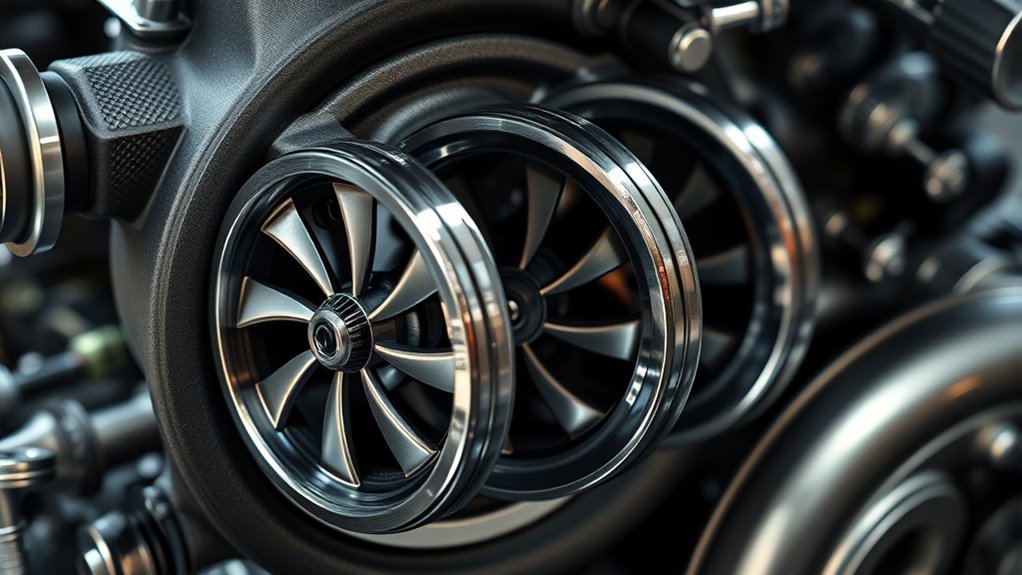
A turbocharger mainly consists of a turbine and a compressor that work together to boost engine power. The turbine harnesses exhaust gases to spin the compressor, which forces more air into the engine. Additionally, the central housing design plays a key role in supporting these components and ensuring efficient operation. The airflow dynamics within the turbo are crucial for optimal performance and preventing issues like turbo lag. Proper maintenance of the turbocharger is essential to sustain its efficiency and longevity over time. Understanding the cooling systems involved can also help in maintaining optimal operating temperatures and preventing damage. Advances in material science have contributed to the development of more durable and efficient turbochargers.
Turbine and Compressor
The turbine and compressor are the core components that make up a turbocharger, working together to boost engine performance. The turbine harnesses exhaust gases to spin rapidly, which in turn drives the compressor. The compressor then forces more air into your engine’s cylinders, increasing power and efficiency. To maximize turbocharger efficiency, high-quality materials are essential, especially since these parts endure extreme heat and stress. Material durability ensures they won’t crack or warp over time, maintaining excellent performance. You’ll notice that a well-designed turbine and compressor can greatly improve throttle response and fuel economy. By understanding these components, you can better appreciate how turbochargers deliver the extra boost your engine needs, all while remaining reliable under demanding conditions. Material durability is crucial for ensuring these components withstand the intense conditions they face, similar to the importance of proper filtration and pump protection in maintaining equipment longevity. Additionally, selecting materials with thermal resistance helps prevent overheating and prolongs component lifespan. Choosing the right materials can also contribute to reducing maintenance costs, ensuring long-term reliability and performance. Incorporating advanced manufacturing techniques can further enhance the performance efficiency of turbocharger parts, leading to better overall engine performance.
Central Housing Design
The central housing, also known as the charger housing, serves as the core structure that holds the turbine and compressor wheels in place. Its housing shape is carefully designed to optimize flow dynamics, ensuring smooth air movement through the turbocharger. The shape influences how exhaust gases spin the turbine wheel and how compressed air is directed into the engine. A well-designed housing minimizes turbulence and pressure loss, maximizing efficiency. The internal channels and passages are crafted to guide air seamlessly, reducing resistance and improving response time. By controlling flow dynamics, the housing ensures that turbocharging delivers the boost you need quickly and reliably. Its design is critical for balancing performance, durability, and efficiency in a compact, lightweight package. Proper housing design can significantly enhance the overall efficiency and longevity of the turbocharger, making it a vital aspect of turbocharger engineering. Additionally, advanced materials and manufacturing techniques are often employed to further optimize airflow and thermal management within the central housing, including flow optimization techniques that improve overall performance.

DEKOPRO 228 Piece Socket Wrench Auto Repair Tool Combination Package Mixed Tool Set Hand Tool Kit with Plastic Toolbox Storage Case
- High-Quality Steel Construction: Forged, chrome-finished, corrosion-resistant tools
- Complete DIY Tool Set: Includes tools for repairs and projects
- Versatile Tool Collection: Wrenches, ratchets, sockets, screwdriver, hammer, more
As an affiliate, we earn on qualifying purchases.
How Exhaust Gases Power the Turbo
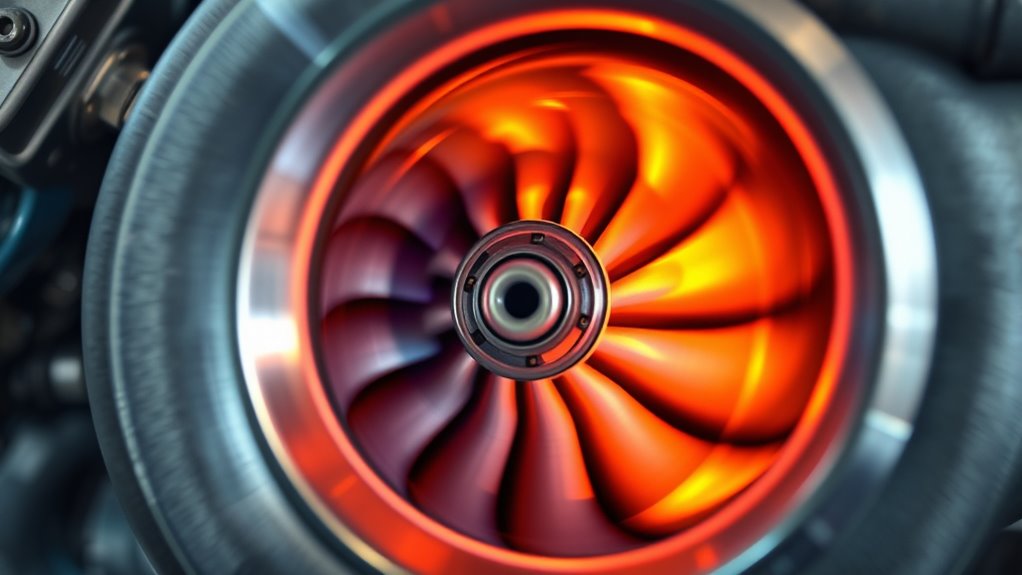
Exhaust gases play an essential role in powering a turbocharger by harnessing their energy to spin the turbine wheel. As exhaust gases flow through the turbine housing, their movement is influenced by exhaust flow dynamics, which determine how efficiently they transfer energy. The design of the turbine blades is fundamental here; blades are shaped to maximize energy extraction from the high-velocity gases, converting this force into rotational motion. When exhaust gases hit the blades, they cause the turbine wheel to spin rapidly. This spinning, in turn, drives the compressor wheel on the other side of the shaft. By optimizing exhaust flow and blade design, turbochargers effectively capture energy from the exhaust gases, boosting engine performance without wasting valuable exhaust energy. Additionally, understanding exhaust flow dynamics helps in designing more efficient turbochargers that can better utilize the energy present in exhaust gases. Recognizing how turbine blade design influences energy transfer is crucial for improving turbocharger efficiency and performance. Furthermore, advances in materials technology enable the manufacturing of blades that can withstand higher temperatures and stress, enhancing durability and efficiency. Improving blade aerodynamics is also a key area of research to further increase efficiency and responsiveness of turbochargers.

WINNER 175-Piece Multi-Purpose Automotive and Household Tool Kit in Toolbox Storage Case, Perfect for General Home and Auto Repairs, House DIY Project, Garage, Car, Travel Emergency, Father's Day Gift
- Versatile Multi-Purpose Set: Ideal for home, auto, and DIY projects
- Complete Tool Collection: Includes wrenches, hammer, screwdrivers, and more
- Premium Alloy Steel Construction: Rust-resistant, durable, and strong tools
As an affiliate, we earn on qualifying purchases.
The Role of the Compressor Wheel

As the turbine wheel spins from exhaust gas energy, it directly drives the compressor wheel on the same shaft. This component’s role is to draw in ambient air and compress it before sending it into your engine’s cylinders. The design of the compressor wheel markedly impacts turbocharger efficiency; a well-crafted wheel maximizes airflow while minimizing pressure losses. Modern compressor wheels often feature aerodynamically optimized blades to improve performance and responsiveness. The more efficient the compressor wheel, the better your engine breathes, resulting in increased power and fuel economy. Proper compressor wheel design ensures smooth operation at various engine speeds, helping you achieve reliable performance without sacrificing efficiency. Vetted is essential for maintaining optimal turbocharger operation. Additionally, ongoing innovations in compressor wheel materials contribute to improved durability and performance under high-stress conditions. To further enhance performance, engineers focus on aerodynamic blade design, which reduces turbulence and increases airflow efficiency. Moreover, advancements in manufacturing techniques enable more precise blade geometries, further boosting efficiency and longevity. Understanding turbocharger maintenance can also help prevent issues and extend the lifespan of these critical components.
How the Intercooler Enhances Performance
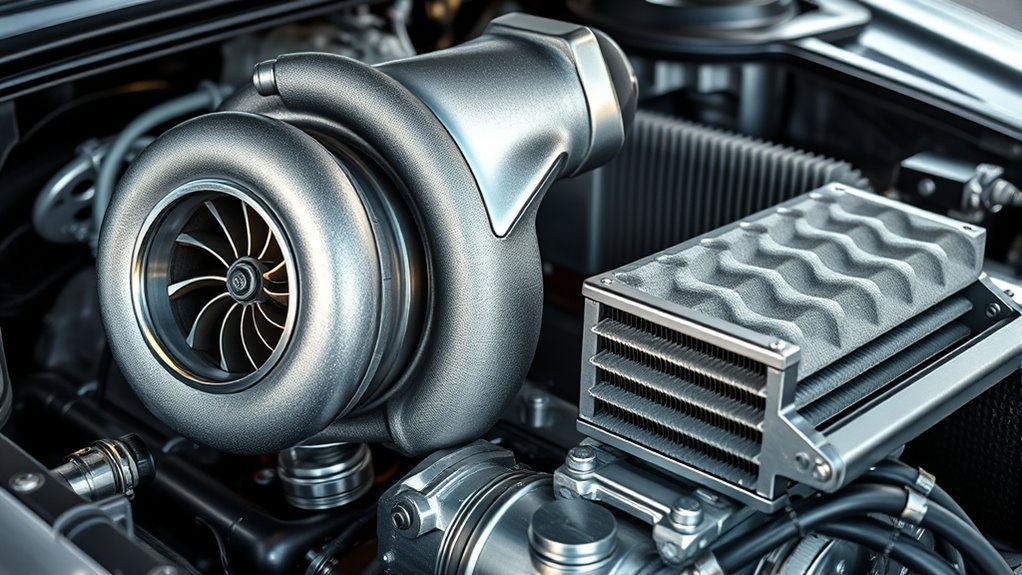
The intercooler plays a key role in boosting your turbocharged engine’s performance by cooling the compressed air before it enters the engine. When the air is cooler, it becomes denser, which helps increase your power output. Plus, it reduces the chance of engine knocking, keeping your engine running smoothly and efficiently.
Cools Compressed Air
Have you ever wondered how an intercooler boosts your turbocharged engine’s performance? It does so by cooling the compressed air before it enters the engine, which increases intercooler efficiency and reduces the risk of turbo lag. Cooler air is denser, meaning more oxygen enters the combustion chamber, leading to better combustion and power. An intercooler’s design allows it to:
- Lower the temperature of compressed air effectively
- Improve overall engine responsiveness
- Minimize power loss caused by heat buildup
Increases Power Output
Cooling the compressed air with an intercooler directly boosts your engine’s power output by allowing more air to enter the cylinders. This increased air density means more oxygen, which leads to a bigger combustion explosion and higher horsepower. Without an intercooler, hot compressed air causes turbo lag, delaying power delivery. The intercooler reduces intake air temperature, maintaining ideal boost pressure and minimizing lag.
Here’s a simple visual:
| Cold Air | Hot Air | Boost Pressure |
|---|---|---|
| Denser, more oxygen | Less dense, warmer | Consistent, ideal levels |
| Improves efficiency | Causes power loss | Enhances engine response |
| Better combustion | Reduced performance | Faster acceleration |
Reduces Engine Knock
Because hot, compressed air increases the likelihood of engine knock, an intercooler plays a crucial role in reducing this problem. By cooling the air before it enters the engine, it helps prevent knocking, which can cause engine noise and damage. Cooler air is denser, allowing for better combustion and improved fuel efficiency. This not only smooths engine operation but also extends engine life. Additionally, an intercooler helps maintain consistent power delivery, especially under high boost conditions.
- Lowers intake air temperature, reducing engine noise
- Enhances combustion stability for smoother operation
- Improves fuel efficiency by optimizing air-fuel mixture
Boosting Power: The Intake Process

To boost engine power, the intake process plays a crucial role by supplying a steady flow of air into the cylinders. Your turbocharger enhances this process by increasing the air intake, which raises the amount of oxygen available for combustion. As the turbo compresses the incoming air, it creates boost pressure, allowing more air to enter each cylinder. This increased air volume means your engine can burn more fuel efficiently, resulting in more power output. The boost pressure generated by the turbocharger is carefully controlled to optimize performance without causing damage. By ensuring a consistent and high-pressure air intake, your engine becomes more responsive and powerful, making every acceleration feel stronger and more immediate.
Benefits and Drawbacks of Using a Turbo
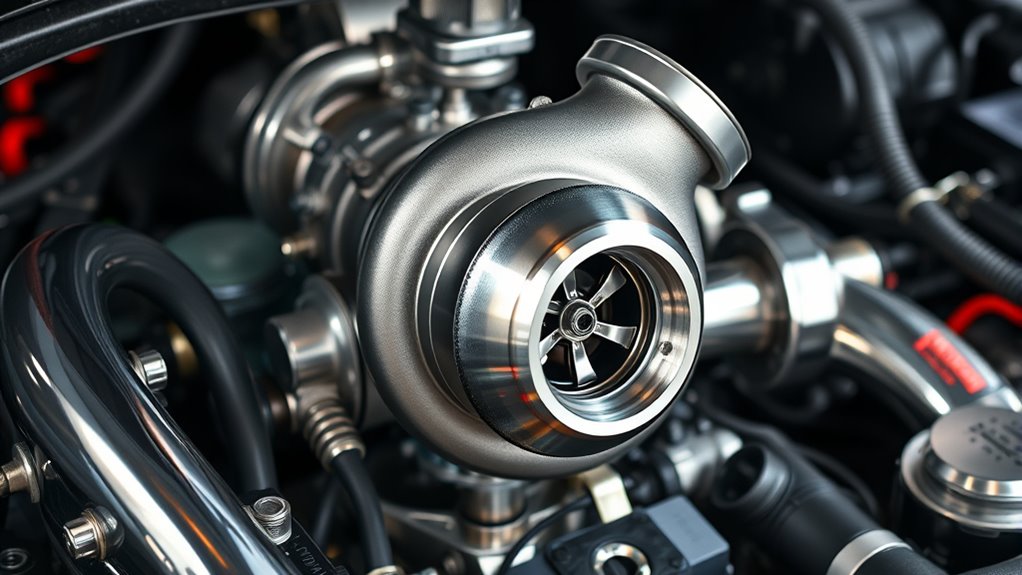
Using a turbo can substantially boost your engine’s power and efficiency, making your vehicle more responsive and capable. One key benefit is improved fuel efficiency, as turbocharged engines extract more power from less fuel. Additionally, turbos contribute to emission reduction by enabling smaller engines to produce the same power as larger ones, lowering overall emissions. However, there are drawbacks to contemplate. Turbo lag, the delay between pressing the accelerator and power delivery, can affect driveability. Increased heat and pressure may lead to higher maintenance needs or potential wear. Finally, turbos can add complexity and cost to repairs.
- Enhanced fuel efficiency and emission reduction
- Increased engine complexity and maintenance
- Turbo lag affecting driving smoothness
Common Maintenance and Troubleshooting Tips

Maintaining your turbocharger properly can guarantee it continues to perform efficiently and reliably. Regular oil changes are essential since clean, high-quality oil lubricates the turbo’s moving parts and prevents buildup that can hinder boost pressure. Check for signs of oil leaks or smoke, which indicate potential issues. Keep an eye on boost pressure levels; if you notice a drop or inconsistent readings, it could signal a problem with the turbine or wastegate. Listen for unusual noises like whining or grinding, which often point to worn bearings or other components. Also, ensure the air intake and intercooler are clean, as debris can reduce performance. Following these maintenance tips helps troubleshoot problems early, prolonging your turbo’s lifespan and guaranteeing peak boost pressure for peak engine performance.
Frequently Asked Questions
How Does a Turbocharger Impact Fuel Efficiency?
A turbocharger improves your vehicle’s fuel efficiency by using exhaust energy to create boost pressure, which helps your engine produce more power with less fuel. Instead of wasting exhaust gases, it recycles their energy to increase airflow, reducing the need for extra fuel. As a result, your engine becomes more efficient, delivering better mileage while maintaining performance, thanks to the effective use of exhaust energy and boost pressure.
What Are the Signs of a Failing Turbocharger?
Imagine your car’s roaring like a dragon, but something’s off. When your turbocharger fails, you’ll notice symptoms like loss of power, excessive exhaust smoke, or strange noises during acceleration. Turbo failure symptoms also include increased oil consumption and poor acceleration. Regular turbo maintenance helps prevent this. If you ignore these signs, you risk costly repairs. Stay vigilant, listen for unusual sounds, and keep up with turbo maintenance to guarantee your engine runs smoothly.
Can Turbochargers Be Installed on Any Engine?
You can’t install a turbocharger on any engine without considering engine compatibility. During turbo installation, you’ll need to check if your engine’s design supports a turbo, including space, exhaust configuration, and strength. Some engines are more suitable for turbos, while others may require significant modifications. Always consult a professional to guarantee your engine can handle the added boost and that the turbocharger fits properly and functions efficiently.
How Does Altitude Affect Turbocharger Performance?
Think of your turbocharger as a swimmer fighting against the current—at higher altitudes, the thinner air creates a stronger current that challenges turbo performance. Altitude effects reduce the density of intake air, meaning less oxygen for combustion. This decrease in air density can cause your turbo to produce less boost, making your engine feel sluggish. To maintain ideal performance, you might need to adjust the boost settings or install altitude-specific tuning.
What Are the Differences Between Turbochargers and Superchargers?
You’ll find that turbochargers use exhaust gases to spin a turbine and boost engine power, while superchargers are belt-driven and provide immediate response. Turbochargers often have an intercooler to cool compressed air, improving efficiency, but can suffer from turbo lag, a delay in power delivery. Superchargers, however, deliver instant boost but can increase engine load. Both improve performance but differ in response and complexity.
Conclusion
Now that you know how a turbocharger works, you can see it’s a real game-changer for boosting engine performance. With proper care and understanding, you’ll get the most out of your turbo and avoid unnecessary headaches. Remember, a little maintenance goes a long way—think of it as keeping your engine in tip-top shape. So, don’t let your turbo go under the radar; stay on top of it, and you’ll keep your ride running smoothly for miles to come.