Removing unnecessary weight like seats and the spare tire from your car immediately reduces its overall mass, making it more responsive and faster off the line. With less weight to carry, your engine doesn’t have to work as hard, improving acceleration and top speed. Combining this with good aerodynamics and engine tuning can boost your car’s performance even more. Want to discover more ways to maximize your vehicle’s speed? Keep exploring the options available.
Key Takeaways
- Removing heavy components like seats and spare tires reduces overall vehicle weight, improving acceleration and responsiveness.
- Lighter vehicles require less engine effort, leading to increased speed and better fuel efficiency.
- Weight reduction complements aerodynamic improvements, collectively enhancing top speed and airflow efficiency.
- Stripping unnecessary weight is a cost-effective way to gain performance without engine modifications.
- Combining weight savings with engine tuning maximizes overall vehicle speed and driving performance.
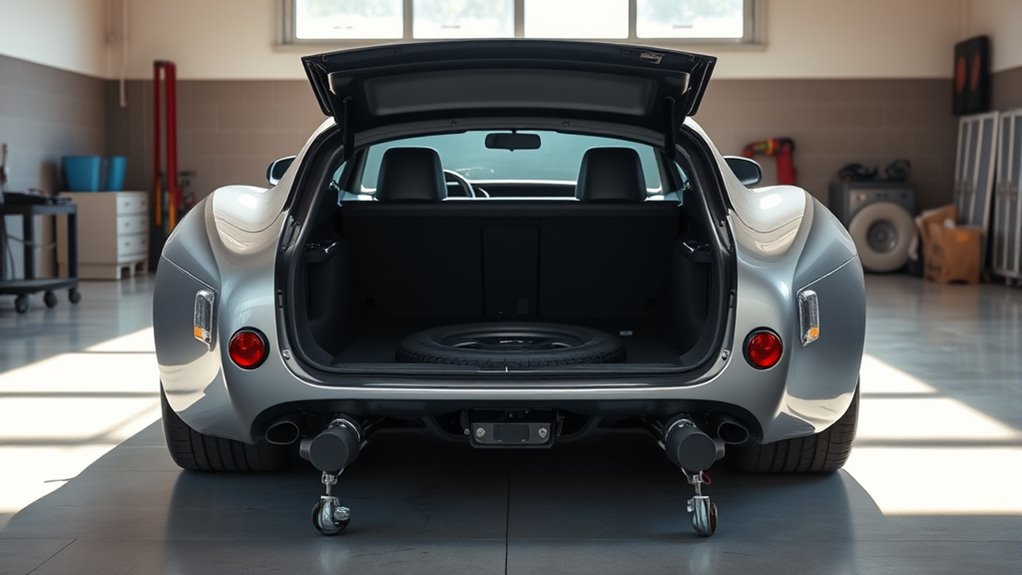
Losing weight can seem challenging, but with the right approach, you can achieve your goals more effectively. When it comes to making your car faster, weight reduction is a common strategy. Removing heavy components like seats and spare tires can help, but the real gains come from understanding how that weight loss translates into performance. Every extra pound you carry adds to the engine’s workload, and that means your car has to work harder to accelerate and maintain speed. By stripping out unnecessary weight, you reduce the overall mass, making your car more responsive and quicker off the line.
Reducing unnecessary weight makes your car more responsive and faster off the line.
However, weight reduction isn’t just about removing parts; it’s also about optimizing your vehicle‘s aerodynamics and engine tuning. Aerodynamic improvements play a vital role in speed and fuel efficiency. Smoother, streamlined bodywork decreases drag, allowing your car to cut through the air more easily. When combined with weight reduction, these improvements can lead to a noticeable increase in performance. Less weight means less strain on the engine, and better aerodynamics reduce the air resistance that slows you down at higher speeds. Together, these modifications can substantially boost your car’s acceleration and top speed.
Engine tuning is another essential element. When your engine is tuned properly, it operates more efficiently, extracting maximum power from each combustion cycle. This means you can get more horsepower without necessarily increasing engine size or adding more boost. A well-tuned engine works synergistically with weight reduction efforts, providing the power needed to take full advantage of the lighter vehicle. When your engine runs more efficiently, you’ll notice improved throttle response and better overall performance, especially when paired with aerodynamics and weight savings. Additionally, understanding projector technology can help you appreciate how different modifications influence overall performance, akin to how various features in a projector affect image quality and clarity.
Frequently Asked Questions
Does Removing Seats Improve Handling or Just Acceleration?
Removing seats mainly improves acceleration by reducing weight, but it doesn’t substantially enhance handling. You might notice quicker acceleration, yet you could sacrifice seat comfort and interior aesthetics, making your ride less cozy. Handling stays mostly unaffected because seats aren’t a primary factor in vehicle stability. If you want better handling, consider suspension upgrades instead. Removing seats is best for track days, not everyday driving, where comfort and interior look matter.
How Much Weight Can You Realistically Save by Stripping the Interior?
You can realistically save up to 100-200 pounds by stripping your interior, which is like shedding a small passenger! Focus on removing heavy interior materials and replacing stock components with lightweight alternatives. Every pound counts, and with strategic upgrades, you’ll notice quicker acceleration and sharper handling. Just remember, while you won’t turn your car into a race machine overnight, reducing weight dramatically boosts your vehicle’s agility and speed.
Are There Legal or Safety Issues When Removing Factory-Installed Seats?
Removing factory-installed seats can jeopardize seat safety and may violate legal compliance. Many jurisdictions require certain safety features, like proper seat mounts and restraints, to be maintained. If you choose to strip seats, make sure you understand local laws and consider the safety implications, especially if you plan to drive on public roads. Always prioritize safety and legal standards to avoid fines and ensure your vehicle remains safe for you and others.
Can Weight Reduction Significantly Improve Fuel Efficiency?
Yes, reducing weight can considerably improve your fuel economy and engine performance. When you strip unnecessary items, your engine doesn’t have to work as hard to move the car, leading to better mileage and smoother acceleration. Just remember, removing safety features or essential components might cause legal issues or compromise safety. Focus on lightweight modifications that balance performance gains with safety and legality for the best results.
Is It Worth Removing the Spare Tire for Weight Savings?
Removing the spare tire can be worth it if you’re after weight savings, especially to reduce trunk weight and improve acceleration. Tire removal cuts down unnecessary weight, making your car more responsive and potentially faster. However, consider safety and practicality—without a spare, you’ll need roadside assistance. If you don’t frequently face flat tires, sacrificing the spare for weight reduction can be a smart move to boost performance.
Conclusion
So, stripping out seats and the spare tire might seem like quick fixes, but will they truly unlock your car’s hidden potential? Imagine the thrill of faster acceleration and sharper handling—are you willing to take the risk? The truth is, small changes can make a big difference, but the real secret lies just beneath the surface. Are you ready to discover how far you can push your car’s limits? The answer might surprise you.