
Before buying a plasma cutter for garage projects, consider safety features like thermal overload protection and proper grounding, as well as the materials you’ll cut, such as steel or aluminum. Make sure the machine matches your workspace, whether portable or fixed, and check its power requirements. Ease of use and maintenance are also key to avoid frustration. Stay aware of safety protocols to prevent mishaps—more helpful insights lie ahead if you keep exploring.

Get business pricing on garage and car supplies
- Business-only prices and quantity discounts
- Tax-exempt purchasing
- Multiple users, one account, clear invoices
Key Takeaways
- Ensure the plasma cutter is compatible with the materials and thicknesses you’ll work with, such as steel or aluminum.
- Prioritize safety features like thermal overload protection and proper grounding for safe operation.
- Consider portability versus fixed units based on your workspace size and project mobility needs.
- Check ease of use, maintenance requirements, and availability of consumables for long-term reliability.
- Confirm the power source compatibility and adherence to electrical safety standards in your garage.
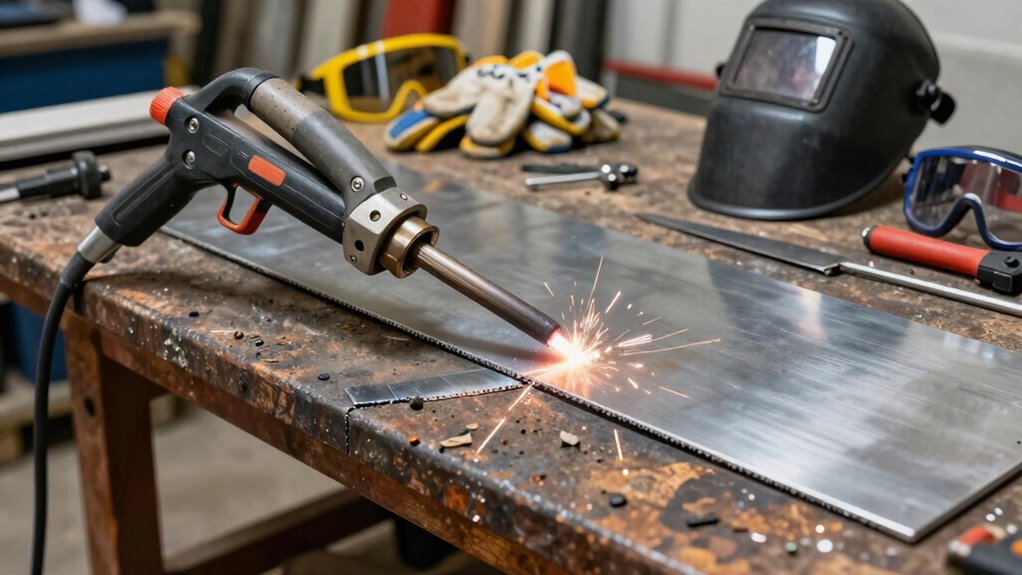
Thinking about upgrading your garage projects? Before you invest in a plasma cutter, it’s vital to understand some key factors that can make or break your experience. One of the first things to consider is industrial safety. Plasma cutting involves high temperatures and intense electrical arcs, so proper safety measures are essential. You’ll want to guarantee your workspace is well-ventilated to avoid inhaling harmful fumes, and always wear appropriate protective gear, including gloves, eye protection, and a welding helmet. Additionally, make sure your equipment has built-in safety features like thermal overload protection and reliable ground connections. Handling a plasma cutter without adhering to safety protocols can lead to serious injuries or equipment damage, so never overlook this aspect.
Prioritize safety with proper ventilation, protective gear, and safety features to ensure a secure plasma cutting experience.
Another important consideration is material compatibility. Not all materials respond equally to plasma cutting, so you need to know what your machine can handle. For example, most plasma cutters work well with metals like steel, stainless steel, aluminum, and copper. However, if you plan to work with thicker or specialized materials, you’ll need to check the cutter’s maximum thickness capacity and its ability to cut through different types of metals efficiently. Some plasma cutters are designed for precision work on thin sheets, while others are better suited for heavy-duty tasks. Understanding the material compatibility helps you choose a model that aligns with your project needs, guaranteeing clean cuts and reducing the risk of damaging your materials or the equipment. Additionally, considering safety features and proper operational protocols can significantly improve your overall experience and safety. Incorporating best practices in safety can further help prevent accidents and prolong the lifespan of your equipment. Recognizing the importance of electrical safety standards is also crucial for ensuring your setup adheres to recommended guidelines and minimizes hazards.
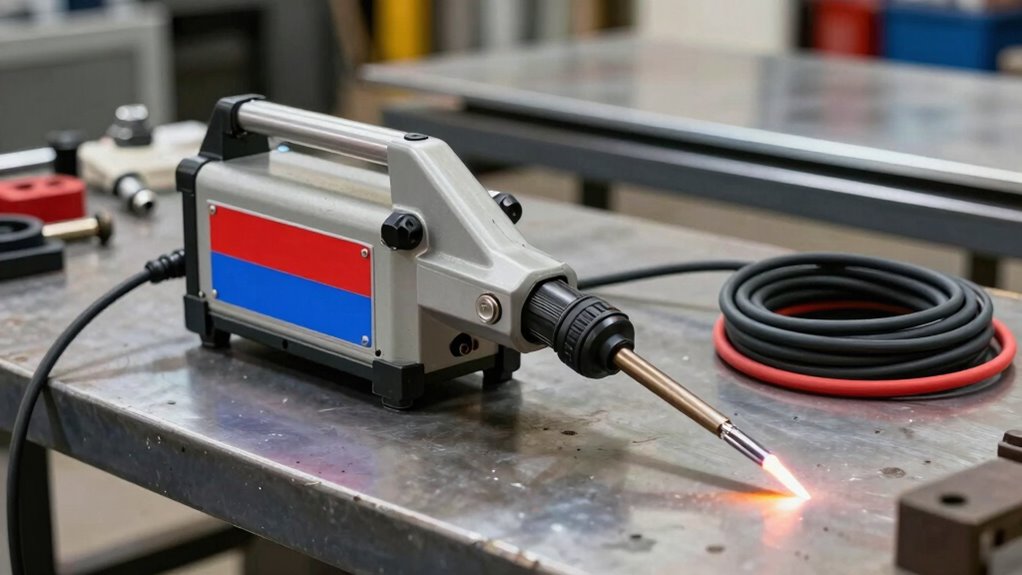
Beyond safety and material considerations, think about the power source and portability of the plasma cutter. Garage projects often require flexibility, so a lightweight, portable unit might be more convenient if you plan to move around your workspace. Conversely, if you have a dedicated, fixed area, a more powerful, stationary model could offer better performance for larger tasks. Also, consider the power requirements of the machine—make sure your electrical outlets can support it without overloads, especially if you’re working in a home garage with limited power supply. It’s also beneficial to choose a model with easy setup and operation, making it more accessible for beginners or casual hobbyists. Moreover, understanding power source options can help you select a unit that matches your existing electrical infrastructure.
Finally, don’t forget to evaluate the ease of use and maintenance. Some plasma cutters come with user-friendly controls and clear instructions, which are helpful if you’re new to plasma cutting. Regular maintenance, such as replacing consumables and cleaning filters, extends the life of your equipment and keeps it running smoothly. By paying attention to these factors—safety, material compatibility, power, portability, and ease of maintenance—you’ll be better prepared to select a plasma cutter that fits your garage projects perfectly.
plasma cutter with thermal overload protection
As an affiliate, we earn on qualifying purchases.
As an affiliate, we earn on qualifying purchases.
Frequently Asked Questions
How Loud Are Plasma Cutters During Operation?
Plasma cutters can be quite loud during operation, with noise levels reaching around 100 decibels, similar to a chainsaw. The sound intensity varies depending on the model and material being cut, but generally, you’ll hear a loud, high-pitched arc. You should wear proper hearing protection because prolonged exposure to these noise levels can damage your ears. Keep in mind, quieter models are available, but most plasma cutters produce significant noise during use.
Can a Plasma Cutter Cut Through Rusted or Painted Metal?
Think of a plasma cutter as a scalpel for metal—you can slice through rusted or painted surfaces with precision. It easily handles rust removal and paint stripping, making it perfect for garage projects. The high-temperature arc melts through corrosion layers and paint, exposing clean metal underneath. Just guarantee your machine has enough power and the right consumables, and you’ll cut through even the toughest, rusted, or painted metal like butter.
What Safety Gear Is Recommended When Using a Plasma Cutter?
When using a plasma cutter, you should wear protective gloves to shield your hands from sparks and hot metal. A respirator mask is also essential to safeguard your lungs from fumes and airborne particles generated during cutting. Additionally, consider eye protection like safety goggles or a welding helmet. Prioritizing safety gear guarantees you minimize risks and work confidently in your garage projects.
How Energy-Efficient Are Plasma Cutters for Long-Term Use?
Your plasma cutter’s energy efficiency depends on its design and usage, and it’s not a one-size-fits-all. While some models are energy-efficient, others may guzzle power, making long-term use costly. Keep an eye on energy consumption and power efficiency ratings to avoid surprises. Think of it like a car’s fuel economy—more efficient models save you money in the long run, especially if you’re using your plasma cutter frequently.
Are There Portable Plasma Cutter Options for Mobile Projects?
Yes, there are portable plasma cutter options that enhance mobile versatility, making them perfect for on-the-go projects. These models are lightweight, compact, and designed for easy transport, so you can take your cutting tools wherever your work leads. With features like built-in handles and sturdy cases, you’ll find these portable options convenient for remote jobs, repairs, or quick fixes, ensuring you’re always ready to cut efficiently no matter where you are.
portable plasma cutter for garage
As an affiliate, we earn on qualifying purchases.
As an affiliate, we earn on qualifying purchases.
Conclusion
Before diving into your garage projects with a plasma cutter, make sure you’re fully informed and prepared. Choosing the right machine means understanding your needs, safety precautions, and maintenance requirements. Remember, a well-chosen plasma cutter can be a game-changer, but rushing in blindly could lead to headaches down the road. So, do your homework and pick wisely—after all, it’s better to be safe than sorry, especially when tackling tough metalwork.
As an affiliate, we earn on qualifying purchases.
As an affiliate, we earn on qualifying purchases.
Fall Picks
fall essentials
As an affiliate, we earn on qualifying purchases.