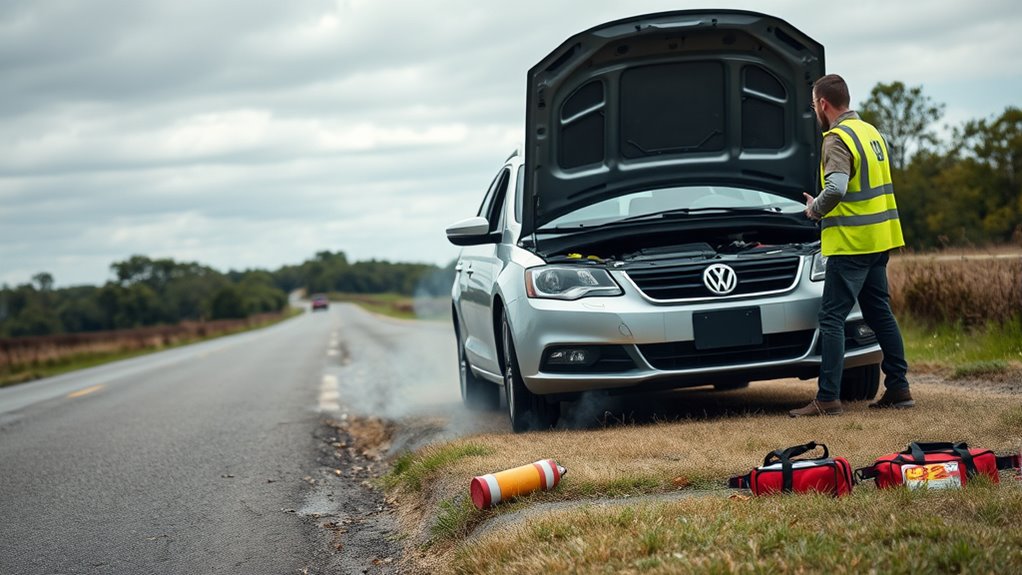

If your car overheats on the road, pull over safely and turn off the engine immediately to prevent damage. Let it cool for at least 30 minutes before opening the hood, and carefully check the coolant level and for leaks. Never open the radiator cap while it’s hot. If the problem persists, seek professional help. Staying calm and acting quickly can save your engine; learn more about each step as you continue.
Key Takeaways
- Recognize overheating signs early, then safely pull over to a secure spot away from traffic.
- Turn off the engine promptly to prevent further damage and allow it to cool down.
- Wait until the engine cools before opening the hood, and inspect coolant levels and components carefully.
- Safely open the radiator cap only after the engine has cooled to release residual pressure.
- If overheating persists, seek professional assistance immediately to avoid severe engine damage.

KOOPOOL 30PCS Radiator Pressure Tester Kit with Vacuum Refill
- Universal Compatibility: Fits most Japanese, European, American cars
- Color-Coded Test Caps: 17 test caps for quick identification
- Durable Aluminum Pump: Ensures airtightness and durability
As an affiliate, we earn on qualifying purchases.
As an affiliate, we earn on qualifying purchases.
Recognize the Signs of Overheating
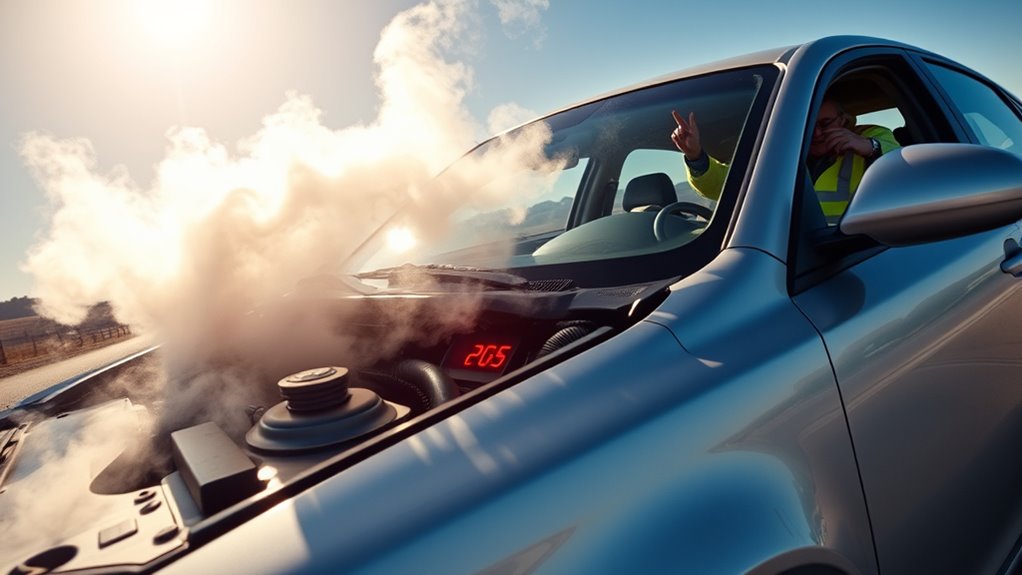
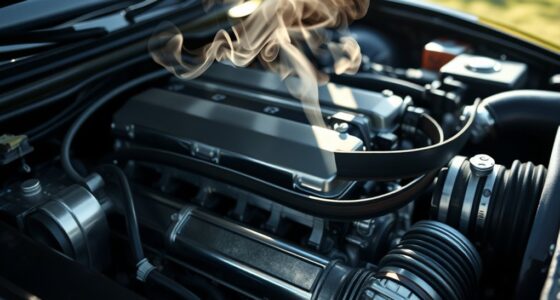
Knowing the signs of an overheating engine can help you act quickly and prevent serious damage. Keep an eye on your engine temperature gauge; if it climbs into the red zone, that’s a clear warning sign. You might also notice steam or smoke coming from under the hood, which indicates excessive heat. Unusual smells, like burning or sweet odors, can signal overheating as well. Listen for warning signs such as the engine running rough or strange noises. Feeling increased vibrations or a loss of power are additional clues. Don’t ignore these warning signs—they’re your first indication that your engine is overheating. Recognizing these early signals allows you to take immediate action, minimizing potential damage and keeping you safe on the road. Additionally, understanding your vehicle’s cooling system can help you identify potential issues before they lead to overheating, especially since proper maintenance is key to preventing problems. Regularly inspecting coolant levels and ensuring the radiator is functioning properly can make a significant difference. Being familiar with your engine components can also assist in diagnosing problems early on, and keeping an eye on fluid leaks can prevent further damage.
As an affiliate, we earn on qualifying purchases.
Safely Pull Over and Turn Off the Engine

Find a safe spot away from traffic where you can pull over quickly. Once stopped, turn off your engine immediately to prevent further overheating. Acting swiftly helps protect your engine and keeps you safe. Additionally, checking your coolant level as soon as possible can help identify if the overheating is related to low fluid levels. If you have a car manual, consult it for specific instructions on your vehicle’s cooling system to better understand how to address the issue. Being familiar with your vehicle’s cooling system and understanding proper maintenance techniques can help you respond more effectively in such emergencies. Knowing how to identify early signs of overheating can also help you take preventative action before the situation worsens.
Find a Safe Spot
When your car starts to overheat, the first step is to safely pull over to the side of the road. Look for a spot that offers good parking safety, away from traffic and roadside hazards. Once you find it, slow down and steer smoothly to avoid sudden movements. Park your vehicle completely off the road, ideally on a flat surface. Make certain there’s enough space around your car to prevent blocking traffic or hitting obstacles. Check for:
- Clear visibility and ample space
- Distance from passing vehicles
- Level ground to prevent rolling
- Innovative European Cloud Servers that can help monitor your vehicle’s temperature remotely in some modern cars. Incorporating field-of-view considerations can also help you assess the best position for safety and visibility when stopping. Additionally, keeping a vehicle safety kit in your car can be invaluable in these situations. Regularly reviewing parking safety tips can further ensure you choose the safest spot during emergencies.
Turn Off Engine Quickly
As soon as you notice your car overheating, it’s essential to turn off the engine immediately to prevent further damage. Continuing to drive can lead to costly engine repair and worsen brake issues, especially since the brake system relies on fluid that can overheat or boil. Safely pull over to the side of the road, away from traffic, and switch off the engine to stop heat buildup. This prevents additional stress on engine components and reduces the risk of a breakdown. Avoid opening the hood right away, as hot steam or coolant can cause burns. Let the engine cool down before inspecting or attempting any repairs. Understanding coolant system and how it functions can help you better manage overheating situations. Proper water circulation within the cooling system is vital to maintaining the engine’s temperature. Knowing how to recognize early signs of overheating can also help prevent severe damage. Turning off the engine promptly helps protect your vehicle’s crucial parts and ensures your safety.
As an affiliate, we earn on qualifying purchases.
Open the Hood Carefully
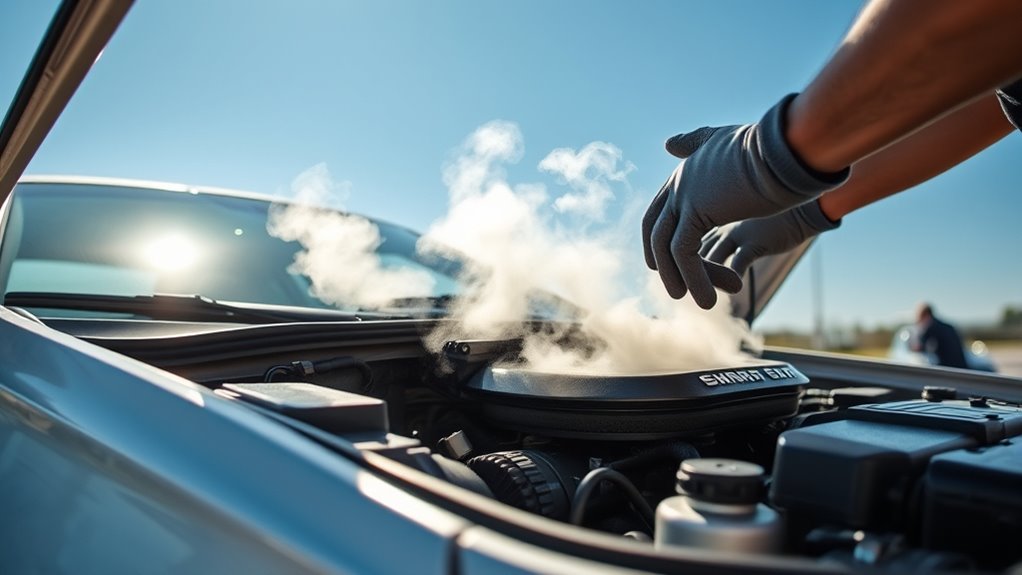
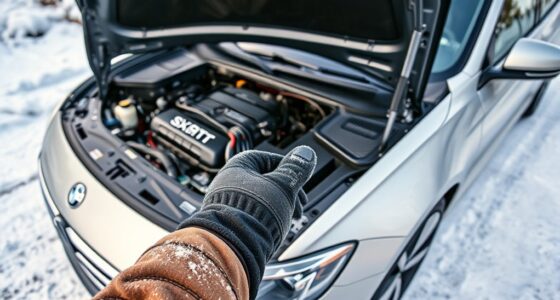
Before opening the hood, make sure your engine has cooled down to prevent burns or injury. Once cooled, carefully lift the hood latch, feeling for any residual heat. As you open it, visualize:
Always ensure your engine is cool before opening the hood to prevent burns or injury.
- The shiny engine components, including the engine oil cap, waiting to be checked.
- The radiator and hoses, which may still be hot but need inspection.
- The tire pressure, which could be affected if overheating caused any issues.
Avoid leaning directly over the engine to prevent burns from hot surfaces. Check the oil level and look for leaks or signs of overheating. Also, ensure the tires are properly inflated to help maintain overall vehicle safety during your breakdown. Incorporating connected equipment like a portable diagnostic scanner can help identify issues more efficiently.
As an affiliate, we earn on qualifying purchases.
Check Coolant Levels and Look for Leaks

To verify your coolant levels, locate the coolant reservoir—usually a translucent plastic tank near the radiator—and make sure the engine is cool to avoid burns. Perform a quick coolant inspection by checking the fluid level against the marked minimum and maximum indicators. Look for signs of leaks around hoses, the radiator, and the reservoir. Detecting leaks early can prevent further overheating. Regularly inspecting these components can also help prevent future overheating issues. Additionally, keeping an eye on the coolant system ensures your vehicle remains in good condition and can help identify problems before they escalate. Routine maintenance of the cooling system can significantly reduce the risk of overheating and mechanical failure. Being aware of signs like heater performance issues can also alert you to potential cooling system problems before they become severe.
Let the Engine Cool Down Before Proceeding

Once your engine overheats, turn it off and let it cool completely before touching anything. This prevents burns and allows the coolant to settle. Don’t rush—wait until the temperature drops considerably before proceeding. Remember, engine overheating can cause serious damage if not addressed promptly. Additionally, understanding the coolant system can help you recognize early signs of trouble and prevent overheating in the future. Familiarity with engine temperature indicators can alert you to potential issues before reaching a critical point.
Turn Off Engine
If your car’s engine starts to overheat, turning it off promptly is essential to prevent further damage. This pause allows the engine oil to settle and reduces stress on critical parts. As you switch off the engine, imagine the following happening:
- The radiator fan slows down, giving the cooling system time to stabilize.
- The heat in the engine compartment begins to dissipate, preventing cracks or warping.
- The engine oil, which lubricates and cools, starts to thicken less quickly, reducing wear.
Allow Coolant to Rest
After turning off the engine, give it time to cool down before proceeding. You should wait until the coolant temperature drops considerably, which indicates the engine has had a proper rest. This prevents you from opening the radiator cap too soon, avoiding dangerous hot coolant spray or burns. During the engine rest, the heat disperses naturally, reducing internal pressure and lowering the risk of additional damage. Check the temperature gauge regularly; once it shows normal or near-normal levels, it’s safe to continue. Remember, patience is key. Rushing to restart the engine too soon can cause further overheating or damage. Allowing the coolant to rest ensures your engine is cooled properly, making it safer to drive again.
Add Coolant if Available and Necessary
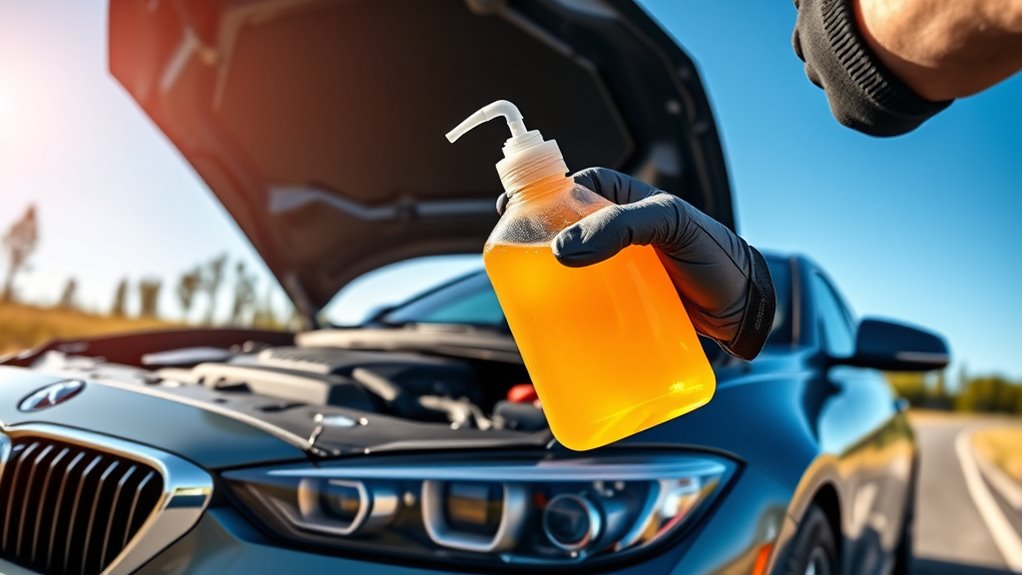
When your car overheats, adding coolant can help prevent further damage if you have some available. First, locate the coolant reservoir, usually a translucent tank near the radiator. Carefully open the cap of the reservoir, ensuring the engine has cooled to avoid steam burns. If the coolant level is low, pour in the appropriate coolant mixture until it reaches the recommended level. Visualize the process:
- Seeing the bright coolant fill the reservoir with a gentle pour
- Hearing the liquid safely settle inside
- Feeling confident you’re supporting your engine’s cooling system
Adding coolant helps stabilize the temperature and reduce strain on the radiator cap. Always check for leaks or cracks in the reservoir and ensure you’re using the correct type of coolant for your vehicle. This simple step can buy you time until proper repairs are possible.
Avoid Opening the Radiator Cap When Hot
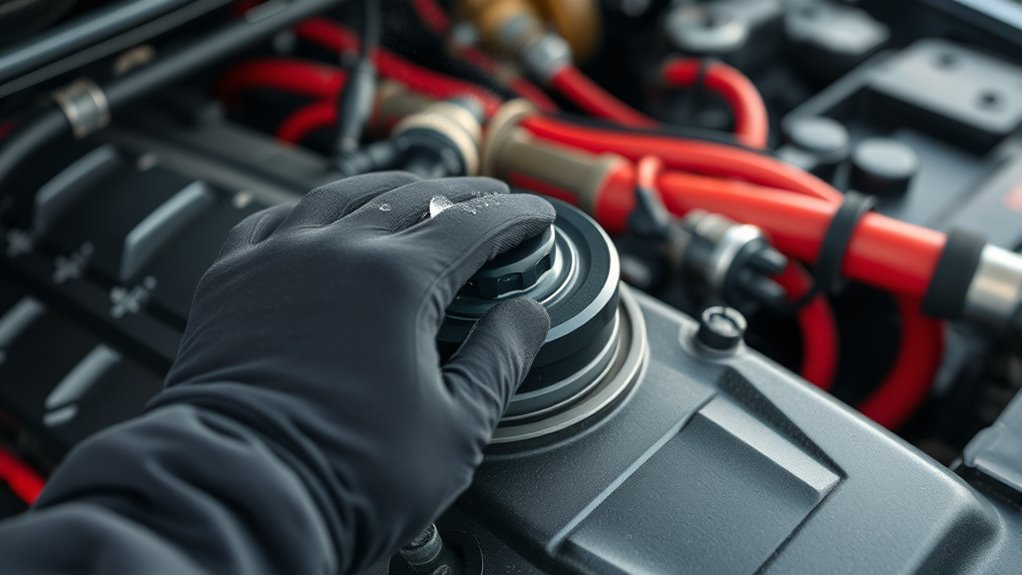
Opening the radiator cap on a hot engine can be extremely dangerous because the pressure inside the cooling system causes hot coolant and steam to burst out rapidly. If you attempt to open the radiator cap while the engine is still hot, you risk severe burns from the scalding hot coolant. The pressure built up inside makes it unsafe to open without proper precautions. Always wait until the engine cools down completely before handling the radiator cap. If you must check the coolant level, do so only after the engine has cooled, and carefully loosen the cap to release any residual pressure gradually. Never rush this process, as hot coolant under pressure can cause serious injuries. Safety first—never open the radiator cap when the engine is still hot.
Seek Professional Assistance if the Problem Persists
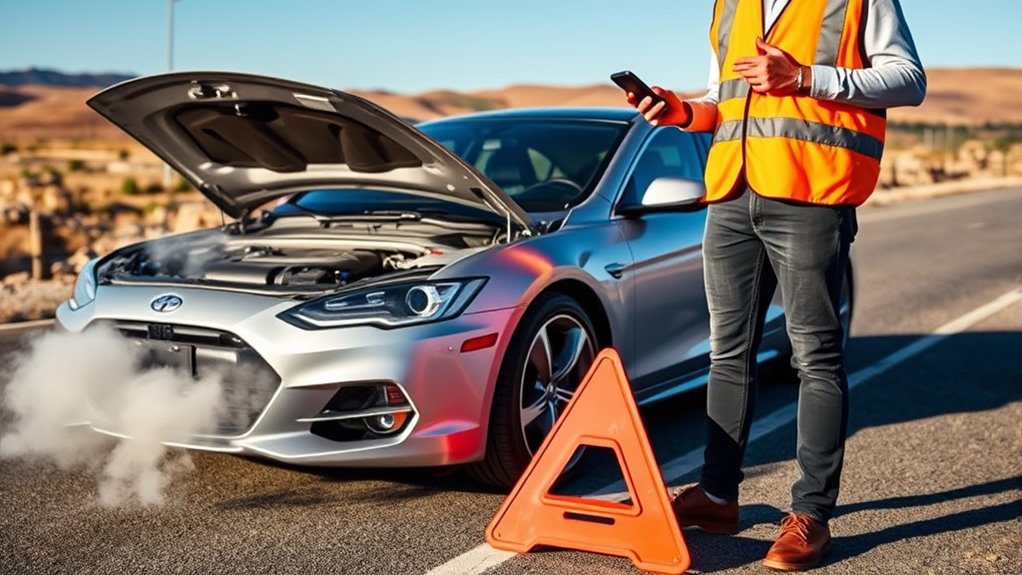
If your car continues to overheat despite your efforts to cool it down, it’s crucial to seek professional help promptly. Ignoring persistent overheating can lead to severe engine damage. Contact emergency services or roadside assistance to avoid further risks. While waiting, consider these maintenance tips to prevent future issues:
- Regularly check coolant levels and top off as needed
- Schedule routine radiator and hose inspections
- Keep an eye on warning lights and temperature gauges
Having emergency contacts readily available ensures quick help when overheating persists. Don’t attempt complex repairs yourself unless you’re qualified; instead, focus on safe roadside measures. Remember, prompt professional intervention can save you from costly repairs and ensure your safety on the road.
Frequently Asked Questions
What Should I Do if I Don’T Have Coolant Available?
If you don’t have coolant available, you should perform emergency cooling by stopping your car safely and turning off the engine. Then, look for alternative fluids like distilled water or a mix of water and a small amount of cooking oil if needed, to help cool the engine temporarily. Avoid using anything harmful or non-approved, and get to a mechanic as soon as possible to prevent damage.
How Can I Prevent My Car From Overheating in the Future?
Because you’re clearly a genius, you’ll want to check your coolant levels regularly and keep an eye on your radiator maintenance. Avoid neglecting these simple tasks, lest you enjoy the thrill of overheating adventures. Keep your coolant topped up, inspect hoses for leaks, and make sure your radiator is clean. These small acts of automotive wisdom prevent future overheating, saving you from embarrassing roadside emergencies and costly repairs.
Is It Safe to Drive With a Temperature Warning Light On?
No, it’s not safe to drive with a temperature warning light on. You should stop immediately and check your coolant levels and engine temperature. Driving with an elevated engine temperature can cause severe damage. If coolant levels are low, add coolant if you have some available. Otherwise, let the engine cool down before proceeding or call for roadside assistance to prevent further damage.
Can Using the Air Conditioning Cause My Car to Overheat?
Using the air conditioning is like adding extra weight to a backpack—your engine temperature can rise. It impacts your car’s cooling system by increasing the workload, which may lead to overheating, especially in hot weather or heavy traffic. To prevent this, keep an eye on the temperature gauge, and avoid running the AC at full blast if you notice the engine getting hot. Regular maintenance helps keep your engine cool.
What Are the Long-Term Damages Caused by Engine Overheating?
Engine overheating can cause serious long-term damage, including engine component damage and coolant system failure. When your engine runs too hot, parts like pistons, valves, and gaskets can warp or crack, leading to costly repairs. The coolant system may also fail, resulting in poor cooling performance and increased risk of future overheating. Regular maintenance and addressing overheating issues promptly help prevent these long-term damages and keep your engine running smoothly.
Conclusion
Remember, your car’s temperature gauge is your warning signal—heed it before it’s too late. Overheating isn’t just a minor glitch; it’s a warning bell ringing loud and clear. By acting swiftly and calmly, you can prevent serious damage and stay safe on the road. Think of your car’s engine as a heart—if it overheats, everything else suffers. Stay vigilant, take action, and keep your journey smooth and safe.