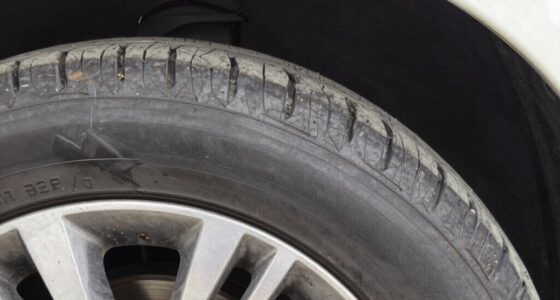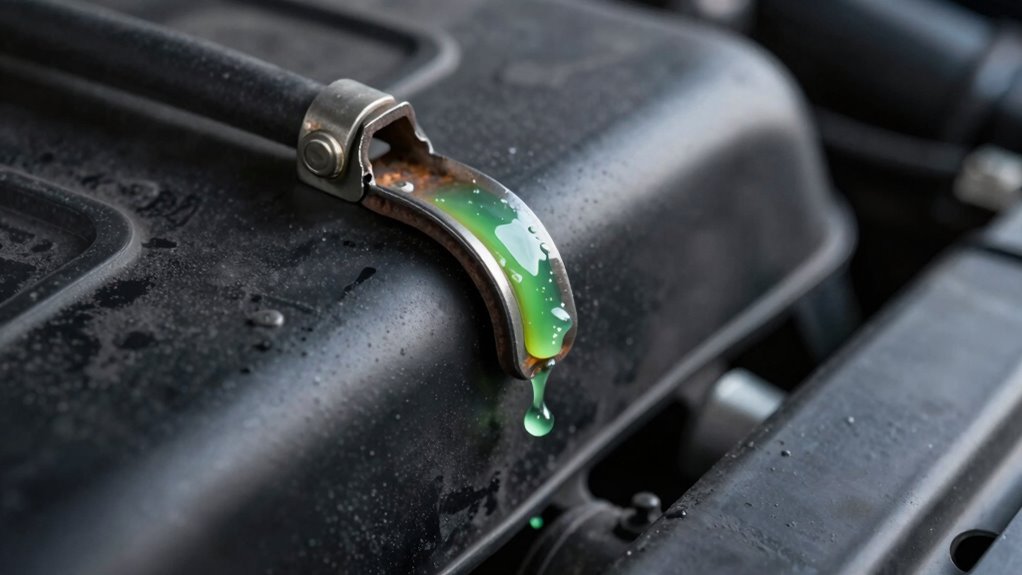
To spot a small coolant leak early, check for corrosion or deposits on your radiator and coolant reservoir, as these indicate deterioration. Look closely at hoses for cracks, bulges, or stiffness, and watch for coolant pooling or low levels in the reservoir. Smell for a sweet vapor or coolant odor near the engine, and monitor your temperature gauge—any increase may signal trouble. If you keep an eye out, you’ll catch signs before the leak worsens.
Key Takeaways
- Regularly inspect radiator and coolant reservoir for corrosion, deposits, or crusty buildup indicating early deterioration.
- Check hoses for cracks, bulges, stiffness, or looseness, especially at connection points.
- Monitor coolant levels in the reservoir for unexplained declines or evaporation signs.
- Smell for sweet vapor or coolant odor near the engine bay, signaling possible vapor leaks.
- Watch engine temperature gauge for unusual rises or frequent overheating, indicating potential coolant loss.
Ever wonder how to detect a small coolant leak before it turns into a bigger problem? Catching early signs can save you money and prevent engine damage. One of the first things to look for is visual clues around your radiator and hoses. Over time, radiator corrosion can develop, especially if your coolant isn’t replaced regularly. Corrosion appears as white, green, or brownish deposits on the radiator’s surface or inside the coolant reservoir. These deposits weaken the metal, making tiny holes or cracks more likely, which can cause small leaks. If you notice any crusty buildup or corrosion spots, it’s a sign you should inspect further.
Corrosion on radiator surfaces indicates potential leaks and should prompt further inspection.
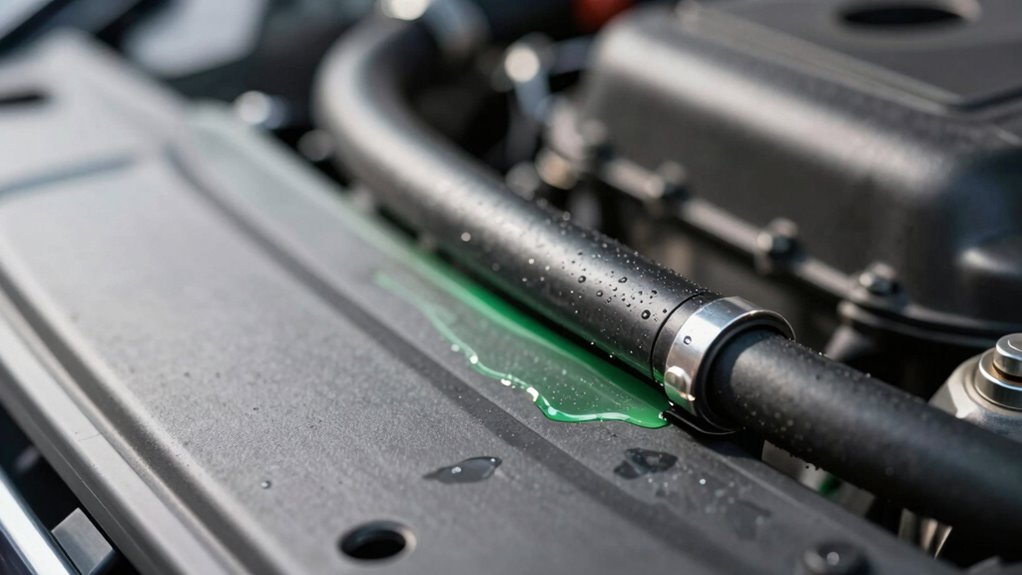
Another common source of leaks is hose deterioration. Hoses are flexible, but they aren’t invincible. Over time, exposure to heat, coolant, and engine vibrations can cause hoses to crack, harden, or become brittle. When hoses deteriorate, small leaks often form at connection points or along the hose itself. You might notice coolant pooling beneath the vehicle’s front or sides, especially around the radiator hoses. Regularly inspecting hoses for bulges, cracks, or loose fittings helps you catch these issues early. Feeling the hoses for softness or stiffness also reveals their condition; soft hoses are more likely to leak, while overly stiff or brittle ones are close to failure.
Pay attention to the coolant level in your reservoir. A steady decline without obvious external leaks may indicate a small internal leak or evaporation, often a sign of hose or radiator issues. Additionally, keep an eye out for sweet-smelling vapor or a sweet taste inside the engine bay—these are signs of coolant escaping and vaporizing. A slight coolant odor near the front of your vehicle is another indicator you should investigate further.
Monitoring your vehicle’s temperature gauge can also help you detect leaks early. If your engine runs hotter than usual or hits the red zone frequently, it could be a sign that coolant isn’t circulating properly due to a leak. Coolant leaks often result from corrosion or deterioration that creates tiny holes or cracks, reducing the coolant’s ability to regulate engine temperature effectively.
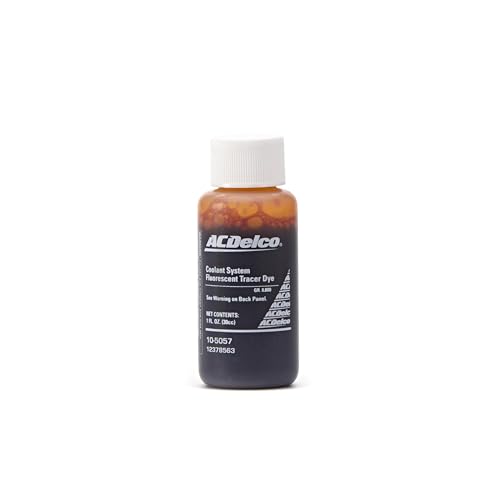
ACDelco GM Original Equipment 10-5057 (12378563) Engine Cooling System Tracer Dye – 1 oz
Designed to quickly pinpoint leaks in traditional coolant systems
As an affiliate, we earn on qualifying purchases.
As an affiliate, we earn on qualifying purchases.
Frequently Asked Questions
Can a Small Coolant Leak Cause Engine Overheating?
Yes, a small coolant leak can cause engine overheating if left unaddressed. As the leak worsens, coolant contamination occurs, reducing the coolant’s effectiveness. This can lead to insufficient cooling and engine temperature rise. To prevent this, you should act quickly by scheduling leak repair and checking coolant levels regularly. Addressing even small leaks early helps maintain ideal engine temperature and prevents costly damage down the line.
How Long Can a Small Coolant Leak Go Unnoticed?
A small coolant leak can go unnoticed for days or even weeks, hiding behind engine parts or under the car. You might notice coolant discoloration or a faint sweet smell, but leak location often makes detection tricky. If you ignore subtle signs, the leak could worsen without your awareness, risking engine damage. Regular checks help catch leaks early, preventing costly repairs and keeping your engine running smoothly.
Is It Safe to Drive With a Small Coolant Leak?
It’s generally unsafe to drive with a small coolant leak. Even a minor leak can cause your engine to overheat, risking serious damage. Pay attention to the coolant color, usually green, orange, or pink, and check the leak location—often near hoses or the radiator. If you notice any signs, it’s best to have a mechanic inspect and fix the issue promptly to prevent costly repairs later.
What Tools Are Best for Detecting Coolant Leaks?
Detecting coolant leaks is like finding a needle in a haystack, but the right tools make it easier. Use leak detection kits with UV dye, which glows under black light, to spot tiny leaks quickly. A UV flashlight helps identify where the dye is leaking, making it a top choice for coolant dye detection. Also, pressure testers can help locate leaks by pressurizing the system and revealing hidden issues.
Can a Coolant Leak Affect Other Vehicle Systems?
A coolant leak can definitely affect other vehicle systems, especially if ignored. You should perform a radiator inspection and coolant color analysis regularly. Leaking coolant might cause your engine to overheat, which damages the radiator, hoses, and even the transmission. Additionally, low coolant levels can impact the heating and cooling system, reducing comfort and efficiency. Catching these issues early helps prevent costly repairs and keeps your vehicle running smoothly.

5Ft ID 3/4 Heater Hose,Silicone Radiator Hose with 650PSI Rupture Pressure for Water/Gas Transportation,Professional Car Accessories Coolant Hoses for Vehicle Cooling Systems (3/4" 5FT)
Application: Note that you can use our radiator hose for the transportation of water or gas in your…
As an affiliate, we earn on qualifying purchases.
As an affiliate, we earn on qualifying purchases.
Conclusion
Remember, a stitch in time saves nine, so don’t ignore that tiny coolant drip. Regularly check your radiator and hoses for leaks, and keep an eye on your coolant level. Catching a small leak early can save you from costly repairs down the road. Stay vigilant and act quickly—it’s better to prevent a problem than fix a big one later. Stay proactive, and your engine will thank you for it.

GolTHd Car Coolant Reservoir Cap, Radiator Cap, OE 13502353 13502509 68249136AA 316702182, Compatible with Chevrolet Dodge GMC Buick Cadillac Jeep Ram Saab
【High Quality Material】 – GolTHd Coolant Reservoir Cap is made from high-quality ABS plastic, good weather resistance than…
As an affiliate, we earn on qualifying purchases.
As an affiliate, we earn on qualifying purchases.

TSI Supercool RD8 Radiator Coolant Water Based U/V Leak Detection Dye (Self Measure Bottle), Purple, 8-Ounce Bottle
Includes Synthetic U/V Leak Detection Dye
As an affiliate, we earn on qualifying purchases.
As an affiliate, we earn on qualifying purchases.