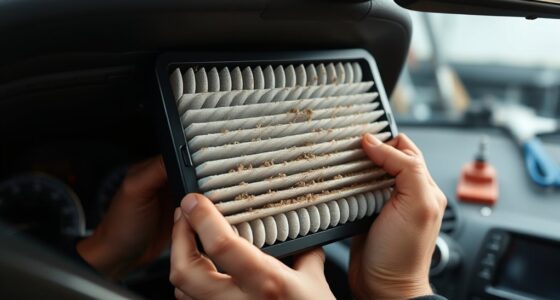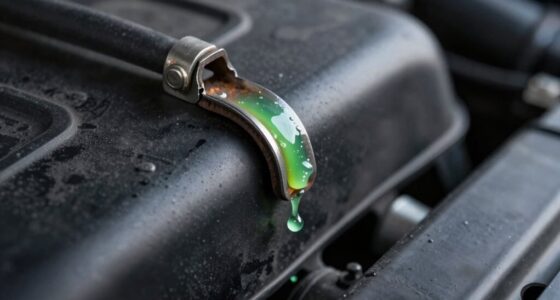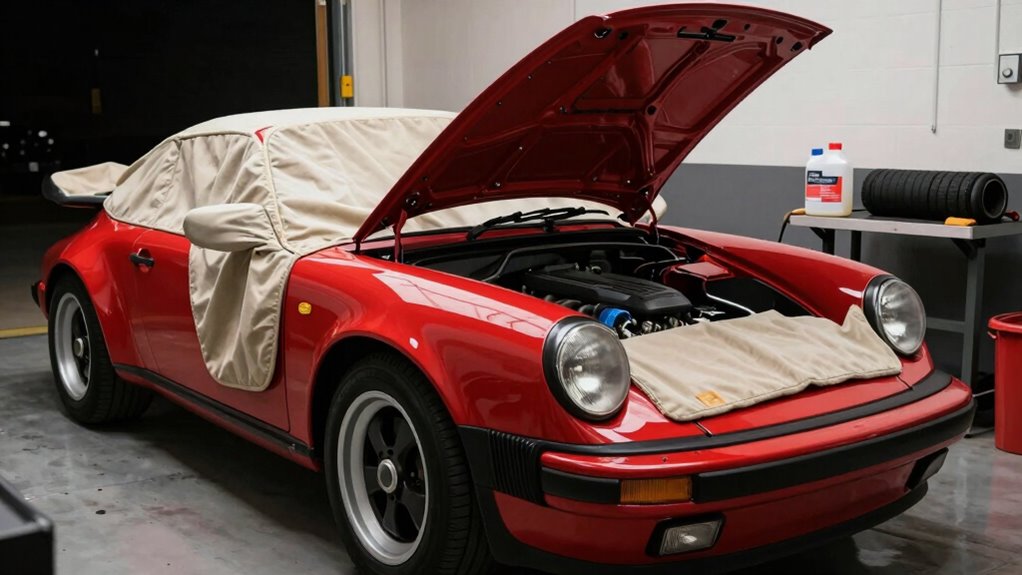

To prep your weekend car for long-term storage, start by cleaning and waxing the exterior, then fill the gas tank with a stabilizer to keep fuel fresh. Disconnect the battery or use a maintainer to prevent drain, and check tire pressure, inflating to the maximum recommended level. Cover the vehicle with a breathable cover in a cool, dry location, and protect tires with covers or stands. Regularly start the engine and inspect for pests or leaks to keep it in top shape. If you continue, you’ll learn even more tips to preserve your car.

Get business pricing on garage and car supplies
- Business-only prices and quantity discounts
- Tax-exempt purchasing
- Multiple users, one account, clear invoices
Key Takeaways
- Fully clean and wax the vehicle to protect the paint and remove debris before storage.
- Fill the fuel tank and add a stabilizer to prevent moisture and fuel degradation.
- Disconnect the battery or use a trickle charger to prevent parasitic drain.
- Inflate tires to maximum pressure and consider using jack stands to prevent flat spots.
- Store in a cool, dry, and well-ventilated area, covering with a breathable car cover for added protection.
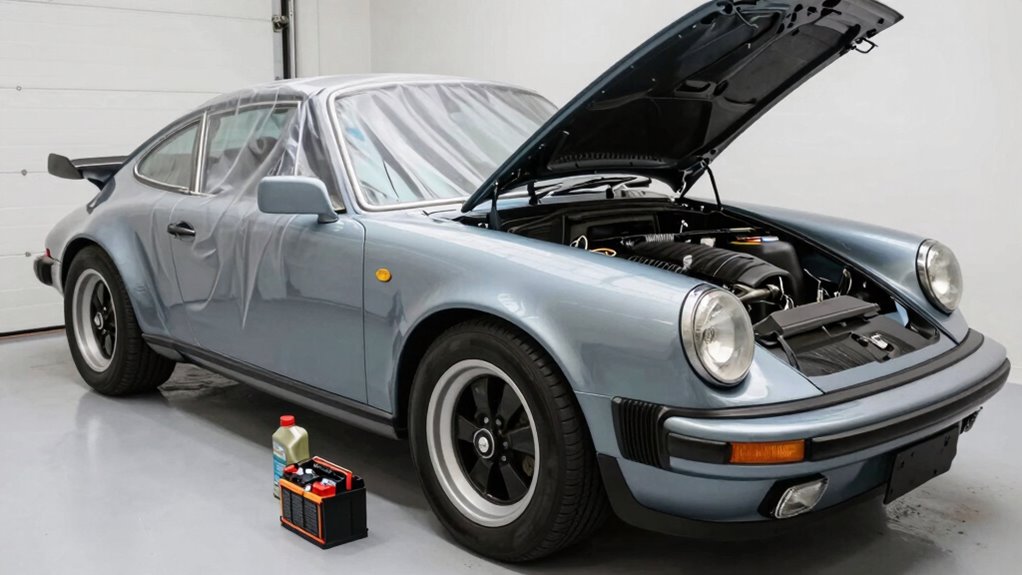
If you’re planning to store your weekend car for an extended period, proper preparation can prevent damage and keep it in good condition. One of your first priorities should be battery maintenance. A car battery can drain quickly when left unused for weeks or months. To prevent this, disconnect the negative terminal to avoid parasitic drain, or better yet, remove the battery entirely. If you choose to leave it in, connect it to a trickle charger or battery maintainer to keep it charged and healthy. This prevents sulfation and extends the battery’s lifespan, saving you from a dead battery when you’re ready to hit the road again. Regularly inspecting battery health can help identify issues early before they lead to failure.
Disconnect or remove the battery, and use a trickle charger to prevent draining and extend lifespan.
Tire preservation is equally important. Tires tend to develop flat spots when they sit in one position for a long time. To avoid this, inflate the tires to the maximum pressure recommended by the manufacturer, which helps maintain their shape and reduces flat spot risks. Consider placing the car on jack stands if you’re storing it for several months; this takes the weight off the tires altogether. If that’s not an option, regularly moving the car slightly—say, once a month—can help shift the tires, preventing uneven wear and flat spots. Covering the tires with a breathable cover also shields them from UV damage and ozone exposure, both of which can degrade rubber over time. Additionally, natural materials can be used for covers to further reduce chemical exposure and promote better breathability.
Beyond batteries and tires, you should also clean the car thoroughly and apply a coat of wax to protect the paint. Fill the fuel tank to prevent moisture buildup inside the tank and add a fuel stabilizer to keep the fuel fresh. Removing or covering the windshield wipers and sealing any vents or openings can prevent dust, pests, and moisture from entering the vehicle. Parking in a cool, dry garage is ideal, but if that’s not possible, use a high-quality car cover that’s breathable to prevent dust accumulation and moisture buildup. Additionally, understanding how long-term storage impacts vehicle components can help you better prepare your car for extended periods of inactivity.
Regular check-ins are crucial. Even if you’re not driving the car, inspecting it monthly allows you to catch issues early. Check tire pressures, battery condition, and look for signs of leaks or pests. Starting the engine briefly and letting it run for a few minutes every so often also keeps the moving parts lubricated and prevents seals from drying out. By taking these steps, you guarantee your weekend car stays in pristine condition, ready for your next adventure without costly repairs or deterioration.
car battery maintainer trickle charger
As an affiliate, we earn on qualifying purchases.
As an affiliate, we earn on qualifying purchases.
Frequently Asked Questions
Should I Disconnect the Car Battery for Long-Term Storage?
Yes, you should disconnect the car battery for long-term storage. Doing so helps with battery maintenance and prevents it from draining or becoming damaged over time. Disconnecting the battery also aids engine preservation by reducing the risk of electrical issues or corrosion. Make sure to clean the terminals before storage, and consider connecting a trickle charger if you want to keep the battery in good shape without fully disconnecting it.
What Type of Cover Is Best for Protecting the Car?
You need a cover that’s tougher than a superhero’s shield to keep your car pristine for years. Opt for a breathable, high-quality cover made from durable materials like polyester or polypropylene, which protect against dust, dirt, and moisture. Before covering, give your car a thorough car cleaning to remove all grime. This combo guarantees your vehicle stays spotless and well-preserved, no matter how long it’s stored.
How Often Should I Start the Car During Storage?
You should start your car at least once every two to four weeks during storage. This helps with battery maintenance and prevents the battery from dying. When you start it, let the engine run for about 15-20 minutes to circulate oil and keep components lubricated. Don’t forget to check the oil level and consider an oil change if it’s been several months since the last one. This keeps your car in good shape for when you need it.
Is It Necessary to Use a Fuel Stabilizer?
Yes, using a fuel stabilizer is necessary for fuel preservation during long-term storage. It prevents the fuel from breaking down, which can cause engine issues and gum buildup. By adding a stabilizer, you help maintain engine maintenance and guarantee your car starts smoothly when you’re ready to use it again. Always fill up the tank before storage, add the stabilizer, and run the engine briefly to circulate it.
How Do I Prevent Tire Flat Spots During Long Storage?
Think of your tires as delicate balloons; if left sitting, they can develop flat spots like craters on the moon. To prevent this, keep your tire pressure at recommended levels, filling them to the max if possible. Store your car in a cool, shaded location to avoid uneven heat buildup. This way, your tires stay round and healthy, ready to roll when you return.
long-term car storage breathable cover
As an affiliate, we earn on qualifying purchases.
As an affiliate, we earn on qualifying purchases.
Conclusion
By following these steps, you can guarantee your weekend car stays in top shape during long-term storage. Proper preparation might seem like a lot of effort now, but it’ll save you headaches later. Remember, a stitch in time saves nine—taking care of small details today prevents bigger problems tomorrow. When you’re ready to hit the road again, your car will be just as enthusiastic to go, ready to roll without a hitch.
As an affiliate, we earn on qualifying purchases.
As an affiliate, we earn on qualifying purchases.
Halloween Picks
halloween
As an affiliate, we earn on qualifying purchases.