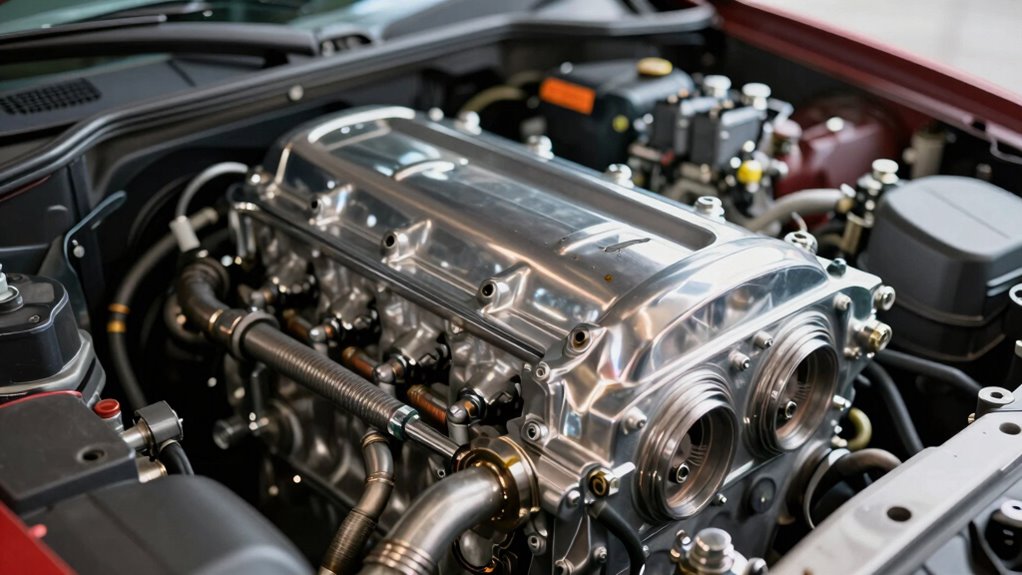

Engine flushes can be helpful if your engine is heavily sludged, contaminated, or performance has declined due to dirt buildup. They’re not necessary for new or regularly maintained engines and can risk dislodging debris that causes damage. Always assess your engine’s condition and consult trusted mechanics before deciding. Properly used, an engine flush can restore flow and lubrication. To learn more about safe, effective use and when they really make sense, keep exploring this topic.
Key Takeaways
- Engine flushes are beneficial mainly for severe sludge buildup or contamination, not routine maintenance.
- They can dislodge debris that may clog oil passages or damage engine components if misused.
- Consult the vehicle’s owner manual or a mechanic before opting for an engine flush.
- Regular oil changes typically eliminate the need for flushing in well-maintained engines.
- Use appropriate products and techniques, avoiding high-pressure methods that may cause damage.

Engine flushes are often marketed as a quick fix to improve your vehicle’s performance, but the truth is more nuanced. While they promise to clean out your engine, what they actually do can vary depending on your car’s condition. One key reason people consider an engine flush is to address oil contamination. Over time, engine oil collects dirt, debris, and tiny metal particles, which can impair lubrication and cause wear. An engine flush aims to clear out these contaminants, making it easier for fresh oil to circulate effectively. This process can be beneficial if your oil has become heavily contaminated or if you notice your engine isn’t running as smoothly as it used to.
Another purpose of engine flushes is sludge removal. Over thousands of miles, engine oil can break down and form sludge—thick, tar-like deposits that clog oil passages and hinder proper lubrication. When sludge builds up, it can cause engine parts to work harder and lead to decreased fuel efficiency or even engine damage. An engine flush can help dissolve and remove some of this sludge, restoring better flow within the engine. However, it’s important to understand that not every vehicle needs this treatment, and in some cases, a flush could do more harm than good. Understanding the limits of engine cleaning is crucial to avoiding unnecessary procedures and ensuring proper maintenance. Additionally, some appliance maintenance plans include inspections that can help identify sludge or contamination early before a flush becomes necessary.
If your engine has been neglected for a long time, or if you’ve recently switched to a different type of oil, a flush might help clean out old, sludge-laden oil. But if your engine is relatively new, or if you use quality oil and change it regularly, a flush may be unnecessary. In fact, forcing a flush into a healthy engine can sometimes loosen deposits that are better left alone, potentially causing blockages or dislodging particles that could damage sensitive components. Knowing when to flush can make all the difference in maintaining engine longevity. Properly assessing your vehicle’s condition can prevent unnecessary procedures and unnecessary costs. Additionally, understanding the philosophical insights on existence and ethics can help car owners approach maintenance decisions with more awareness and responsibility.
You should also consider the method used for the flush. Some products are straightforward, while others involve high-pressure techniques that could pose risks if your engine isn’t in good shape. Consulting your owner’s manual or a trusted mechanic can help determine if a flush makes sense for your specific vehicle. It’s also worth noting that understanding the limits of engine cleaning can help prevent unnecessary procedures. Ultimately, engine flushes are not a universal solution. They can be useful in certain situations—like severe sludge buildup or oil contamination—but should be approached with caution and proper guidance. When used appropriately, they can help maintain engine health; when used blindly, they might cause more harm than good.

Liqui Moly Pro-Line Engine Flush | 500 ml | Oil additive | SKU: 2037
Easy way to clean and flush the oil systems of gasoline and diesel engines
As an affiliate, we earn on qualifying purchases.
As an affiliate, we earn on qualifying purchases.
Frequently Asked Questions
Are Engine Flushes Suitable for All Vehicle Types?
Engine flushes aren’t suitable for all vehicle types. If your car uses synthetic oils or has an active engine warranty, consult your manufacturer’s recommendations first. Some vehicles with high mileage or delicate components might benefit from a flush, but others could experience damage. Always check your owner’s manual or speak with a trusted mechanic before proceeding, ensuring you don’t void warranties or compromise engine health.
How Often Should I Consider an Engine Flush?
When it comes to engine longevity, you shouldn’t wait until oil contamination builds up like clutter in a closet. Typically, consider an engine flush every 30,000 miles or during major oil changes, especially if you notice rough idling or decreased performance. Regular flushes help clear sludge and debris, keeping your engine running smoothly. But always consult your vehicle’s manual or a mechanic to tailor the timing to your car’s needs.
Can Engine Flushes Improve Fuel Efficiency?
Engine flushes can sometimes improve fuel efficiency if your engine’s performance has declined due to sludge buildup. By removing deposits, an engine flush helps maintain ideal fuel economy and smooth operation. However, if your engine is already clean, a flush may not make a noticeable difference. You should consider it if you notice reduced engine performance or after extensive oil changes to help sustain better fuel economy.
What Are the Risks of Neglecting Engine Sludge?
Neglecting engine sludge can lead to serious issues like reduced engine performance, overheating, and even engine failure. As oil degrades over time, sludge builds up, clogging essential components and impairing lubrication. This buildup increases wear and tear, causing costly repairs. Regular maintenance helps prevent oil degradation and sludge accumulation, ensuring your engine stays clean and runs smoothly. Ignoring these risks can shorten your engine’s lifespan considerably.
Do Engine Flush Products Vary in Quality?
Yes, engine flush products vary in quality, impacting how effectively they combat oil contamination and prevent engine wear. You might find some formulas that promise pristine operation but fall short in performance, risking damage. Higher-quality products use advanced agents to loosen sludge safely and clear harmful deposits. It’s wise to research and select trusted brands, ensuring your engine gets the best protection from inferior, ineffective solutions that could worsen the problem.

TRIAX Pro Engine Flush Oil-Based Deep Clean Motor Oil Flush Removes Sludge & Carbon | Non-Solvent | Safe for Engine, Seals, Injectors | Professional Shop Grade (16 oz – 473 ml)
Rapidly Dissolves Sludge & Deposits: Dissolves engine deposits from piston rings, bearings, valve train, and other lubricant-related parts,…
As an affiliate, we earn on qualifying purchases.
As an affiliate, we earn on qualifying purchases.
Conclusion
So, now you know the truth about engine flushes. They aren’t always necessary, and in many cases, they can do more harm than good. Only consider a flush if your engine shows clear signs of sludge buildup or has serious issues. Otherwise, sticking to regular oil changes and maintenance is your best bet. Trust your mechanic’s advice, and remember—sometimes, simple care beats complicated fixes every time.

Chevron Techron Concentrate Plus Fuel System Cleaner, 20 oz., Pack of 1
QUALITY ASSURED
As an affiliate, we earn on qualifying purchases.
As an affiliate, we earn on qualifying purchases.

Liqui Moly MoS2 Anti-Friction Engine Treatment | 300 ml | Oil additive | SKU: 2009
Motor oil additive – Liqui Moly MoS2 anti-friction (300 ml. Can).Fit Type: Universal
As an affiliate, we earn on qualifying purchases.
As an affiliate, we earn on qualifying purchases.