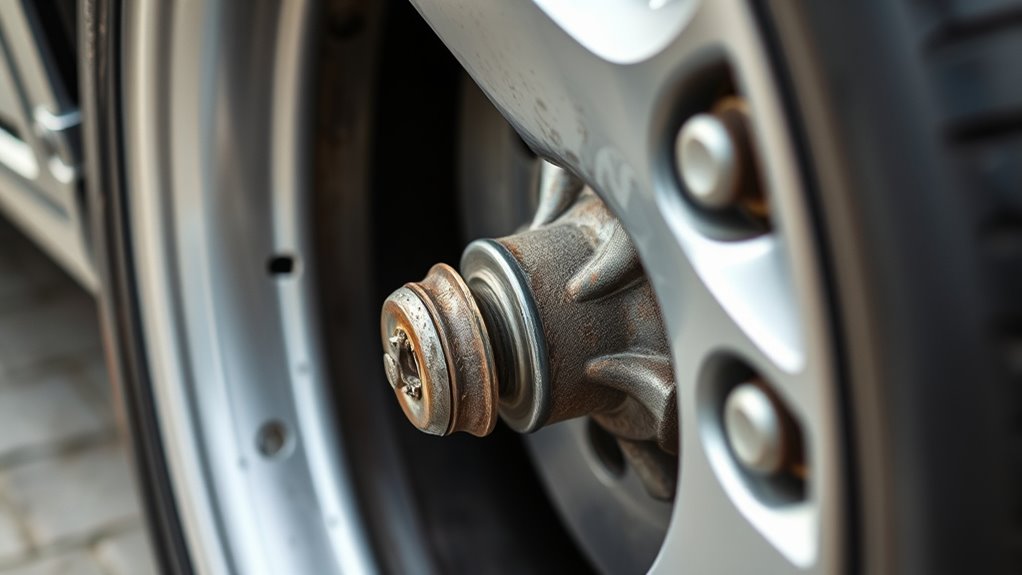

If you hear a clicking noise when turning, it likely means your CV joint is bad or worn out. This can happen from torn boots, dirt, or moisture getting inside, causing damage. You might also notice uneven tire wear or vibrations. To fix it, have a mechanic inspect the CV joints, replace any damaged parts, or get a wheel alignment if needed. Continuing with the problem could lead to more damage—learn more to keep your vehicle safe.
Key Takeaways
- A clicking noise during turns often indicates a bad or worn CV joint.
- Damaged CV joints can cause vibrations, loss of control, and eventual joint failure.
- Inspect the CV joint boot for tears or cracks to identify contamination or damage.
- Replacing the faulty CV joint or boot restores proper function and eliminates noise.
- Regular maintenance and early replacement prevent further damage and costly repairs.
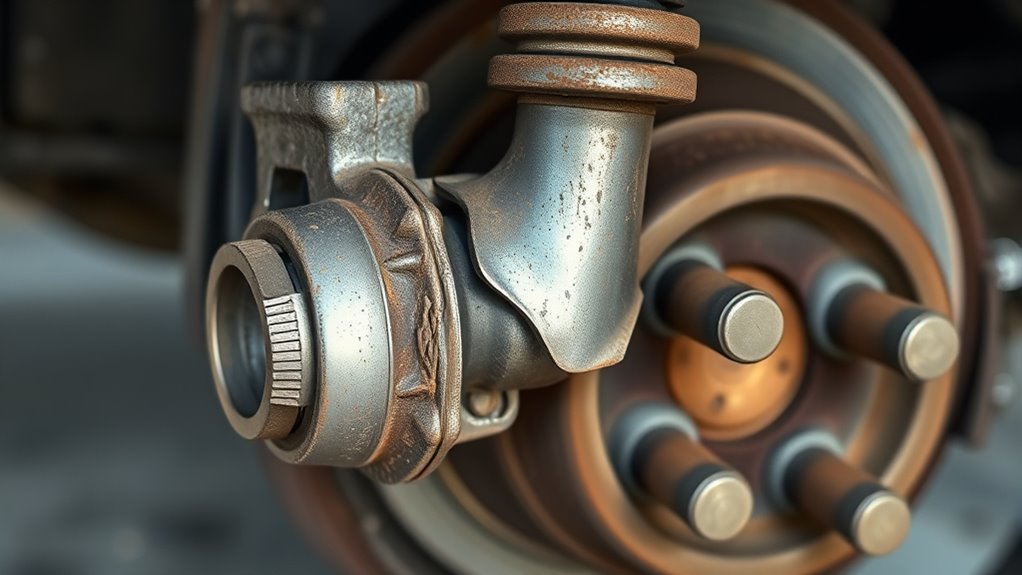
If you hear a clicking noise when turning your vehicle, it’s a sign that something might be wrong with your steering or suspension system. Most often, this noise points to issues with your CV joints or other components that help your wheels move smoothly through turns. One common cause is a bad CV joint, which can produce a distinct clicking or popping sound, especially during tight turns. But before jumping to conclusions, consider whether your wheel alignment is off or if your power steering system is functioning properly. Both can contribute to unusual noises and handling problems.
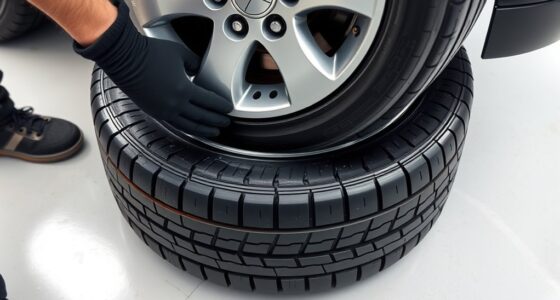
Your wheel alignment plays a vital role in how your car responds when you turn. If the alignment is off, your wheels aren’t pointing in the right direction, causing uneven tire wear and increased strain on suspension parts. This misalignment can lead to clicking sounds because the tires and suspension components aren’t moving in sync. Regular wheel alignment checks and adjustments can prevent or mitigate these issues, ensuring your vehicle handles as it should. Proper alignment also reduces stress on your power steering system, making turns smoother and quieter.
Proper wheel alignment ensures smooth turns, reduces tire wear, and minimizes suspension and steering noise.
Power steering is another key factor. If there’s a problem with your power steering fluid, pump, or belt, you might notice noises when turning, sometimes accompanied by a stiff or jerky steering feel. Low fluid levels or a failing power steering pump can cause a whining or clicking noise, which might be mistaken for CV joint problems. Ensuring your power steering system is topped off, and inspecting for leaks or worn belts, can eliminate these sounds and improve overall steering performance.
When it comes to fixing a clicking noise while turning, start with a visual inspection of your CV joints and steering components. If you notice torn or cracked CV boot covers, dirt and moisture likely have contaminated the joint, leading to premature wear. Replacing the CV joint or boot is essential to prevent further damage. Additionally, have your wheel alignment checked and corrected if needed. Proper alignment not only reduces noise but also enhances your vehicle’s handling and tire longevity.
If the clicking persists after addressing alignment and steering issues, it’s time to think about the condition of your CV joints. A bad CV joint often exhibits noticeable play, clicking during turns, and sometimes vibrations. Replacing a worn CV joint can restore smoothness and eliminate the noise. Remember, neglecting these symptoms can lead to more severe suspension damage or a complete failure of the joint, leaving you stranded.
In essence, a clicking noise when turning is your vehicle’s way of signaling trouble. Whether it’s a misaligned wheel, a failing power steering system, or a worn CV joint, diagnosing and fixing the problem promptly helps keep you safe on the road. Regular maintenance, including wheel alignment checks and steering system inspections, can prevent many of these issues from developing into costly repairs. Additionally, understanding how high-quality projectors work can be beneficial if you’re looking to upgrade your home entertainment system and avoid noise issues caused by improper setup or incompatible components.
Frequently Asked Questions
Can a Bad CV Joint Cause Steering Problems?
Yes, a bad CV joint can cause steering problems. When it’s worn, it may lead to poor steering alignment, making your vehicle feel unstable or hard to control. You might also notice suspension noise, especially when turning. Addressing the issue promptly helps maintain safe steering and smooth handling. If you experience these symptoms, get your CV joint inspected and repaired to avoid further damage and guarantee the best steering performance.
How Long Can I Drive With a Clicking CV Joint?
Imagine driving with a worn CV joint that causes a noticeable clicking noise when turning. You shouldn’t drive long with a bad CV joint because it can worsen, leading to drivetrain noise and suspension issues. Typically, you might get a few hundred miles, but it’s risky. The best move is to have it inspected and replaced soon, preventing costly damage and unsafe driving conditions.
Are There Temporary Fixes for a Clicking CV Joint?
Yes, there are temporary solutions and DIY fixes for a clicking CV joint. You can apply a high-quality CV joint grease or spray a silicone-based lubricant to reduce noise temporarily. Some people use zip ties or tape to secure loose parts, but these are only short-term fixes. Keep in mind, these don’t replace professional repairs, and driving with a faulty CV joint risks further damage or breakdown, so plan for a proper repair soon.
What Are the Costs to Replace a CV Joint?
Suppose you need to replace a CV joint; the cost estimate typically ranges from $300 to $800 depending on your vehicle. During the replacement process, a mechanic disassembles the axle, replaces the faulty joint, and reassembles everything securely. You may pay for parts and labor separately. Keep in mind, the exact cost varies based on your car’s make, model, and location, so get a detailed quote first.
Can a Clicking Noise Indicate Other Vehicle Issues?
A clicking noise can indicate issues beyond a bad CV joint, like wheel alignment problems or brake noise. If your wheels aren’t properly aligned, they might produce clicking sounds when turning, and worn brake components can also create unusual noises. You should inspect your vehicle promptly to identify the cause, as ignoring these sounds could lead to more significant issues or unsafe driving conditions.
Conclusion
If you hear that clicking noise when turning, don’t ignore it—think of it as your car’s cry for help. Addressing a bad CV joint early can save you from costly repairs and keep your drives smooth and safe. Remember, a ticking time bomb is still a bomb; so, when that click starts, take action. Your vehicle’s health depends on your quick response—because silence isn’t just golden, it’s essential.