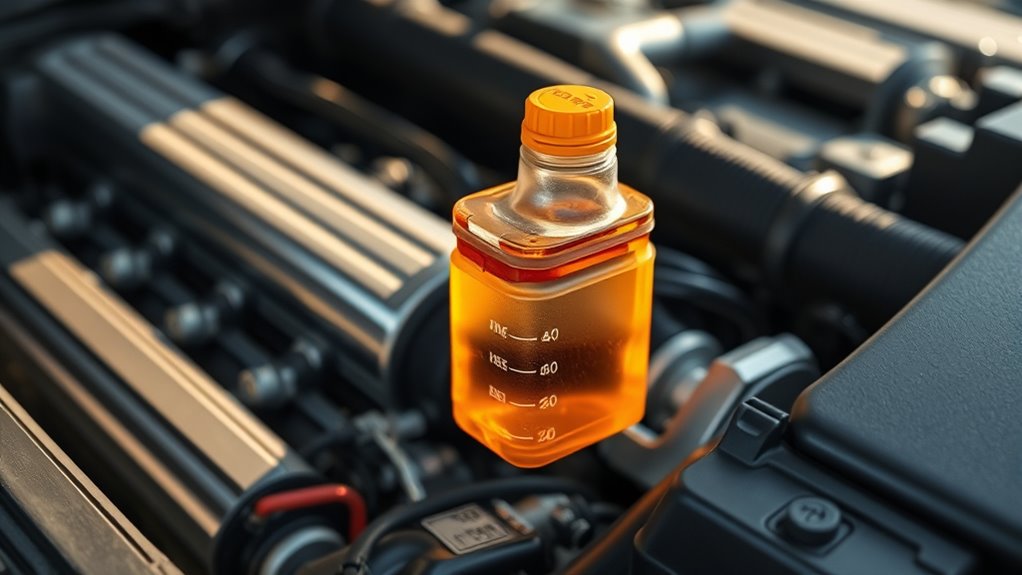
Brake fluid needs changing regularly to keep your vehicle’s braking system safe and effective because it can absorb moisture and dirt over time, which lowers its boiling point and causes corrosion. Most experts recommend replacing it every two years or every 24,000 miles, especially if you drive in harsh conditions. To do it safely, flush out the old fluid completely and use the correct type specified for your vehicle. Continue exploring to learn more about proper maintenance.
Key Takeaways
- Brake fluid absorbs moisture over time, lowering its boiling point and reducing braking effectiveness.
- Regularly changing brake fluid prevents corrosion, dirt buildup, and hydraulic system blockages.
- Most vehicles require brake fluid replacement every two years or 24,000 miles, but check manufacturer guidelines.
- Flushing and replacing brake fluid safely involves bleeding the system to remove old fluid and air.
- Routine brake fluid maintenance ensures consistent braking performance and enhances vehicle safety.
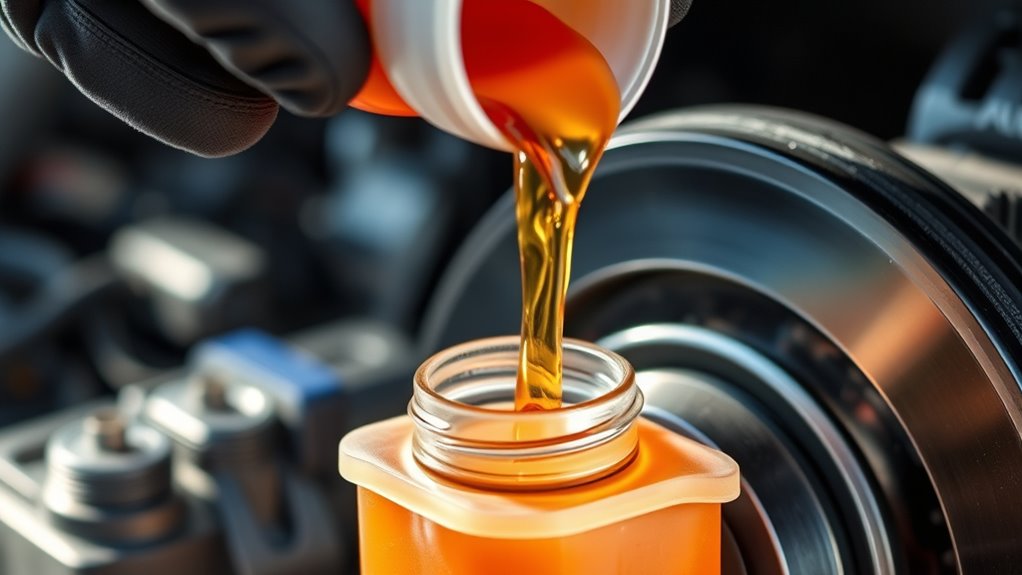
Have you ever wondered why regular brake fluid changes are vital for your vehicle’s safety? The answer lies in understanding how brake fluid functions and what happens over time. Brake fluid is a hydraulic fluid that transfers force from your brake pedal to the brake components, allowing you to stop smoothly and effectively. However, as you drive, brake fluid can become contaminated with moisture, dirt, and debris, which compromises its performance. This contamination can lead to corrosion inside the brake system, reduce braking efficiency, and even cause brake failure in extreme cases. That’s why brake system maintenance isn’t just about checking pads and rotors; it also involves guaranteeing your brake fluid remains clean and effective.
Brake fluid contamination is one of the main reasons you need to change your brake fluid regularly. Over time, moisture from the air naturally seeps into the brake lines, diluting the fluid and lowering its boiling point. When brake fluid boils, it creates vapor pockets that compress under pressure, resulting in a spongy brake pedal or, worse, total brake failure. Dirt and debris can also accumulate within the fluid, clogging small passages and impairing the hydraulic system. These issues aren’t always visible, making routine brake fluid changes vital for maintaining peak brake system performance. Ignoring these maintenance requirements can lead to costly repairs or dangerous driving conditions. Regularly checking for signs of brake fluid degradation can help prevent unexpected brake issues.
How often you should change your brake fluid depends on your vehicle and driving habits, but a common guideline is every two years or around 24,000 miles. Some manufacturers recommend more frequent changes, especially if you frequently drive in harsh conditions like heavy traffic, mountainous terrain, or humid environments where moisture buildup is quicker. Checking your owner’s manual provides specific recommendations for your vehicle. When you schedule a brake fluid change, it’s important to have it done properly by a qualified mechanic who can flush out the old fluid and replace it with fresh, high-quality brake fluid. This process guarantees that all contaminated fluid is removed from the system, reducing the risk of brake fluid contamination and guaranteeing your brakes perform reliably whenever you need them.
Incorporating regular brake system maintenance into your vehicle care routine isn’t just about avoiding repairs; it’s about keeping yourself and others safe on the road. By understanding the importance of timely brake fluid changes, you’re taking a proactive step toward safer driving. Don’t wait until you notice a brake problem—schedule routine brake fluid inspections and changes, and trust that your vehicle’s braking system will perform as it should, providing you with peace of mind every time you press the pedal.
As an affiliate, we earn on qualifying purchases.
Frequently Asked Questions
Can I Change Brake Fluid Myself Without Professional Tools?
You can change brake fluid yourself, but you need the right tools and prioritize DIY safety. Basic tools like a wrench, a clear container, and a brake bleeder kit are essential. Be cautious, follow instructions carefully, and wear safety gear to avoid injuries. If you’re unsure or lack experience, it’s better to consult a professional. Proper technique guarantees safety and prevents damage to your vehicle’s braking system.
What Are the Signs of Contaminated or Degraded Brake Fluid?
You’ll notice brake fluid contamination if your brake pedal feels spongy or sinks slowly when pressed. Brake fluid degradation can cause a decrease in braking performance or a longer stopping distance. Look for dark, cloudy fluid or a burnt smell around the reservoir. If you experience any of these signs, it’s time to replace or flush your brake fluid to guarantee your braking system stays safe and effective.
Is There a Specific Type of Brake Fluid Recommended for My Vehicle?
You should use brake fluid that matches your vehicle’s specifications for essential performance. Check your owner’s manual for the recommended brake fluid type, whether DOT 3, DOT 4, or DOT 5. Ensuring vehicle compatibility is vital to maintain safety and efficiency. Always select a high-quality fluid that meets or exceeds your manufacturer’s standards, and be cautious to avoid using incompatible types that could damage your braking system.
How Long Does a Typical Brake Fluid Change Take?
A typical brake fluid service usually takes about 30 to 45 minutes, giving you just enough time to imagine your car’s brakes as tiny, overworked superheroes sipping energy drinks. During this replacement duration, your mechanic flushes out the old fluid and refills with fresh stuff, ensuring your brakes stay responsive. Don’t worry—it’s quick, efficient, and essential for safe stopping power, so you can keep imagining those heroes saving the day.
Are There Risks Associated With Delaying the Brake Fluid Replacement?
Delaying brake fluid replacement can lead to serious risks like brake failure and increased stopping distance. Over time, moisture buildup in the fluid can cause corrosion and reduce its effectiveness, making your brakes less responsive. If you ignore these signs, you might experience brake failure during an emergency, putting you and others in danger. Regularly changing your brake fluid ensures peak performance and safety on the road.
As an affiliate, we earn on qualifying purchases.
Conclusion
Think of your brake fluid like the heartbeat of your car’s safety system—when it’s neglected, everything else suffers. I once ignored mine, and on a rainy day, my brakes hesitated just enough to make me panic. Regularly changing your brake fluid is like giving your car a fresh set of lungs, ensuring it breathes smoothly and keeps you safe. Don’t wait for a warning; stay proactive and keep that essential “heartbeat” strong.

CHUMXINY Brake Bleed Kit for SHIMANO, TEKTRO Hydraulic Disc Brakes, Including High Performance Mineral Brake Fluid (120ml)
- Fluid Capacity: Two 60ml bottles of mineral oil
- Complete Bleed Kit: Includes gloves, fasteners, adapters, funnel, and injectors
- Wide Compatibility: Suitable for brake models from 2000 to 2021
As an affiliate, we earn on qualifying purchases.
As an affiliate, we earn on qualifying purchases.
As an affiliate, we earn on qualifying purchases.