To prevent mold and mildew in your car interior, keep the area dry and well ventilated by regularly cleaning carpets, upholstery, and hidden spots. Fix leaks quickly and avoid spills that can cause moisture buildup. Use moisture absorbers, run the AC or heater to dry damp areas, and replace cabin air filters periodically. For effective cleanup, wear gloves, use vinegar or mold cleaners, and guarantee everything is thoroughly dried. Discover more tips to keep your car fresh and mold-free.

Get business pricing on garage and car supplies
- Business-only prices and quantity discounts
- Tax-exempt purchasing
- Multiple users, one account, clear invoices
Key Takeaways
- Regularly clean the interior and address leaks or dampness promptly to prevent mold growth.
- Use natural solutions like vinegar and water on hard surfaces to inhibit mold development.
- Improve ventilation by opening windows and avoiding recirculation to reduce moisture buildup.
- Dry all cleaned areas thoroughly with towels and airflow to eliminate residual moisture.
- Maintain proper humidity levels with dehumidifiers and replace cabin air filters regularly.
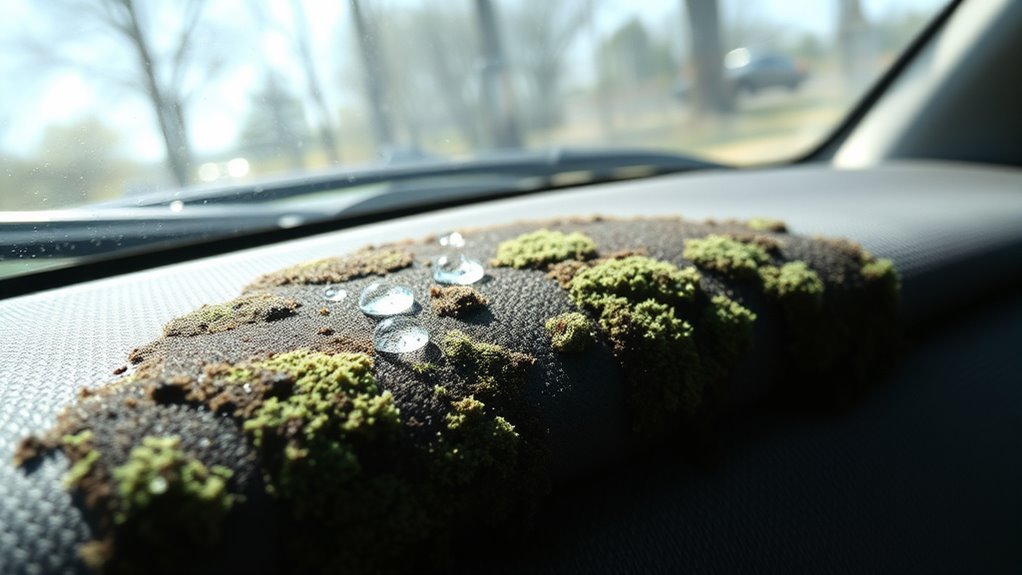
Mold and mildew can quickly become a problem inside your car if moisture gets trapped and isn’t properly dried. When this happens, your car’s interior air quality suffers, leading to unpleasant odors and potential health risks. To prevent this, regular interior cleaning is essential. Start by inspecting your vehicle for any signs of dampness or water intrusion, especially after heavy rain or spills. Cleaning your car’s interior with appropriate disinfectants and moisture-absorbing products helps eliminate existing mold spores and discourages new growth. Pay close attention to carpets, upholstery, and hidden areas like under seats and around vents, where moisture tends to accumulate.
One of the most effective ways to improve your car air quality and prevent mold growth is to control humidity levels inside your vehicle. Use dehumidifiers or moisture absorbers, especially during humid weather or if your car tends to stay damp. Making certain that proper ventilation is also key—whenever possible, keep windows slightly open or run the air conditioning with the recirculate function off to promote air circulation and dry out damp areas. Regularly replacing cabin air filters can further improve air quality and reduce the likelihood of mold spores circulating through your vehicle’s ventilation system. Additionally, understanding the ventilation considerations in your vehicle can help optimize airflow and reduce moisture buildup.
If you notice any mold or mildew, it’s imperative to act quickly. Start by wearing gloves and a mask to avoid inhaling spores. Use a mixture of water and a mild detergent or a specialized mold cleaner to scrub affected areas thoroughly. For fabric surfaces, a steam cleaner can be effective at killing mold and removing odors. For hard surfaces like plastic or vinyl, a solution of vinegar and water works well, as vinegar is a natural mold inhibitor. After cleaning, make sure to dry everything completely—use towels to blot excess moisture and leave windows or doors open to air out the interior. Running the car’s heater or air conditioning can also help dry out hidden moisture.
Consistent maintenance is vital to keep mold and mildew at bay. Regular interior cleaning, combined with moisture control and good ventilation practices, will help preserve your car’s air quality and interior condition. Remember, mold thrives in damp, dark spaces, so staying vigilant about spills, leaks, and humidity is your best defense. By taking proactive steps, you guarantee a healthier, fresher environment inside your vehicle and extend the life of its interior components.
As an affiliate, we earn on qualifying purchases.
Frequently Asked Questions
Can Mold and Mildew Cause Health Issues Inside My Car?
Yes, mold and mildew can cause health issues inside your car. They produce spores that you breathe in, which may lead to allergies, respiratory problems, or asthma. To reduce risks, make sure your car ventilation system is working properly and keep interior humidity low. Regularly cleaning and ventilating your car helps prevent mold growth, ensuring a healthier environment for you and your passengers.
What Are the Best Natural Remedies for Mold Removal?
Think of mold as unwelcome guests in your car that you can politely show the door. You can use natural remedies like essential oils—tea tree or eucalyptus—to mask odors and inhibit mold growth. Baking soda acts like a sponge, absorbing moisture and odors. Mix baking soda with water, spray onto affected areas, then add a few drops of essential oil. Let it sit, then wipe away to restore freshness naturally.
How Often Should I Inspect My Car for Mold?
You should inspect your car for mold at least once a month as part of your regular car maintenance. Regular inspections help catch any signs of mold early, especially after heavy rain or spills. Incorporate mold checks into your cleaning schedule to prevent buildup. Pay attention to hidden areas like under seats and in vents, and address any issues promptly to keep your car interior clean and healthy.
Are There Specific Car Models More Prone to Mold?
Some car models are more susceptible to mold, especially those with poor ventilation or higher humidity levels inside. Mold-prone vehicles often include older models, convertibles, and cars with damaged seals or leaks. If you drive a vehicle with these features, you’re at a higher risk. Regular inspections and proper maintenance can help reduce mold buildup, but being aware of your car’s susceptibility allows you to take proactive steps to prevent mold growth.
Can Air Purifiers Effectively Prevent Mold Growth?
Air purifier effectiveness varies, but it can help prevent mold growth if it features a HEPA filter and addresses humidity issues. While an air purifier alone isn’t enough for mold prevention strategies, it reduces airborne mold spores, lowering the risk of mold taking hold. To maximize protection, combine an air purifier with proper ventilation, regular cleaning, and controlling moisture inside your car. This combined approach offers the best defense against mold growth.
car dehumidifier for moisture control
As an affiliate, we earn on qualifying purchases.
As an affiliate, we earn on qualifying purchases.
Conclusion
If you ignore mold and mildew in your car, the damage could be more than just unsightly stains. Left unchecked, they can spread silently, affecting your health and the vehicle’s interior. But with quick action, you can prevent a nightmare from unfolding. Don’t wait until it’s too late—stay vigilant, clean regularly, and keep moisture at bay. Your car’s future—and your well-being—depend on what you do next. Will you act now or regret it later?
cabin air filter replacement kit
As an affiliate, we earn on qualifying purchases.
As an affiliate, we earn on qualifying purchases.
As an affiliate, we earn on qualifying purchases.
Fall Picks
fall essentials
As an affiliate, we earn on qualifying purchases.