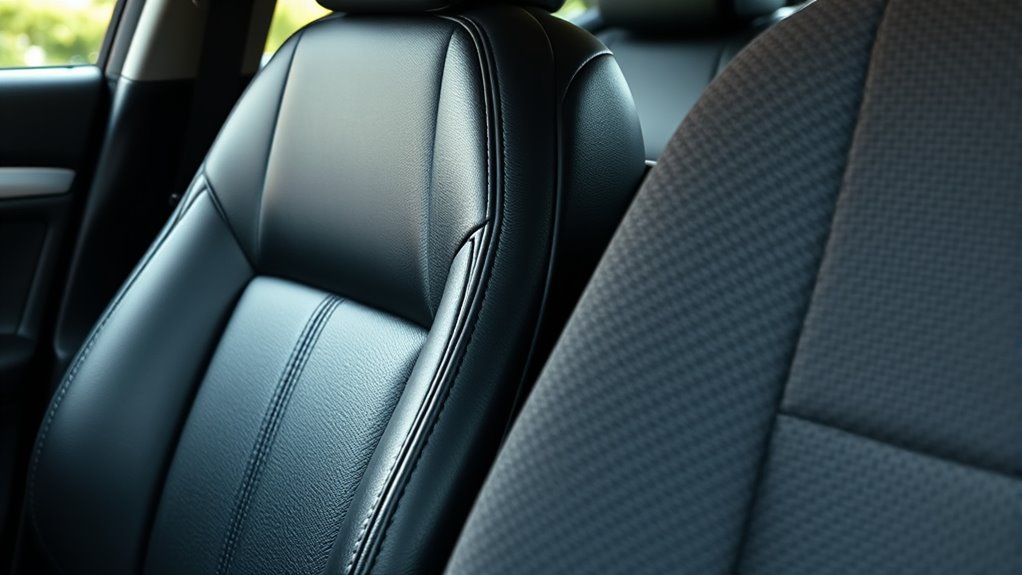

If you prefer luxury and easy cleaning, leather seats might suit you best, but they can get hot or cold and need regular care. Cloth seats offer better breathability and comfort in varying climates, with easier maintenance, especially if you have allergies or pets. While leather lasts longer and looks sleek, they tend to cost more upfront. To weigh durability, comfort, and budget, explore more about each option’s pros and cons for your lifestyle.
Key Takeaways
- Leather seats offer a luxurious feel but can get hot or cold with temperature changes, while cloth seats are more breathable and comfortable in varying climates.
- Leather requires regular cleaning and maintenance to prevent damage, whereas cloth seats need frequent vacuuming and stain treatment.
- Leather is generally more durable and resistant to wear, but it may be affected by extreme temperatures, unlike cloth which is softer and more breathable.
- Leather seats tend to have higher upfront costs but may save money long-term due to better longevity; cloth seats are more budget-friendly initially.
- Leather provides a sleek, premium aesthetic, whereas cloth offers a wider range of colors and textures for personalization.
Comfort and Feel: How Leather and Cloth Compare

When it comes to comfort and feel, leather and cloth seats offer distinctly different experiences. Leather seats tend to feel luxurious and smooth, giving a premium vibe, but they can get hot in summer and cold in winter, affecting temperature regulation. Cloth seats, on the other hand, usually feel softer and more breathable, helping you stay comfortable in varying climates. If you have allergy considerations, cloth seats might be better since they don’t trap dust and allergens as easily as leather can. Leather’s surface can attract pet hair and dust, making allergies worse if not cleaned regularly. Additionally, there are fabric decorating markers available that can be used to customize cloth seats and add a personal touch. Proper seat maintenance can help extend the life of both types of upholstery and maintain comfort. Regular cleaning with appropriate cleaning products is essential for preserving the appearance and hygiene of your seats. To further improve comfort, some vehicle owners opt for seat covers that can protect and enhance the interior. Using professional cleaning services can also help remove accumulated allergens and keep the seats in optimal condition. Ultimately, your choice depends on your comfort preferences and how you handle temperature changes and allergy concerns in your vehicle.
Maintenance and Cleaning Considerations

Maintaining and cleaning leather and cloth seats requires different approaches to keep them looking their best. For leather, regular dusting and wiping with a damp cloth prevent dirt buildup, and using a leather cleaner helps with stain removal. You should clean leather seats every few months or as needed, especially after spills. Proper cleaning methods are essential to prevent damage and ensure longevity. Leather seats are usually easier to wipe clean, while cloth seats demand more attention to prevent stains from setting. Regular vacuuming helps remove loose dirt and debris from cloth seats and is important for maintaining fabric integrity. Deep cleaning might be necessary periodically for cloth seats to remove embedded dirt and stains. Incorporating regular maintenance routines can significantly extend the lifespan of both types of seats. Additionally, selecting appropriate cleaning products tailored to each material can further protect your seats from wear and tear. Employing protective treatments designed specifically for each surface can also help maintain their appearance over time.
Durability and Longevity of Each Material
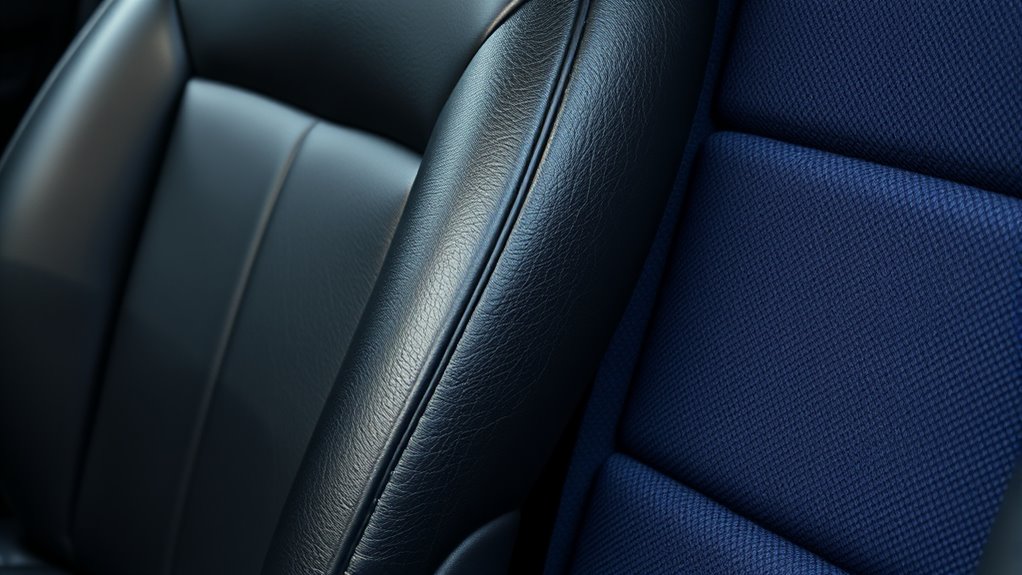
Leather seats are generally more durable and tend to age better over time, resisting wear and tear when properly maintained. They offer excellent resistance to stains, making spills easier to clean and less likely to cause permanent damage. Leather also maintains its appearance longer, even after years of use. However, its breathability and temperature regulation can vary; leather can become hot in summer and cold in winter, which may impact longevity if not cared for properly. Proper maintenance practices can significantly extend the lifespan of leather upholstery, ensuring it remains in good condition longer. Additionally, eco-friendly accommodations are increasingly popular, emphasizing sustainable materials and practices that can also extend the lifespan of vehicle interiors by promoting environmentally conscious choices. The choice of material can also influence the cost of maintenance, with leather often requiring specific products to preserve its quality. Being aware of regulatory standards for automotive materials can help ensure the longevity and safety of leather seats. Regular conditioning and cleaning with appropriate products can further preserve the leather’s resilience and appearance over time.
Cost Factors and Budget Implications

Choosing between leather and cloth car seats often hinges on budget considerations, as their costs can vary remarkably. Leather seats typically come with higher pricing differences, making them a more expensive investment upfront. However, premium leather options may offer better resale value over time. Cloth seats are generally more budget-friendly options, with lower initial costs that appeal to many drivers. If you’re on a strict budget, cloth can be a practical choice without sacrificing comfort. Keep in mind that maintenance and longevity can influence overall costs, so weigh these factors alongside the initial price. While leather may cost more initially, its durability might offset expenses in the long run. Additionally, family photoshoot fails and pet antics can sometimes be a concern for leather seats, as they may require more careful cleaning. Considering the long-term costs associated with each type can help you make a more informed decision. For example, the wear and tear of seats over time can significantly affect their lifespan and appearance. Proper upholstery care can extend the life of both leather and cloth seats, impacting their overall value. Moreover, understanding the cost factors involved in maintenance and repair can help you better anticipate future expenses. Ultimately, your budget will play a key role in determining the best fit for your vehicle.
Style and Aesthetic Appeal
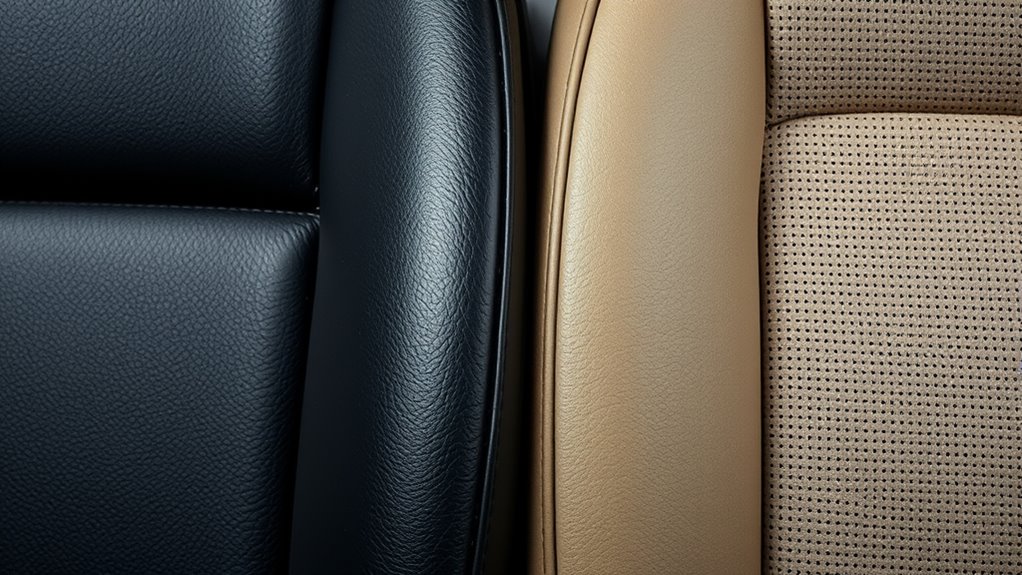
When considering the visual impact of your vehicle’s interior, style and aesthetic appeal become significant factors. Leather seats often exude a sleek, luxurious look, offering a refined texture variety that enhances sophistication. They typically come in classic color options like black, beige, or gray, which blend seamlessly with various interior designs. Cloth seats, on the other hand, provide a broader range of color options and textures, allowing you to personalize your car’s appearance more boldly. The textured fabric can bring a casual, comfortable vibe, while also offering more flexibility for unique color schemes. Additionally, the aesthetic appeal of the materials can influence the overall ambiance of your vehicle’s interior. The choice between leather and cloth can also impact the perceived luxury level of your car’s interior, which may influence your overall satisfaction. Moreover, interior customization options play a role in how well your vehicle reflects your personal style and preferences. Ultimately, your choice depends on whether you prioritize a polished, upscale look or prefer a more colorful, versatile interior that reflects your personal style.
Frequently Asked Questions
Which Material Is Better for Hot or Cold Climates?
Cloth seats are better for hot climates because they offer improved temperature regulation and climate suitability, keeping you cooler in the summer. Leather seats tend to get hot and sticky, making them uncomfortable in high temperatures. In cold weather, leather can warm up quickly and feels cozy, giving it an advantage. So, for hot or cold climates, cloth is more comfortable in heat, while leather suits cooler conditions better.
How Do Leather and Cloth Seats Affect Interior Noise Levels?
Leather seats tend to amplify interior noise, reducing sound insulation and making the cabin less quiet. Cloth seats, on the other hand, absorb sound better, enhancing cabin quietness. If you prioritize a quieter ride, cloth seats are a better choice because they help dampen noise, creating a more peaceful environment. Leather’s reflective surface can increase noise levels, so consider your preference for sound insulation when choosing your seats.
Are There Allergy Concerns Associated With Either Material?
Imagine you’re sneezing every time you sit in your car—that’s allergy triggers from material sensitivities. Both leather and cloth seats can harbor dust, mold, or pet dander, affecting allergy sufferers. Leather is less likely to trap allergens, making it a better choice if you’re sensitive. However, if you’re allergic to dyes or chemical treatments used in leather, cloth might be safer. Always consider your specific allergies when choosing seats.
Can Seat Covers Improve the Longevity of Cloth or Leather Seats?
Yes, seat covers can improve the longevity of your cloth or leather seats. Proper seat cover maintenance protects against wear, spills, and UV damage. To get the best results, choose covers compatible with your seat material, ensuring they fit well and don’t cause damage. Regular cleaning and inspections help maintain their effectiveness, keeping your seats looking newer longer and preserving their comfort and appearance over time.
How Do Leather and Cloth Seats Impact Resale Value?
You might be surprised how much seats influence your car’s resale value. Leather seats often boost resale value because of their perceived luxury and material durability, appealing to buyers seeking upscale features. Cloth seats, while generally less expensive, can sometimes detract from resale value if they show wear. Ultimately, your choice impacts resale factors, so consider how each material aligns with your vehicle’s condition and target market.
Conclusion
Ultimately, choosing between leather and cloth seats shapes your driving experience like a well-tailored suit or a cozy sweater. Picture slipping into seats that feel cool and smooth or soft and inviting—each offers its own charm. Think about the care you’ll give and the style you crave. Whichever you pick, make sure it turns your car’s interior into a space you love to sit in, day after day, mile after mile.