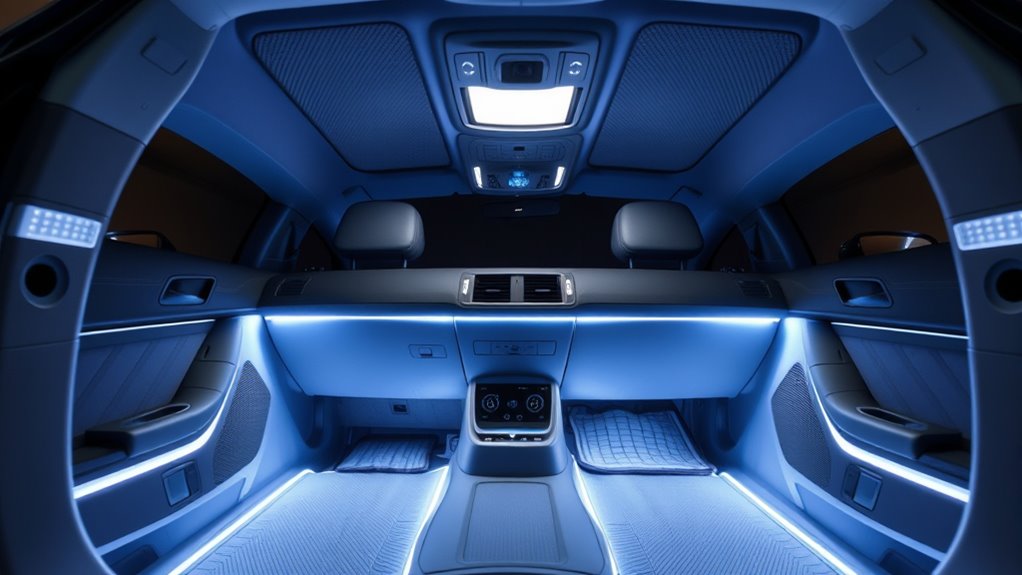

Upgrading your car’s dome and footwell lights with DIY wireless LED kits is simple and customizable. You can attach adhesive strips or modules without wiring modifications, then connect the wireless receiver to a power source like the cigarette lighter or fuse box. Use a remote or smartphone app to easily change colors, brightness, or create effects like fading or flashing. If you want to explore step-by-step instructions and helpful tips, you’ll find plenty more inside.

Get business pricing on garage and car supplies
- Business-only prices and quantity discounts
- Tax-exempt purchasing
- Multiple users, one account, clear invoices
Key Takeaways
- Choose wireless LED kits for easy, wiring-free installation in dome and footwell areas.
- Use adhesive-backed LED strips for quick attachment without complex modifications.
- Control lighting via remote or smartphone app for instant color and brightness adjustments.
- Reposition lights easily to customize your vehicle’s interior ambiance without rewiring.
- Follow safety steps like disconnecting power before installation for a hassle-free upgrade.
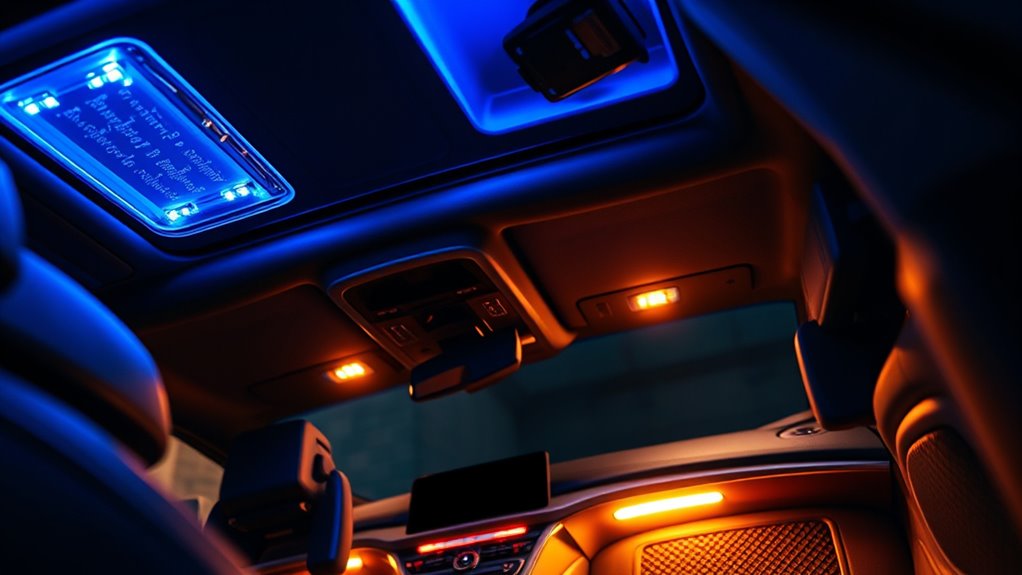
Creating your own LED lighting setup is a rewarding way to customize your space while saving money. When upgrading your car’s dome and footwell lights, one of the best ways to do this is through DIY LED projects. The process isn’t complicated, especially when you opt for wireless installation options. Wireless LED kits eliminate the need for complex wiring, making the installation process much smoother and more accessible for beginners. With wireless controls, you can easily turn your lights on or off, adjust brightness, or even change colors without crawling under the dash or dealing with tangled wires.
DIY wireless LED upgrades make vehicle lighting easy, customizable, and hassle-free for all skill levels.
Color customization is another major benefit when you choose LED upgrades for your car. Instead of sticking with standard white or yellow lighting, you can select from a spectrum of colors to match your style or mood. Many LED kits come with remote controls or smartphone apps, allowing you to switch colors instantly or set them to cycle through a range of hues. This flexibility lets you create a personalized ambiance inside your vehicle, whether you want a subtle glow for late-night drives or vibrant colors for car shows.
When installing your new LEDs, start by disconnecting your vehicle’s power to ensure safety. For wireless installation, most kits come with adhesive-backed LED strips or modules that attach easily to your existing dome or footwell areas. You won’t need to cut into wiring harnesses or use soldering tools, which makes the process faster and less intimidating. Once the LEDs are in place, connect the wireless receiver to your power source, usually via the cigarette lighter or fuse box, depending on the kit. Then, sync your remote or app to the receiver, and you’re ready to control your lighting setup from inside the vehicle.
One key advantage of wireless LED systems is their versatility. You can reposition the lights if needed or add additional strips without rerouting wires. Plus, they often come with multiple color modes, including static, flashing, or fade effects, giving you even more customization options. The wireless control also means you can change your lighting preferences without having to reach into tight spaces or crawl on the floor. This convenience makes it easier to experiment with different looks until you find the perfect setup. Additionally, these systems often utilize innovative wireless technology, enhancing connectivity and reliability during operation.
wireless LED car interior lighting kit
As an affiliate, we earn on qualifying purchases.
As an affiliate, we earn on qualifying purchases.
Frequently Asked Questions
Can I Use Any LED Strip for Automotive Lighting?
You can’t use any LED strip for automotive lighting, as compatibility depends on factors like color temperature and electrical specs. Look for strips designed for automotive use, with appropriate voltage and heat resistance. Check the LED’s color temperature to match your preferred ambiance, and make certain the strip is compatible with your car’s electrical system. Using the right LED strip ensures safety, durability, and the best lighting effect in your vehicle.
What Is the Best Power Source for DIY LED Upgrades?
Did you know that most automotive LEDs operate efficiently within a 12-volt system? The best power source for your DIY LED upgrades is your car’s battery, but verify compatibility by checking its voltage regulation. You should use a regulated power supply or a resistor to prevent voltage fluctuations, which can damage your LEDs. This approach guarantees reliable performance and longevity for your upgraded lighting system.
How Long Does a Typical LED Lighting Upgrade Last?
Your LED lighting upgrade typically lasts around 25,000 to 50,000 hours, depending on quality and usage. To guarantee longevity, follow maintenance tips like avoiding moisture exposure and keeping connections secure. Proper installation and choosing high-quality LEDs can maximize lifetime expectancy. You’ll enjoy bright, reliable lighting for years, and if you notice dimming, it’s time to check connections or replace the LEDs to maintain peak performance.
Are There Any Safety Concerns When Installing LED Lights?
Think of installing LED lights as lighting a path through a dark forest—you want it safe and steady. You should consider battery safety to prevent electrical mishaps and guarantee wiring compatibility to avoid sparks or shorts. Always double-check connections, use proper fuses, and follow manufacturer instructions. By doing so, you keep your journey bright and safe, avoiding surprises that could turn your upgrade into a risky adventure.
Will LED Lights Interfere With My Car’s Electrical System?
LED lights typically won’t interfere with your car’s electrical system if you check wiring compatibility beforehand. However, some models may cause flickering issues or minor electrical disturbances, especially if the wiring isn’t compatible or if a resistor isn’t used. To avoid problems, verify your LED bulbs match your vehicle’s voltage and wiring standards. Proper installation minimizes flickering issues and keeps your car’s electrical system running smoothly.
As an affiliate, we earn on qualifying purchases.
Conclusion
Think of upgrading your car’s lights as planting new stars in your personal night sky. With a little effort, you turn a dull landscape into a vibrant galaxy, guiding your way with brighter, more efficient beams. Just like stars illuminate the darkness, your DIY LED upgrade lights up your journey. So, take the reins, spark your creativity, and enjoy the newfound brilliance—your car’s transformed into a constellation of style and function.
car dome and footwell LED lighting
As an affiliate, we earn on qualifying purchases.
As an affiliate, we earn on qualifying purchases.
remote controlled LED car lights
As an affiliate, we earn on qualifying purchases.
As an affiliate, we earn on qualifying purchases.
Fall Picks
fall essentials
As an affiliate, we earn on qualifying purchases.