Dashboard rattles usually happen because parts inside it are loose or vibrating, often caused by worn clips, loose trim pieces, debris, or components affected by road bumps and acceleration. To track them down, listen carefully to pinpoint where the noise comes from—upper or lower dashboard—and press or tap on different areas to spot loose parts. By systematically inspecting and tightening these components, you’ll reduce the noise. Keep going, and you’ll discover more ways to silence those annoying rattles.
Key Takeaways
- Loose or vibrating dashboard parts, trim, or clips often cause rattles, especially on rough roads or during acceleration.
- Rattle patterns, such as occurring only on bumps or constantly, help identify if the issue is external or internal.
- Pinpoint the noise source by listening near different dashboard areas and applying gentle pressure to find loose components.
- Inspect and tighten screws, replace clips, and remove debris behind panels to eliminate common rattling causes.
- Use sound-deadening materials and secure insulation to reduce vibrations and dampen interior noise.
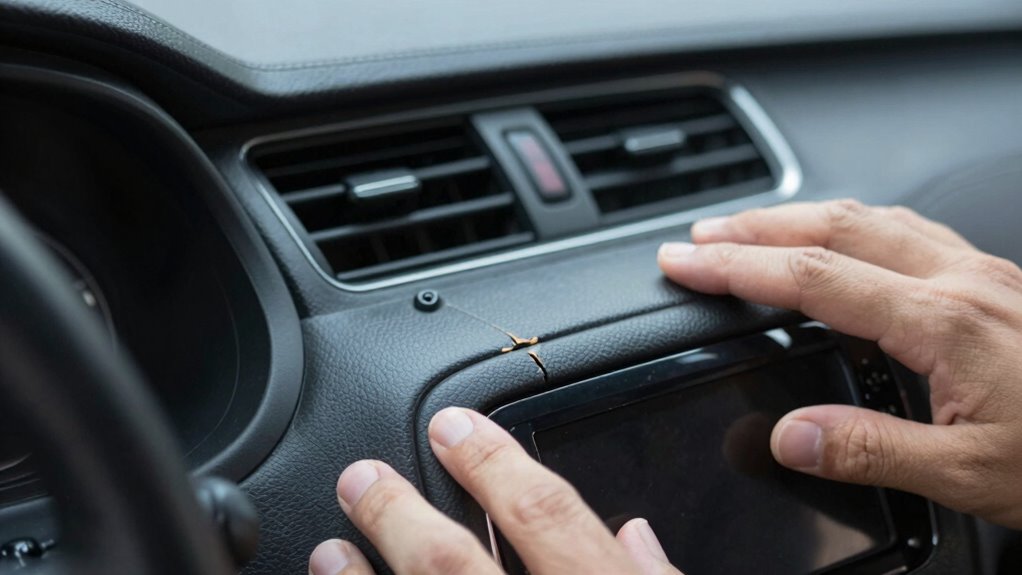
If you’ve noticed a rattling noise coming from your dashboard, it can be both annoying and concerning. That interior noise disrupts your driving experience and can make it hard to focus on the road. Often, these rattles are caused by loose or vibrating parts inside the dashboard, which can be triggered by vehicle vibrations from uneven roads or sudden stops. When the components aren’t securely fastened, they can shift or vibrate, creating that persistent noise.
Rattling dashboard noises often stem from loose or vibrating parts triggered by uneven roads or sudden stops.
The first step in tracking down the source is to pay close attention to when the rattling occurs. Does it happen only when you hit certain bumps or rough patches? Or is it constant, regardless of the road conditions? Recognizing these patterns helps narrow down whether the issue is related to external vibrations or something inside the dashboard. For example, if the rattling intensifies during acceleration or deceleration, it could be linked to loose panels or components that shift with engine movement or braking forces.
Next, listen carefully to identify which part of the dashboard is making the noise. Is it coming from the upper section near the instrument cluster, or is it more towards the lower part near the glove box or vent controls? Different areas suggest different causes. Loose trim pieces are common culprits, especially if the rattling is more metallic or plastic-sounding. Sometimes, small objects or debris trapped behind the dashboard can also cause vibrations and noise when the vehicle moves. Using sound-deadening materials can help reduce these vibrations and improve overall interior noise levels. Additionally, inspecting for loose or worn clips can be an effective step in securing components and stopping rattles.
To track down the problem more precisely, try gently pressing or tapping on the dashboard in various spots while the engine is on or off. If the noise stops or changes when you apply pressure, you’ve likely found the loose or vibrating component. Removing panels or trim pieces might be necessary to inspect for loose screws or clips. Be cautious and consult your vehicle’s manual or a professional if you’re unsure about disassembly. Sometimes, simply tightening loose screws or replacing worn clips can eliminate the rattles. In other cases, replacing or re-adhering padding or insulation inside the dashboard can dampen vibrations and reduce noise. Additionally, understanding that dashboard components can vary widely among vehicle models helps in troubleshooting specific issues more effectively. Using a diagnostic approach and systematically checking different areas can save time and frustration.
In some situations, engine or road vibrations are transferred through the vehicle’s structure, causing parts to rattle. Using sound-deadening materials or padding can help absorb these vibrations and minimize interior noise. Tracking down dashboard rattles involves a mix of listening, inspecting, and testing different areas, but with patience, you can often pinpoint the source and take steps to fix it, making your drives quieter and more comfortable.

ATG Car Dash Repair Kit for Cracked Dash – Dashboard Crack Filler for Vinyl, Leather and Plastic – Car Interior Repair Kit
- Repair Cracks, Holes & Breaks: Fix dashboard damage without replacement
- Matches Dashboard Texture: Includes structure paper for natural blending
- Flexible Repair Filler: Remains flexible for moving parts
As an affiliate, we earn on qualifying purchases.
As an affiliate, we earn on qualifying purchases.
Frequently Asked Questions
Can Dashboard Rattles Be Fixed Without Professional Help?
Yes, you can fix dashboard rattles without professional help. Try DIY repair by tightening loose panels or adding foam padding between the dashboard and panels. Using soundproofing techniques, like applying adhesive-backed foam or felt, can reduce the noise. Carefully inspect for loose objects or screws and secure them. With patience and the right materials, you can effectively minimize or eliminate dashboard rattles on your own.
Do Aftermarket Parts Increase Dashboard Rattle Chances?
Think of aftermarket modifications as adding extra spices to your car’s interior stew—they can boost performance but might also stir up extra noise. Yes, aftermarket parts can increase dashboard rattles, turning your smooth ride into a symphony of interior noise. When you install these parts, you often alter the factory settings, which may loosen fittings or vibrate more, making rattles more likely. Keep an ear out, and tighten or adjust as needed to keep your ride quiet.
How Long Does It Typically Take to Identify a Rattle Source?
It usually takes anywhere from a few minutes to a couple of hours to identify a rattle source, depending on complexity. You’ll want to use diagnostic tools and inspection techniques, such as listening carefully and tapping different areas, to pinpoint the issue. By systematically checking common rattling spots, you can narrow down the cause quickly. Patience and a methodical approach are key to tracking down the source efficiently.
Are Certain Vehicle Models More Prone to Dashboard Rattles?
Some vehicle models are definitely more prone to dashboard rattles, often due to inferior interior materials or manufacturing defects. You might find that older or budget-friendly cars shake like a leaf in a storm, making rattles unbearable. These issues stem from poor construction or low-quality components, leading to persistent noise problems. If you own a specific model known for these flaws, you’ll face more frequent rattles and a harder time fixing them.
Can Temperature Changes Worsen Dashboard Rattles?
Yes, temperature effects can worsen dashboard rattles. When it gets hot, materials expand, leading to rattling expansion, which can make existing noises more noticeable. Conversely, cold temperatures cause contraction, potentially loosening panels and increasing rattling. You might notice more noise during extreme temperature changes, as the materials shift and create additional vibrations. To reduce this, make certain panels are properly secured and consider using insulation or padding to dampen the vibrations.

KILMAT 80 mil 36 sqft Car Sound Deadening Mat, Butyl Automotive Sound Deadener, Audio Noise Insulation and dampening
- Self-adhesive design: Easy to install automotive sound deadener
- Increased thickness: 1.5 times thicker for better insulation
- Lightweight material: 0.5 lbs per square foot for efficiency
As an affiliate, we earn on qualifying purchases.
As an affiliate, we earn on qualifying purchases.
Conclusion
To silence that pesky dashboard rattle, you need to become a detective, listening carefully and inspecting each nook. Think of your dashboard as a symphony waiting to be tuned—each squeak and shake a note that needs fixing. With patience and a keen eye, you’ll silence the noise and restore peace to your drive. Remember, a quiet ride isn’t just a comfort—it’s a symphony of smooth sailing, waiting for you to conduct it.

UBOG 20PCS Car Clips,Car Accessories Plastic Fasteners,Nylon Retainer Clips,Car Front Console Retainer,Automotive Clips Car Dash Dashboard Console Trim,Dash Retainer Clips Replacement for Most Cars
- Package Includes: 20 plastic fasteners for replacements
- Durable Material: Wear-resistant, corrosion-resistant plastic
- Product Dimensions: 8mm width, 14mm length, 9x9mm head
As an affiliate, we earn on qualifying purchases.
As an affiliate, we earn on qualifying purchases.

50-Piece #8 SEMS Phillips Screws Black | Interior | Exterior | Molding | Bezel | Trim | Door Panel | Headliner | Dash | Hardware | FITS: GM, Chevrolet, Buick, Oldsmobile, Pontiac, Cadillac, GMC Trucks
- Thread Pitch: #8
- Available Lengths: 1/2" to 1 1/4"
- Head Type: #6 Phillips with washer
As an affiliate, we earn on qualifying purchases.
As an affiliate, we earn on qualifying purchases.