
To prevent ruining your car’s interior, avoid neglecting regular cleaning and using harsh products, which can cause damage and odors. Address spills immediately, and be cautious with accessories and overloading, as these can compromise safety. Protect surfaces from sun damage by using shades or UV protectants, and keep leather and fabric conditioned. Don’t forget to maintain good air quality and ventilation. Knowing these mistakes helps you keep your car looking new—stay tuned to learn more.

Get business pricing on garage and car supplies
- Business-only prices and quantity discounts
- Tax-exempt purchasing
- Multiple users, one account, clear invoices
Key Takeaways
- Neglecting regular cleaning and surface care accelerates wear, dulls appearance, and causes odors.
- Using harsh chemicals or improper techniques damages upholstery, dashboards, and trim.
- Ignoring spills and poor ventilation lead to stains, odors, mold, and long-term damage.
- Overloading the vehicle or misusing accessories compromises safety and interior integrity.
- Failing to protect against sun damage and neglecting maintenance shortens material lifespan.
Neglecting Regular Cleaning and Detailing

Neglecting regular cleaning and detailing can lead to a messy and less enjoyable driving experience. You might notice dust and grime accumulating on your dashboard, making it look dull and unkempt. Regular dashboard maintenance keeps your interior looking fresh and prevents dust buildup that can affect air quality. Don’t forget about floor mat care; dirty mats trap dirt and moisture, which can cause unpleasant odors and wear down the material faster. Removing and vacuuming your mats weekly prevents dirt from spreading throughout your cabin. Wiping down surfaces and cleaning mats regularly not only improve aesthetics but also extend the life of your interior components. Additionally, incorporating color accuracy in your cleaning routine can help maintain the original look of your interior fabrics and surfaces. Using appropriate cleaning products designed specifically for car interiors can further enhance the longevity of your materials. Staying consistent with these basic maintenance tasks is also important to prevent dust and debris from settling into interior fabrics, which can be difficult to remove later. Regular cleaning helps preserve the interior quality and value of your vehicle over time.
Using Harsh or Inappropriate Cleaning Products
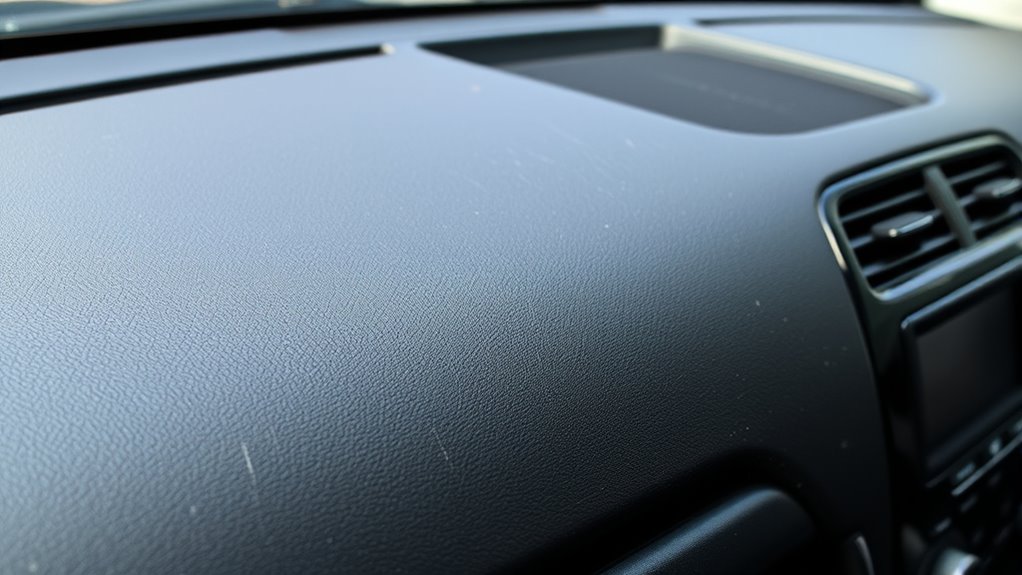
Using harsh or inappropriate cleaning products can quickly undo your efforts to keep the interior tidy. The key is choosing the right detergent selection for each surface. Harsh chemicals may damage upholstery, dashboards, or trim, causing fading or cracking. Instead, opt for gentle, vehicle-specific cleaners. Additionally, consider your cleaning frequency—overusing strong products can wear down materials faster. Regularly cleaning with appropriate products prevents buildup and stains, reducing the need for aggressive treatments. Avoid household cleaners like bleach or ammonia, which aren’t designed for car interiors. Always read labels and test a small area first. Using the wrong products not only risks damage but can also diminish the interior’s appearance and longevity. Proper detergent selection and balanced cleaning routines are essential to maintaining your car’s interior quality. Furthermore, filter maintenance can help prevent the buildup of dust and allergens that may otherwise require more intensive cleaning. Incorporating gentle cleaning techniques can further protect interior surfaces from unnecessary wear and help preserve the overall interior condition. Regular use of appropriate cleaning products ensures your car’s interior remains in top shape over time. Understanding material compatibility can help you choose the safest cleaning methods for each surface.
Ignoring Spills and Stains Immediately
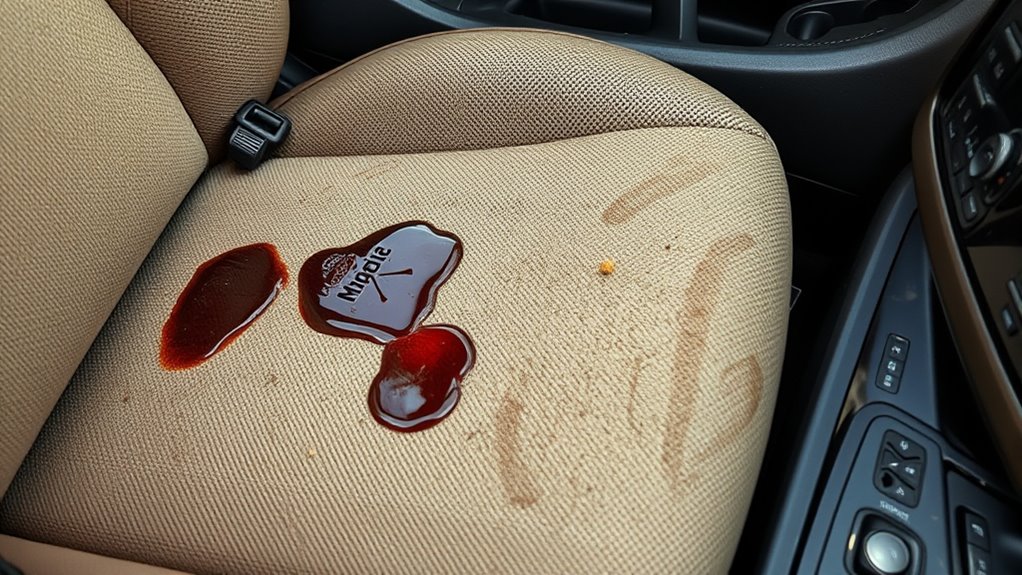
When you ignore spills and stains right away, they become harder to remove later and can cause permanent damage. Using proper stain removal techniques helps keep your car’s interior looking fresh and clean. Acting promptly prevents long-term issues and preserves your vehicle’s value. Additionally, understanding the best cleaning methods tailored for different stains can significantly improve your results. Incorporating a methodical approach to cleaning ensures consistency and thoroughness in maintaining your car’s interior. Being aware of the science behind stain removal can help you choose the most effective strategies for each situation, much like how AI tools in content creation optimize efficiency and accuracy.
Immediate Spill Cleanup
Ignoring spills and stains immediately can lead to stubborn marks that are harder to remove later. When you delay cleanup, liquids seep into the upholstery and carpets, causing lingering car interior odors that are tough to eliminate. Prompt action prevents stains from setting, making cleaning easier and more effective. It’s also vital for dashboard maintenance, as spills on the console or vents can cause sticky residues or damage sensitive parts if left unattended. Act quickly by blotting the spill with a clean cloth, avoiding rubbing that spreads the stain. Additionally, addressing spills promptly can help prevent infection risks, which could compromise the integrity of your car’s interior materials. Proper cleanup also aligns with sound healing science, ensuring your vehicle remains a healthy environment free from harmful bacteria. Regular use of a car vacuum can help you maintain a clean interior and prevent the buildup of debris and allergens. By addressing spills right away, you preserve your car’s interior appearance and fresh scent, reducing the risk of permanent damage. Immediate cleanup is a simple step that saves you time and effort in the long run.
Stain Removal Techniques
Failing to remove stains promptly can make them much harder to eliminate later. When you act quickly, you prevent stains from setting into your upholstery and causing long-term damage. Upholstery protection products can help create a barrier against spills, making stain prevention easier. If a spill occurs, blot it gently with a clean cloth instead of rubbing, which can spread the stain. Use appropriate cleaning solutions suited for your car’s interior material to avoid damage. Remember, the sooner you address a stain, the easier it is to remove. Delaying stain removal not only makes cleaning more difficult but also risks permanent discoloration. Regularly maintaining your upholstery with stain-resistant treatments ensures spills are less likely to penetrate deep, keeping your car’s interior looking fresh and clean longer.
Long-term Damage Prevention
Prompt spills and stains promptly to prevent long-term damage to your car’s interior. Ignoring messes can lead to permanent stains, especially on delicate seat material choices like leather or fabric. Acting quickly helps preserve the integrity of your seats and keeps your vehicle looking fresh. Consider current interior design trends that favor stain-resistant fabrics or protective coatings, which make cleanup easier. Avoid letting spills sit, as they can seep into seams or underlays, causing mold or unpleasant odors over time. Regularly cleaning your interior and addressing accidents immediately ensures your car maintains its aesthetic appeal and resale value. Staying attentive to spills and understanding suitable seat material choices are key to long-term damage prevention, helping your vehicle stay pristine despite everyday mishaps. Additionally, choosing stain-resistant fabrics or applying protective coatings can further safeguard your interior from future damage.
Overloading or Misusing Seatbelts and Accessories

Overloading your car with excessive weight or misusing seatbelts and accessories can substantially compromise safety. When you overload your vehicle, the strain on seatbelt mechanisms increases, reducing their effectiveness and risking failure during a collision. Misusing accessories, like attaching heavy objects to headrests or using improper seatbelt extensions, also diminishes seatbelt safety, making them less reliable in protecting you. Always follow manufacturer guidelines for weight limits and proper accessory use. Properly securing items and understanding load distribution can prevent shifting during an accident, reducing injury risks. Additionally, being aware of safety features and their proper use can further enhance your protection on the road. Improperly secured items can become projectiles in an accident, causing injury or damaging interior surfaces. Proper weight management and correct accessory use are essential for maintaining safety and the longevity of your car’s interior.
Exposing Interior Surfaces to Excessive Sunlight and Heat

Exposing your car’s interior to excessive sunlight and heat can cause significant damage over time, undermining both comfort and safety. UV damage accelerates deterioration, leading to cracked dashboards, brittle plastics, and faded fabrics. The intense sun can cause fading color on upholstery and trim, making your car look worn out prematurely. To protect your interior, consider using sunshades, parking in shaded areas, or applying UV-protective coatings.
| Action | Benefit |
|---|---|
| Use sunshades | Reduces UV damage and fading color |
| Park in shaded areas | Limits heat buildup and sun exposure |
| Apply UV protective coatings | Preserves interior surfaces’ finish |
| Crack windows slightly | Promotes air circulation, cools interior |
Forgetting to Protect and Condition Leather and Fabric Surfaces

Neglecting to regularly protect and condition leather and fabric surfaces can lead to premature wear and deterioration. Leather conditioning helps keep leather soft, supple, and resistant to cracks, while fabric protection prevents stains and fading. Skipping these steps allows dirt, oils, and UV exposure to weaken materials over time. Without proper care, leather can crack and fade, and fabric seats may stain or develop unpleasant odors. Using quality leather conditioners and fabric protectants creates a barrier against daily wear and environmental damage. Consistent maintenance extends the lifespan of your interior and keeps it looking new. Additionally, understanding proper cleaning techniques can help prevent damage caused by improper care. Regular application of these products also helps maintain material integrity, ensuring your car’s interior stays durable and attractive. Making appropriate product choices based on material type can further enhance protection. Make it a habit to apply leather conditioning and fabric protection regularly, especially after cleaning or exposure to harsh conditions, to preserve your car’s interior and avoid costly repairs.
Failing to Address Air Quality and Ventilation Issues

Maintaining your car’s interior isn’t just about protecting surfaces; fresh air and proper ventilation play a key role in keeping the environment healthy and comfortable. Poor air quality inside your vehicle can lead to unpleasant odors, mold growth, and even health issues. If you neglect ventilation, pollutants, dust, and moisture can accumulate, affecting both comfort and safety. Make sure to regularly open windows or use the ventilation system to circulate fresh air. Replace cabin filters when needed to improve air quality and prevent allergens from spreading. Proper ventilation also helps reduce humidity, preventing mildew and mold. Ignoring these issues can turn your car into an uncomfortable and unhealthy space. Prioritize good air quality and consistent ventilation to maintain a fresh, inviting interior.
Frequently Asked Questions
How Often Should I Schedule Professional Interior Detailing?
You should schedule professional interior detailing every 3 to 6 months, depending on your usage and lifestyle. Regular interior cleaning helps maintain your car’s look and value, preventing dirt and stains from settling in. If you have kids, pets, or frequently eat inside your vehicle, consider more frequent detailing. Consistent detailing not only keeps your interior fresh but also extends the lifespan of your car’s interior components.
What Are Safe Cleaning Products for Delicate Interior Surfaces?
You should opt for eco-friendly cleaners that are specially formulated for delicate surfaces. These products are gentle yet effective, helping you avoid damage. Use a gentle microfiber cloth to clean surfaces softly, preventing scratches and preserving your interior’s quality. Always read labels and test a small area first. By choosing eco-friendly cleaners and a gentle microfiber, you keep your car’s interior safe, clean, and well-maintained.
How Can I Prevent Sun Damage to My Car’s Interior?
To prevent sun damage to your car’s interior, you should always use UV protection products on your dashboard and seats. Additionally, make a habit of using a sunshade whenever you park in the sun. These steps block harmful UV rays, reduce heat buildup, and preserve your interior’s appearance and value. Consistent sunshade usage and UV protection help keep your car looking new longer and avoid cracking or fading caused by sun exposure.
What Are Signs of Poor Air Quality Inside My Vehicle?
If you notice persistent musty smells, unexplained coughing, or feeling unusually tired after driving, your car might have poor air quality. Signs include airborne pollutants lingering in the cabin and potential mold growth on seats or mats. These issues can compromise your comfort and health, so it’s wise to check your air filters regularly and keep the interior dry to maintain a fresh, healthy environment inside your vehicle.
How Do I Protect Interior Fabrics From Daily Wear and Tear?
To protect your interior fabrics from daily wear and tear, you should apply fabric protection spray regularly to prevent stains and damage. Use seat covers or mats to minimize abrasion and dirt buildup. Keep liquids away from fabric surfaces and clean spills promptly. Regular vacuuming helps prevent dirt from embedding. By practicing stain prevention and fabric protection, you’ll extend the life of your car’s interior and keep it looking fresh longer.
Conclusion
Think of your car’s interior as a treasured garden—neglected weeds and harsh elements can quickly ruin its beauty. By avoiding these common mistakes, you’re nurturing a clean, fresh space that feels inviting every time you step inside. With regular care and attention, your car remains a sanctuary, not a battlefield. Keep it protected, just like a prized heirloom, and enjoy the comfort and pride that come with a well-maintained interior.
Fall Picks
fall essentials
As an affiliate, we earn on qualifying purchases.