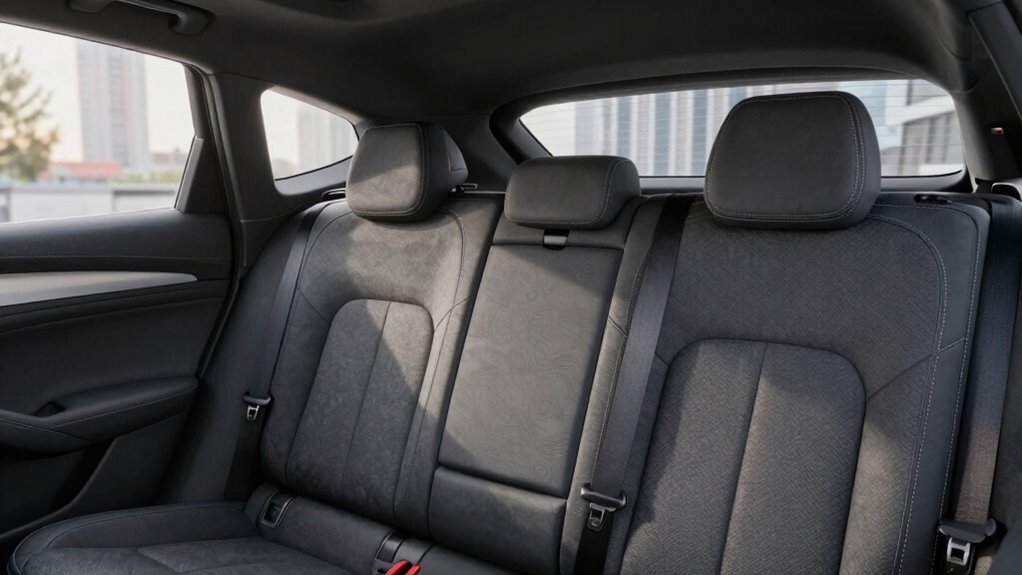

To improve rear seat comfort without a full interior overhaul, start by adding seat cushions or memory foam pads for better support. Use lumbar pillows to reduce back strain and adjust the seat position for a more relaxed posture. Incorporate seat ventilation or cooling pads to keep cool, especially in hot climates. Regularly clean and protect your seats to maintain comfort. Keep exploring simple tips to make your ride more comfortable and enjoyable.
Key Takeaways
- Add seat cushions or memory foam pads for instant comfort and better weight distribution.
- Incorporate lumbar support pillows to reduce back strain and improve posture.
- Adjust seat position, tilt, and headrests for ergonomic alignment and reduced fatigue.
- Use seat covers, ventilation, and cooling pads to enhance comfort and airflow.
- Regularly clean and protect seats to maintain comfort and prolong their lifespan.
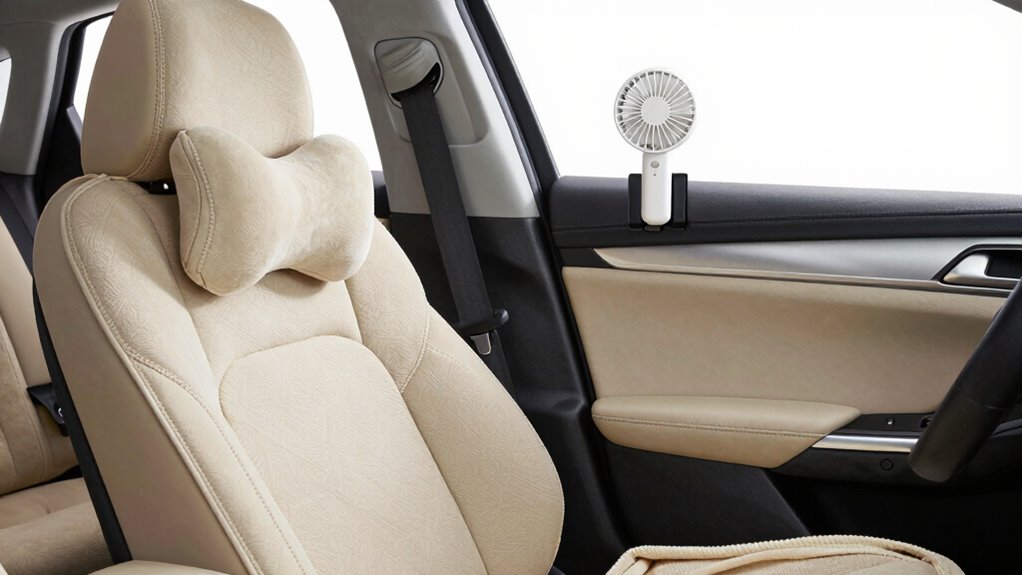
If you want to make your rear seat more comfortable, small adjustments can make a big difference. You don’t need a full interior overhaul to enhance your passengers’ experience. A few simple tweaks can turn a basic ride into a more enjoyable journey. First, focus on the seat itself. Adding seat cushions or memory foam pads can instantly improve comfort, especially if the seats are flat or hard. These additions help distribute weight more evenly and reduce pressure points, making longer trips less tiring. But beyond cushions, consider how to improve airflow and support for your passengers. Seat ventilation can be a game-changer, especially in warmer climates. If your seats lack built-in ventilation, portable seat fans or cooling pads can promote airflow and keep passengers comfortable, preventing sweat buildup and overheating. This small investment can significantly boost comfort without modifying the vehicle’s interior.
Small upgrades like seat cushions and portable fans greatly enhance rear seat comfort and airflow.
Another critical aspect is lumbar support. Many vehicles don’t offer enough lumbar support, which can lead to back pain after extended periods. You can address this easily by adding a lumbar pillow or a specially designed back support cushion. Place it behind the lower back to maintain proper spinal alignment. Not only does this reduce strain, but it also encourages better posture, making long rides feel less taxing. If the seats have adjustable features, use them to find the most supportive position for your back. Combining lumbar support with seat ventilation ensures your rear passengers stay cool and properly supported, which is especially beneficial on longer trips or in hot weather. Additionally, maintaining proper seat alignment and correct positioning can further enhance comfort and reduce fatigue during travel. Paying attention to ergonomic principles can also help you optimize seating for comfort and safety.
Adjusting the seat position can also help improve comfort. Move the seat forward or back to find a natural, relaxed posture, and tilt the seat cushion slightly for better thigh support. When possible, adjust the headrests to prevent neck strain. Small changes like these are quick, affordable, and effective. Additionally, consider the climate inside your vehicle. Using sunshades or tinting windows can prevent excessive heat buildup, complementing your efforts with seat ventilation. Understanding how contrast ratio impacts the clarity and depth of the images can also influence how enjoyable your in-car entertainment system feels, making your journey even more pleasant. Incorporating proper seat maintenance by regularly cleaning and protecting your seats can help preserve their comfort and appearance over time.
Finally, keep the seats clean and well-maintained. Dirt and wear can reduce comfort over time, so vacuum regularly and consider protective seat covers. They can add a layer of softness and help keep the seats in good condition. By implementing these simple steps—enhancing seat ventilation, adding lumbar support, adjusting your seating position, and maintaining the seats—you can significantly improve rear seat comfort without the need for a costly interior overhaul. Your passengers will thank you for the extra thought and effort, making every trip more pleasant for everyone involved.
As an affiliate, we earn on qualifying purchases.
Frequently Asked Questions
Can Seat Cushions Really Enhance Rear Seat Comfort?
Yes, seat cushions can really enhance rear seat comfort. Opt for cushions with memory foam, which molds to your body’s shape, providing better support. Look for ergonomic design features that promote proper posture and reduce fatigue during long rides. By adding a well-chosen cushion, you’ll notice improved comfort, reduced pressure points, and a more enjoyable driving experience without needing a full interior overhaul.
Are There Easy Ways to Reduce Rear Seat Noise?
You can easily reduce rear seat noise by using soundproofing materials like foam panels or mats, which absorb vibrations and block out sound. Adding noise-canceling devices, such as portable white noise machines, helps mask unwanted sounds during rides. These simple solutions work together, creating a quieter environment without major modifications. When you combine soundproofing with noise canceling gadgets, you’ll notice a significant decrease in rear seat noise, making your journeys more comfortable.
How Can I Improve Rear Seat Ventilation Easily?
To improve rear seat ventilation easily, focus on enhancing climate control and air circulation. You can crack open rear vents or install portable fans to boost airflow. Using the vehicle’s climate control system to set a comfortable temperature and ensuring vents are unobstructed helps circulate fresh air efficiently. Regularly cleaning vents and cabin filters also improves air quality, making rear seats more comfortable without a full interior overhaul.
Do Seat Covers Affect Comfort Levels?
Seat covers can definitely affect comfort levels, especially depending on the seat material. If you choose soft, breathable fabrics, you’ll likely notice improved comfort, while stiff or rough materials might cause discomfort. Also, consider how seat covers support passenger posture; ergonomic designs can enhance comfort during long rides. Opt for covers that fit well and complement your seat’s shape to guarantee a comfortable, supportive seating experience without a full interior overhaul.
Is Adjusting Seat Angles Beneficial for Comfort?
Ever wonder if adjusting seat angles truly boosts comfort? Yes, it can. By fine-tuning your seat angle, you help optimize seat padding distribution and lumbar support, reducing pressure points and fatigue. Properly angled seats encourage better posture, making long rides more comfortable. Experiment with slight adjustments to find your ideal position, ensuring your lumbar area gets the support it needs while the seat padding feels just right.
lumbar support pillow for car seats
As an affiliate, we earn on qualifying purchases.
As an affiliate, we earn on qualifying purchases.
Conclusion
Think of your car’s rear seat as a cozy island in a vast ocean—you want it to be a peaceful haven amid the waves. By adding simple upgrades like cushions, lumbar supports, and window shades, you’re transforming that island into your personal retreat. These tweaks may seem small, but they can turn your rear seat from a rough ride into a smooth sailing experience. So, set your course and enjoy the journey in comfort!
As an affiliate, we earn on qualifying purchases.
As an affiliate, we earn on qualifying purchases.