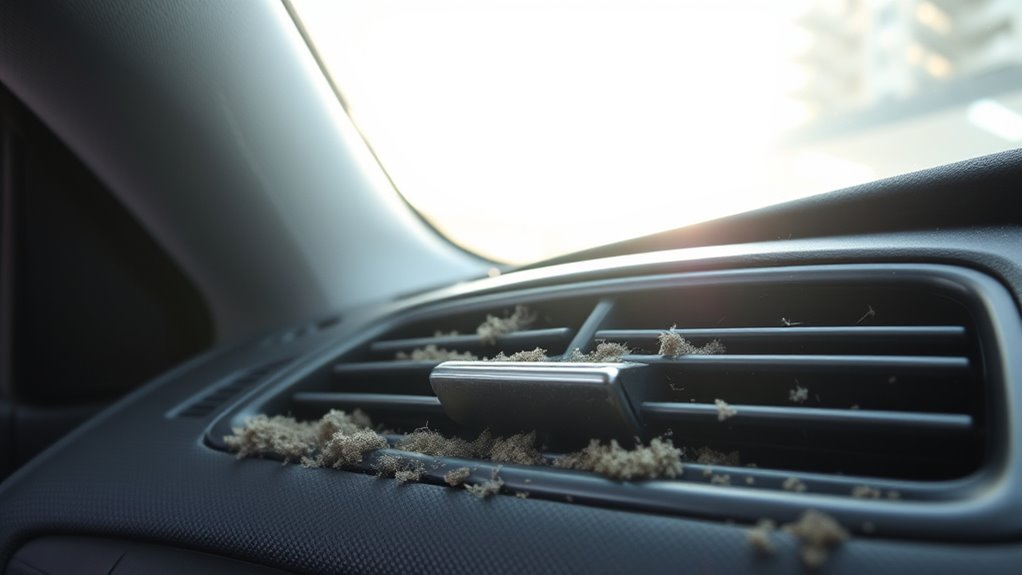

If your car’s AC smells bad, it’s likely due to mold, bacteria, or debris developing inside the vents and filters. Moisture from frequent use or clogged drains creates a perfect environment for odor-causing mold and microorganisms to grow. Regularly replacing your air filter, cleaning vents, and ensuring drains are clear can help eliminate these odors. Keeping your interior dry and well-ventilated is also key—continue exploring to discover more tips for freshening your cabin.
Key Takeaways
- Mold and bacteria thrive in moist, dirty filters and AC components, causing foul odors.
- Regularly replace or clean the air filter to prevent mold buildup and improve air quality.
- Moisture accumulation from clogged drains or residual dampness promotes mold growth inside the system.
- Running the AC on defrost mode and ensuring proper drainage helps dry out moisture and reduce odors.
- Professional cleaning and disinfecting of the HVAC system can eliminate hidden mold and bacteria causing smells.

Have you ever noticed a foul smell coming from your car’s AC? That unpleasant odor can be frustrating, and it often indicates something needs attention. One common culprit is a dirty or clogged air filter. Your car’s air filter plays an essential role in trapping dust, debris, and pollutants before they circulate inside your vehicle. When the filter becomes dirty or saturated, it can start to harbor mold, bacteria, and other microorganisms. These microorganisms thrive in the moist environment inside your AC system, especially if you frequently use your AC in humid conditions. Over time, mold can develop on or around the air filter, releasing musty, sour odors into your cabin.
To tackle this, you should start by inspecting and replacing your air filter regularly. A fresh filter not only improves air quality but also helps prevent mold buildup by reducing the moisture and debris that bacteria and mold need to grow. When replacing the filter, make sure to choose a high-quality one compatible with your vehicle. This simple step considerably cuts down on mold prevention and keeps your AC smelling fresh. Additionally, maintaining good cabin air quality involves keeping the interior clean and dry. Wipe down air vents and surrounding areas to remove dust and moisture that could encourage mold growth.
Beyond replacing the filter, it’s essential to address the source of moisture that fuels mold growth. When you turn off your AC, some residual moisture can remain inside the system, especially if the drains are clogged or not functioning properly. This moisture creates a perfect environment for mold spores to develop. Regularly running your AC on the defrost setting can help dry out the system, reducing moisture accumulation. Also, consider using a mold and mildew spray designed for automotive HVAC systems. These products can disinfect the ducts and prevent mold spores from settling and growing.
Another effective mold prevention tip is to keep your car’s interior dry. Avoid leaving wet items inside your vehicle, and use mats or towels if you’ve been caught in the rain. Proper ventilation is also essential; whenever possible, leave your windows slightly open or park in a well-ventilated area to allow fresh air to circulate and help dry out any dampness. If the smell persists despite these efforts, it might be time to have your HVAC system professionally cleaned. A thorough cleaning can remove hidden mold and bacteria that you can’t reach on your own. Regular maintenance and Proper ventilation are key to preventing persistent odors and ensuring a fresh cabin environment.
Frequently Asked Questions
Can a Dirty Cabin Air Filter Cause Bad Odors?
Yes, a dirty air filter can cause bad odors in your car. When the air filter becomes clogged or contaminated, it traps moisture, dirt, and bacteria, which become the odor source. As air passes through, these smells circulate inside your vehicle. To fix this, replace or clean the air filter regularly. Ensuring a clean air filter keeps your cabin smelling fresh and prevents the buildup of unpleasant odor sources.
How Often Should I Service My Car’s AC System?
You should service your car’s AC system at least once a year or every 12,000 to 15,000 miles. During maintenance, guarantee proper air filter maintenance to prevent odors and check refrigerant levels, recharging if necessary. Regular service helps your AC run efficiently, keeps the air clean, and prevents bad smells. Don’t forget to replace filters and recharge refrigerant to maintain ideal cooling and air quality.
Are There Natural Remedies to Remove AC Odors?
Yes, you can use natural remedies to remove AC odors. Try spraying herbal sprays designed for cars to freshen the air naturally. Baking soda is also effective; sprinkle it on the car mats and seats, then vacuum it up after a few hours to absorb odors. These methods are safe, inexpensive, and eco-friendly, giving your car a pleasant smell without harsh chemicals.
Can Mold Growth in the AC System Be Prevented?
Think of your AC system as a garden; mold prevention is like tending to it regularly, ensuring it stays healthy. You can prevent mold growth by changing the cabin air filter, running the AC regularly, and keeping vents clean. Proper odor control involves keeping the system dry and using disinfectants. These steps create an environment where mold can’t thrive, ensuring fresh air and a pleasant ride every time you turn on your AC.
Does Using the AC Regularly Help Reduce Odors?
Yes, using your AC regularly helps reduce odors. It promotes air circulation, which prevents moisture from stagnating and bacterial growth, both of which contribute to odor buildup. When you run your AC often, it keeps the system dry and clean, reducing mold and mildew. Even short trips can help maintain airflow, so make it a habit to turn on your AC regularly to keep odors at bay and your system fresh.
Conclusion
Don’t let a bad-smelling AC ruin your drive. With regular cleaning and simple maintenance, you can keep your car’s AC fresh and odor-free. Some might think it’s too much effort, but a quick wipe or filter change is all it takes. Once you eliminate those odors, you’ll enjoy a cleaner, more pleasant ride every time. So, take action today—your nose and your passengers will thank you for it!