For night driving, bright white headlights give you sharper, clearer illumination that helps spot hazards easily, while warm yellow lights create softer contrast and work better in fog or bad weather. If you want maximum visibility on well-lit roads, white lights are a good choice. But if weather conditions are tough, yellow lights might improve safety with better contrast. Keep exploring to discover which headlight color suits your driving style best.
Key Takeaways
- Bright white LEDs offer sharper, clearer illumination, improving hazard detection at night.
- Warm yellow halogens reduce glare and improve contrast in foggy or poor weather conditions.
- White lights enhance long-distance visibility but may cause more glare for oncoming drivers.
- Yellow lights are gentler on the eyes, reducing strain and glare in adverse weather.
- Modern headlights with adjustable color temperatures provide customizable lighting suited for various driving environments.
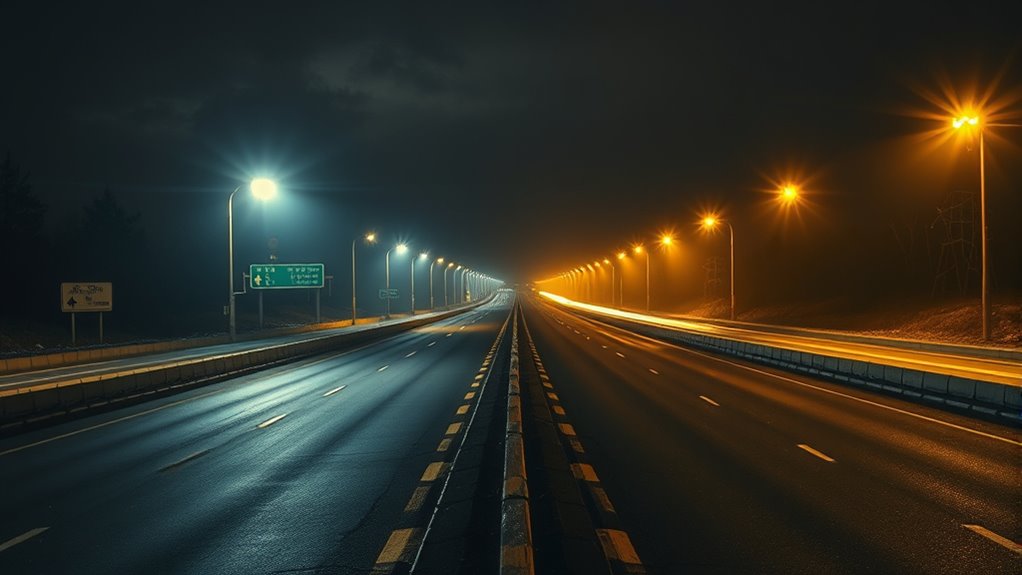
When choosing headlights for your vehicle, understanding the difference between bright white and warm yellow lights can substantially impact your driving experience. The type of light you select influences visibility, safety, and even how you perceive the road. Two popular lighting options are LED and halogen headlights, each with distinct advantages. LEDs produce a brighter, crisper white light that illuminates the road sharply and clearly, making it easier to spot hazards at night. Halogens, on the other hand, tend to emit a warmer, yellowish glow that can sometimes be less intense but are more affordable and easier to replace. If you prioritize brightness and modern technology, LEDs are generally the better choice. However, some drivers prefer halogens for their softer, less glaring light, especially in foggy conditions.
Choosing between bright white LEDs and warm yellow halogens affects visibility, safety, and comfort on the road.
This brings us to another critical aspect of nighttime driving: fog lights versus high beams. Fog lights are designed to cut through fog, rain, or snow, emitting a wide, low beam that illuminates the road immediately in front of you without reflecting off the moisture in the air. They usually produce a warm yellow or amber hue, which reduces glare and enhances contrast, making it easier to see the edges of the road or obstacles. High beams, conversely, are meant to illuminate distant objects and are typically bright white or blue-white, providing maximum visibility over long distances. While high beams are excellent for open roads with minimal traffic, they can cause glare for oncoming drivers and are less effective in foggy or rainy conditions. Knowing when to use fog lights versus high beams is key to safe night driving.
The choice between bright white and warm yellow lights also impacts how you perceive the environment. Bright white lights tend to provide a clearer, more detailed view of the road, but they can sometimes be harsh or cause glare, especially if your headlights aren’t properly aligned. Warm yellow lights tend to create a softer illumination that reduces eye strain and glare, which can be beneficial during long drives or in poor weather. Additionally, color temperature adjustments in modern headlights allow for more personalized lighting options to suit your preferences and conditions. Ultimately, your decision should consider your typical driving conditions, personal preference, and whether you value maximum brightness or softer, more comfortable lighting. Both LED and halogen options can be tailored to produce either bright white or warm yellow light, but LEDs are increasingly versatile, offering customizable color temperatures.
In choosing your headlights, weigh the differences between these options carefully. Bright white LEDs might give you the sharpest visibility, but warm yellow halogens or LEDs can offer better contrast in adverse weather. Similarly, understanding when to use fog lights or high beams ensures you maximize your safety and comfort on the road.
Frequently Asked Questions
Do Different Headlight Colors Affect Driver Fatigue?
Different headlight colors can influence your driver fatigue by affecting driver mood and alertness. Bright white headlights tend to enhance visibility, reducing eye strain and fatigue, while warm yellow lights may create a calmer environment, potentially leading to drowsiness. Your headlight aesthetics can impact how alert you feel, so choosing a color that balances visibility with comfort helps maintain focus during night driving.
Are There Legal Restrictions on Headlight Color Choices?
You should know that legal restrictions on headlight color choices vary by location. Most areas prohibit custom headlight colors or headlight tinting that alter the vehicle’s original lighting, especially for non-white or yellow hues. Check your local regulations before opting for custom headlight colors, as non-compliance can result in fines or vehicle inspection failures. Always prioritize safety and legality when considering headlight modifications.
How Do Headlight Colors Impact Pedestrian Visibility?
Like guiding stars in the night, your headlight color influences pedestrian safety and visibility enhancement. Bright white headlights improve clarity, making pedestrians more noticeable, especially in urban areas. Warm yellow lights reduce glare and enhance contrast, helping pedestrians stand out against dark backgrounds. Choosing the right color isn’t just about style; it’s about protecting lives. Prioritize visibility to ensure safer journeys for everyone sharing the road.
Can Color Temperature Influence Headlight Bulb Lifespan?
Yes, color temperature can influence headlight bulb lifespan. High color temperature bulbs, like bright white lights, often run hotter and may experience reduced headlight durability over time. This increased heat can accelerate bulb wear, shortening the overall bulb lifespan. Conversely, warmer yellow lights typically generate less heat, potentially extending bulb life. To maximize durability, choose bulbs suited for your driving conditions and guarantee proper installation and cooling.
Are There Regional Preferences for Headlight Colors?
Like a traveler choosing a path, you’ll find regional preferences shape headlight choices. In some areas, brighter white lights symbolize modernity, echoing innovation’s glow, while in others, warm yellow reflects tradition and cultural significance. These regional trends influence what drivers favor, blending practicality with cultural identity. So, your choice of headlight color isn’t just about visibility—it’s also a nod to local customs and societal values that guide your driving experience.
Conclusion
Ultimately, choosing between bright white and warm yellow headlights comes down to your personal preference and driving conditions. Bright white lights offer a modern, crisp visibility that can make night driving feel safer and more precise. Warm yellow lights, on the other hand, tend to cut through fog and rain better. Remember, it’s not just about what looks good—it’s about what keeps you safe on the road. Sometimes, you’ve got to pick your battles and go with what works best for you.