To fix small rust spots before they spread, start by inspecting the area for loose paint or flaky rust, then gently remove debris with a wire brush or sandpaper. Apply a rust converter to neutralize stubborn rust, followed by priming and painting for a protective seal. Regular inspections and prompt touch-ups help prevent further damage. Keep going to learn more tips to keep your metal surfaces looking great and rust-free.

Get business pricing on garage and car supplies
- Business-only prices and quantity discounts
- Tax-exempt purchasing
- Multiple users, one account, clear invoices
Key Takeaways
- Remove loose rust and paint with a wire brush or sanding to expose clean metal surface.
- Apply a rust converter or neutralizer to chemically halt rust spread.
- Sand the treated area lightly for a smooth, prepared surface before painting.
- Prime the area with a compatible metal primer, then apply thin coats of touch-up paint.
- Seal with a clear coat and regularly inspect for new rust to prevent future spreading.
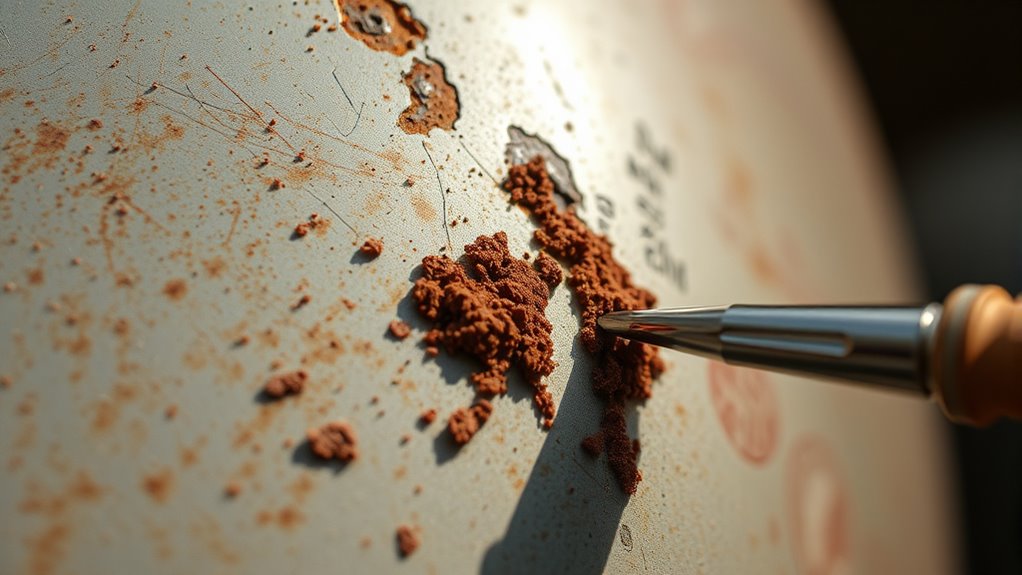
Rust can quickly compromise the integrity of your vehicle or metal item if left unchecked. When rust takes hold, it can weaken the structure and cause costly repairs down the line. That’s why catching small rust spots early and knowing how to fix them yourself can save you time and money. The key to successful DIY rust repair is proper rust prevention and metal preparation. By addressing rust early, you stop it from spreading and causing more damage.
Address rust early to prevent costly damage and keep your vehicle or metal item in top condition.
First, you need to assess the rusted area carefully. Look for any loose paint or flaky rust. Use a wire brush or a sanding tool to remove loose debris and rust flakes. This step is essential because it exposes the bare metal underneath, which you’ll need to treat properly. Make sure to wear gloves and a mask to avoid inhaling rust dust or particles. Once the loose rust is gone, you should clean the area thoroughly with a degreaser or soap and water. Dry it completely because moisture can trigger further rusting if left behind.
Next, focus on metal preparation. Proper metal preparation is vital before applying any rust prevention products or paint. Use a rust converter or a rust neutralizer on stubborn rust spots. These products chemically convert rust into a stable compound, stopping it from spreading further. Once the rust converter has dried, lightly sand the surface again to create a smooth, clean surface for painting. This step guarantees good adhesion of your repair materials and prevents future rust from seeping through. Regular inspection and maintenance can help identify new rust spots early, preventing significant damage.
Applying primer designed for metal surfaces is your next step. A good primer helps seal the metal and provides a strong base for the topcoat. Make sure to choose a primer that’s compatible with the paint you plan to use. After applying the primer, wait for it to dry fully, usually following the manufacturer’s instructions. Then, you can apply your chosen paint or touch-up product. Use thin, even coats to avoid drips and ensure a smooth finish. Once the paint dries, consider sealing the area with a clear coat for added protection against moisture and environmental elements.
Throughout the process, remember that rust prevention is ongoing. Regularly inspect your vehicle or metal item, especially after harsh weather, and touch up any new rust spots promptly. Proper metal preparation and timely repairs help prevent small issues from becoming major problems. By taking these steps, you extend the life of your vehicle or metal object and maintain its appearance and strength. DIY rust repair isn’t difficult if you follow these steps, and it can save you significant money compared to professional repairs. Acting quickly and preparing the metal properly are your best defenses against rust’s destructive power. Preventive measures like rust inhibitors can further protect your metal surfaces from future corrosion.
rust converter for metal surfaces
As an affiliate, we earn on qualifying purchases.
As an affiliate, we earn on qualifying purchases.
Frequently Asked Questions
Can I Prevent Rust From Forming Again After Repair?
Yes, you can prevent rust from forming again after repair by applying rust prevention treatments like rust inhibitors or sealants. Make sure to keep the repaired area clean and dry, as moisture causes re-rusting concerns. Regularly inspect the surface for signs of new rust and touch up any spots promptly. Using protective coatings creates a barrier, reducing the chances of re rusting and ensuring your repair lasts longer.
What Tools Are Essential for DIY Rust Repair?
To perform DIY rust repair, you’ll need essential tools like sandpaper with varying grit, such as coarse grit for removing rust and fine grit for smoothing surfaces. A rust converter is vital to neutralize remaining rust and prepare the area for painting. Additionally, gather a wire brush, putty knife, primer, and paint. These tools enable you to effectively remove rust, treat affected spots, and restore your surface.
How Long Does a Rust Repair Typically Last?
Your rust repair can last several years if you prioritize rust prevention and guarantee thorough corrosion resistance. However, the lifespan depends on factors like exposure to moisture and how well you prep and seal the area. If you neglect these steps, rust can return faster. Proper maintenance, like regular inspections and touch-ups, keeps your repair durable and extends its life, giving you peace of mind that your work stands the test of time.
Is It Safe to Use Household Products for Rust Removal?
Using household chemicals for rust removal can be safe if you select the right products and follow instructions carefully. Common household chemicals like vinegar or baking soda work well for removing rust stains and small rust spots. However, avoid harsh chemicals like bleach or abrasive cleaners, as they can damage surfaces or create health hazards. Always wear gloves and ensure proper ventilation when using household chemicals for rust removal.
When Should I Consult a Professional Instead of DIY?
Like a knight in shining armor, you should seek a professional assessment when rust damage seems severe or has spread beyond small spots. If you’re unsure about the extent of the rust or if DIY methods haven’t worked, it’s best to call in experts. They can accurately evaluate the rust damage extent and recommend proper repairs, ensuring your vehicle’s safety and longevity aren’t compromised. Don’t wait until it’s too late!
As an affiliate, we earn on qualifying purchases.
Conclusion
By catching rust early and applying these simple DIY fixes, you can save your vehicle from costly repairs. For example, imagine noticing a small rust spot on your car door; a quick sand, rust converter, and touch-up paint can prevent it from spreading and keep your car looking great. With a little effort, you’ll maintain your vehicle’s value and appearance, proving that tackling rust early is a smart, satisfying DIY project.
As an affiliate, we earn on qualifying purchases.
As an affiliate, we earn on qualifying purchases.
Fall Picks
fall essentials
As an affiliate, we earn on qualifying purchases.