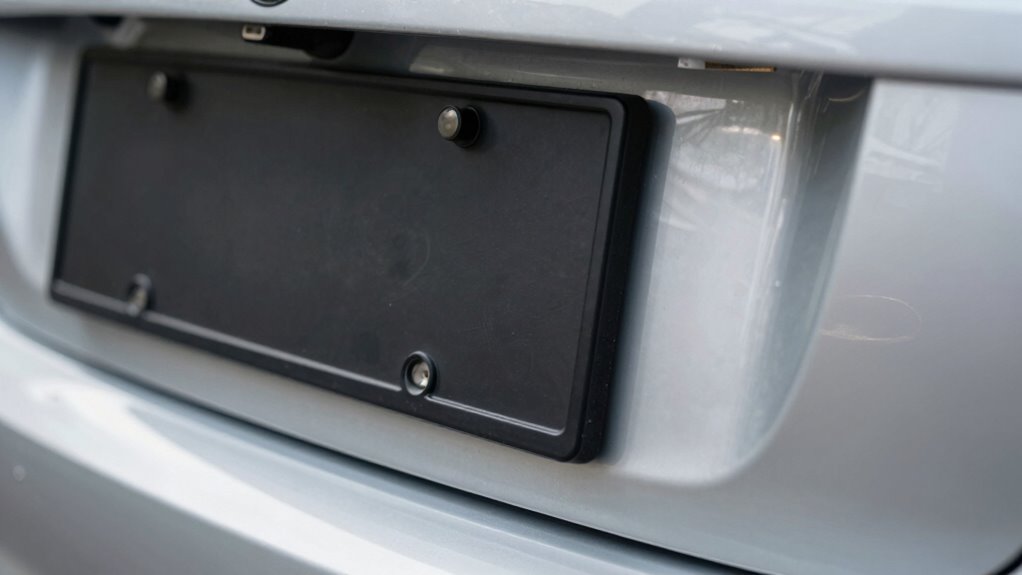

To stop your license plate frame from rattling, check how it’s mounted and tighten the screws with a proper screwdriver, avoiding overtightening. Add washers made of rubber or foam between the frame and the vehicle to absorb vibrations. Consider upgrading to a heavy-duty frame with anti-rattle features or using anti-vibration hardware. Regularly inspect the setup and replace rusty or loose parts to keep it secure. Keep exploring to find more tips for a quiet, secure installation.

Get garage and car supplies delivered free — and shop member deals
- Fast, free delivery on millions of items
- Access to Prime Big Deal Days deals on October 6–7
- Prime Video, Amazon Music and more included
Key Takeaways
- Tighten all mounting screws securely with the correct screwdriver, avoiding overtightening to prevent damage.
- Add rubber or foam washers between the frame and vehicle to absorb vibrations and reduce rattling.
- Use anti-rattle hardware or vibration-resistant frames designed to minimize movement.
- Apply adhesive-backed rubber strips behind the frame to cushion and secure it in place.
- Regularly inspect and replace loose or corroded hardware to maintain a tight, rattle-free fit.

If your license plate frame rattles every time you hit a bump, it can quickly become annoying and distracting while driving. Not only does this constant noise bother you, but it can also affect the security of your license plate. A loose or poorly secured frame might even fall off, leading to potential fines or the hassle of replacement. To prevent this, you need to focus on proper frame installation tips to guarantee your license plate stays secure and quiet on the road.
First, examine how your license plate is mounted. Many frames come with screws, but over time, these can loosen due to vibrations. Tighten the screws carefully, but don’t overtighten, as this could crack the frame or damage the plate. Use a screwdriver that fits well to avoid stripping the screws. If you notice rust or corrosion, replace the screws with stainless steel or corrosion-resistant hardware. This not only enhances license plate security but also helps prevent rattling caused by loose fittings. Additionally, proper hardware selection can contribute significantly to minimizing vibrations and securing your plate more effectively.
Tighten license plate screws carefully and replace rusted ones with corrosion-resistant hardware to prevent rattling.
Next, consider the mounting surface. If your vehicle’s mounting area is uneven or warped, it can cause your frame to wobble. In such cases, adding a thin rubber or foam washer between the frame and the vehicle can absorb vibrations and provide a snug fit. These washers act as a buffer, reducing movement and noise. Make sure the washer is durable enough to withstand weather conditions and won’t deteriorate over time. Additionally, choosing a vibration-resistant license plate frame can further reduce rattling caused by road vibrations. Using anti-rattle hardware or accessories designed specifically for this purpose can also be highly effective. You might also explore using specialized mounting hardware that is designed to reduce movement and noise. Incorporating some anti-vibration features can make a notable difference in keeping the frame steady.
Another tip involves using additional securing methods. For example, applying a small amount of adhesive-backed rubber or foam strips behind the frame can help eliminate rattling. These materials fill in gaps and create friction, keeping the frame in place. Just be cautious not to block your license plate’s visibility or interfere with its legal requirements. Regularly inspecting and tightening screws is also recommended to maintain a secure fit over time, especially after harsh weather conditions or rough roads.
Finally, check your license plate security routinely. Regular inspections can help you identify loose screws, warping frames, or other issues before they cause bigger problems. If your license plate frame is still rattling despite your efforts, you might consider upgrading to a more secure, heavy-duty frame designed specifically to minimize vibrations. Some frames come with built-in anti-rattle features, providing a more permanent solution. Ensuring your hardware and mounting methods are appropriate for your vehicle’s specific needs can make a significant difference in preventing rattling.
license plate frame anti-rattle hardware
As an affiliate, we earn on qualifying purchases.
As an affiliate, we earn on qualifying purchases.
Frequently Asked Questions
Can I Use Double-Sided Tape Instead of Screws?
Yes, you can use double-sided tape as an alternative mounting option for your license plate frame. Opt for weather-resistant materials to guarantee durability against the elements. Make sure the surface is clean and dry before applying the tape, and press firmly to secure it. Keep in mind, though, that tape might not be as secure as screws, especially during rough weather or high speeds, so check it regularly.
Will Tightening the Screws Damage My License Plate?
Tightening the screws won’t damage your license plate if you do it carefully—most plates are designed to withstand regular handling. Surprisingly, about 10% of license plate theft cases involve tampering with frames, especially custom designs. To prevent damage, avoid overtightening, which can crack the plate or damage the frame. Use the right screwdriver, tighten gently, and ensure a snug fit without excessive force, especially if your frame has intricate designs.
Are There Specific Materials That Prevent Rattling?
Yes, certain materials can help prevent rattling. Look for license plate frames made from rubber, foam, or silicone, as these materials offer better noise reduction and absorb vibrations, preventing rattling. Guarantee material compatibility with your vehicle’s surface to avoid damage. Using washers or rubber grommets along with these materials enhances noise reduction techniques, keeping your plate steady and quiet. Choose quality materials for the best rattling prevention.
How Often Should I Check My License Plate for Looseness?
You should check your license plate for looseness at least once a month. Regular inspections help prevent issues like license plate theft or frame corrosion, which can make your plate easier to remove or cause damage over time. Keep an eye on the mounting screws and frame stability. Tighten any loose screws promptly, ensuring your plate stays secure and intact, especially in areas prone to theft or harsh weather conditions.
Is It Legal to Modify My License Plate Frame?
Modifying your license plate frame is like painting a masterpiece on a strict canvas—only certain alterations are legal. You can add custom designs, but illegal modifications, like covering the state name or obscuring the registration number, can land you in hot water. Always make sure your frame doesn’t block essential information, keeping your ride within legal boundaries. Think of it as dressing your vehicle stylishly without breaking the rules that keep roads safe.
stainless steel license plate screws
As an affiliate, we earn on qualifying purchases.
As an affiliate, we earn on qualifying purchases.
Conclusion
To keep your license plate frame silent, stay vigilant, stay secure, and stay satisfied. Regularly check your screws, tighten them when needed, and replace worn-out hardware. Use rubber or foam padding to absorb vibrations, and opt for sturdy materials that last. By staying attentive, securing tightly, and cushioning effectively, you’ll prevent rattling and enjoy a quieter, smoother ride. Keep your license plate quiet, keep your peace of mind, and keep your drive hassle-free.
rubber washers for license plates
As an affiliate, we earn on qualifying purchases.
As an affiliate, we earn on qualifying purchases.
anti-vibration license plate frame
As an affiliate, we earn on qualifying purchases.
As an affiliate, we earn on qualifying purchases.
Halloween Picks
halloween
As an affiliate, we earn on qualifying purchases.