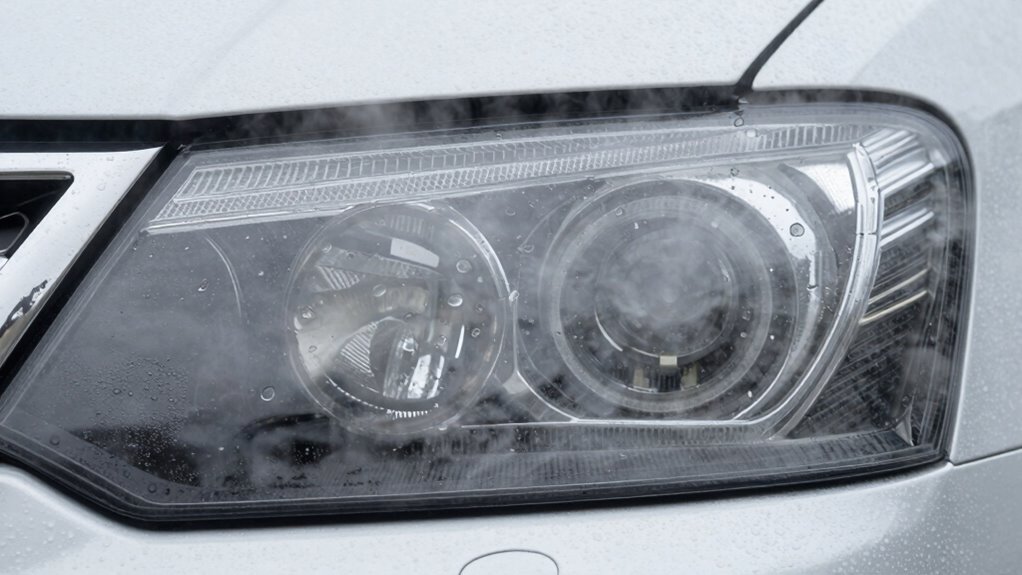

Headlight condensation happens when moisture gets trapped inside the sealed unit due to temperature changes, cracks, or damaged seals, allowing humidity and water to enter. This fogging can reduce visibility and harm internal components if it persists. You’ll want to fix or replace damaged seals or cracks before the moisture causes more damage or affects your headlight’s performance. If you’re curious about how to prevent this or fix it, keep exploring the details below.

Get business pricing on garage and car supplies
- Business-only prices and quantity discounts
- Tax-exempt purchasing
- Multiple users, one account, clear invoices
Key Takeaways
- Condensation occurs when moisture gets trapped inside sealed headlights due to seal failure or cracks.
- Temperature fluctuations cause humidity to condense inside the headlight assembly.
- Cracks, damage, or degraded seals allow water ingress, leading to internal moisture buildup.
- Fogging reduces light output and can cause corrosion or electrical issues if persistent.
- Repair or replace seals and inspect for damage to prevent long-term headlight performance problems.
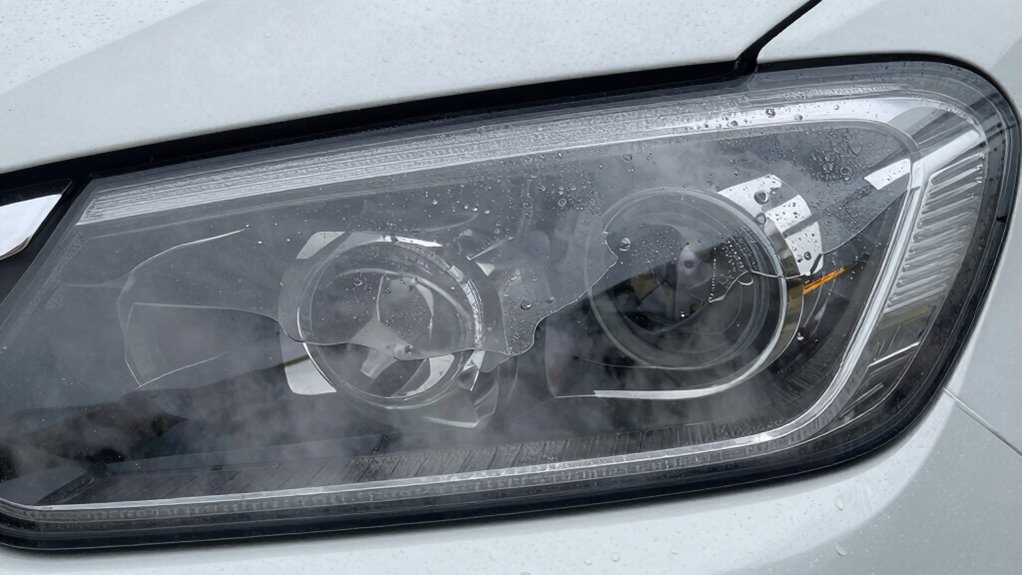
Headlight condensation is a common issue that many vehicle owners encounter, often caused by moisture getting trapped inside the headlight assembly. When you notice fogging or water droplets on the inside of your headlights, it’s usually because humidity has entered the sealed unit. This moisture can form due to temperature fluctuations, driving through rain, or even minor cracks in the headlight casing. Understanding why this happens helps you address the root cause more effectively.
Moisture trapped inside headlights causes fogging, often from temperature changes or cracks in the seal.
One key factor influencing how prone your headlights are to condensation is the headlight material. Modern headlights are typically made from polycarbonate or acrylic, both of which are durable but can be vulnerable if not properly sealed. If the material becomes scratched or damaged, it can compromise the integrity of the headlight’s seal, allowing moisture to seep in. Choosing high-quality materials during manufacturing and ensuring they’re free from cracks or chips can significantly reduce the chances of condensation forming inside.
Sealing techniques are equally critical in preventing moisture intrusion. When the headlights are assembled, manufacturers use various sealing methods, such as rubber gaskets, silicone sealants, or specialized adhesives, to create an airtight barrier. Over time, these seals can degrade due to exposure to UV rays, heat cycles, or general wear and tear. If you notice your headlights fogging up or water droplets inside, it’s often a sign that the seal has failed or is deteriorating. Repairing or replacing these seals can restore the headlight’s integrity and prevent future moisture buildup.
While condensation isn’t always a sign of a major problem, it can lead to more serious issues if left unaddressed. Excess moisture can reduce the effectiveness of your headlights, dimming the light output and decreasing visibility at night. Additionally, prolonged exposure to moisture can cause internal corrosion of the reflector or bulb socket, potentially leading to electrical failures. If the condensation persists or worsens, it’s a good idea to inspect the headlight assembly for damage or seal failure and consider professional repairs or replacements. Proper sealing techniques and quality materials are essential in preventing this common issue.
As an affiliate, we earn on qualifying purchases.
Frequently Asked Questions
Can Headlight Condensation Damage the Bulb or Lens Over Time?
Headlight condensation can potentially damage the bulb or lens over time if moisture buildup persists. When moisture gets trapped due to faulty headlight seals, it can cause fogging and even corrosion inside the headlight assembly. This ongoing exposure to moisture may weaken the lens or cause electrical issues, leading to reduced visibility or bulb failure. It’s important to address condensation early to prevent long-term damage and maintain ideal headlight performance.
Is Condensation More Common in Certain Climates or Seasons?
In a blink of an eye, you’ll notice condensation more often in climates with high humidity or during seasonal changes. Climate variations and seasonal shifts cause temperature swings that create moisture inside headlights. Areas with cold winters or humid summers see this issue more frequently. So, if you live in such regions, keep an eye on your headlights, as this moisture can lead to fogging, reduced visibility, and potential damage over time.
How Often Should I Check for Headlight Condensation?
You should check your headlights for condensation at least once a month, especially after rain or car washes. Use simple cleaning techniques like wiping the lens with a microfiber cloth and inspecting for moisture buildup. Regular maintenance tips include resealing the headlight housing if you notice persistent condensation, which prevents moisture from entering. Staying proactive helps guarantee your headlights stay clear, bright, and safe for nighttime driving.
Can DIY Repairs Prevent Future Headlight Condensation?
Yes, DIY solutions can help prevent future headlight condensation, but they’re not foolproof like professional repairs. You can reseal or replace vents, or add silica gel packs to absorb moisture. These quick fixes act like a band-aid, but for long-lasting results, professional repairs guarantee proper sealing and venting. Combining both approaches keeps your headlights clear and your vision bright, steering clear of foggy trouble down the road.
Are There Specific Headlight Models More Prone to Condensation?
Yes, some headlight models are more prone to condensation due to their materials and manufacturing defects. Plastic lenses, especially older or cheaper ones, tend to trap moisture more easily. Poor sealing during manufacturing or damaged seals can also increase the risk. If your headlights are made from low-quality materials or have known manufacturing issues, you’re more likely to experience condensation, so inspecting and maintaining your headlights regularly is essential.
As an affiliate, we earn on qualifying purchases.
Conclusion
So, next time you see that foggy headlight, remember it’s just trying to keep things interesting. Who knew that a little condensation could turn your sleek ride into a mini science experiment? While it might seem harmless, ignoring it could lead to bigger problems—like dimmer lights or costly repairs. Ironically, what starts as a simple moisture issue could turn your perfect drive into a foggy mystery. Better check those headlights before they turn your car into a cloud!
car headlight gasket replacement
As an affiliate, we earn on qualifying purchases.
As an affiliate, we earn on qualifying purchases.
As an affiliate, we earn on qualifying purchases.
Fall Picks
fall essentials
As an affiliate, we earn on qualifying purchases.