When deciding between hand polishing and machine polishing, prioritize safety and control. Hand polishing is gentler, making it ideal for small areas or delicate finishes, but it requires patience and consistent effort. Machine polishing is faster and more effective for deeper scratches but needs proper technique, cautious pressure, and awareness to prevent damage. Both methods can give terrific results when done correctly, and if you keep learning, you can master safe, professional-looking paint correction.
Open a free Amazon Business account
Business pricing, bulk buying and tax-exempt orders.
As an affiliate, we earn on qualifying purchases.
Key Takeaways
- Choose hand polishing for small areas or delicate finishes to minimize risk of damage.
- Use proper technique, even pressure, and quality products for both hand and machine polishing.
- Always test on inconspicuous spots before full application to prevent unintended damage.
- Keep the machine moving and start with the least aggressive setting to avoid heat buildup.
- Prioritize safety by working in shaded areas, taking breaks, and avoiding excessive pressure or prolonged polishing.
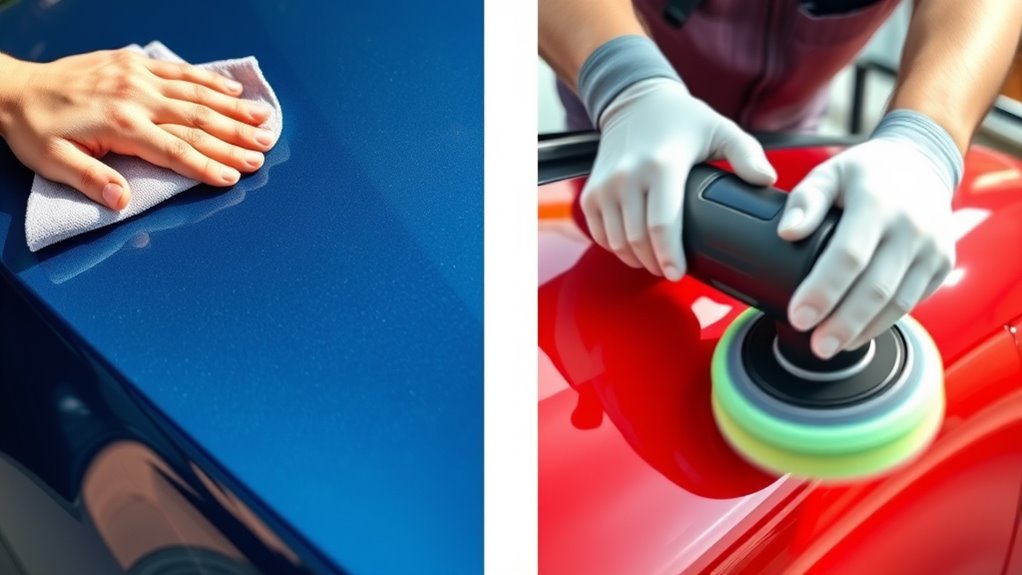
Have you ever noticed how your car’s paint can lose its shine over time? That dull, lackluster appearance is often due to minor scratches, swirl marks, and oxidation that accumulate with everyday use. To restore that glossy finish, you need to understand the importance of proper paint correction and polishing techniques. Whether you choose hand polishing or machine polishing, safety and technique are key to preserving your car’s paintwork while achieving a professional-looking shine.
When considering hand polishing, you’re relying on your own effort and a bit of patience. Hand polishing can be effective for small areas or minor imperfections, but it requires a gentle touch and consistent pressure. Using quality polishing compounds and applicators, like foam or microfiber pads, helps you control the process and minimizes the risk of damaging the paint. It’s essential to follow proper polishing techniques—work in small sections, apply even pressure, and use circular motions to evenly distribute the product. While hand polishing might seem slow, it’s a safer approach for delicate finishes or newer paint, as you have more control and less risk of overdoing it.
On the other hand, machine polishing offers a faster, more efficient way to perform thorough paint correction. With a dual-action or rotary polisher, you can remove deeper scratches and oxidation that hand polishing might miss. Machine polishing, however, demands a good understanding of your equipment and the correct polishing techniques. You need to select the appropriate pad and compound based on your paint’s condition, and always start with the least aggressive settings. Proper technique involves keeping the machine moving to prevent heat buildup, which can damage the clear coat. When done correctly, machine polishing produces a smooth, mirror-like finish that’s hard to achieve manually. Additionally, understanding the safety precautions involved in polishing can help prevent accidental damage to your vehicle’s paint.
Regardless of your choice, always prioritize safety. Test your polishing products and techniques on a small, inconspicuous area first. Use quality products designed for automotive paint correction, and avoid excessive pressure or prolonged polishing in one spot. Keep the surface cool by working in shaded areas and taking breaks to prevent overheating. Remember, the goal of polishing is to enhance the paint’s clarity without removing too much material. Whether you opt for hand polishing or machine polishing, mastering the right techniques ensures you’ll restore your car’s shine while protecting its paint for years to come.
car polishing kit with foam pads
As an affiliate, we earn on qualifying purchases.
As an affiliate, we earn on qualifying purchases.
Frequently Asked Questions
Can Hand Polishing Achieve the Same Shine as Machine Polishing?
Yes, hand polishing can achieve a shine similar to machine polishing, but it depends on your hand techniques and polishing tools. You need to apply consistent pressure and use high-quality pads or cloths to get an even finish. While it takes longer and requires more effort, careful hand polishing can enhance your car’s paint and deliver impressive results, especially for small touch-ups or delicate areas.
What Types of Paint Damage Can Polishing Fix?
You can fix minor paint damage through polishing, including swirl marks, scratches, and oxidation. Polishing helps with paint correction and surface refinishing, restoring the car’s smooth, glossy appearance. It’s effective at removing surface imperfections, dullness, and light blemishes. However, for deeper scratches or severe damage, you might need professional repairs or repainting. Regular polishing maintains your car’s paint, prolongs its finish, and keeps it looking its best.
How Often Should I Polish My Car’s Paint?
You should polish your car’s paint every 3 to 6 months, depending on its condition and your driving habits. Regular polishing helps maintain paint thickness, removing minor scratches and oxidation. However, avoid over-polishing, as it can thin the paint and cause damage. Keep an eye on your car’s appearance and adjust your polishing frequency accordingly to protect your paint while keeping it looking fresh.
Is It Safe to Polish Over Existing Scratches?
It’s generally safe to polish over existing scratches if you keep the paint depth in mind. If the scratches are shallow and don’t reach the primer or metal, polishing can help reduce their visibility without damaging your paint. However, if scratches are deep and have compromised the paint’s integrity, polishing might worsen the damage. Always assess the scratch’s depth first, and use gentle techniques to avoid thinning the paint.
What Are the Risks of Improper Polishing Techniques?
Improper polishing techniques can cause paint swirl marks and damage the clear coat. When you press too hard or use the wrong pad, you risk removing too much paint, exposing the base metal, or creating uneven surfaces. If you don’t follow proper steps, you might also weaken the clear coat, leading to future peeling or fading. Always guarantee you use gentle motions and appropriate products to protect your car’s finish.
As an affiliate, we earn on qualifying purchases.
Conclusion
Whether you choose hand polishing or machine polishing, safety is key to safeguarding your car’s paint. Don’t worry about the effort—picture yourself gently gliding over your vehicle, restoring its shine without risking damage. With patience and the right technique, you’ll achieve a smooth, glossy finish that makes your car look brand new. Remember, taking your time ensures your paint stays flawless and protected for years to come. Happy polishing!
As an affiliate, we earn on qualifying purchases.
automotive paint correction compounds
As an affiliate, we earn on qualifying purchases.
As an affiliate, we earn on qualifying purchases.
NFL season / tailgating Picks
team gear
As an affiliate, we earn on qualifying purchases.