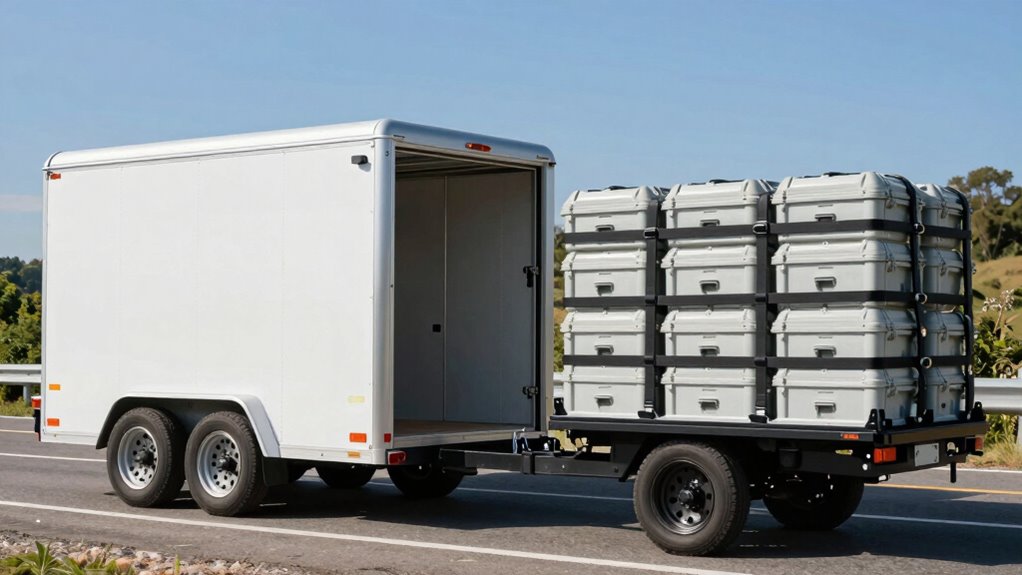

To decide between a cargo trailer and extra roof storage, consider how often you’ll haul heavy or bulky gear, and if weather protection matters. Cargo trailers are better for larger, heavier loads and keep your gear dry, but they cost more and require setup. Roof storage is quicker, more flexible, and less expensive but limited in capacity and weather resistance. If you want detailed guidance tailored to your needs, there’s more to explore below.

Get business pricing on garage and car supplies
- Business-only prices and quantity discounts
- Tax-exempt purchasing
- Multiple users, one account, clear invoices
Key Takeaways
- Assess your typical load size and weight to determine if a trailer’s capacity is necessary.
- Consider weather conditions; trailers offer better protection against rain, snow, and debris.
- Evaluate how often you need quick access; roof storage is more convenient for frequent, temporary use.
- Compare your budget against long-term needs for durability and capacity offered by trailers.
- Match your lifestyle and hauling frequency to choose between dedicated trailer space or flexible roof storage.
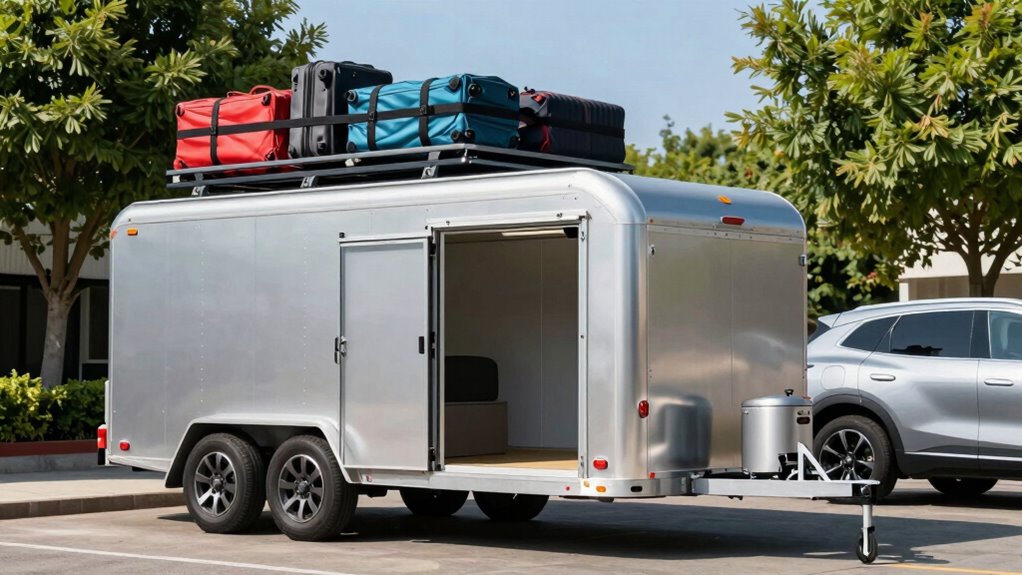
Are you trying to figure out the best way to add extra storage to your vehicle? Deciding between a cargo trailer and more roof storage depends on several key factors. First, think about your typical hauling needs. If you regularly carry bulky or heavy gear, a cargo trailer might be the better option. Trailers generally offer higher weight capacity, so you can load larger items without stressing your vehicle’s roof. Plus, cargo trailers come with the advantage of a dedicated, enclosed space that protects your gear from the elements, making them weather-resistant. This means your belongings stay dry and safe, even in heavy rain or snow, which is crucial if you often travel in variable weather conditions.
Cargo trailers provide higher capacity and weather protection for bulky, heavy gear.
On the other hand, if your storage needs are occasional or lighter, adding more roof storage could be a practical choice. Roof racks and cargo boxes are usually easier and quicker to install, and they don’t require towing a separate trailer. However, it’s essential to consider the weight capacity of your roof. Your vehicle’s roof has a limit—exceeding it can compromise safety and vehicle handling. Additionally, roof storage options are generally less weather-resistant than an enclosed trailer. They’re more exposed to rain, snow, and road debris, so you’ll want to invest in good weatherproofing and secure fastenings to keep your gear dry.
Another factor to weigh is convenience. Roof storage is often more accessible; you can load and unload gear without hitching or unhitching anything. Trailers, however, require more setup time and space to park, which might be inconvenient if you’re on the go or have limited parking space. Cost is also a factor. Roof storage solutions tend to be less expensive upfront, but their capacity is limited. Cargo trailers, while more costly initially, offer more space and durability, which can be a better long-term investment if you frequently need to transport large or heavy loads.
In the end, your choice hinges on your specific needs. If you prioritize high weight capacity and weather resistance, a cargo trailer could be the smarter pick. But if you want quick, flexible, and less costly storage, adding more roof storage might suit you better. Weigh your typical loads, weather conditions, convenience preferences, and budget to make the decision that best fits your lifestyle.
As an affiliate, we earn on qualifying purchases.
Frequently Asked Questions
What Are the Security Concerns for Roof Storage?
You should be aware that roof storage presents security vulnerabilities like theft, especially if it’s not properly secured. To prevent theft, use high-quality locks, tamper-proof mounting hardware, and consider locking covers or enclosures. Always remove valuable items when possible, and park in well-lit, monitored areas. These precautions help strengthen theft prevention efforts and protect your gear from opportunistic thieves.
How Does Weather Affect Roof-Mounted Storage Options?
Ironically, weather patterns are your biggest obstacle for roof-mounted storage. Rain, snow, or high winds challenge its durability, risking damage or loss. You might think it’s convenient, but constant exposure wears down materials faster than you’d like. If you rely on roof storage, plan for harsh weather and choose durable, weather-resistant solutions. Otherwise, you’ll find yourself replacing gear more often than you’d hoped, making a cargo trailer seem like a smarter investment.
Can Roof Storage Damage My Vehicle’s Paint?
Roof storage can potentially cause paint damage if you don’t take proper precautions. When you secure racks or cargo carriers, they might scratch or chip your vehicle’s paint, especially if debris or dirt gets trapped underneath. To protect your vehicle, use padding or protective covers, and regularly inspect your roof storage. Proper installation and maintenance help guarantee vehicle protection and prevent paint damage over time.
What Is the Maintenance Required for Cargo Trailers?
You need to regularly inspect your cargo trailer’s trailer lighting to guarantee it’s functioning properly and replace any damaged bulbs. Tire maintenance is essential—check tire pressure before each trip, look for signs of wear or damage, and rotate tires as needed. Keeping the trailer clean and dry also prevents rust and corrosion. Regularly servicing these aspects will keep your trailer safe, reliable, and in top condition for your hauling needs.
Are There Weight Restrictions for Roof Storage?
Sure, your roof can handle a lot—until it suddenly doesn’t. Weight limits and load capacity are serious business here. Most vehicles specify a maximum roof load, often around 150-300 pounds. Ignore these limits, and you risk a rooftop dance with gravity. Always check your vehicle’s load capacity before piling on gear, because exceeding it could turn your rooftop paradise into an unintended crash pad.
As an affiliate, we earn on qualifying purchases.
Conclusion
Ultimately, choosing between a cargo trailer and more roof storage depends on your needs. While roof storage offers quick access and keeps your vehicle streamlined, a cargo trailer provides ample space for larger loads and long-term use. Think of roof storage as a quick snack—convenient but limited—versus a cargo trailer as a hearty meal, offering capacity and durability. Decide what suits your adventures best, and hit the road with confidence, knowing you’ve made the right choice.
As an affiliate, we earn on qualifying purchases.
As an affiliate, we earn on qualifying purchases.
Fall Picks
fall essentials
As an affiliate, we earn on qualifying purchases.