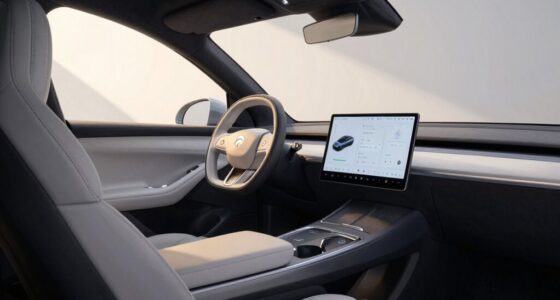
To make EV home charging automatic and stress-free, choose a high-quality, compatible Level 2 charger and install it in a weather-protected, convenient spot near your garage or driveway. Use smart chargers connected to your home Wi-Fi for scheduling and remote control. Keep your cables neatly stored and follow safety standards. Maintain your vehicle’s software and stay updated on infrastructure options. If you want tips on creating a seamless charging routine, keep exploring for more helpful insights.
Key Takeaways
- Install a smart charger with scheduling and remote control features for effortless, automated charging routines.
- Choose a weather-protected, conveniently located charging station to simplify access and protect equipment.
- Keep cables neatly stored and create a consistent parking spot to streamline the charging process.
- Regularly update vehicle and charger software to optimize performance and reduce manual adjustments.
- Monitor battery health regularly to prevent issues and maintain efficient, stress-free charging.
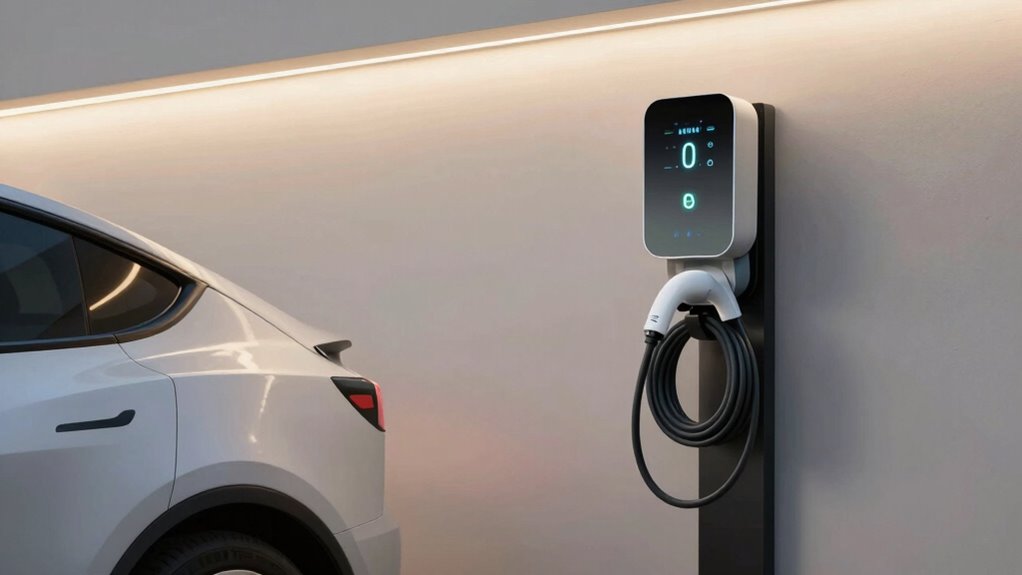
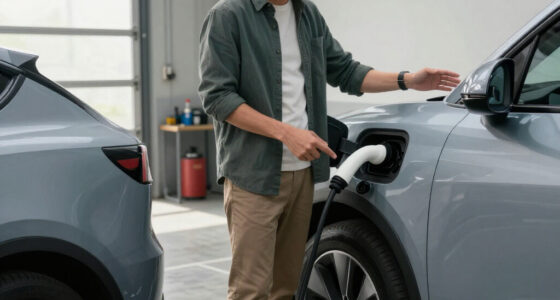
Charging your electric vehicle at home doesn’t have to be a hassle; with a few simple steps, it can become an effortless part of your daily routine. The key is setting up a system that works seamlessly with your lifestyle, so you don’t have to think twice about plugging in or managing the process. Start by selecting a high-quality, level 2 home charger that’s compatible with your vehicle. These chargers deliver faster, more efficient charging and are designed for convenience. Once installed correctly, they can automatically start charging when you plug in, removing the need for manual operation each time.
Effortlessly charge your EV at home with a compatible level 2 charger that starts automatically.
Next, focus on battery maintenance to keep your EV running smoothly and maximize energy efficiency. Regularly monitoring your battery’s health ensures it stays in the best condition, which translates into better range and fewer charging sessions. Many EVs come with onboard systems that alert you to battery status or suggest maintenance actions. Incorporate these into your routine so you can address small issues before they become major problems. Maintaining your battery also helps improve energy efficiency, meaning your vehicle uses less power to reach a full charge, saving you money and reducing your carbon footprint. Additionally, understanding battery management systems can help you optimize your vehicle’s performance and longevity. Being aware of and utilizing charging infrastructure options in your area can further streamline your experience.
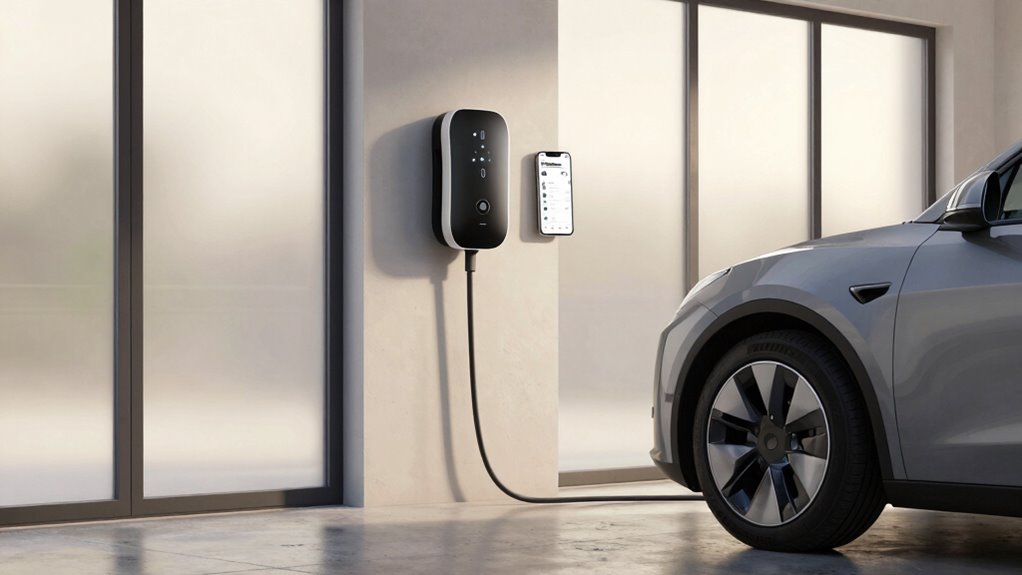
Implementing smart home technology can also contribute significantly to making your EV charging more automatic, especially as smart chargers allow you to control and schedule charging remotely. Creating a dedicated charging space simplifies your routine. Install your charger in a convenient, weather-protected spot near your garage or driveway. Keep the cable neatly stored to avoid clutter, and make sure your vehicle is always parked in the same spot for easy access. This consistency makes charging feel more automatic—just park, plug in, and forget about it until you need your vehicle again. Incorporating proper wiring standards can help ensure that your setup remains safe and efficient over time.
Finally, stay informed about your vehicle’s software updates and charging best practices. Manufacturers often release updates that improve battery management and energy efficiency. Staying current ensures your EV continues to operate at peak performance and that your home charging setup remains hassle-free. Also, choosing equipment that adheres to extension cord standards and weatherproofing guidelines can help ensure safety and durability over time. When you streamline these steps into your routine, home charging becomes a simple, stress-free part of your daily life—one less thing to worry about, and one more way to enjoy the benefits of electric driving.

ChargePoint HomeFlex Level 2 EV Fast Charger, J1772, Smart, Hardwired, 50A
- Reliable Home Charging: Builds dependable EV charging stations
- 24/7 Support: Around-the-clock assistance available
- Mobile App Control: Manage charger via user-friendly app
As an affiliate, we earn on qualifying purchases.
As an affiliate, we earn on qualifying purchases.
Frequently Asked Questions
What Are the Initial Costs of Installing a Home EV Charger?
The initial costs of installing a home EV charging station typically range from $500 to $2,500, depending on the charger type and installation complexity. You’ll need a reliable power supply, possibly requiring upgrades to your electrical system. Professional installation guarantees safety and proper setup, which adds to the cost. While the upfront expense might seem high, investing in a good charging station makes home charging more convenient and stress-free over time.
Can I Upgrade My Existing Electrical System for Faster Charging?
Think of your electrical system as a highway; upgrading it speeds up your EV charging journey. You can definitely upgrade your existing electrical system for faster charging, but first, check your charger compatibility. Electrical upgrades might include installing a higher-capacity breaker or wiring. Consulting a licensed electrician guarantees safety and efficiency, helping you enjoy quicker, more seamless charging experiences without the hassle of constant stops or delays.
How Do I Ensure My Charger Is Compatible With All EV Models?
To guarantee your charger is compatible with all EV models, check the charger’s compatibility and EV model integration details. Look for chargers supporting multiple charging standards, like SAE J1772 and CCS. Confirm the charger’s specifications match your vehicle’s requirements. You can also consult manufacturer guides or contact customer support to verify compatibility. This way, you’ll enjoy seamless, trouble-free home charging for any EV model you own.
What Safety Precautions Should I Follow During Installation?
When installing your charging station, follow safety regulations to protect yourself and your property. Turn off power before beginning installation, and use a dedicated circuit to prevent overloads. Wear protective gear and guarantee proper grounding. Hire a licensed electrician if you’re unsure about any step. Always adhere to local electrical codes and manufacturer instructions, making sure the setup is safe, reliable, and compliant with safety standards.
Are There Government Incentives for Installing Home EV Chargers?
Yes, there are government incentives available for installing home EV chargers. You can benefit from rebates or tax credits that help offset installation costs. When planning your charging station placement, guarantee easy access and proper wiring, and consider battery maintenance to keep your EV running efficiently. These incentives often require specific installation standards, so check local programs and guidelines to maximize your savings and ensure safety during setup.

AIMILER Level 2 Electric Vehicle (EV) Charger(WiFi APP/Plug-Play), 48A, 25ft Cable ETL Certified, J1772 Connector EVSE EV Electric Car Charging Stations for Home Level 2 (Black 240V Nema 14-50P)
- Fast Charging Speed: Up to 9X faster than Level 1
- Universal J1772 Compatibility: Compatible with most North American EVs
- High Power Output: Up to 11.5kWh charging capacity
As an affiliate, we earn on qualifying purchases.
As an affiliate, we earn on qualifying purchases.
Conclusion
Making your EV home charging feel automatic and stress-free is like having a trusted co-pilot. With smart chargers, scheduled routines, and a little planning, you’ll never have to worry about running out of juice or complicated setups. Instead, charging becomes as seamless as a gentle tide—easy, predictable, and effortless. Once you set it up, you’ll enjoy the ride knowing that your electric journey is smooth sailing from start to finish.

EVIQO Level 2 EV Charger J1772 40A NEMA 14-50 – 240V Wall Charging Station
- Universal Compatibility: Works with all North American EVs and PHEVs
- Tesla Compatibility: Supports Tesla with J1772-to-NACS adapter
- Secure Connector: Rubberized SAE J1772 connector with metal latch
As an affiliate, we earn on qualifying purchases.
As an affiliate, we earn on qualifying purchases.
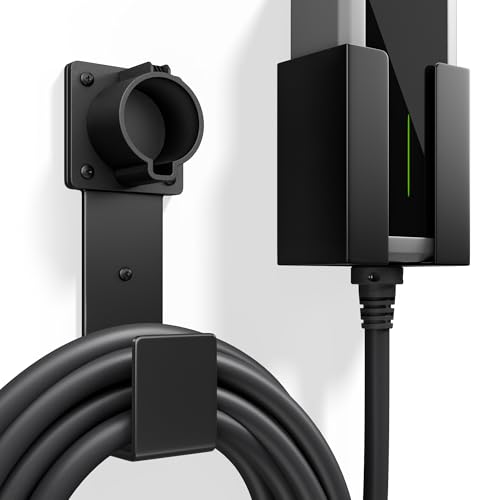
EV Charger Holder Wall Mount – J1772 Cable Organizer & Nozzle Holster with Storage Box for Electric Vehicle Charging
- Compatible with J1772 Connectors: Securely holds standard J1772 chargers
- Durable Stainless Steel Build: Rust-resistant and long-lasting construction
- Cable Organization Hook: Supports and prevents cable tangling
As an affiliate, we earn on qualifying purchases.
As an affiliate, we earn on qualifying purchases.