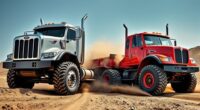
When you upgrade to larger tires, re-gearing your differential is essential to keep your vehicle running smoothly. Bigger tires change the overall gear ratio, which can lead to sluggish acceleration, higher RPMs, and increased wear on drivetrain parts if you don’t adjust. Re-gearing restores proper performance, improves fuel efficiency, and protects your drivetrain. If you want to understand exactly when and how to re-gear for your tire size, keep exploring these important details.

Get business pricing on garage and car supplies
- Business-only prices and quantity discounts
- Tax-exempt purchasing
- Multiple users, one account, clear invoices
Key Takeaways
- Larger tires increase the effective gear ratio, causing sluggish acceleration and higher RPMs at highway speeds.
- Re-gearing compensates for this change, restoring optimal engine performance and fuel efficiency.
- Typically necessary when tire size increases by more than 10-15%.
- Proper gear ratio selection (e.g., 4.10 or 4.56) improves throttle response and drivetrain longevity.
- Re-gearing ensures the vehicle maintains reliable performance and prevents drivetrain strain after tire upgrades.
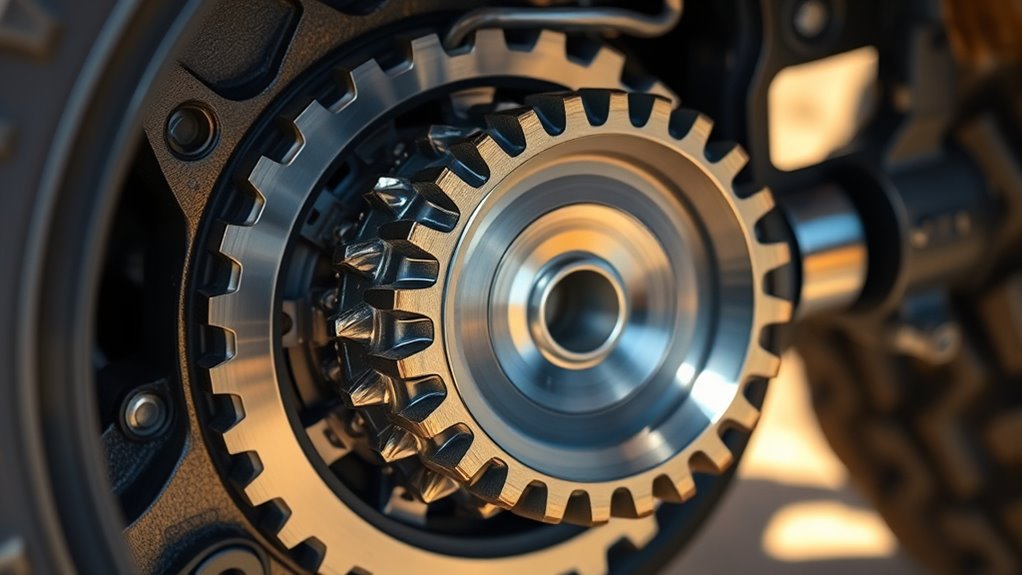
Have you ever installed bigger tires on your vehicle and noticed it doesn’t drive quite the same? That’s because changing your tire size impacts how your vehicle performs, especially when it comes to acceleration, top speed, and fuel economy. Bigger tires increase the overall diameter, which affects your gear ratio—the relationship between your engine’s RPM and the wheels’ rotation. When your tire size grows, your stock gear ratio may no longer be *indispensable*, causing your vehicle to feel sluggish or over-revved at highway speeds. This mismatch can lead to decreased fuel efficiency, sluggish acceleration, and even increased wear on your drivetrain components.
Understanding the importance of re-gearing is *essential* if you’ve upgraded to larger tires. Your gear ratio is designed based on your original tire size, allowing your engine to operate within its most efficient RPM range. When you switch to bigger tires, the effective gear ratio changes because your wheels are turning fewer times per engine revolution. As a result, your engine has to work harder to reach the same speeds, which can lead to a noticeable decrease in performance. Re-gearing involves installing different differential gears—usually a smaller gear ratio—to compensate for the larger tires. This adjustment brings your vehicle’s performance back in line, restoring acceleration and efficiency.
Timing is *vital* when considering re-gearing. If you install bigger tires without adjusting your gear ratio, you might feel the effects immediately—slower acceleration, higher engine RPMs at cruising speeds, and increased fuel consumption. Typically, if your tire size increases by more than 10-15%, it’s a good sign that re-gearing could benefit your vehicle. It’s not just about performance; it’s also about preserving the longevity of your drivetrain. Running larger tires with the stock gear ratio puts extra strain on your transmission and differential, potentially leading to premature wear and costly repairs. Recognizing the impact on vehicle performance and understanding your vehicle’s specifications can help you make informed decisions about re-gearing.
Re-gearing isn’t a complicated process, but it does require some knowledge about your vehicle’s specifications and your driving needs. Consulting with a professional or doing thorough research helps you determine the right gear ratio for your new tire size. For instance, if you’ve gone from 30-inch tires to 35-inch tires, adjusting the gear ratio from 3.73 to around 4.10 or 4.56 might be appropriate. By re-gearing, you’ll enjoy better throttle response, improved acceleration, and *best possible* engine performance—all while extending the lifespan of your drivetrain. Ultimately, when you upgrade your tire size, re-gearing is a *smart* step to *guarantee* your vehicle continues to perform reliably and efficiently.
differential gear ratio calculator
As an affiliate, we earn on qualifying purchases.
As an affiliate, we earn on qualifying purchases.
Frequently Asked Questions
How Do I Determine the Correct Gear Ratio for My Vehicle?
To determine the correct gear ratio, start with a gear ratio calculation based on your vehicle’s stock specifications and your new tire size. Adjust for tire size by considering how it affects your speedometer and power. Use online calculators or consult your vehicle’s manual to find the best gear ratio, ensuring your engine runs efficiently with the larger tires, providing the right balance between performance, fuel economy, and drivability.
Will Re-Gearing Affect My Vehicle’s Fuel Economy?
Re-gearing can impact your vehicle’s fuel efficiency because changing the gear ratio alters how hard the engine works. If you install larger tires and re-gear for better performance, expect some decrease in fuel economy since the engine may need to work harder at certain speeds. However, if done correctly, a well-chosen gear ratio balances power and efficiency, helping you get the best mileage possible with your upgraded tires.
What Tools Are Needed for Re-Gearing a Differential?
Think of re-gearing as tuning a musical instrument—you need the right tools for perfect harmony. You’ll need gear installation tools like a bearing puller, gear puller, and a gear press. Precision matters, so a torque measurement wrench is essential to tighten bolts correctly. Don’t forget bearing separators and a dial indicator to guarantee proper gear mesh and alignment. With these tools, you’ll hit the right note in differential re-gearing.
Can I Re-Gear My Differential Myself or Should I Hire a Professional?
You can re-gear your differential yourself, but it’s important to prioritize DIY safety and understand the complexity involved. If you have mechanical skills and the right tools, you might manage it, but for precise calibration and to avoid damaging your vehicle, hiring a professional with expertise is advised. Professionals bring experience and ensure proper installation, saving you time and potential costly mistakes.
How Often Should I Consider Re-Gearing After Installing Bigger Tires?
Imagine you upgrade to 35-inch tires and notice sluggish acceleration; that’s when re-gearing becomes essential. You should consider re-gearing whenever your tire size impacts your vehicle’s performance, typically after installing bigger tires. Many gear myths suggest you only need to re-gear once, but driving habits and tire size influence timing. Regularly monitor your vehicle’s response, and plan re-gearing every 20,000 to 50,000 miles, depending on use.
As an affiliate, we earn on qualifying purchases.
Conclusion
Re-gearing after upgrading your tires guarantees your vehicle performs at its best, maintaining power and efficiency. If you’ve increased your tire size by 20% or more, re-gearing is a smart move to prevent strain on your engine and drivetrain. Did you know that improper gearing can reduce fuel efficiency by up to 15%? Taking this step now keeps your ride smooth, responsive, and ready for any adventure. Don’t overlook re-gearing—it’s the key to revealing your vehicle’s full potential.
As an affiliate, we earn on qualifying purchases.
off-road vehicle re-gearing parts
As an affiliate, we earn on qualifying purchases.
As an affiliate, we earn on qualifying purchases.
Fall Picks
fall essentials
As an affiliate, we earn on qualifying purchases.