To clean and lubricate your car door hinges and locks, start by opening the door wide and removing loose debris with a brush or compressed air. Apply a degreasing cleaner to remove grease and grime, then inspect for rust or damage. After cleaning, spray a high-quality lubricant onto the hinges and lock parts, moving the door to distribute it evenly. For more tips on maintaining your car’s hinges and locks, keep exploring these simple steps.

Get business pricing on garage and car supplies
- Business-only prices and quantity discounts
- Tax-exempt purchasing
- Multiple users, one account, clear invoices
Key Takeaways
- Open the door fully, remove debris with a brush or compressed air, then apply a degreasing cleaner to break down grime.
- Check hinges for rust, corrosion, or damage, and consider applying a rust inhibitor if needed.
- Spray a high-quality, corrosion-resistant lubricant onto hinge pins and lock components, then operate the door and lock to distribute it.
- Wipe off excess lubricant to prevent dirt buildup and insert the key to turn the lock, spreading lubricant inside the cylinder.
- Regularly clean and lubricate hinges and locks to maintain smooth operation, prevent rust, and extend component lifespan.
Ever wonder why your car door squeaks or sticks? One common culprit is the buildup of dirt, grime, and rust, which can cause hinges and locks to seize or become noisy. To keep your doors functioning smoothly, it’s essential to regularly clean and lubricate the hinges and locks. This not only prevents annoying squeaks but also extends the lifespan of your vehicle’s components, saving you money in the long run. If you notice persistent sticking or grinding, it might be time for hinge replacement, but often a thorough cleaning and proper lubrication can restore proper movement.
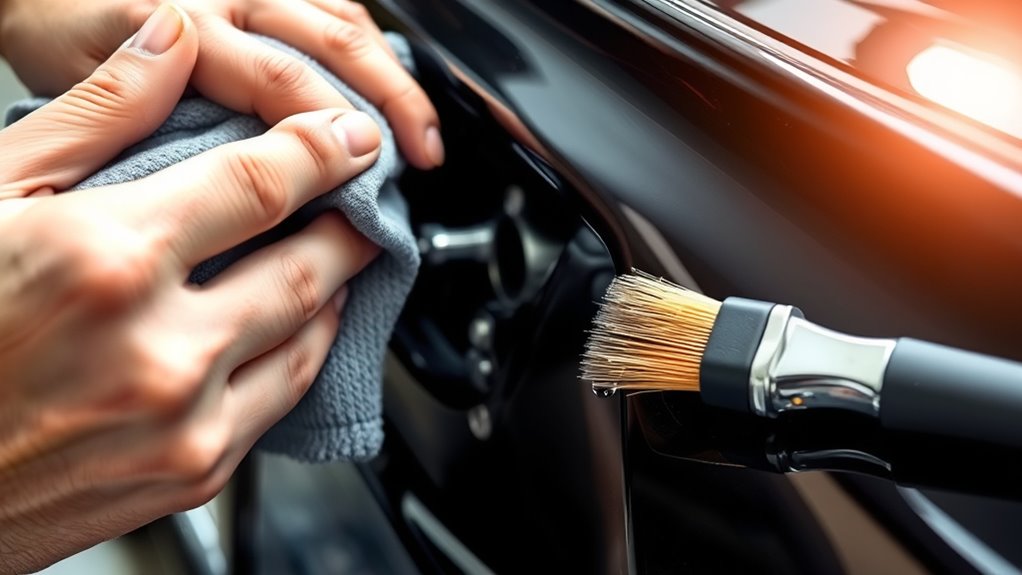
Start by opening your car door wide to access the hinges fully. Use a brush or compressed air to remove loose dirt and debris from the hinges and lock mechanisms. Next, spray a degreasing cleaner or a dedicated hinge cleaner onto the hinges to break down grease, grime, and any rust that’s forming. If rust prevention is your goal, consider applying a rust inhibitor to the hinge surfaces after cleaning, especially if you live in humid or salty environments. Rust can weaken metal components over time, making hinge replacement inevitable if it’s left untreated. During this step, check for any signs of severe corrosion or damage. If the rust is extensive and the hinges are compromised, replacing them is the best way to ensure safety and proper door operation.
Once the hinges are clean and dry, it’s time to lubricate. Use a high-quality, corrosion-resistant lubricant designed for automotive use. Spray it liberally onto the hinge pins and moving parts of the lock mechanism. Move the door back and forth to help distribute the lubricant evenly, ensuring smooth movement and reducing future squeaks. Avoid over-lubricating, as excess oil can attract dirt and grime, which can accelerate wear and rust formation. For the locks, insert the key and turn it several times to spread the lubricant inside the lock cylinder. Wipe away any excess to prevent dirt buildup.
Regular maintenance like this keeps your car door hinges and locks operating quietly and efficiently. Remember, rust prevention measures—like applying rust inhibitors—and timely hinge replacement can save you from more costly repairs down the line. Staying proactive with cleaning and lubrication helps your doors stay functional, safe, and quiet, making your driving experience more comfortable and worry-free.
Frequently Asked Questions
How Often Should I Clean My Car Door Hinges and Locks?
You should clean your car door hinges and locks every six months to maintain proper hinge maintenance and follow a consistent lubrication schedule. Regular checks help prevent rust, squeaks, and sticking. If you notice unusual noises or difficulty opening your doors, it’s time to clean and lubricate sooner. Staying proactive guarantees your hinges stay smooth and functional, ultimately extending their lifespan and keeping your vehicle operating quietly and reliably.
Can I Use WD-40 on Car Locks?
Sure, you can use WD-40 on your car locks, but don’t expect it to be a long-term fix for car lock maintenance. WD-40’s uses are legendary for squeaks and rust, but it’s not ideal for actual lubrication. Instead, opt for a graphite or silicone-based lubricant designed specifically for locks. That way, you avoid turning your lock into a greasy mess and keep it functioning smoothly.
What Signs Indicate My Hinges Need Lubrication?
If your hinges start squeaking or you notice your lock sticking, it’s a clear sign they require lubrication. You might also hear creaking sounds or feel resistance when opening or closing the door. These issues indicate that the hinges aren’t moving smoothly and need a proper lubricant. Addressing these signs promptly helps prevent further damage and ensures your door operates quietly and efficiently.
Are There Any DIY Methods to Prevent Rust on Hinges?
Did you know that rust can reduce hinge lifespan by up to 50%? To prevent rust, regularly apply a rust prevention spray or a light coat of oil on your hinges, especially in humid areas. Keep hinges clean and dry, and consider installing rust-resistant hinges if you live in a coastal or rainy climate. Consistent hinge maintenance is key to avoiding corrosion and ensuring smooth door operation.
Is It Safe to Use Water to Clean Car Door Hinges?
Using water to clean car door hinges isn’t the safest choice, as water safety is essential to prevent rust and corrosion. Instead, consider cleaning alternatives like a damp cloth or a degreasing spray, which effectively remove dirt without introducing excess moisture. If you do use water, make sure you thoroughly dry the hinges afterward to avoid rust. Always prioritize dry cleaning methods for hinge maintenance to keep your car in top shape.
Conclusion
Think of your car door hinges and locks as the joints of a well-oiled dance partner. When you clean and lubricate them regularly, they perform smoothly and gracefully, avoiding unnecessary strain or squeaks. Neglecting this routine is like forcing a dancer to move without oil—eventually, everything grinds to a halt. Keep your car moving effortlessly by giving these essential parts the care they deserve, and they’ll keep performing their best for miles to come.
Fall Picks
fall essentials
As an affiliate, we earn on qualifying purchases.