
To get AC power in your car, connect a suitable power inverter directly to your vehicle’s battery using the correct cables. Make certain the inverter’s wattage matches your power needs and follow the manufacturer’s instructions carefully. Keep cables neat and avoid overloading the system. Turn off the vehicle before connecting, then power on the inverter to test with small devices first. For detailed steps and safety tips, keep exploring further.

Get business pricing on garage and car supplies
- Business-only prices and quantity discounts
- Tax-exempt purchasing
- Multiple users, one account, clear invoices
Key Takeaways
- Ensure your vehicle’s electrical system can handle the inverter’s wattage without overload.
- Follow manufacturer instructions for wiring, connecting the inverter directly to the vehicle battery with secure cables.
- Use appropriate fuses and circuit breakers to protect against electrical faults.
- Install the inverter in a well-ventilated area to prevent overheating and ensure proper cooling.
- Test the setup with small devices before powering larger appliances to confirm safe operation.
Are you ready to upgrade your vehicle or home with a power inverter? Installing one can be a game-changer, giving you the ability to power your devices with AC electricity wherever you are. But before you dive in, it’s essential to understand some key aspects to guarantee a safe and efficient setup. Starting with battery capacity is crucial because your inverter’s performance depends heavily on the power source. If your vehicle’s battery isn’t large enough or isn’t in good condition, it might struggle to supply the inverter with sufficient energy, leading to potential system failures or drained batteries. Make sure your car battery has enough capacity to handle the additional load, especially if you plan to run high-wattage devices. Checking the battery’s specifications and, if necessary, upgrading to a higher-capacity one can prevent issues down the line.
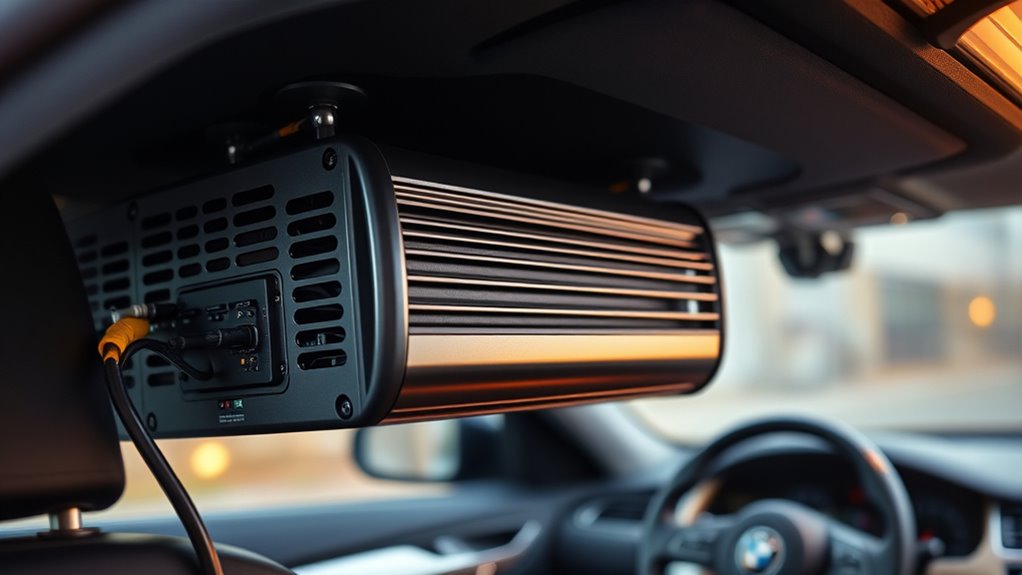
Inverter safety is another critical consideration. When installing your inverter, always follow the manufacturer’s instructions carefully to avoid electrical hazards. Use appropriate fuses and circuit breakers to protect your vehicle’s wiring and prevent overheating or short circuits. Proper wiring techniques are vital—keep cables neat, insulated, and away from moving parts or heat sources. Additionally, guarantee your inverter has adequate ventilation; overheating can be dangerous and reduce the lifespan of your equipment. Remember, a poorly ventilated inverter can become a fire hazard, so installing it in a well-ventilated area is smart. Ensuring that the inverter’s cooling system functions properly can significantly extend its operational life.
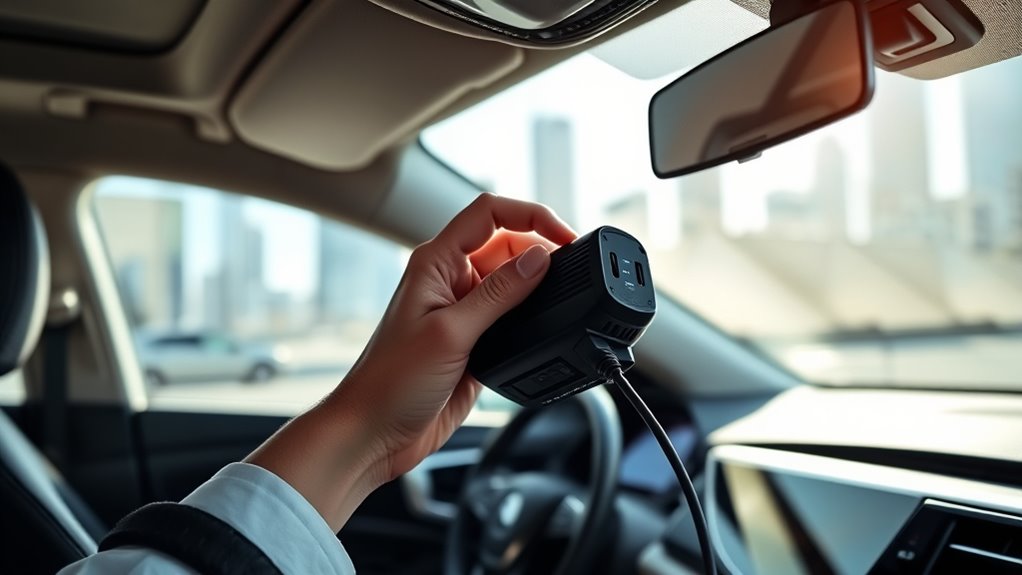
Before connecting your inverter, double-check your vehicle’s electrical system to understand its limits. Overloading the inverter can cause damage not just to the device but also to your vehicle’s electrical components. Always match the inverter’s wattage rating with your power needs, and avoid pushing it beyond the recommended capacity. When connecting, start by turning off your vehicle, then hook up the inverter directly to the battery using the appropriate cables. Ensure all connections are tight and secure to prevent any accidental disconnections or sparks. Once everything is connected, power on the inverter and test it with small devices first, confirming that your setup works smoothly.
As an affiliate, we earn on qualifying purchases.
Frequently Asked Questions
Can I Use a Power Inverter While Driving or Only When Parked?
You can use a power inverter while driving, but keep in mind that inverter installation affects your car battery impact. Running the inverter during driving puts less strain on your battery because the alternator supplies power. However, if you use it while parked, your car battery handles all the load, which could drain it quickly. Always verify your inverter is properly installed and monitor your battery’s charge to avoid issues.
What Safety Precautions Should I Take When Installing a Power Inverter?
Think of installing a power inverter as building a bridge—safety is your foundation. You should always check electrical grounding to prevent shocks and make certain proper circuit protection to avoid overloads. Use insulated tools, wear gloves, and verify connections before powering on. These precautions protect you and your vehicle, making sure your setup is safe, reliable, and ready to handle your power needs without risking damage or injury.
Will Using a Power Inverter Drain My Car Battery Quickly?
Using a power inverter can drain your car battery quickly if you run it for extended periods or connect high-wattage devices. Higher inverter efficiency minimizes battery drain because less energy is lost as heat. To avoid draining your battery, only use the inverter when the engine is running, and keep an eye on the battery level. This way, you guarantee your battery lasts longer and your devices stay powered.
How Do I Choose the Right Wattage Inverter for My Needs?
Like a trusty sidekick in a sci-fi flick, choosing the right inverter capacity is vital. To meet your power requirements, sum up what devices you’ll run and select an inverter with a wattage rating slightly higher. If you need to power a laptop and small appliances, opt for a 300-500 watt inverter. For heavier tools, go for 1000 watts or more. This guarantees efficient operation without overloading your system.
Can I Run Sensitive Electronics With a Power Inverter?
Yes, you can run sensitive electronics with a power inverter, but you need to take into account electronics compatibility and inverter limitations. Look for inverters with pure sine wave output, as they better match your device’s power needs and reduce risks of damage. Be aware of the inverter’s wattage capacity and surge ratings to ensure it can handle your electronics’ startup and operating power. Always check your device specifications before plugging in.
12V to AC power inverter for vehicle
As an affiliate, we earn on qualifying purchases.
As an affiliate, we earn on qualifying purchases.
Conclusion
Now that you’ve installed your power inverter, you’re all set to enjoy AC power on the go, much like a portable oasis in the desert. With a little effort, you’ve transformed your car into a mobile charging station, ready to power everything from laptops to small appliances. Remember to use it safely and follow the manufacturer’s guidelines. Just like a trusty compass, your inverter keeps you powered up wherever your journey takes you.
As an affiliate, we earn on qualifying purchases.
car inverter with fuse and cooling system
As an affiliate, we earn on qualifying purchases.
As an affiliate, we earn on qualifying purchases.
Halloween Picks
halloween
As an affiliate, we earn on qualifying purchases.