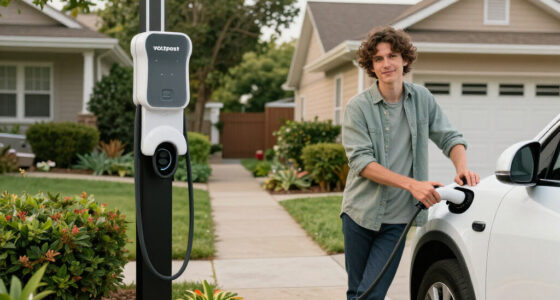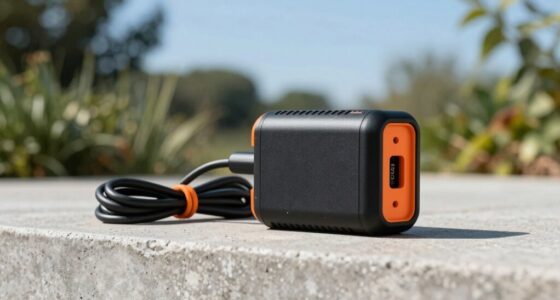

To choose between a smart and simple home EV charger, consider your budget, lifestyle, and how much control you want. Smart chargers offer remote access, energy management, and integration with renewable sources, but they come with higher costs and installation complexity. Simple chargers are budget-friendly and easy to set up, ideal if you just need basic charging. To decide confidently, look at your needs for convenience and sustainability—more details are ahead to help you make the best choice.

Get business pricing on garage and car supplies
- Business-only prices and quantity discounts
- Tax-exempt purchasing
- Multiple users, one account, clear invoices
Key Takeaways
- Assess your budget and installation capabilities; smart chargers are more expensive and complex to install.
- Determine if remote control and energy management features are essential for your routine.
- Consider compatibility with renewable energy sources and demand response needs.
- Evaluate the importance of security updates and software enhancements for long-term use.
- Match your usage preferences: basic manual operation versus advanced connectivity and automation.
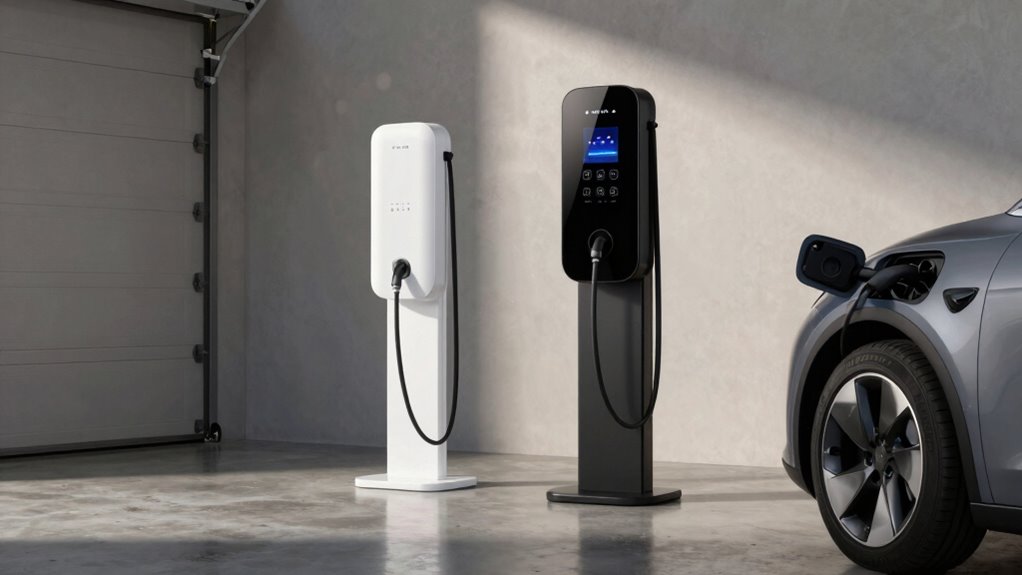
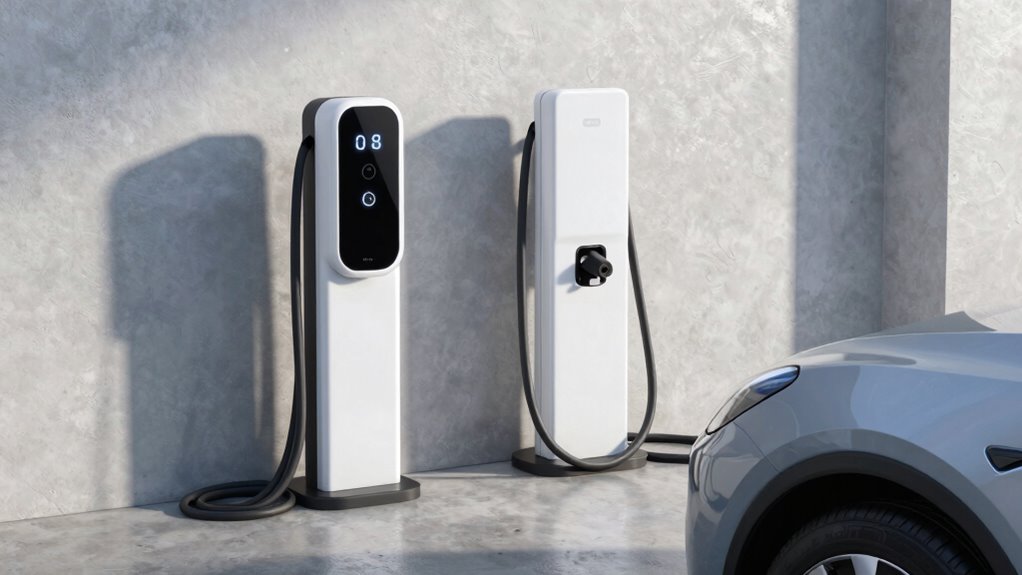
When deciding on a home electric vehicle (EV) charger, understanding the differences between smart and simple models can make a significant impact on your convenience and cost savings. If you’re considering a smart charger, you’ll find that wireless connectivity is one of its key features. This allows you to control and monitor your charging remotely through a smartphone app, giving you the flexibility to start, stop, or adjust charging sessions from anywhere. Wireless connectivity also enables real-time updates and alerts, so you’re always informed about your vehicle’s charging status. This can be particularly useful if you want to optimize your energy use or avoid charging during peak electricity rates. On the other hand, simple chargers lack these advanced features. They typically operate on a basic timer or manual controls, which means you need to be physically present or set schedules in advance, limiting your ability to fine-tune charging based on your daily routine. Additionally, security features in smart chargers help protect your system from potential cyber threats, ensuring a safer charging experience. Incorporating energy management capabilities, these chargers can play a vital role in supporting sustainable energy practices within your home. Moreover, smart chargers often include software updates, which can improve functionality and security over time without the need for new hardware. The integration of renewable energy sources, such as solar panels, is also more streamlined with smart chargers, allowing you to maximize the use of clean energy. Energy management is another critical aspect to consider. Smart chargers often come with built-in energy management capabilities, allowing you to integrate them seamlessly with your home’s energy system. They can monitor your overall energy consumption and adjust charging patterns accordingly, helping you reduce electricity costs and support renewable energy sources like solar panels. Some smart chargers can even prioritize charging during off-peak hours automatically, saving you money over time. Incorporating demand response strategies can further enhance cost savings and grid stability, making smart chargers a forward-thinking choice. Conversely, simple chargers usually don’t include energy management features. They may rely solely on basic timing options or manual operation, making it harder to optimize your energy use. If you’re aiming to maximize efficiency and lower your electricity bills, a smart charger could be the better choice, especially if you already have or plan to install renewable energy sources or smart home systems. Overall, understanding these features can help you choose a charger that aligns with your energy goals and budget.
While smart chargers offer advanced features that can improve convenience and efficiency, they also tend to be more expensive upfront and may require a more complex installation process. Simple chargers, however, are more straightforward, cheaper, and easier to install, with minimal setup needed. Your decision depends on how much you value remote control, real-time monitoring, and energy optimization versus straightforward operation and affordability. If you want to stay connected and manage your energy consumption intelligently, a smart EV charger is worth the investment. But if you prefer a no-fuss, budget-friendly option, a simple charger can still effectively meet your basic charging needs without the extra bells and whistles.
As an affiliate, we earn on qualifying purchases.
Frequently Asked Questions
Can I Upgrade My Charger From Simple to Smart Later?
Yes, you can upgrade your charger from simple to smart later. First, check your current charger’s compatibility with smart features and make sure your home’s electrical system can handle the upgrade. The installation process may involve replacing or adding components, so it’s best to consult a professional. Upgrading offers benefits like remote control and energy monitoring, making it a practical choice if you want more convenience and efficiency in the future.
Do Smart Chargers Require a Dedicated Wi-Fi Network?
Smart chargers typically do require a dedicated Wi-Fi network to guarantee reliable wireless connectivity and peak performance. This setup allows for features like energy monitoring, remote control, and scheduling. Without a dedicated network, you might experience connectivity issues that hinder these functionalities. Making sure your Wi-Fi is stable and secure helps maximize your smart charger’s capabilities, giving you better control and insight into your energy consumption.
Are There Any Additional Costs for Smart Charger Features?
Yes, smart charger features can come with additional costs. You might pay extra for advanced functionalities like remote control, scheduling, and energy efficiency optimization. These features often include a user interface that allows you to easily monitor and manage your charging. Keep in mind, the added convenience and energy savings can justify the extra expense, helping you save money and time in the long run.
How Secure Are Smart EV Chargers From Hacking?
Like a fortress guarding its secrets, smart EV chargers are generally secure, but cybersecurity risks exist. They employ encryption and regular firmware updates to protect against hacking. Still, it’s essential to choose models with robust security features, maintain software updates, and change default passwords. Staying vigilant ensures your charger remains a safe, smart addition to your home, shielding your vehicle and data from potential cyber threats.
Can Smart Chargers Be Integrated With Home Automation Systems?
Yes, smart chargers can be integrated with your home automation systems. They allow you to monitor energy usage through energy monitoring features, helping you optimize your electricity consumption. You can also control the charger remotely, making it convenient to start or stop charging sessions from anywhere. This seamless integration enhances your home’s automation capabilities, giving you more control and insights into your EV charging habits effortlessly.
As an affiliate, we earn on qualifying purchases.
Conclusion
Ultimately, your choice depends on your lifestyle and needs. If you value convenience and remote control, a smart charger like Sarah’s setup, which she used to optimize charging times and save on electricity bills, might be ideal. However, if you prefer straightforward, reliable charging without extra features, a simple charger could suit you best. Consider your daily routine and budget to make the best decision—after all, your home charging setup should fit seamlessly into your life.
wireless EV charger with app control
As an affiliate, we earn on qualifying purchases.
As an affiliate, we earn on qualifying purchases.
As an affiliate, we earn on qualifying purchases.
Columbus Day / Indigenous Peoples' Day Picks
long weekend sales
As an affiliate, we earn on qualifying purchases.