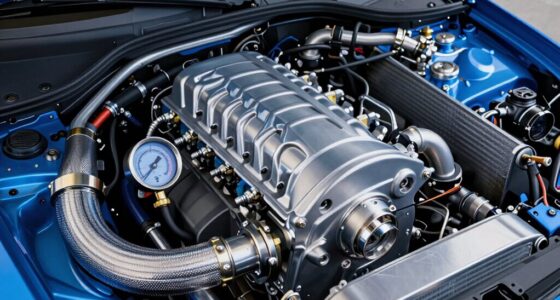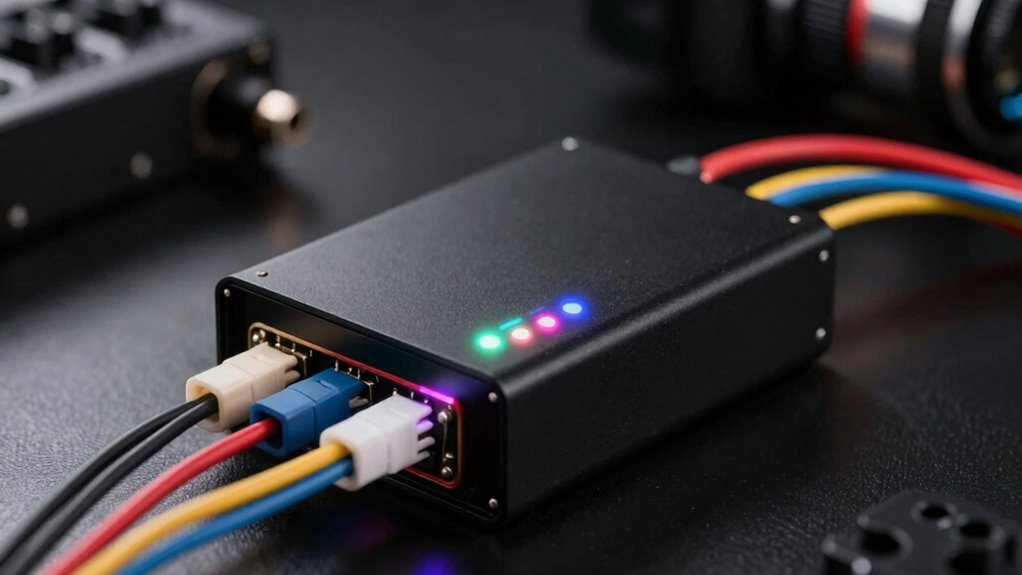

Standalone ECUs are special devices that give you direct control over your engine’s performance, allowing you to customize its behavior beyond what the factory settings offer. You can adjust things like fuel delivery, ignition timing, and boost pressure to suit your driving style or modifications. This means your car can run more efficiently, more powerfully, or more smoothly. If you want to understand how to fine-tune your engine’s potential, you’re in the right place to explore further.
Key Takeaways
- Standalone ECUs are custom devices that give you more control over your engine’s performance than factory settings.
- They let you adjust fuel, ignition, and boost to match your driving style and modifications.
- Connecting to engine sensors, they help fine-tune responses for better power, efficiency, and drivability.
- Using a standalone ECU requires learning, but it allows precise tuning for personalized engine behavior.
- They help enthusiasts achieve goals like more horsepower, better fuel economy, or smoother driving.
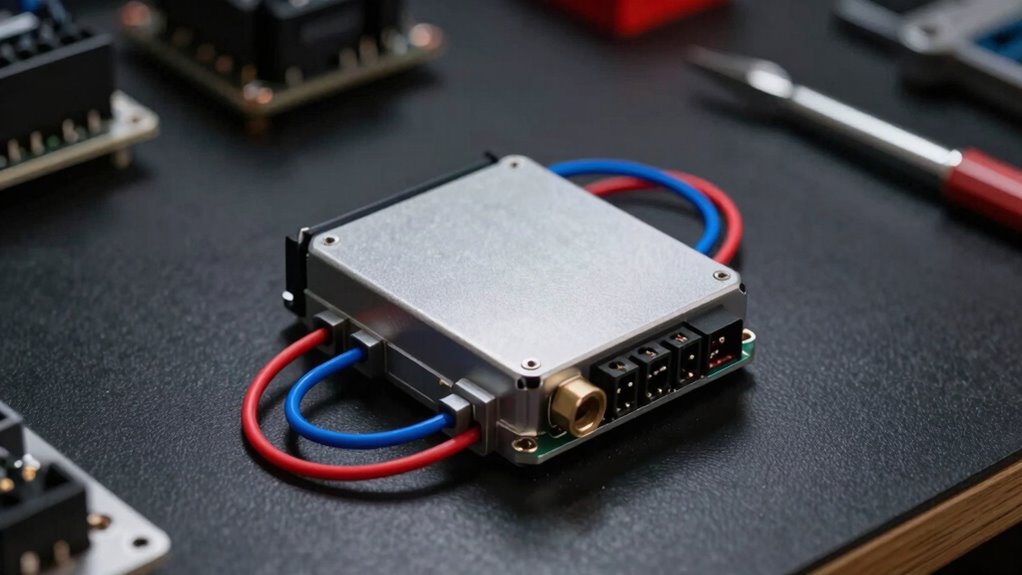
Standalone ECUs, or Engine Control Units, are specialized devices that give you direct control over your vehicle’s engine management system. Instead of relying on the factory setup, which is designed for general use, a standalone ECU allows you to customize how your engine performs. This means you can fine-tune things like fuel delivery, ignition timing, and boost pressure to match your specific modifications or driving style. When you’re working with a standalone ECU, fuel mapping becomes a vital aspect. Fuel mapping involves adjusting how much fuel the engine receives at different RPMs and loads. By tweaking these maps, you can optimize power output, improve fuel efficiency, or achieve a balance that suits your needs. It’s like creating a personalized recipe for your engine, helping it run smoothly and efficiently under various conditions.
Sensor integration is another key feature of standalone ECUs. Modern engines are packed with sensors that monitor everything from air intake and coolant temperature to air pressure and oxygen levels. A standalone ECU integrates these sensors directly, allowing you to modify how the engine responds to different inputs. For example, you might set the ECU to advance ignition timing when the intake air is cooler or adjust fuel delivery based on real-time oxygen sensor feedback. This direct sensor integration gives you better control over engine performance and helps you troubleshoot issues more effectively. It also means you can implement advanced tuning strategies that aren’t possible with stock ECUs, such as custom boost control or launch control systems. Additionally, understanding how sensor data influences engine behavior can help you develop a deeper knowledge of engine management systems and their capabilities. Incorporating real-time data analysis can further enhance tuning precision and engine responsiveness. Recognizing the importance of sensor calibration ensures that your adjustments are accurate and reliable. Moreover, engaging with community forums and expert resources can accelerate your learning curve and troubleshooting skills.
When you choose a standalone ECU, you’re taking a hands-on approach to your vehicle’s performance. You get the ability to craft precise fuel maps and seamlessly integrate sensor data, which together *liberate* new levels of tuning potential. This kind of control isn’t just about increasing horsepower; it’s about refining how your engine responds to your driving habits and modifications. Whether you’re chasing maximum power, better mileage, or improved drivability, a standalone ECU puts the power in your hands. It requires some learning and patience, but the reward is a more responsive, personalized driving experience. Ultimately, it’s about moving beyond the limitations of stock systems and truly tailoring your vehicle to perform exactly how you want. Understanding the core functions of ECUs can further empower enthusiasts to make informed adjustments and optimize their engine’s performance.

Original 39127-2b620 ILE1 New ECU Car Engine Computer Board Electronic Control Unit MEG17.9.12 for KIA Hyundai
Specification: Type: Engine Computer Board Accessory Type: Direct Installation Part Number: 39127-2b620 Material: Metal Color: argent
As an affiliate, we earn on qualifying purchases.
As an affiliate, we earn on qualifying purchases.
Frequently Asked Questions
Can I Install a Standalone ECU Myself?
Yes, you can install a standalone ECU yourself, but it’s not always straightforward. You’ll need to carefully manage engine wiring and handle installation challenges like connecting sensors and ensuring proper power supply. If you’re comfortable with automotive wiring and troubleshooting, you can do it. However, if you’re unsure, it’s wise to seek professional help to avoid mistakes that could affect your engine’s performance or damage components.
How Much Does a Standalone ECU Typically Cost?
Like a well-placed brushstroke on a canvas, a standalone ECU can transform your ride, but it comes at a cost. Typically, aftermarket upgrades range from $600 to $2,000, depending on features and brand. Keep in mind, fitting one helps optimize performance and emissions regulations, but you’ll also need to take into account installation and tuning costs. Budget accordingly to get the most out of your investment and avoid surprises.
Will a Standalone ECU Improve My Car’s Fuel Efficiency?
Yes, a standalone ECU can improve your car’s fuel economy and engine performance. By allowing you to fine-tune your engine’s settings, you optimize fuel delivery and ignition timing, which leads to more efficient combustion. This tailored control helps you get better mileage and smoother acceleration. Keep in mind, the actual gains depend on how well you or a tuner adjust the ECU, but overall, it’s a solid upgrade for efficiency and performance.
Do I Need Professional Help to Tune a Standalone ECU?
You don’t need a professional to tune a standalone ECU, but it’s highly recommended. Think of engine mapping like customizing a suit; without proper fit, it’s just not right. A professional guarantees sensor compatibility and ideal settings, avoiding potential damage. While you can learn and do it yourself, expert help guarantees your engine runs smoothly, efficiently, and safely, especially with complex setups or high-performance goals.
Are Standalone ECUS Legal for Street Use Everywhere?
Standalone ECUs aren’t legal for street use everywhere because they may not meet local legal compliance and emission regulations. You need to verify your area’s laws before installing one, as some regions restrict modifications that alter emissions or vehicle safety standards. If you ignore these rules, you risk fines or vehicle impoundment. Always research your local regulations and consider consulting experts to guarantee your setup stays compliant and legal.

MPPS V21 ECU Programmer, OBD2 Car Engine Tuning Tool with Main + TRICORE + MULTIBOOT, No Usage Restrictions, Compatible with EDC15 EDC16 EDC17 ME7 MED9 Series
Upgraded V21, No Usage Restrictions: Advanced upgrade of MPPS V18, with permanent full function access, no 10-time use…
As an affiliate, we earn on qualifying purchases.
As an affiliate, we earn on qualifying purchases.
Conclusion
With a standalone ECU, you’re steering your setup straight into a sea of supreme customization. It’s your secret sauce, shaping your car’s character with precision and power. As you tinker and tweak, remember that this technological titan turns your vision into vibrant velocity. So, seize the steering wheel, set your sights, and step into a world where your ride’s rhythm reigns. Your perfect performance awaits—pioneering, personal, and perfectly yours.

How to Tune and Modify Automotive Engine Management Systems – All New Edition: Upgrade Your Engine to Increase Horsepowe (Motorbooks Workshop)
Used Book in Good Condition
As an affiliate, we earn on qualifying purchases.
As an affiliate, we earn on qualifying purchases.

ECU Programming for Automotive Performance: Master Fuel Mapping, Sensor Calibration, Diagnostic Workflows, and Digital Vehicle Control
As an affiliate, we earn on qualifying purchases.
As an affiliate, we earn on qualifying purchases.