
To control heat in your turbo setup before issues arise, guarantee you have a properly sized and mounted intercooler for efficient cooling. Regularly clean or upgrade your intercooler and maintain unobstructed airflow to reduce intake temps. Upgrade cooling components like radiators and add oil coolers for better heat dissipation. Installing temperature sensors and tuning your engine can also help manage heat proactively. Keep these practices in mind, and you’ll find ways to keep your turbo running smoothly under all conditions.

Get business pricing on garage and car supplies
- Business-only prices and quantity discounts
- Tax-exempt purchasing
- Multiple users, one account, clear invoices
Key Takeaways
- Install and regularly maintain an appropriately sized intercooler for efficient cooling.
- Use heat shields around hot components to prevent heat transfer to sensitive parts.
- Upgrade radiators and add oil coolers to improve overall heat dissipation.
- Monitor turbo and intake temperatures with sensors for proactive heat management.
- Ensure unobstructed airflow around intercoolers, radiators, and hot engine components.

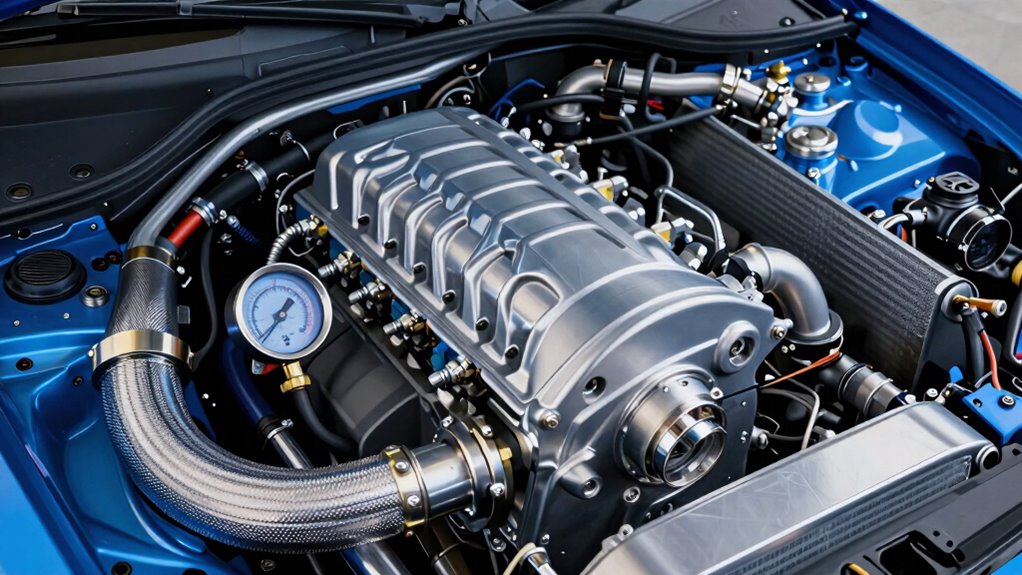
When you’re running a turbo setup, controlling heat is essential to prevent costly damage and guarantee peak performance. Turbo lag can be frustrating, but it also indicates heat buildup issues that need addressing. As your turbo spools up, it compresses air, which heats up considerably. If that heat isn’t managed properly, it can lead to reduced power, increased engine wear, and even component failure over time. One of your top priorities should be maintaining intercooler efficiency because it plays a pivotal role in cooling compressed air before it enters the engine. An effective intercooler reduces intake air temperature, which not only boosts power but also helps prevent knocking and detonation caused by excessive heat.
You can improve intercooler efficiency by ensuring it’s properly sized and mounted. If it’s too small or blocked by debris, it won’t cool the air effectively, leading to higher intake temperatures and increased turbo lag. Regularly cleaning or upgrading your intercooler can make a noticeable difference. Additionally, considering an aftermarket intercooler with better core design can improve airflow and heat exchange, further reducing intake air temperatures. Proper airflow around the intercooler is equally important; make sure nothing obstructs the airflow through it, especially during high-speed driving or in hot weather conditions. Properly managing airflow can significantly improve intercooler performance, ensuring your turbo system stays cooler and more responsive. Maintaining optimal engine cooling components also plays a critical role in heat control, especially when operating under strenuous conditions. Ensuring proper heat dissipation in your cooling system helps prevent heat buildup in critical engine parts. Implementing heat shields around hot components can further reduce heat transfer to sensitive parts.
Controlling heat isn’t just about the intercooler; it extends to your overall cooling system. Upgrading your radiator or adding an oil cooler can help dissipate heat from other engine parts affected by turbo operation. Using high-quality, heat-resistant fluids** and performing regular maintenance also keep temperatures in check. When it comes to turbo lag, remember that excessive heat can slow spool times. Cooler intake air improves turbo responsiveness, so managing heat directly influences your turbo’s immediacy and efficiency. Installing temperature sensors** and monitoring fuel maps can help you optimize engine settings to mitigate heat-related issues proactively.
Finally, consider installing a blow-off valve or wastegate properly calibrated to prevent excess pressure and heat buildup in the system. Proper tuning, combined with good airflow management and intercooler upkeep, keeps your turbo running smoothly and reduces the risk of heat-related problems. When you take control of heat early, you extend your turbo’s lifespan, improve performance, and avoid costly repairs down the line. Managing heat isn’t just a maintenance task; it’s an essential part of your turbo setup’s health and efficiency.
aftermarket intercooler for turbocharged engines
As an affiliate, we earn on qualifying purchases.
As an affiliate, we earn on qualifying purchases.
Frequently Asked Questions
What Are the Signs of Excessive Turbo Heat?
You’ll notice signs of excessive turbo heat through increased exhaust temps and turbo lag. If your exhaust gases get unusually hot, it signals the turbo is working harder than it should, risking damage. Turbo lag may also become more pronounced, indicating the turbo isn’t spooling properly due to heat-related issues. Keep an eye on these signs, as they warn you to check your cooling and airflow systems before serious problems occur.
How Does Ambient Temperature Affect Turbo Heat Management?
A stitch in time saves nine, and managing turbo heat starts with understanding ambient temperature’s impact. Hotter outside air raises turbo temperatures, so you should optimize cooling systems and ventilation strategies to keep airflow consistent. When ambient temps climb, enhance intercooler efficiency and make sure proper ducting. By actively adjusting these systems, you prevent heat buildup, protect your turbo, and keep your engine running smoothly regardless of outside conditions.
Can Aftermarket Parts Improve Heat Control in Turbo Setups?
Yes, aftermarket parts can considerably improve heat control in your turbo setup. Upgrading cooling systems, like high-performance intercoolers and oil coolers, helps dissipate heat more effectively. Additionally, installing heat shielding around critical components prevents heat transfer, keeping your engine cooler. These modifications work together to reduce turbo heat, enhance reliability, and maintain ideal performance, especially under demanding conditions.
What Is the Ideal Boost Pressure for Heat Control?
The ideal boost pressure for heat control varies, but generally, staying below 15 psi helps prevent excessive heat buildup. To manage heat effectively, you should upgrade cooling systems and install heat shields around critical turbo components. These improvements help dissipate heat faster, reducing the risk of damage. Monitoring boost levels and maintaining proper airflow also guarantee your turbo setup runs efficiently without overheating.
How Often Should Turbo Components Be Inspected for Heat Damage?
You should inspect your turbo components regularly—every 3,000 to 5,000 miles or during every oil change—to prevent heat damage. Check for signs of wear and tear, especially on turbo insulation and heat shielding. When you notice cracks or deterioration, it’s time to replace them. Consistent inspections help keep heat in check, preserving your turbo’s performance and avoiding costly repairs down the line.
As an affiliate, we earn on qualifying purchases.
Conclusion
Controlling heat in your turbo setup is like tending a garden—you need to stay proactive before problems sprout. Keep an eye on your temps, invest in quality cooling systems, and don’t push your setup beyond its limits. By staying ahead of the heat, you’ll keep your turbo running smoothly and avoid costly damage. Think of heat management as the shield that keeps your engine’s heart beating strong and healthy, ensuring your ride stays powerful mile after mile.
As an affiliate, we earn on qualifying purchases.
high performance radiator for turbo cars
As an affiliate, we earn on qualifying purchases.
As an affiliate, we earn on qualifying purchases.
Fall Picks
fall essentials
As an affiliate, we earn on qualifying purchases.