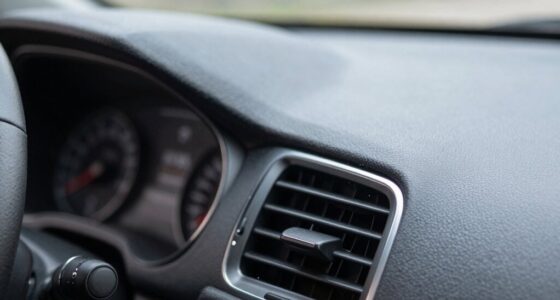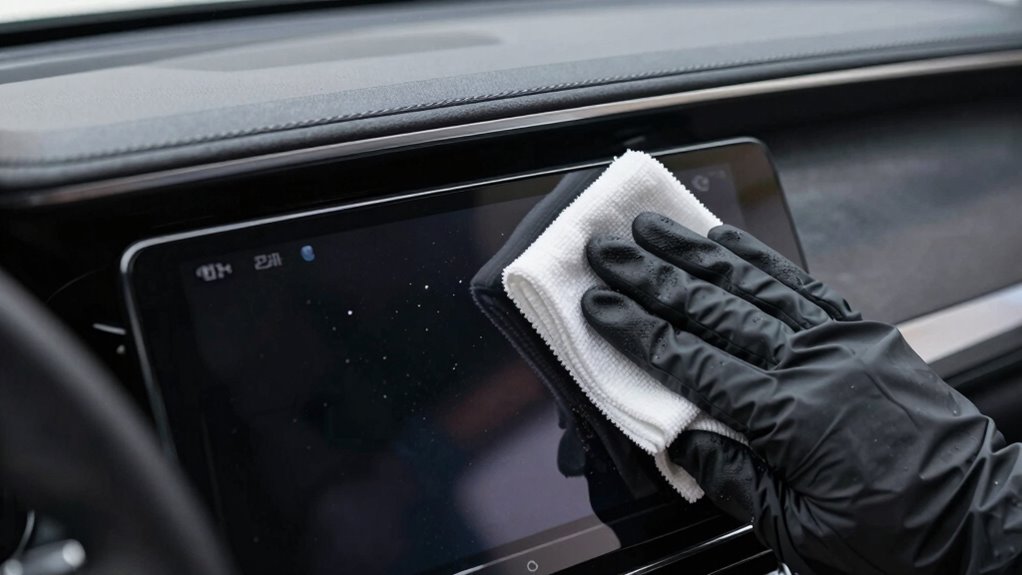

To clean your car’s touchscreens and piano black trim safely, use a soft microfiber cloth lightly dampened with a gentle, electronics-safe cleaner or distilled water. Spray the cleaner onto the cloth, not directly onto surfaces, and wipe in smooth, circular motions without pressing too hard. Avoid harsh chemicals and abrasive materials to prevent scratches or streaks. For more expert tips, discover how proper techniques can help maintain your car’s surfaces in top condition.

Get business pricing on garage and car supplies
- Business-only prices and quantity discounts
- Tax-exempt purchasing
- Multiple users, one account, clear invoices
Key Takeaways
- Turn off the vehicle and disconnect electronics before cleaning to prevent damage.
- Lightly dampen a microfiber cloth with a gentle, electronics-safe cleaner; spray cleaner onto the cloth, not directly on surfaces.
- Use smooth, circular motions and avoid pressing hard to prevent scratches and streaks.
- Avoid harsh chemicals like ammonia or alcohol-based cleaners that can damage glossy finishes.
- Gently dry surfaces with a clean microfiber cloth to remove streaks and residue.
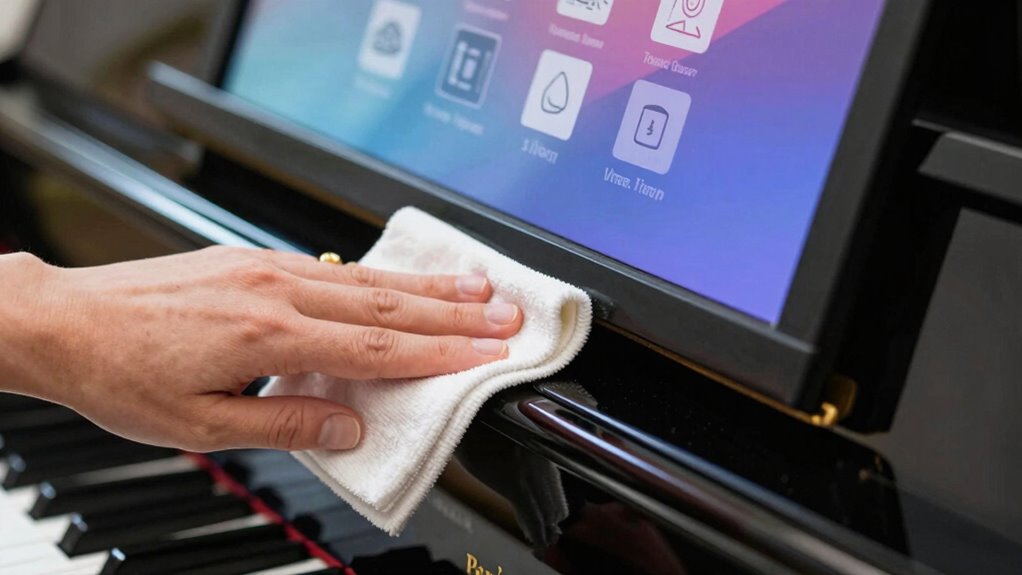
Cleaning your car’s touchscreen and piano black trim requires careful attention to avoid scratches or damage. These surfaces are delicate and can easily be marred by improper cleaning tools or techniques. To get started, choose the right cleaning tools—soft microfiber cloths are your best bet. They’re gentle, non-abrasive, and effective at trapping dust and dirt without scratching. Avoid using paper towels, rough cloths, or anything abrasive, as these common mistakes can leave scratches or streaks on your surfaces. When cleaning, steer clear of harsh chemicals like ammonia or alcohol-based cleaners, which can damage the glossy finish of piano black trim and degrade screen coatings over time. Instead, opt for a gentle, electronics-safe cleaner, or simply use distilled water for light dusting.
Before you begin, turn off your vehicle’s ignition and disconnect any devices if possible. This helps prevent accidental inputs or electrical issues. Lightly dampen your microfiber cloth with your chosen cleaner—never spray directly onto the screen or trim. Instead, spray or apply the cleaner onto the cloth, then gently wipe the surface. Use smooth, circular motions, and avoid pressing too hard, which could cause scratches or push dirt into small crevices. Pay special attention to edges and corners, but don’t force your cloth into tight spots. For stubborn smudges or fingerprints, a slightly moistened cloth should suffice; avoid aggressive scrubbing. Additionally, ensuring good color accuracy during cleaning helps maintain the original appearance of your surfaces. Regular cleaning also reduces the likelihood of dirt buildup, which can lead to scratches during cleaning attempts.
Many people make the common mistake of using excessive moisture or harsh chemicals, which can leave streaks or damage the finish. Also, neglecting to clean regularly can cause dirt to build up, making deep cleaning more difficult and increasing the risk of scratches. Another mistake is using household cleaning products that aren’t designed for electronics or delicate surfaces—they can cause discoloration or cloudiness on the glossy black trim. Patience is key: take your time to gently clean without rushing, ensuring the surface remains pristine. When finished, buff the surface with a dry microfiber cloth to remove any remaining streaks or residue. Incorporating proper cleaning techniques not only preserves your surfaces but also extends their aesthetic appeal over time.
Products Worth Considering

Chemical Guys 10-Piece Car Wash Kit with Foam Gun

Meguiar's G55048 Ultimate Car Care Kit

Chemical Guys 17-Piece Car Detailing Kit
As an affiliate, we earn on qualifying purchases.
Frequently Asked Questions
Can I Use Household Glass Cleaner on My Car’s Touchscreens?
No, you shouldn’t use household glass cleaner on your car’s touchscreens. Household cleaners often contain alcohol or ammonia, which can damage the delicate surface and remove protective coatings. Instead, opt for a gentle, screen-safe cleaner that preserves surface protection. Using the right products helps prevent scratches, streaks, and long-term damage, keeping your touchscreen clear and functioning properly without risking harm to the sensitive surface.
How Often Should I Clean the Piano Black Trim?
You should clean your piano black trim regularly, like tending to a delicate garden, to keep its luster alive. Aim for weekly or bi-weekly cleanings, depending on your driving environment. Regular maintenance prevents dust and fingerprints from building up, preserving its sleek aesthetic. Neglecting this can cause scratches and dullness, diminishing its beauty over time. Consistent care keeps your car’s interior looking sharp and preserves its value.
Are There Specific Microfiber Cloths Recommended for Cleaning?
Yes, you should use high-quality microfiber cleaning cloths for best results. Look for microfiber quality that’s soft, lint-free, and designed for delicate surfaces. Avoid rough or low-quality cloths that can scratch or damage your touchscreen or piano black trim. Opt for cleaning cloths specifically made for electronics or automotive surfaces, ensuring they won’t leave streaks or residue. Proper microfiber cleaning cloths keep your interior looking pristine and protected.
What Cleaning Products Should I Avoid to Prevent Damage?
You should avoid harsh chemicals like ammonia, bleach, or alcohol-based cleaners, as they can damage your touchscreen and piano black trim. Also, steer clear of abrasive scrubbers or scouring pads, which can scratch the surface. Instead, opt for gentle, microfiber cloths and mild cleaning solutions specifically designed for electronics or delicate surfaces. These steps help keep your interior looking pristine without risking damage.
Is It Safe to Use a Damp Cloth for Cleaning in the Car?
Using a damp cloth is generally safe for interior dusting and moisture control, but beware—excess moisture can turn your car’s delicate surfaces into a water park! Just lightly dampen the cloth and avoid soaking. Too much water risks damaging screens and trims. Keep your cleaning gentle and precise, and your car’s interior will sparkle without turning into a mini water slide. Safety first, fun always!
Conclusion
By using gentle cleaners, soft cloths, and mindful techniques, you protect your car’s surfaces, preserve their shine, and guarantee their longevity. You prevent scratches, avoid damage, and maintain beauty. You take pride in your vehicle, care for its details, and cherish its pristine condition. In every careful wipe, in each thoughtful touch, you create a space that’s clean, safe, and genuinely yours. Keep it shining, keep it safe, and keep it yours.