Choosing between coaxial and component car speakers depends on your preferences for sound quality, installation effort, and budget. Coaxial speakers are simple to install and suit those who want a quick upgrade with decent sound. Component speakers provide better clarity and customization, ideal if you’re willing to invest more time and money for premium audio. To find out which option best matches your vehicle and listening goals, explore the details that follow.
Key Takeaways
- Coaxial speakers are easier to install and cost less, suitable for quick upgrades and basic sound needs.
- Component speakers offer better sound clarity, customization, and superior performance, ideal for audiophiles.
- Coaxials provide full-range sound in a single unit, while components separate drivers for clearer high and mid frequencies.
- Durability and material quality impact long-term performance for both types; choose based on driving conditions.
- Consider your vehicle space, installation complexity, and desired sound quality when selecting between coaxial and component speakers.
Understanding the Basics of Car Speakers

Understanding the basics of car speakers is essential if you want to improve your in-vehicle audio experience. Car speakers are designed to deliver tailored sound that matches your listening preferences, whether you enjoy bass-heavy tunes or crisp vocals. When choosing speakers, consider their durability; high-quality materials guarantee they withstand the vibrations, temperature changes, and moisture inside your vehicle. Speaker durability is vital because it directly affects how long your speakers last without needing replacement. Additionally, understanding the different components, like cones and surrounds, helps you select speakers that produce clearer, more accurate sound. An important aspect to consider is the high refresh rates of certain speakers, which can influence how smoothly sound transitions occur, especially in high-fidelity systems. By focusing on these fundamentals, you can make smarter choices that enhance your driving experience and guarantee your investment remains protected over time. Recognizing material quality is also crucial, as it impacts both the durability and sound clarity of your speakers. Moreover, selecting speakers with appropriate impedance ratings ensures compatibility with your vehicle’s audio system for optimal performance.
What Are Coaxial Speakers and How Do They Work?

Coaxial speakers have a simple design that combines multiple sound components into one unit, making them compact and efficient. They feature integrated tweeters and woofers, so you get clear highs and deep bass without extra parts. Plus, their straightforward setup makes installation quick and hassle-free. For those seeking additional sound enhancement, some models incorporate essential oils to help create a more relaxing or invigorating environment during use.
Simple Design Structure
Because of their simple design, coaxial speakers combine multiple driver elements into a single unit, making installation straightforward and space-efficient. This compact structure helps you maintain your car’s aesthetics without sacrificing sound quality. With coaxial speakers, you get:
- A central tweeter mounted on the midrange cone, ensuring clear high frequencies.
- A sturdy, integrated basket that holds all components securely.
- Minimal wiring needed, reducing clutter and installation time.
- Their design is especially compatible with free floating mounting options, allowing flexible placement within your vehicle.
This simplicity enhances your car’s clean look and supports your audio branding, making it easier to create a cohesive sound environment. Coaxial speakers are ideal if you want quick setup, neat installation, and a sleek appearance, all while delivering decent sound performance for your vehicle.
Integrated Sound Components
Coaxial speakers are designed to deliver a full range of sound by combining multiple driver components into a single, unified unit. This integration simplifies audio tuning and speaker placement, making installation easier. You’ll notice that the tweeter and woofer are aligned, allowing sound to come from one location, which helps create a balanced and clear audio experience. Proper speaker placement is key to maximizing their performance, ensuring sound waves reach your ears effectively. Here’s a quick comparison:
| Feature | Coaxial Speakers | Benefits |
|---|---|---|
| Design | All-in-one unit | Easy installation, compact size |
| Sound Quality | Full range, less precise | Suitable for casual listening |
| Audio Tuning | Simplified due to integrated components | Less need for complex adjustments |
| Speaker Placement | Flexible, as units are self-contained | Fits various locations easily |
| Ideal Use | Everyday cars, limited space | Convenience, straightforward setup |
Easy Installation Process
Installing coaxial speakers is straightforward since their all-in-one design simplifies the process. You won’t need to connect multiple components separately, making setup quick and hassle-free. Here’s what to expect:
- Plug-and-Play Setup: Most coaxial speakers come with standard mounting hardware, allowing you to install them directly into your car’s existing speaker openings.
- Minimal Wiring: They typically require only one or two wires, reducing clutter and installation time.
- Aesthetic Design: Their sleek, integrated look blends seamlessly with your car’s interior, enhancing its style without extra effort.
While wireless connectivity isn’t common with traditional coaxial speakers, some models now offer wireless options for easy streaming. Overall, coaxial speakers are designed for quick, clean installations with minimal fuss.
Exploring the Features of Component Speakers

Component speakers stand out for their ability to deliver superior sound clarity and customization options. They typically feature separate drivers for midrange and high frequencies, allowing you to optimize each component’s placement. The speaker enclosure plays a pivotal role in enhancing sound quality by reducing vibrations and unwanted resonance. With adjustable tweeter placement, you can direct high frequencies precisely where you want them, improving overall sound staging. This flexibility means you can tailor your audio experience to your vehicle’s acoustics. Unlike coaxial speakers, component sets often require more installation effort but reward you with clearer, more detailed sound. Overall, their versatility and focus on sound precision make them an excellent choice if you’re looking to upgrade your car’s audio system. Understanding speaker design can help you make more informed choices when selecting the right components for your setup. Additionally, proper installation and positioning of individual drivers can significantly impact your overall listening experience, emphasizing the importance of speaker placement techniques.
Comparing Sound Quality and Performance

When comparing sound quality and performance, you’ll notice differences in clarity and detail between coaxial and component speakers. Power handling and range also play a vital role in how well each type delivers sound at different volumes. Understanding these points helps you choose the speakers that match your preferred audio experience. Additionally, considering proper wiring techniques ensures optimal performance and longevity of your sound system. Proper wiring can prevent common issues such as distortion or sound imbalance and maximize the potential of your speakers. For optimal results, paying attention to speaker placement can significantly enhance overall sound quality and prevent issues like distortion or sound imbalance. Furthermore, selecting the right amplifier compatibility is essential to fully utilize your speakers’ capabilities.
Clarity and Detail
Have you ever noticed how some car speakers produce crisp, detailed sound while others sound muddy or dull? This difference comes down to clarity and detail, influenced by factors like frequency response and durability. Coaxial speakers often deliver a balanced sound with decent clarity, but component systems excel in revealing nuances. To illustrate:
- Coaxial speakers may have a wider frequency response but less precision at high frequencies.
- Component speakers typically offer sharper detail, especially in treble ranges.
- Durability impacts sound quality over time, ensuring consistent clarity without distortion.
- The material quality of the speaker components also plays a crucial role in maintaining sound clarity and longevity.
Your choice depends on your desire for crisp sound and long-lasting performance. Better clarity means you’ll pick up subtle details in vocals and instruments, making your listening experience more immersive.
Power Handling and Range
Power capacity and spectrum considerably influence how your car speakers perform across different listening conditions. If your speakers can’t handle high power, they may distort or fail quickly, impacting speaker durability. Coaxial speakers often have a lower power handling capacity but are built to withstand typical daily use, while component speakers usually support higher power levels, offering better amplifier compatibility. The range of your speakers determines how well they reproduce sound across frequencies; a wider spectrum provides clearer bass and crisp treble. When selecting speakers, consider your amplifier’s wattage and ensure compatibility to prevent damage. Proper matching enhances sound quality, maintains speaker longevity, and ensures consistent performance under various audio demands. Additionally, understanding speaker durability can help you choose components that last longer and perform reliably over time. Balancing power handling and spectrum is key to optimizing your sound system’s overall performance.
Installation and Customization Considerations

Choosing between coaxial and component speakers affects your installation process and how much you can customize your sound system. Coaxial speakers are easier to install, often fitting into existing spaces with minimal effort. In contrast, component speakers require more work but offer greater flexibility for aesthetic customization. Consider these factors:
- Compatibility considerations: Confirm your vehicle’s audio system can support the speakers you choose, especially with wiring and mounting options.
- Aesthetic customization: Component speakers allow for more precise installation, giving you options to hide wires or match interior design.
- Installation complexity: Coaxial speakers are straightforward, while component systems may need custom mounting and soundproofing for ideal performance. Additionally, installation techniques can influence the final sound quality and ease of setup.
- Modern audio technology advancements can enhance the overall sound quality and integration options for both types of speakers. Additionally, understanding sound system customization options can help you optimize your setup for the best listening experience.
Your choice impacts both the effort involved and your ability to personalize your sound system’s look and feel.
Cost Differences and Value for Money

While coaxial speakers generally cost less upfront, component speakers often deliver better long-term value through enhanced sound quality and flexibility. Your pricing strategies should consider initial expenses versus potential upgrades and durability. Coaxials are budget-friendly, making them appealing if you’re working within tight budget considerations. However, investing in components can be more cost-effective over time, especially if you prioritize sound clarity and customization. Although component systems usually require a higher initial investment, they allow for future upgrades and tailored sound setups, maximizing value. Additionally, sound quality can be significantly improved with component speakers, providing a richer listening experience that justifies the higher initial cost. Ultimately, your choice depends on balancing immediate costs with long-term benefits, ensuring you get the best sound experience without overspending. Careful assessment of your budget considerations helps you determine which option offers the greatest value for your money.
Making the Right Choice for Your Vehicle
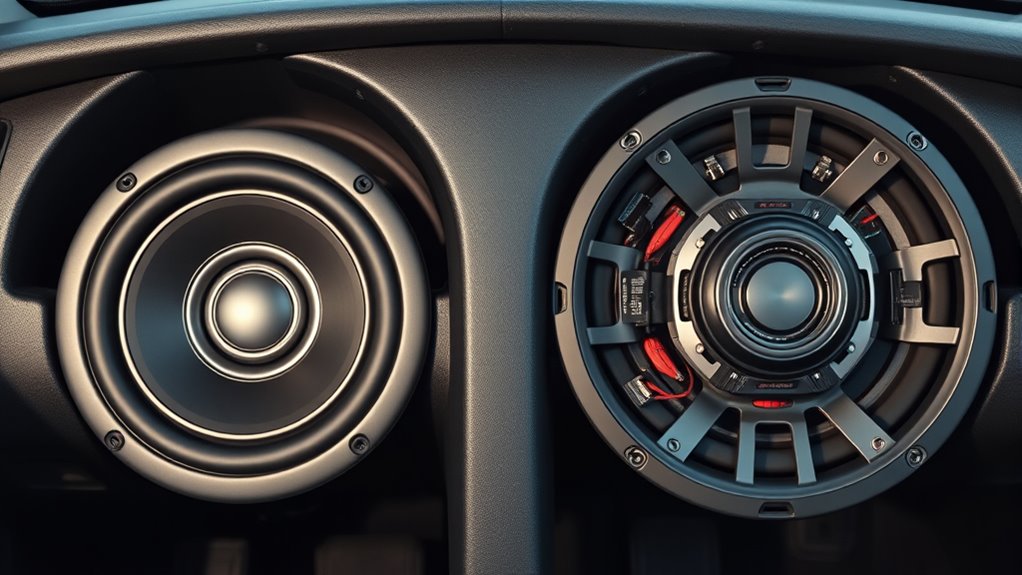
Selecting the right car speakers depends on your vehicle’s specific setup and how you plan to use your audio system. To make an informed choice, consider these factors:
- Audio tuning: Determine if you want speakers that can be fine-tuned for a personalized sound experience or if simplicity suits you better. Many high-quality speakers, such as component systems, offer adjustable features that allow you to customize your sound profile to your preferences. Additionally, understanding your sound system requirements can help guide your selection toward the best fit.
- Speaker durability: If you frequently drive on rough roads or in extreme weather, opt for speakers designed with durable materials to withstand the conditions. This ensures your system remains reliable over time. Material quality is crucial for longevity in challenging environments.
- Compatibility and space: Check your vehicle’s space constraints and compatibility to ensure easy installation and ideal performance. Proper measurement and compatibility checks can prevent installation issues.
- Long-term support: Consider the availability of replacement parts and technical assistance, which are crucial for maintaining your system’s reliability over time. Support and maintenance options can vary between brands, affecting your long-term investment.
Frequently Asked Questions
Which Speaker Type Is Better for Bass Response?
If you want better bass depth and sound clarity, component speakers are the better choice. They separate the tweeters and woofers, allowing for more precise placement and improved bass response. Coaxial speakers, while easier to install, tend to have less depth in bass and may sacrifice some sound clarity. For a richer, more detailed sound experience with stronger bass, go with component speakers.
How Do Coaxial and Component Speakers Affect Vehicle Space?
Did you know that coaxial speakers save 20-30% more space than component systems? They’re easier to install, making them ideal if you want a quick upgrade. Coaxials fit seamlessly into your vehicle, offering better aesthetic integration with minimal space requirements. On the other hand, component speakers might take up more room and require more complex installation, but they deliver superior sound quality if space isn’t your main concern.
Are There Specific Car Models Better Suited for Each Speaker Type?
Certain car models are better suited for coaxial or component speakers based on vehicle compatibility and installation considerations. If your vehicle has limited space or factory speaker mounts, coaxial speakers are easier to install and fit well. For cars with more room and advanced audio needs, component speakers offer superior sound quality but may require more complex installation. Always check your vehicle’s specifications and consult with an expert to guarantee compatibility.
Can I Upgrade My Existing Speakers Without Rewiring?
Yes, you can upgrade your existing speakers without rewiring if the new speakers are compatible with your current wiring and mounting points. Check the speaker compatibility to verify they fit and connect properly. Keep in mind, some upgrades may involve wiring complexity, especially if you’re switching between coaxial and component speakers. If wiring differs considerably, rewiring might be necessary for ideal sound quality and proper installation.
What Maintenance Is Required for Coaxial Versus Component Speakers?
An ounce of prevention is worth a pound of cure. For coaxial speakers, you’ll want to check speaker durability and clean dust and debris regularly, usually every few months. Component speakers may need more frequent maintenance, like inspecting crossovers and securing wiring connections. Both types benefit from keeping moisture out and avoiding extreme temperatures. Regular maintenance guarantees peak sound quality and prolongs their lifespan, saving you from costly replacements down the road.
Conclusion
Choosing between coaxial and component speakers is like planting a seed—you’ll need to think about your space, needs, and how much you want your sound garden to flourish. Coaxials are like quick-growing trees, easy and reliable, while components are the intricate flowers that require careful tending but reward you with richer, more detailed sound. Whichever you pick, make sure it fits your vehicle and your ear’s appetite, so your sound system truly blossoms.