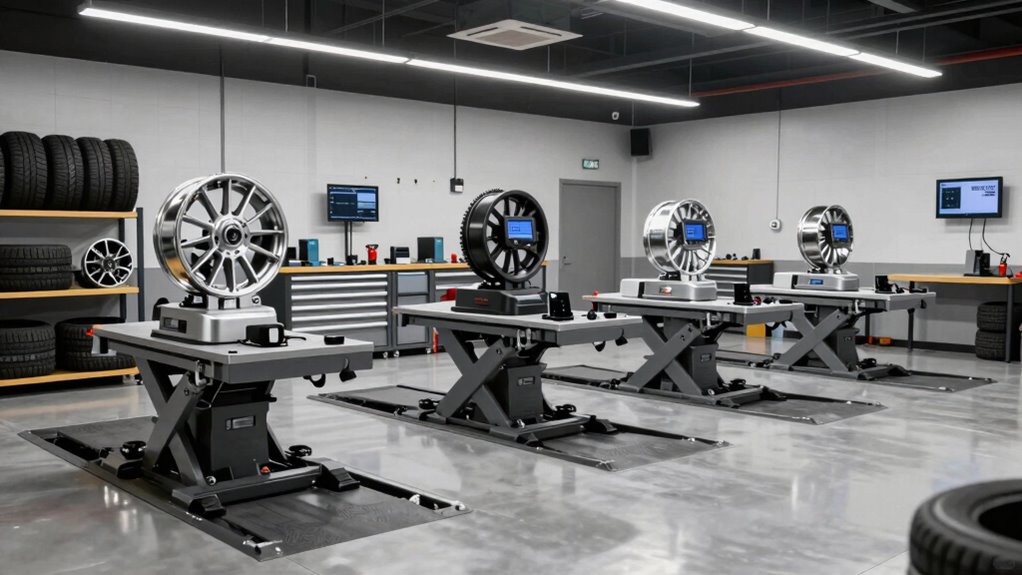
Finding the right wheel balancer for a small shop involves balancing cost, ease of use, and reliability. The Portable Bubble Wheel Balancer stands out for its affordability and simplicity, ideal for quick, light-duty jobs. The ME-B600 Wheel Balancer offers heavy-duty performance suited for frequent use, while the KT-B750 with Automatic Ruler provides high precision with automation features. Each option involves tradeoffs between price, automation, and capacity, so understanding your shop’s specific needs is key. Continue reading to see how these models compare and which one might suit your shop best.

Get business pricing on garage and car supplies
- Business-only prices and quantity discounts
- Tax-exempt purchasing
- Multiple users, one account, clear invoices
Complete the kit


Key Takeaways
- The top picks balance automation features with price, with the KT-B750 excelling in precision and ease of use.
- Heavy-duty models like the ME-B600 are better suited for frequent, high-volume balancing tasks, despite a higher initial cost.
- Portability and simplicity are prioritized in models like the Bubble Balancer, making them perfect for small, low-traffic shops.
- Capacity varies significantly; choosing a model with the right weight limit prevents future upgrades or replacements.
- Build quality and warranty support are key marks of durability, especially for shops that depend on consistent, daily use.


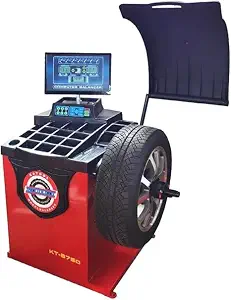


More Details on Our Top Picks
Portable Bubble Wheel Balancer with Bull Eye Level for 1.5-4 inch Hubs
This balancer shines for small shops that need a quick, lightweight solution without complex features. Its integrated bubble level ensures precise wheel centering, making it ideal for manual operation and straightforward balancing tasks. Compared with the more sophisticated KT-B750, this model sacrifices automation for ease of use and portability, which suits shops with limited space or a need for mobile setups. The aluminum alloy construction offers durability, but manual calibration can be tricky for inexperienced operators. Its hub compatibility from 1.5 to 4 inches covers most small wheels, yet it doesn’t handle larger rims or tires, limiting its scope. Overall, this pick makes the most sense for small shops prioritizing simple, on-the-go balancing rather than high-volume or high-precision needs.
Pros:- Accurate bubble level ensures precise wheel centering
- Lightweight and portable design simplifies transport
- Wide hub compatibility from 1.5 to 4 inches
Cons:- Manual operation demands skill and experience
- Limited to wheel balancing, not tire mounting or heavy-duty use
Best for: Small shops or mobile technicians needing a portable, easy-to-use wheel balancer for small hub sizes.
Not ideal for: Larger shops or those requiring automatic, high-precision balancing for bigger wheels or volume work.
- Hub Compatibility:1.5-4 inches
- Weight:10.56 pounds
- Dimensions:24 inches high, 11.5 inch base
- Material:Aluminum alloy
Our verdict“This balancer fits small shops seeking a simple, portable solution for balancing small wheels with minimal automation.”
ME-B600 Wheel Balancer Machine Heavy Duty 0.34HP Motor Tire Balancer for Auto Shops and Home Garages
The ME-B600 stands out for its lab-grade precision, making it suitable for shops that need reliable, highly accurate balancing. Its 0.34HP motor and automatic rim detection simplify operations, outperforming manual devices like the Portable Bubble in consistency. While this model offers a broad rim size range from 10 to 26 inches and a max load of 143 lbs, its weight and size can be a drawback for small garages with limited space. Additionally, its complexity may challenge beginners who prefer straightforward tools. Compared to the KT-B750, it offers similar accuracy but with more robust features for heavy-duty use, though at the cost of increased setup effort. This machine is ideal for shops that prioritize precision and durability over portability or simplicity.
Pros:- High-precision balancing with ±1g accuracy
- Automatic rim detection reduces setup time
- Sturdy steel frame for stability
Cons:- Heavier and bulkier than manual or portable options
- Complex operation may require training
Best for: Professional small shops or dedicated garages needing high-precision, versatile wheel balancing for various rim sizes.
Not ideal for: Beginners or small shops with limited space that prefer lightweight, easy-to-operate equipment.
- Motor Power:0.34HP
- Rim Diameter Range:10-26 inches
- Rim Width Range:1.5-20 inches
- Max Rim Diameter:50 inches
Our verdict“This model suits shops that need precise, durable balancing with automatic features, accepting larger size and complexity.”
KT-B750 Wheel Balancer with Automatic Ruler, High Precision, 65KG Capacity for Home Garage & Tire Shop
The KT-B750 offers rapid measurement in just 7 seconds, making it perfect for busy shops that value speed and accuracy. Its automatic measurement and self-calibration features minimize setup errors, outperforming manual devices like the Portable Bubble in efficiency. Its durable steel construction ensures stability during operation, while compatibility with wheels up to 30 inches broadens its application scope. However, it requires a 120V power supply and might be less suitable for shops without reliable electrical access. Compared to the ME-B600, it emphasizes speed and user-friendliness but might lack some of the heavy-duty robustness. This balancer is ideal for shops that prioritize quick turnaround times without sacrificing high precision.
Pros:- Fast 7-second measuring cycle boosts productivity
- Automatic measurement and self-calibration reduce setup errors
- High accuracy of ±1g
Cons:- Requires 120V power—may not suit all locations
- Limited to wheels up to 30 inches in diameter
Best for: Small to medium-sized shops needing rapid, accurate balancing for wheels up to 30 inches and value automation.
Not ideal for: Workshops with limited electrical infrastructure or those handling larger, heavy-duty wheels exceeding 30 inches.
- Measurement Accuracy:±1g
- Measuring Cycle:7 seconds
- Construction Material:Steel
- Wheel Diameter Capacity:30 inches
Our verdict“This balancer is ideal for shops seeking quick, precise balancing with minimal manual intervention.”
KATOOL Wheel Balancer KT-B750 with Wheel Guard Automatic Measurement Ruler Tire Balancer Tires Repair Machines Tire Balancing
The KATOOL KT-B750 combines versatility with automatic measurement, supporting rims from 8 to 24 inches and weights up to 143 lbs. Its automatic input of ‘A’ and ‘D’ values reduces setup time and errors, making it suitable for high-volume or multi-vehicle operations. Its standard 110V input allows for plug-and-play use, fitting well into most small shop environments. Compared with models like the KT-B700, this balancer offers broader rim size compatibility and integrated measurement features, though its specs may be overwhelming for less experienced users. Its automatic measurement feature ensures faster turnaround, but it may be less suitable for very specialized or heavy-duty applications requiring larger rims. This device is best for busy shops needing reliable, quick, and flexible balancing across a wide range of wheel sizes.
Pros:- Automatic measurement and input streamline setup
- Supports a wide range of rim sizes and weights
- Plug-and-play operation with standard 110V power
Cons:- Automation may be complex for beginners
- Limited to rims up to 24 inches in diameter
Best for: Small to medium shops handling diverse rim sizes and seeking fast, automated balancing.
Not ideal for: Workshops primarily dealing with very large wheels or those with limited electrical access.
Our verdict“This balancer suits shops that need quick, flexible, and automated wheel balancing across various sizes.”
KATOOL Wheel Balancer KT-B700 – Heavy Duty Tire Balancing Machine with 1-Year Warranty
The KATOOL KT-B700 offers a robust solution for workshops that demand durability and high-volume throughput. Its powerful motor with pure copper winding ensures longevity and efficient heat dissipation, supporting rims up to 30 inches and widths up to 12 inches. The multiple balancing modes provide flexibility for different tire types, making it suitable for busy shops. Its 1-year warranty adds peace of mind, but the technical complexity and lack of detailed specs might intimidate small shop owners new to advanced equipment. Compared with the ME-B600, it emphasizes durability and warranty coverage, though it may lack some of the automatic features. This machine is best for shops that prioritize heavy-duty performance and long-term reliability over compact size or simplicity.
Pros:- Durable motor with pure copper winding ensures longevity
- Supports rim sizes up to 30 inches with high precision
- Includes a one-year full parts warranty
Cons:- Complex operation may require technical training
- Size and weight may challenge small shop space constraints
Best for: Heavy-duty small shops or garages with high-volume, diverse wheel balancing needs.
Not ideal for: Small shops with limited space or operators seeking simple, automated solutions without extensive technical setup.
- Rim Diameter:<30"
- Wheel Width:3-12″
- Wheel Diameter:<880mm
- Balancing Speed:180rpm
Our verdict“This balancer is ideal for busy, high-volume shops that need durable, reliable equipment with wide size support.”
KATOOL ME Wheel Balancer with Extended Shaft for Home and Garage
This KATOOL ME Wheel Balancer stands out for its extended shaft, making it ideal for larger rims and custom wheel configurations that might challenge more compact models like the Portable Bubble Wheel Balancer. Its intelligent calibration modes ensure accurate, smooth balancing, which is crucial for preventing vibrations and uneven tire wear. Compared with the ME-B600, this model offers greater versatility for custom and oversized wheels, but it comes with a more complex setup, requiring familiarity with balancing machines. The durable copper-wound motor contributes to long-term stability but adds weight, making it less portable than smaller units. This pick makes the most sense for small shops or serious hobbyists who work with a variety of rim sizes and need reliable, precise results, even if setup takes some time.
Pros:- Handles large rims and custom wheel setups with ease thanks to the extended shaft
- Provides accurate and smooth balancing results for precision work
- Built with a durable copper-wound motor for long-term stability
- Multiple specialized calibration modes improve measurement accuracy
Cons:- Complex setup process might be challenging for beginners or casual users
- Heavy and bulky design reduces portability and may require dedicated space
- No clear pricing information could complicate budgeting decisions
Best for: Small shop owners or serious DIYers handling large rims or custom setups who prioritize accuracy and durability.
Not ideal for: Shop owners seeking a lightweight, portable machine for quick, casual balancing on small or standard rims.
- Motor:Copper-wound
- Shaft:Extended
- Modes:Multiple specialized modes
- Application:Shop, Home, Garage
- Compatibility:Large rims, custom wheel setups
Our verdict“This machine is perfect for small shops or serious enthusiasts needing precise balancing for large or custom rims, accepting some setup complexity for superior results.”

How We Picked
These products were selected based on their suitability for small shop environments, emphasizing ease of use, reliability, and price-to-performance ratio. We prioritized models that offer a balance between automation and manual operation, considering their capacity to handle common wheel sizes in small shops. Durability, warranty, and user-friendly features also played a role in ranking. Our evaluation focused on how well each model meets the typical needs of small shop owners, including workflow integration, maintenance costs, and overall value for money.Factors to Consider When Choosing Wheel Balancers For Small Shops
Choosing the right wheel balancer for a small shop requires careful consideration of several factors. Understanding your typical workload and the types of wheels you service can significantly influence your choice. Additional features like automation or capacity should align with your shop’s needs to maximize efficiency and minimize downtime. This guide highlights the key considerations to help you avoid common pitfalls and select a model that offers the best balance of cost, performance, and longevity.Capacity and Weight Range
Ensuring the wheel balancer can accommodate the typical wheel sizes and weights you handle is essential. Overestimating capacity might mean paying for features you rarely use, while underestimating can lead to future limitations or needing an upgrade. Small shops often work with standard passenger tires, but if you occasionally service larger wheels or specialty tires, choose a model with a higher weight capacity to avoid restrictions later.
Automation and Ease of Use
Automation features like automatic measurement and balancing reduce setup time and minimize user error, making them valuable for busy shops. However, these features come at a higher price and can increase maintenance complexity. Manual models may require more skill but often cost less upfront. Consider your staff’s experience level and your workflow when deciding whether automation justifies the extra investment.
Build Quality and Durability
Durability matters more in a small shop where equipment faces daily use. Look for models with sturdy construction and reliable components, as well as warranty coverage. Cheaper, less robust models may save money initially but could lead to costly repairs or replacements over time. Investing in quality can reduce downtime and maintenance costs, especially if your shop operates at high volume.
Ease of Maintenance and Support
Choosing a model with accessible parts and clear maintenance procedures can save time and reduce frustration. Support from the manufacturer, including availability of replacement parts and technical help, is equally important. Smaller shops should favor brands with a reputation for dependable customer service, as downtime can directly impact revenue.
Price and Overall Value
While budget is a key factor, the cheapest option isn’t always the best long-term investment. Consider the total cost of ownership, including maintenance, warranty, and features. Sometimes spending a bit more upfront on a reliable, well-supported model results in lower costs and better performance over its lifespan. Balance your immediate budget constraints with the potential for future needs and growth.
Frequently Asked Questions
Is automation worth it for a small shop?
Automation can significantly reduce setup time and increase consistency, making it especially valuable in a busy small shop. Automated models often require less manual skill, which means less training and fewer errors. However, they tend to cost more upfront and may have more complex repairs if they break. If your shop handles a high volume of wheels regularly, automation can improve efficiency and profitability, justifying the initial investment.
What capacity should I look for if I service mostly passenger cars?
For most small shops focusing on passenger vehicles, a wheel balancer with a capacity around 65-75 KG (143-165 lbs) is sufficient. This range comfortably handles standard wheels and tires without paying for unnecessary heavy-duty features. If you occasionally service larger or specialty wheels, opt for a model with a higher capacity to avoid needing an upgrade later.
How important is warranty support for wheel balancers?
Warranty support is critical, especially for equipment that sees daily use. A solid warranty minimizes downtime and repair costs, allowing you to keep your shop running smoothly. Look for brands with responsive customer service and readily available replacement parts. Investing in a model with a comprehensive warranty can save money and hassle if issues arise down the line.
Should I prioritize manual or automatic models for a small shop?
Manual models are typically less expensive and suitable if you or your staff have experience with wheel balancing. They also allow more control over the process. Automatic models, while costlier, save time and reduce user error, which can be advantageous in a high-volume setting. The choice depends on your budget, staff expertise, and how much you value speed versus cost savings.
What features are most important for longevity and reliability?
Look for models with high-quality construction, durable components, and good user reviews. Features like a sturdy frame, reliable sensors, and a proven track record of performance matter more than bells and whistles. Additionally, brands that offer accessible customer support and parts availability tend to provide longer-lasting, dependable equipment, reducing costly repairs or replacements over time.
Conclusion
For small shops, the Portable Bubble Wheel Balancer offers affordability and simplicity, suited for occasional use or low-volume environments. The ME-B600 stands out for high durability and capacity, ideal for shops with frequent, demanding workloads. The KT-B750 with Automatic Ruler offers a blend of precision and automation, perfect for shops seeking efficiency without overpaying. Those prioritizing value should consider models with manual features, while shops needing premium performance may find the KT-B750 premium model justifies the investment. Ultimately, your choice depends on your shop’s size, volume, and specific needs—balancing initial cost against long-term reliability and workflow efficiency.Halloween Picks
halloween
As an affiliate, we earn on qualifying purchases.