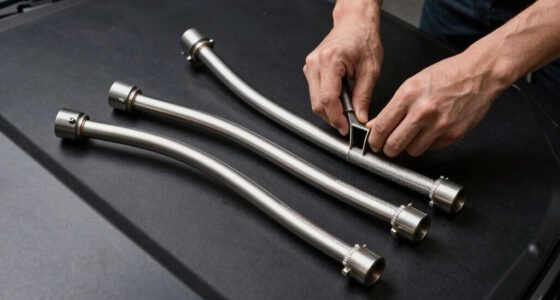
For a broad, adaptable starting point, I rank the maXpeedingrods T04E T3/T4 kit best overall, while the Rev9 K04/F23T upgrade is the more focused choice for compatible VW EOS owners and the GT28 GT2871 suits a smaller-engine, application-specific build. The main tradeoff is between universal kits that need more fabrication and vehicle-specific parts that may fit a narrower set of cars. Horsepower claims alone do not tell you whether a turbo will match your engine, supporting fuel system, or intended use. I compare fitment, included hardware, engine range, and likely installation demands across all seven options. Read on for the full breakdown and guidance on choosing a kit that makes sense for your car.

Get business pricing on garage and car supplies
- Business-only prices and quantity discounts
- Tax-exempt purchasing
- Multiple users, one account, clear invoices
Complete the kit


Key Takeaways
- The T04E T3/T4 kit with wastegate and oil line ranks first for breadth of included hardware, but its universal nature means buyers still need to verify manifold, downpipe, and engine fit.
- The Rev9 K04/F23T is the most application-focused pick: its stated compatibility is limited to specified 2006–2009 VW EOS 2.0L turbo models, unlike the broader universal listings.
- The GT28 GT2871 has the clearest small-engine focus, with a stated 1.5L–2.0L range and Nissan 240SX fitment; that does not make it a guaranteed bolt-on for every engine in that range.
- Several T3/T4 listings overlap on engine range and power claims, so included parts, flange details, and exact dimensions matter more than similar headline descriptions.
- The GT35 and Chevrolet-family TD04L6-04H serve different, narrower needs: the GT35 listing targets 2.5L–6.0L engines, while the TD04L6-04H listing names particular 2013–2023 vehicle applications.


| turbocharger kits for 4 cylinder cars 2 | Engine compatibility | Weight |
|---|---|---|
| maXpeedingrods T04E T3 T4 Turb | 4–6 cylinders; 1.5L–2.5L | 35.8 pounds |
| Rev9 TC-087_6 K04 F23T Turboch | 2.0L DOHC turbocharged | — |
| maXpeedingrods GT28 GT2871 Tur | 4-cylinder, 1.5L–2.0L | 17.42 pounds |
| maXpeedingrods T3 T4 T04E Turb | 4 or 6 cylinders, 1.5L–2.5L | 15.87 pounds |
| T3 T4 Universal Turbocharger C | 1.5L–2.5L engines | — |
| maXpeedingrods GT35 Turbo Kit | — | 41.4 pounds |
| Turbocharger Kit for Chevrolet | — | 19.58 pounds |
More Details on Our Top Picks
maXpeedingrods T04E T3 T4 Turbocharger Kit 400HP with Wastegate and Oil Line
For a 4-cylinder build where the plumbing pieces matter as much as the turbo itself, this kit stands out by including a wastegate and oil feed/return lines. Its ductile iron turbine housing and stated support for 1.5L–2.5L engines give it broader stated engine coverage than the Nissan-specific maXpeedingrods GT28 GT2871. The listed power ceiling is also higher than that model’s 350 BHP figure, though it is not a guarantee of safe output on an unmodified engine.
The tradeoff is its 35.8-pound weight, which can make handling and installation more demanding, and the supplied details do not establish vehicle-specific fitment. I would choose it over the T3 T4 T04E turbocharger with gaskets when bundled oil lines and a wastegate are priorities; I would skip it if I need a documented bolt-on fit for a particular car or a lighter unit.
Pros:- Includes a wastegate and oil feed/return lines.
- Ductile iron turbine housing is specified.
- Lists compatibility with 4–6 cylinder engines from 1.5L to 2.5L.
- States support for up to 400 HP.
Cons:- At 35.8 pounds, it is substantially heavier than the listed T3 T4 T04E turbocharger with gaskets.
- Vehicle-specific fitment and installation detail are not provided.
- The stated power capacity does not establish safe output for a particular engine setup.
Best for: Builders of 1.5L–2.5L four-cylinder projects who want a turbo kit that lists a wastegate and oil lines among its included parts.
Not ideal for: Drivers seeking a verified bolt-on setup for a specific vehicle, or installers who need to minimize component weight and handling difficulty.
- Engine compatibility:4–6 cylinders; 1.5L–2.5L
- Stated power output:Up to 400 HP
- Inlet diameter:3 inches
- Outlet diameter:2 inches
- Compressor trim:.55
- Compressor / turbine A/R:.50 / .63
- Turbine housing material:Ductile iron
- Listed components:Wastegate and oil feed/return lines
- Weight:35.8 pounds
Our verdict“Choose this kit if included oil lines and a wastegate matter more than low weight or confirmed vehicle-specific fitment.”
Rev9 TC-087_6 K04 F23T Turbocharger Manifold Upgrade, 62MM Billet Compressor Wheel, compatible with VW EOS 2.0L DOHC Turbocharged 2006-2009
This is the most application-specific choice in the group: the listing names the 2006–2009 VW EOS 2.0L DOHC turbocharged rather than claiming broad universal compatibility. Its 62mm billet compressor wheel is presented as an airflow upgrade, making this a more targeted path than the generic maXpeedingrods T3 T4 T04E units, which cover wider engine ranges but leave vehicle fitment to the buyer to verify.
That narrow scope is also its main limitation. The supplied information does not give a power figure, detailed installation instructions, or a list of included hardware, so I would not treat it as a complete conversion kit. Compared with the Nissan 240SX-specific GT28 GT2871, the Rev9 is similarly focused on a named vehicle, but its stated compatibility is limited to the EOS range shown. Buyers with another VW model—or a non-VW four-cylinder—should look elsewhere.
Pros:- Names a specific VW EOS model range and engine.
- Uses a listed 62mm billet compressor wheel.
- Designed as a targeted turbocharger manifold upgrade.
- May suit buyers who prefer a stated application over a universal unit.
Cons:- Compatibility is only specified for 2006–2009 VW EOS 2.0L DOHC turbocharged models.
- No horsepower capacity or boost specification is supplied.
- Installation instructions and included hardware are not detailed.
Best for: Owners of a 2006–2009 VW EOS 2.0L DOHC turbocharged car seeking a model-specific manifold and turbo upgrade.
Not ideal for: Drivers of other VW models or general four-cylinder projects who need confirmed fitment, a stated power target, or clearly itemized installation parts.
- Brand:Rev9
- Part number:TC-087_6
- Vehicle compatibility:VW EOS, 2006–2009
- Engine compatibility:2.0L DOHC turbocharged
- Compressor wheel diameter:62mm
- Compressor wheel material:Billet
- Product type:K04 F23T turbocharger manifold upgrade
Our verdict“Pick the Rev9 only if your car matches the specified EOS application and you can confirm the installation requirements before buying.”
maXpeedingrods GT28 GT2871 Turbocharger for 4 Cylinder Engines 1.5L-2.0L, Nissan 240SX 1989-1998, Dual Ceramic Ball Bearing, Billet Compressor Wheel, Sport SD Series
The GT28 GT2871 is the clearest fit in this group for a 1989–1998 Nissan 240SX project with a 1.5L–2.0L four-cylinder engine. Its dual ceramic ball bearings are intended to reduce friction and help the turbo respond, while the billet aluminum compressor wheel and stainless steel turbine housing give it a different component profile from the heavier, broader-range T04E kit. Its stated ceiling of up to 350 BHP is also below the 400 HP claims attached to the maXpeedingrods T04E options.
That lower figure may make it a more focused match for a smaller-displacement build, but it is not universal: compatibility beyond the named 240SX application is uncertain. At 17.42 pounds, it is lighter than the 35.8-pound T04E kit, though still not a featherweight component. I would pass if my car is not a 240SX or if I need a complete kit with documented plumbing and installation parts.
Pros:- Specifies Nissan 240SX compatibility for 1989–1998 models.
- Dual ceramic ball bearings are designed to reduce friction and support response.
- Billet aluminum compressor wheel is specified.
- Stainless steel turbine housing is rated for temperatures up to 1868°F.
Cons:- Fitment beyond the listed Nissan 240SX application is uncertain.
- Its stated 350 BHP capacity is below the 400 HP claims of the T04E alternatives.
- The supplied information does not list a wastegate or oil lines.
Best for: Nissan 240SX owners from the listed model years building a 1.5L–2.0L four-cylinder setup around a stated 350 BHP turbo capacity.
Not ideal for: Owners of other vehicles, buyers seeking a complete turbo kit with listed oil lines and wastegate, or builds requiring a stated capacity above 350 BHP.
- Engine compatibility:4-cylinder, 1.5L–2.0L
- Vehicle compatibility:Nissan 240SX, 1989–1998
- Stated horsepower:Up to 350 BHP
- Turbine housing material:Stainless steel
- Turbine temperature resistance:1868°F
- Compressor wheel material:Billet aluminum
- Bearing type:Dual ceramic ball bearing
- Weight:17.42 pounds
- Manufacturer part number:NO23CC
Our verdict“Choose this turbo for a matching Nissan 240SX build if its 350 BHP ceiling and turbo-only scope fit your plan.”
maXpeedingrods T3 T4 T04E Turbocharger with Gaskets for 4/6 Cylinder Engines
This T3 T4 T04E is a straightforward choice for builders who want a turbocharger with gaskets rather than the more bundled maXpeedingrods T04E kit with wastegate and oil lines. It lists 4- and 6-cylinder engines from 1.5L to 2.5L and support for up to 400 HP, so its stated engine range suits many small-engine projects. The 15.87-pound weight is also far below the 35.8-pound kit’s listed weight, a practical difference when fitting and positioning the unit.
Its forged aluminum compressor wheel, ductile iron turbine housing, and copper alloy journal bearing offer a distinct construction specification, but the listing still leaves fitment and the rest of the installation system to the builder. Compared with the universal T3 T4 400+ HP turbo, this model explicitly includes gaskets and gives a weight figure, while the universal listing provides more wheel measurements. I would skip this if I need an all-in-one kit or lack tuning and installation support.
Pros:- Lists compatibility with 4- and 6-cylinder engines from 1.5L to 2.5L.
- States support for up to 400 HP.
- Includes gaskets and weighs 15.87 pounds.
- Specifies a forged aluminum compressor wheel and copper alloy journal bearing.
Cons:- Does not list a wastegate or oil lines, unlike the maXpeedingrods T04E kit.
- Fitment for a specific vehicle is not confirmed in the supplied details.
- Installation complexity and likely tuning needs favor experienced builders.
Best for: Experienced builders of 1.5L–2.5L four- or six-cylinder engines who want a lighter T3 T4 turbo with gaskets and can source the remaining parts.
Not ideal for: First-time installers seeking a complete kit, vehicle-specific bolt-on compatibility, or a setup that avoids additional tuning work.
- Engine compatibility:4 or 6 cylinders, 1.5L–2.5L
- Horsepower support:Up to 400 HP
- Turbine housing material:Ductile iron
- Turbine wheel material:Alloy
- Compressor wheel material:Forged aluminum alloy
- Bearing type:Copper alloy journal bearing
- Weight:15.87 pounds
- Dimensions:9.84 x 9.06 x 11.02 inches
- Included item:Gaskets
Our verdict“This is a sensible turbo-only pick for experienced builders who value its broad engine range and lower listed weight over bundled installation parts.”
T3 T4 Universal Turbocharger Compatible with T3/T4 T04E 0.57 A/R 48.1 Trim 400+HP Boost Stage III Charger for 1.5L-2.5L Engines
This universal T3 T4 turbo stands out for the amount of compressor and turbine sizing data it provides: inducer and exducer measurements, trims, and A/R values give a builder more geometry to compare against a planned setup than the simpler T3 T4 T04E turbo with gaskets. It is listed for 1.5L–2.5L engines and claims 400+ HP, placing its stated capacity near the other T04E options without establishing what a particular engine can safely produce.
The key omission is an internal wastegate; the listing explicitly says none is included, so the buyer must plan for external boost control and confirm the supporting hardware. It also calls the unit universal, not vehicle-specific, which makes fitment verification and installation expertise part of the purchase decision. I would choose it over the gasket-equipped maXpeedingrods unit when sizing data is the priority, but not for a beginner seeking a bundled, clearly matched kit.
Pros:- Provides compressor and turbine inducer, exducer, trim, and A/R measurements.
- Lists compatibility with 1.5L–2.5L engines.
- States a maximum output of 400+ HP.
- T3/T4 T04E format gives builders a defined configuration to evaluate.
Cons:- No internal wastegate is included, so external boost control must be planned.
- Universal fitment requires vehicle-specific clearance and connection checks.
- Installation may call for additional parts and technical expertise.
Best for: Experienced turbo builders choosing a T3/T4 setup who want detailed wheel and housing dimensions to compare with their planned engine and plumbing.
Not ideal for: Beginners or buyers who need a complete kit, confirmed vehicle fitment, or a turbo with an included internal wastegate.
- Engine compatibility:1.5L–2.5L engines
- Maximum horsepower:400+ HP
- Compressor trim:48.1
- Compressor A/R:0.5
- Compressor inducer / exducer:52.7mm / 76mm
- Turbine trim / A/R:74.2 / 0.57
- Turbine inducer / exducer:64.8mm / 55.8mm
- Wastegate:Internal wastegate not included
Our verdict“Choose this option if you can interpret its sizing data and supply external boost control; otherwise, the gasket-equipped T04E is a simpler starting point.”
maXpeedingrods GT35 Turbo Kit Turbocharger T3 Flange for 2.5-6.0L Engines
The GT35 kit suits a custom 4-cylinder build where the installer can adapt parts rather than rely on a vehicle-specific package. Its stated 2.5–6.0L range is broad, and the included intercooler and oil lines provide useful pieces for a larger project. Compared with the maXpeedingrods GT28, which is aimed at smaller 1.5–2.0L engines, this GT35 is positioned for larger-displacement applications; that broader scope does not confirm fitment or tuning for any particular car. The T3 flange and listed compressor and turbine dimensions give a fabricator details to check against a planned setup, but modifications and professional installation are expected. It is a poor choice for a beginner seeking a bolt-on kit: the product comes without instructions, and the 41.4-pound package adds handling and installation demands.
Pros:- Stated compatibility range includes a variety of engine sizes and applications
- Intercooler and oil lines are included for the custom setup
- T3 exhaust inlet flange and detailed compressor and turbine measurements aid planning
- Performance-oriented GT35 configuration for builds beyond small-displacement applications
Cons:- Fitment is not vehicle-specific and may require fabrication or other modifications
- No instructions are included, making installation harder for beginners
- Professional installation and careful compatibility checks are recommended
Best for: Experienced builders planning a custom 2.5L-or-larger four-cylinder installation who can verify fitment, fabrication needs, and supporting hardware.
Not ideal for: First-time turbo installers or owners seeking a vehicle-specific, ready-to-fit kit; modifications, professional installation, and compatibility checks are required.
- Stated engine range:2.5–6.0L
- Exhaust inlet flange:T3
- Exhaust outlet flange:4-bolt, 3 inches
- Compressor inducer diameter:61.5 mm
- Compressor exducer diameter:81.5 mm
- Compressor A/R:0.7
- Turbine A/R:0.63
- Weight:41.4 pounds
Our verdict“Choose this GT35 kit for a larger custom build with fabrication support, not for a straightforward, vehicle-specific upgrade.”
Turbocharger Kit for Chevrolet Camaro, Malibu, Buick Regal, and More (2013-2023 Models) – TD04L6-04H
Unlike the universal maXpeedingrods GT35 kit, this TD04L6-04H option is aimed at a defined group of 2013–2023 Chevrolet, Buick, Cadillac, and GMC vehicles. That makes it the more relevant choice for an owner seeking a replacement-style turbo for a listed GM application, rather than a fabricator assembling a custom four-cylinder system. Its extensive OE reference numbers offer a practical starting point for matching the existing part, but the broad model list is not proof that every engine or trim fits. I would verify the vehicle and part number before ordering. The listing provides little detail about included installation hardware or performance specifications, so it is less useful for planning a tuned build than the GT35, which lists flange and wheel measurements and includes an intercooler and oil lines. Professional installation may also be needed.
Pros:- Targets a range of Chevrolet, Buick, Cadillac, and GMC applications from 2013–2023
- TD04L6-04H model is identified
- Multiple OE reference numbers help with part matching
- More application-specific than the universal GT35 kit
Cons:- Vehicle and engine compatibility must be confirmed before purchase
- Listing gives limited turbo performance and installation-hardware details
- Installation may require professional expertise
Best for: Owners of a listed 2013–2023 Chevrolet, Buick, Cadillac, or GMC model who can confirm the engine and OE reference number before purchase.
Not ideal for: Custom-build fabricators or shoppers seeking a complete, performance-focused turbo system with detailed wheel specifications and clearly listed supporting components.
- Turbo model:TD04L6-04H
- Stated model years:2013–2023
- Listed makes:Chevrolet, Buick, Cadillac, and GMC
- Product model:AUT-W250700053-1
- Weight:19.58 pounds
- Dimensions:12.2 x 11.42 x 10.24 inches
- OE reference numbers:49377-07831, 49377-07820, 49377-07800, 49377-07810, 49377-07821, 49377-07822, 49377-07823, 49377-07830, 12653326, 12682937, 12649944, 12658628, 12663026, 12674684, 12676713, 12682007, 12663028, 12662051, M1040106N, 2511537
Our verdict“Pick this TD04L6-04H when its OE references match your GM vehicle; choose the GT35 instead for a custom build requiring more published turbo specifications.”

How We Picked
I ranked these turbocharger kits for 4-cylinder cars by how clearly their stated fitment matches a buyer’s likely project, how much relevant hardware is included, and how usable the listed engine range is for comparing options. I also weighed design and configuration details—such as a stated ball-bearing center section, compressor wheel, wastegate, oil line, and flange type—because those details affect compatibility and the parts a build may still need. A broad engine-range claim is useful for narrowing choices, but I treated it as a starting point rather than proof of vehicle fit.
The order favors options with a more useful balance of application detail and kit contents for a typical four-cylinder project. That puts the T04E kit with wastegate and oil line ahead of similar bare turbo listings, while the Rev9 ranks highly for buyers whose exact VW application matches. The GT35’s stated 2.5L–6.0L range and the TD04L6-04H’s named vehicle list make them less broadly suited to four-cylinder shoppers, despite their potential fit for specific builds. Since these listings do not establish complete vehicle-specific systems or verified power on a given engine, I call out fitment checks and supporting modifications rather than treating advertised output as a guaranteed result.
Factors to Consider When Choosing Turbocharger Kits For 4 Cylinder Cars 2
A turbo listing is only one part of a forced-induction setup. Before choosing among these options, I would match the turbo’s physical interfaces and airflow goals to the exact engine and plan for the supporting systems that make a build reliable.
Match the Turbo to the Exact Engine and Chassis
Start with the car’s year, make, model, engine code, and existing turbo or manifold layout—not just displacement. Two 2.0L engines can use different exhaust manifolds, oil and coolant connections, downpipes, and engine-management strategies. A product described as compatible with a vehicle family may still cover only certain trims or engine versions, so confirm the seller’s application details before ordering. For universal T3/T4 options, check the flange pattern and the space available around the engine, radiator, and firewall. A mismatch discovered during installation can add fabrication work that a broad compatibility label never implied. If the listing does not identify your engine code or the needed dimensions, treat fitment as unconfirmed and ask for specifics.
Choose Airflow for the Build, Not the Headline Number
Rated horsepower is not a direct prediction of output on your car; results depend on the engine, fuel, tuning, boost level, and supporting hardware. A larger turbo may offer more airflow potential but can change response and may not suit a street-focused setup. A smaller unit can make more sense for a modest-displacement engine or a quick-response goal, provided its operating range matches the build. Compare compressor and turbine specifications where they are supplied, and do not assume that two T3/T4 labels describe identical performance. Decide first how the car will be used and what power range the engine can reasonably support. That helps prevent choosing a turbo based only on the largest number in a product title.
Budget for the Supporting System
A turbocharger alone does not make a complete conversion kit. Depending on the car and listing, the build may also need an exhaust manifold, downpipe, intercooler and piping, intake plumbing, oil feed and drain lines, fuel-system upgrades, sensors, and engine-management changes. A listed wastegate or oil line is useful, but it does not confirm that every connection and control component is present for your chassis. Before buying, make a parts checklist against the current car and ask which items are included, which are reusable, and which require fabrication. Skipping this step can leave the car immobilized while waiting for small but application-specific parts. Include tuning and installation work in the project plan, not just the turbo hardware.
Verify Flanges, Clearances, and Installation Skill
Flange type, compressor and turbine housing dimensions, actuator placement, and outlet orientation can decide whether a turbo physically fits. Universal listings tend to offer flexibility, but they often shift responsibility for matching the manifold, downpipe, and pipes to the buyer or fabricator. A vehicle-specific upgrade may reduce some uncertainty, though only when the exact engine and original configuration match the stated application. Compare drawings or measurements with the space in the engine bay before purchase, especially where steering, air conditioning, or the radiator limits room. If you lack fabrication experience, favor a setup with documented fitment and plan for professional installation. Do not treat a named flange or model family as proof that the whole assembly bolts on without changes.
Check Build Details and Long-Term Service Needs
Materials and bearing design can influence durability, service demands, and suitability for a particular use, but a feature name by itself cannot establish real-world lifespan. Check what the listing says about wheel construction, bearing type, included gaskets, and oil connections, then look for clear specifications and manufacturer support. A kit with more supplied hardware can reduce parts hunting, yet each component still needs to match the engine and installation plan. Consider whether replacement parts and technical help are available for the specific turbo model. Keep room in the maintenance plan for oil quality, heat management, boost-leak checks, and inspection of connections. For a daily-driven car, serviceability and a reliable tune may matter more than a higher advertised output.
Decide When a Narrow Fitment Is Worth More Than Versatility
A universal turbo can be appealing when a project has custom fabrication already planned, but its flexibility comes with more fitment decisions. A part aimed at a named vehicle or engine can reduce guesswork when the car falls squarely within the stated application. That advantage disappears if the car has a different engine code, prior modifications, or a nonstandard manifold. Compare the time and extra parts needed to adapt a universal option against the limits of a narrower unit. For a first forced-induction build, clear application details may be more valuable than a broad engine range. For a custom project, flexibility can be useful if you have the tools and expertise to resolve the remaining fitment work.
Frequently Asked Questions
Can I install a universal T3/T4 turbo on any 4-cylinder car?
No. A universal label does not confirm that the turbo matches your exhaust manifold, downpipe, oil connections, intake plumbing, or engine-bay clearances. Check the flange pattern and dimensions against your car, then confirm whether you need an adapter or custom fabrication. You will also need to plan for fuel delivery, intercooling, engine management, and a suitable tune. If the seller cannot verify the interfaces for your setup, treat the purchase as a custom project rather than a bolt-on installation.
Does a 400HP listing mean my 4-cylinder will make 400 horsepower?
No. A title’s power figure describes a product claim or intended capacity, not a guaranteed result on a particular engine. Actual output depends on the engine’s condition, turbo matching, fuel system, boost control, intercooling, exhaust, and calibration. The engine and drivetrain also need to tolerate the added load. Use the figure as a rough comparison point, then ask a qualified tuner to assess the complete build before selecting a target.
Which option makes the most sense for a VW EOS 2.0L owner?
The Rev9 K04/F23T upgrade is the most directly relevant listing here because it names the VW EOS 2.0L DOHC turbocharged models from 2006–2009. Confirm your model year, engine code, and original turbo configuration before ordering, since a vehicle name alone may not cover every version. Also check what supporting parts are included and whether your existing manifold and plumbing are compatible. If your EOS falls outside the stated application, do not assume this upgrade will fit just because the displacement matches.
What should I prioritize if this is my first turbo build?
Prioritize confirmed vehicle fitment, a clear parts list, and access to installation and tuning support over a large advertised horsepower figure. A turbo that appears inexpensive or broadly compatible can require extensive custom work and additional components. Before buying, map the full system: manifold, downpipe, intercooler, fuel delivery, oil routing, boost control, and engine management. Ask a mechanic or tuner to review the plan, especially if the car is a daily driver. That review can reveal incompatible parts before they turn into installation delays.
Should I choose the GT35 just because it lists a higher engine range?
No. The GT35 listing’s 2.5L–6.0L range makes it a less natural match for many four-cylinder cars than the T04E or GT28 options listed here. Engine displacement alone does not establish whether the turbo will provide the response or airflow your build needs. Check the complete turbo specifications, intended power range, and compatibility with your manifold and supporting systems. If your four-cylinder setup falls outside the stated range, seek confirmation from the manufacturer or a knowledgeable builder before proceeding.
Conclusion
For most shoppers comparing these turbocharger kits for 4-cylinder cars, I would start with the maXpeedingrods T04E T3/T4 kit with wastegate and oil line as the best overall balance of broad use and included hardware, while recognizing that it is not a confirmed bolt-on for every car. The T3/T4 listings without the same named extras are the best value candidates when their exact specifications and your existing parts line up. For a beginner, I would favor the option with the clearest confirmed fitment for the exact vehicle—and the Rev9 is the most focused choice here for a matching 2006–2009 VW EOS 2.0L turbo. The GT28 GT2871 is the more specific pick for a suitable 1.5L–2.0L or Nissan 240SX project, while the TD04L6-04H makes sense only for buyers whose listed Chevrolet or Buick application matches. I would reserve the GT35 for a build whose engine size and setup suit its stated range, rather than choosing it as a general four-cylinder upgrade. No listing establishes a universal premium winner, so I would pay more only for verified fitment, useful documentation, and support that reduce uncertainty in your particular build.