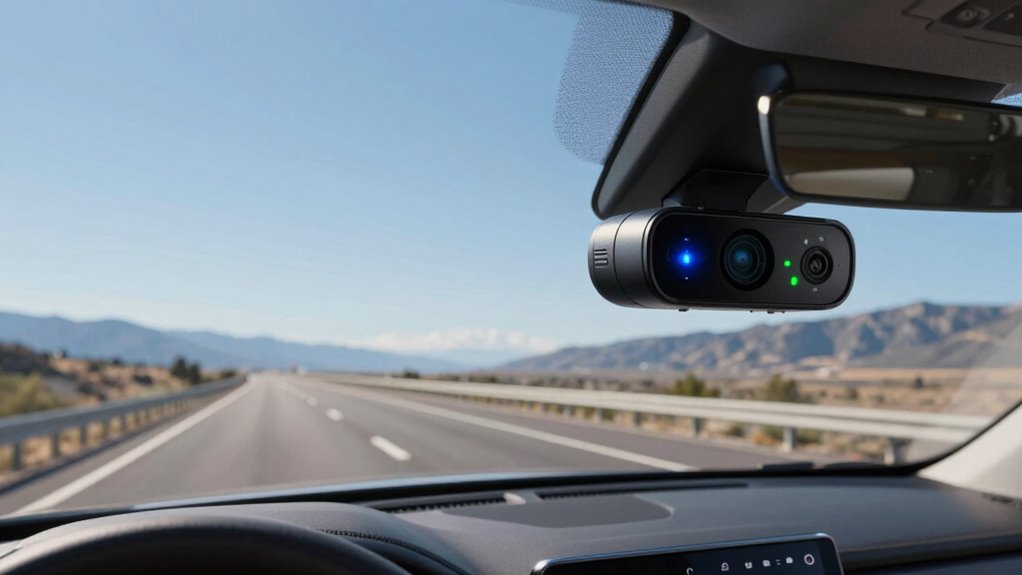
For most long-distance drivers, I’d start with the Uniden R7: its dual antennas, GPS, and directional arrows make it easier to interpret alerts across unfamiliar roads. The Uniden R3 is a strong alternative if you want GPS-based features in a simpler, non-directional unit, while the Escort MAX 360c MKII is the premium choice for drivers who value 360-degree directional information. The tradeoff is between useful long-range awareness and the cost, setup, and false-alert management that can come with more capable detectors. Simpler Cobra and generic models may suit drivers who want basic alerts, but their listed feature sets offer less detail for sorting signals on varied routes. Read on for the full comparison, selection criteria, and advice for matching a detector to your driving habits.

Get business pricing on garage and car supplies
- Business-only prices and quantity discounts
- Tax-exempt purchasing
- Multiple users, one account, clear invoices
Complete the kit


Key Takeaways
- The Uniden R7 leads this lineup for long trips because its dual antennas, GPS, and directional arrows give drivers more context than the simpler listed models.
- The Uniden R3 offers a more straightforward GPS-equipped alternative, though it lacks the R7’s dual-antenna directional setup.
- The Escort MAX 360c MKII is the premium directional pick; choose it for 360-degree arrows, not simply because it is the most feature-rich option.
- The Cobra models occupy different levels of simplicity: the RAD 490i adds Bluetooth, the RAD 480i also lists Bluetooth, and the RAD 390 is a more basic long-range option.
- Several generic listings claim long range or 360-degree detection without the same level of listed supporting detail, so the comparison favors models with clearly specified GPS, antenna, or alert features.


| radar detectors for long road trip | Brand | Model | Display | Warranty |
|---|---|---|---|---|
| Radar Detector for Cars | — | — | — | — |
| Radar Detector for Cars | houpoo | RAD2000 | LED | 1 year |
| Cobra RAD 490i Laser Radar Det | Cobra | 0180020-1 | — | 1 year |
| Radar Detector for Cars | — | — | LED | — |
| Newly Radar Detector for Cars | — | — | LED | — |
| Escort MAX 360c MKII Laser Rad | Escort | 0100037-3 | — | 1 year |
| Uniden R7 Extreme Long-Range L | Uniden | R7 | OLED | — |
| Cobra RAD 480i Laser Radar Det | Cobra | RAD 480i | — | 1 year limited |
| Cobra RAD 390 Laser Radar Dete | Cobra | — | LED | 1 year |
| Uniden R3 Extreme Long Range L | Uniden | R3 | Multi-color OLED | 1 year |
More Details on Our Top Picks
Radar Detector for Cars, Long Range Radar & Laser Detector Up to 1,100 Yards, X/K/Ka/KU/ST/CT Band Detection, DSP False Alert Filtering, Voice Alerts, RDD Stealth, City/Highway Modes
For drivers who spend hours on highways and want broad band coverage, this model pairs a stated range of up to 1,100 yards with detection for X, K, Ka, KU, ST, and CT bands, plus laser signals. Its DSP filtering is intended to cut down on distracting alerts, while voice prompts let the driver keep attention on the road. Compared with the houpoo RAD2000, whose listed supported frequencies specify only X and K bands, this detector’s listed band set is broader. City and Highway modes also let drivers adjust it for changing road environments. The tradeoff is that the range can vary with terrain and conditions, and it still needs a windshield mount and power setup. I’d choose it for broad stated coverage, not as a substitute for checking local detector rules.
Pros:- Lists six detection bands and laser detection for broad signal coverage
- Stated range of up to 1,100 yards is suited to long stretches of open road
- DSP filtering is designed to reduce distracting false alerts
- Voice alerts and City/Highway modes support hands-on-wheel use and changing environments
Cons:- Actual detection distance may vary with terrain and driving conditions
- Requires windshield mounting and a suitable power connection
- RDD stealth is listed, but the supplied details do not explain its limits or compatibility
Best for: Highway travelers who want voice alerts and a broad set of listed detection bands in one windshield-mounted unit
Not ideal for: Drivers seeking a cordless, pocketable detector or verified performance data beyond the stated range and band list
- Detection range:Up to 1,100 yards
- Detection bands:X, K, Ka, KU, ST, CT
- Laser detection:Supported
- False-alert filtering:DSP technology
- Stealth technology:Yes
- Driving modes:City and Highway
- Alert type:Voice alerts
Our verdict“Choose this model if broad listed band coverage and voice alerts matter more than a cordless setup or independently detailed performance information.”
Radar Detector for Cars, Long Range Police Radar Detector, 360° Detection
At 4.12 × 2.56 × 1.1 inches, the houpoo RAD2000 is the most clearly specified compact option in this group, a useful fit for drivers who want a modest windshield footprint on long trips. Its description claims up to 1,100 yards of range and 360-degree detection, with voice alerts and false-alert filtering intended to make warnings easier to follow without staring at the display. Compared with the larger-feature pitch of the Cobra RAD 490i, the RAD2000 has no listed phone-platform integration or firmware updates; its appeal is simpler installation and a compact form. There is a specification gap, though: the description claims multiple bands and laser coverage, while the listed supported frequencies name only X and K. I’d favor it for size and basic road awareness, not buyers who need clearly documented band coverage.
Pros:- Compact dimensions make it easier to place without dominating the windshield
- Description states up to 1,100 yards of range and 360-degree detection
- Voice alerts and false-alert filtering can reduce the need to watch the LED display
- Listed as compatible with cars, commercial vehicles, MPVs, SUVs, and trucks
Cons:- Listed supported frequency bands are limited to X and K despite broader claims in the description
- Urban driving may bring false alerts
- Uses a 12V DC car adapter, so it is not a cordless travel option
Best for: Drivers who want a compact, cord-powered detector for a car, SUV, truck, or commercial vehicle and prioritize simple installation
Not ideal for: Buyers who need a clearly specified broad band list, app or car-display integration, or fewer urban false alerts
- Brand:houpoo
- Model:RAD2000
- Dimensions:4.12 × 2.56 × 1.1 inches
- Listed supported bands:K-band and X-band
- Power source:12V DC car power adapter
- Display:LED
- Listed vehicle compatibility:Cars, commercial vehicles, MPVs, SUVs, and trucks
- Warranty:1 year
Our verdict“Pick the RAD2000 if compact size and straightforward installation lead your priorities, but choose a model with a clearer band specification for broader documented coverage.”
Cobra RAD 490i Laser Radar Detector with Long Range Detection
The Cobra RAD 490i suits road-trippers who want alerts tied into a connected car setup rather than a detector that only speaks or flashes. Its Bluetooth and compatibility with Apple CarPlay and Android Auto give it a more integrated approach than the simpler RADAR Detector for Cars, 360° Long Range Police Radar Detector (Black), which lists an LED display and voice alerts but no phone-platform connection. Cobra also lists front and rear LaserEye detection, DSP filtering, a bright OLED display, and firmware updates, all useful for keeping warnings visible and the unit’s software current over time. The tradeoff is installation: it remains a mounted detector, not a set-and-forget built-in system. Its supplied details also don’t state a specific detection distance or supported radar-band list, so buyers comparing raw range should look closely at those specifications.
Pros:- Apple CarPlay and Android Auto compatibility can bring alerts into a familiar in-car interface
- Front and rear LaserEye detection covers laser signals from both directions
- DSP filtering is designed to reduce false alerts on extended drives
- Firmware-updatable design offers a path for ongoing software improvements
Cons:- Requires mounting and installation rather than operating as a self-contained built-in system
- Provided specifications do not state a detection range or supported radar bands
- Bluetooth and display integration may be unnecessary complexity for drivers who prefer basic voice alerts
Best for: Long-distance drivers who use Apple CarPlay or Android Auto and want a detector with front-and-rear laser detection and update support
Not ideal for: Buyers who want a simple plug-in unit with a clearly stated detection range and radar-band list
- Brand:Cobra
- Model:0180020-1
- Weight:4.8 ounces
- Laser detection:LaserEye front and rear detection
- Signal filtering:DSP
- Connectivity:Bluetooth
- Vehicle-platform compatibility:Apple CarPlay and Android Auto
- Firmware:Firmware updatable
- Warranty:1 year
Our verdict“Choose the RAD 490i if connected-car integration and front-and-rear laser detection matter more to you than having range and band figures spelled out in the supplied specifications.”
Radar Detector for Cars, 360° Long Range Police Radar Detector (Black)
This black 360-degree detector is aimed at drivers who want the essentials—voice alerts, an LED display, and City/Highway modes—without a feature-heavy connected setup. Its listed frequencies span several values, including 10.525 GHz, 24.150 GHz, and 34.700 GHz, while the 12-volt corded power source suits a conventional car installation. Compared with the Cobra RAD 490i, it does not list Bluetooth, phone-platform compatibility, or firmware updates; the simpler feature set may be easier to live with, but gives buyers fewer ways to integrate or update the detector. The product description claims long-range detection and 360-degree coverage, yet does not quantify distance or explain the listed frequencies by band. That leaves less detail for comparing it with the models that state a range of up to 1,100 yards.
Pros:- Voice alerts provide warnings without requiring constant attention to the LED display
- City and Highway modes offer a basic way to adapt settings to different roads
- Lists multiple supported frequencies and 360-degree detection
- Corded 12V power suits a standard car installation
Cons:- No numeric detection range is provided in the supplied specifications
- No GPS, app, or phone-platform connectivity is listed
- The listed frequencies are not mapped to specific radar bands in the product data
Best for: Drivers who want a straightforward 12V car detector with voice prompts and separate city and highway settings
Not ideal for: Road-trippers who want a stated detection distance, app or vehicle-display integration, or clearly explained band coverage
- Listed frequencies:10.525 GHz, 24.150 GHz, 24.125 GHz, 34.700 GHz, 33.400 GHz, 11.150 GHz
- Detection coverage:360 degrees
- Power source:Corded electric
- Voltage:12V DC
- Display:LED
- Alert type:Real-time voice alerts
- Driving modes:City and Highway
- False-alert filtering:Advanced filtering stated in product description
Our verdict“Choose this model for basic voice-led alerts and city/highway settings, but look elsewhere if documented range or connected features are central to your trip setup.”
Newly Radar Detector for Cars, 360° Long Range Police Radar Detector (Blue)
The blue Newly detector’s distinguishing travel convenience is mute memory: after silencing an alert, the unit is designed to retain that choice, which can make repeated alerts less disruptive on familiar stretches. It also lists 360-degree detection, voice alerts, false-alarm filtering, and City/Highway modes, giving it a more specific everyday-use angle than the black 360-degree detector, which does not list mute memory. VG-2 immunity is included as another stated feature, though the supplied data does not describe its limits or local legal relevance. Like that black model, this one lacks a numeric range, GPS, and app connectivity, so its long-range claim is harder to compare with the detectors that specify up to 1,100 yards. The corded 12V setup also means it depends on the car’s power outlet rather than offering battery operation.
Pros:- Mute memory can preserve silencing choices for recurring alerts
- Voice alerts and an LED display provide two ways to receive warnings
- City and Highway modes offer settings for different driving environments
- VG-2 immunity is listed among its features
Cons:- Requires a 12V corded connection and is not battery operated
- No numeric detection range or radar-band list is supplied
- Product data notes that complex urban environments may still produce false alarms
Best for: Drivers who want a corded detector with voice prompts and remembered mute settings for recurring alerts on regular routes
Not ideal for: Travelers who need battery operation, a documented detection distance, or GPS and app-based features
- Color:Blue
- Detection coverage:360 degrees
- Detection range:Described as long range; numeric distance not provided
- Power source:Corded electric
- Voltage:12V DC
- Display:LED
- Listed features:False-alarm filtering, mute memory, and VG-2 immunity
- Driving modes:City and Highway
Our verdict“Pick the blue Newly model if mute memory is useful on your regular routes, but choose a better-documented detector when range and band coverage need to be compared directly.”
Escort MAX 360c MKII Laser Radar Detector, 360° Directional Arrows, Black
For long trips where alerts from other drivers and vehicle displays are part of the plan, the Escort MAX 360c MKII is the most connected option in this group. Its dual antennas support extended detection and directional awareness, while filtering aims to cut down the repeated false alerts that can wear on a driver over several hours. Wi-Fi, Bluetooth, Apple CarPlay, Android Auto, and shared alerts give it more ways to communicate than the Uniden R7, whose strengths lean more toward built-in GPS and directional detection without the same connectivity list.
The tradeoff is setup: getting the most from its app and display integrations may require a phone or compatible vehicle system, and the feature set can take time to configure. I’d choose it for connected touring, not for a simple plug-in-and-go setup.
Pros:- Dual antennas support enhanced detection range and directional awareness.
- Advanced filtering can reduce distracting false alerts on long drives.
- Wi-Fi, Bluetooth, Apple CarPlay, and Android Auto provide multiple connection options.
- Shared driver alerts add information beyond the detector’s own sensing.
Cons:- Full use of connectivity features depends on a smartphone or compatible vehicle display.
- Setup and feature configuration may be involved for first-time detector owners.
- The feature-rich design is more than a basic, standalone road-trip setup requires.
Best for: Drivers who regularly take long highway trips and want shared alerts plus integration with a phone or compatible in-car display.
Not ideal for: Drivers who want a self-contained detector with minimal setup or do not plan to use smartphone and vehicle-display connections.
- Brand:Escort
- Model:0100037-3
- Detection technology:Radar and laser
- Antenna configuration:Dual antennas
- Connectivity:Dual-band Wi-Fi, Bluetooth, Apple CarPlay, Android Auto
- False-alert filtering:Advanced filtering technology
- Shared alerts:Yes
- Item weight:10.08 ounces
- Warranty:1 year
Our verdict“Choose the MAX 360c MKII if you want dual-antenna detection paired with connected, shared alerts; skip it if you prefer simpler operation.”
Uniden R7 Extreme Long-Range Laser-Radar Detector with GPS and Dual Antennas
The Uniden R7 suits road-trippers who want to know not just that a signal is present, but where it is coming from. Its dual antennas and directional arrows help distinguish threats around the vehicle, while built-in GPS can remember false-alert locations and show red-light and speed-camera alerts. That combination makes it a more self-contained touring choice than the Escort MAX 360c MKII, which offers broader phone and vehicle connectivity but may ask more of drivers who want its connected features.
The R7’s capability brings a learning curve: new users may need time with its settings and display, and keeping its firmware current is part of ownership. Its listed supported bands are K and Ka, so buyers should check that this matches their needs and local driving conditions. I’d pick it for directional information and GPS-based filtering, rather than the simplest interface.
Pros:- Dual antennas and directional arrows help identify the direction of detected threats.
- Built-in GPS can remember false-alert locations.
- Preloaded red-light and speed-camera alerts add useful context on unfamiliar routes.
- OLED display presents alerts clearly.
Cons:- Advanced settings can be challenging for first-time users.
- Regular firmware updates are needed to keep the unit current.
- Connectivity options are less prominent than on the Escort MAX 360c MKII.
Best for: Frequent highway drivers who want directional threat cues, GPS-based false-alert memory, and camera alerts without relying on a phone connection.
Not ideal for: First-time detector owners seeking a very simple setup, or buyers who specifically want extensive smartphone and in-car connectivity.
- Brand:Uniden
- Model:R7
- Display:OLED
- Supported frequency bands:K, Ka
- Antenna configuration:Dual antennas
- GPS:Built-in; remembers false-alert locations
- Camera alerts:Preloaded red-light and speed-camera alerts; updates available
- Power source:DC
- Item weight:6.72 ounces
Our verdict“Pick the R7 if directional arrows and GPS-based alert handling matter more to you than easy setup or extensive connectivity.”
Cobra RAD 480i Laser Radar Detector, Long Range Detection, Bluetooth, Black
The Cobra RAD 480i is a practical fit for drivers who want app-linked alerts without moving to the more elaborate connected setup of the Escort MAX 360c MKII. Bluetooth and the Cobra iRadar app bring shared alerts into the trip, while front-and-rear LaserEye detection adds coverage beyond a front-facing alert approach. Its filtering and camera notifications can help keep a long drive more informative, though the shared-alert benefit depends on using a smartphone.
Compared with the Cobra RAD 390, the 480i’s defining advantage is its Bluetooth and app connection, not a more self-contained GPS system. The product information also lists Apple CarPlay and Android Auto compatibility, but drivers should expect the phone app to be central to its alert-sharing features. I’d choose it for connected Cobra alerts; skip it if you want GPS-based false-alert memory built into the detector.
Pros:- Bluetooth and the Cobra iRadar app provide access to shared alerts.
- Front-and-rear LaserEye detection supports coverage around the vehicle.
- Advanced filtering can reduce distracting alerts during extended driving.
- Apple CarPlay and Android Auto compatibility is listed.
Cons:- Full shared-alert functionality depends on a smartphone and app connection.
- The supplied product data does not list built-in GPS for remembering false-alert locations.
- Its app-centered appeal is less useful to drivers who want a standalone detector.
Best for: Drivers who want Bluetooth-linked community alerts and front-and-rear laser detection, and are comfortable using a smartphone app on trips.
Not ideal for: Drivers who avoid phone-dependent features or want built-in GPS to remember recurring false-alert locations.
- Brand:Cobra
- Model:RAD 480i
- Detection technology:LaserEye, digital signal processing
- Laser detection:Front and rear
- Connectivity:Bluetooth
- App:Cobra iRadar
- Compatibility:Apple CarPlay, Android Auto
- Item weight:136.1 g
- Warranty:1 year limited
Our verdict“Choose the RAD 480i for app-based shared alerts and front-and-rear laser detection, but choose the RAD 390 if you prefer to avoid phone connectivity.”
Cobra RAD 390 Laser Radar Detector with Long Range Detection
For drivers who want a straightforward detector without app-based alert sharing, the Cobra RAD 390 keeps the setup centered on the unit itself. Adjustable sensitivity modes let drivers tailor alerts to different road conditions, and front-and-rear LaserEye detection gives it a useful coverage feature for a corded model. Its small listed dimensions and 4.8-ounce weight also make it less imposing in the cabin than the Escort MAX 360c MKII.
The tradeoff is a lack of built-in GPS and smartphone connectivity. That means it does not offer the RAD 480i’s app-linked shared alerts or the Uniden R7’s GPS-based false-alert memory. Firmware updates are listed, but the detector needs a 12-volt corded power source, which limits how easily it can move between vehicles. I’d favor it for a simpler, vehicle-based setup, not for drivers who want connected trip data.
Pros:- Adjustable sensitivity modes support different driving conditions.
- Front-and-rear LaserEye detection provides coverage in both directions.
- Compact listed dimensions and low item weight suit a less obtrusive cabin setup.
- Firmware updates are available.
Cons:- No built-in GPS or smartphone connectivity is listed.
- Corded 12-volt power limits portability between vehicles.
- It lacks the shared-alert features available with the Cobra RAD 480i.
Best for: Drivers who want adjustable sensitivity and front-and-rear laser detection in a compact, corded unit without app features.
Not ideal for: Drivers who want GPS-based false-alert memory, shared community alerts, or easy portability between vehicles.
- Brand:Cobra
- Supported frequency bands:X, K, Ka
- Display:LED
- Power source:Corded electric
- Voltage:12 volts DC
- Item dimensions:4.25 × 2.75 × 1.25 inches
- Item weight:4.8 ounces
- Laser detection:Front and rear LaserEye
- Warranty:1 year
Our verdict“Choose the RAD 390 if you want a compact, corded detector with adjustable sensitivity and do not need GPS or app-linked alerts.”
Uniden R3 Extreme Long Range Laser and Radar Detector with GPS, Voice Alerts, and Multi-Color OLED Display
The Uniden R3 is a strong choice for drivers who want GPS-based false-alert filtering and spoken notifications without the R7’s directional-arrow emphasis. Its voice alerts can communicate warnings without requiring a driver to keep checking the display, while the multi-color OLED and preloaded red-light and speed-camera alerts add useful context on unfamiliar roads. Compared with the Cobra RAD 390, the R3 adds built-in GPS and a more information-rich display, making it better suited to long trips through changing routes.
The tradeoffs are its listed 1.7-pound weight and the need to keep firmware current. It also lacks the R7’s dual antennas and directional arrows, so buyers prioritizing threat direction should choose the R7 instead. I’d pick the R3 for hands-free alert communication and GPS filtering, while drivers seeking the lightest or simplest unit may prefer another option.
Pros:- Built-in GPS supports false-alert filtering and user-marked locations.
- Voice alerts communicate warnings without relying only on the display.
- Preloaded red-light and speed-camera alerts help on unfamiliar routes.
- Multi-color OLED display makes alert information easier to distinguish.
Cons:- The listed 1.7-pound weight is substantially higher than the other detectors in this batch.
- Firmware updates are needed to keep the unit current.
- It does not list the R7’s dual antennas or directional arrows.
Best for: Road-trippers who want GPS-based false-alert filtering, spoken notifications, and camera alerts on routes they do not know well.
Not ideal for: Drivers who prioritize directional arrows, a lighter listed unit, or minimal firmware maintenance.
- Brand:Uniden
- Model:R3
- Display:Multi-color OLED
- Supported frequencies:34.7 GHz, 24.125 GHz, 10.525 GHz
- GPS:Built-in; supports false-alert filtering and user marking
- Alerts:Voice alerts
- Camera alerts:Preloaded red-light and speed-camera alerts
- Dimensions:4.5 × 2.81 × 1.25 inches
- Warranty:1 year
Our verdict“Choose the R3 if GPS filtering and spoken alerts matter more than directional arrows or a lightweight setup.”

How We Picked
I ranked these detectors around the demands of extended driving: receiving useful warnings, understanding where they come from, and managing alerts across unfamiliar roads. I gave more weight to clearly specified features that can help with those tasks, including GPS, dual antennas, directional arrows, false-alert filtering, voice alerts, and adjustable city or highway modes. I also considered how much setup and interpretation each feature asks of the driver, since extra information is only useful when it remains manageable behind the wheel.
The Uniden R7 ranks first because its listed GPS, dual antennas, and arrows combine range-oriented hardware with alert context. The Escort MAX 360c MKII and Uniden R3 follow for distinct strengths: directional awareness and a simpler GPS-equipped configuration. Cobra’s models and the generic detectors appear lower because their supplied descriptions list fewer trip-specific tools or provide less detail for comparison. I did not treat broad range claims as proof of real-world performance, and I recommend checking current local laws and exact model specifications before buying.
| radar detectors for long road trip | Brand | Display |
|---|---|---|
| Radar Detector for Cars | — | — |
| Radar Detector for Cars | houpoo | LED |
| Cobra RAD 490i Laser Radar Det | Cobra | — |
| Radar Detector for Cars | — | LED |
| Newly Radar Detector for Cars | — | LED |
| Escort MAX 360c MKII Laser Rad | Escort | — |
| Uniden R7 Extreme Long-Range L | Uniden | OLED |
| Cobra RAD 480i Laser Radar Det | Cobra | — |
| Cobra RAD 390 Laser Radar Dete | Cobra | LED |
| Uniden R3 Extreme Long Range L | Uniden | Multi-color OLED |
Factors to Consider When Choosing Radar Detectors For Long Road Trips
Long-trip suitability is about more than maximum range: routes change, alerts accumulate, and a detector needs to be understandable without demanding constant attention. I’d match the device to how much information you want, whether your drives repeat the same roads, and how much setup you’re willing to manage.
Choose alert context, not just a range claim
Advertised detection distance can be difficult to compare across listings, especially when test conditions and methods are not stated. For a road trip, knowing the direction of an alert can be more useful than a long-distance figure alone, since it helps you interpret whether a signal may be ahead or behind. GPS can add location-based context, while directional arrows provide a different kind of immediate information. These features are not interchangeable, so decide which uncertainty you most want to reduce. A common mistake is buying based on the largest yardage claim without checking whether the detector also helps identify or manage alerts. Treat range figures as a starting point, not a guarantee of warning distance on every road.
Decide how much alert information you can use
A detector that reports many signals can become distracting if its alerts are hard to distinguish while driving. Voice alerts and clear displays can help keep attention on the road, while filtering and GPS functions may reduce repeated nuisance warnings on familiar routes. More features can also mean more menus, settings, and decisions before a trip. If you prefer a simple setup, a basic model may be easier to live with even if it offers less context. Avoid assuming that more alerts automatically mean better protection; useful warnings need to be timely and understandable. Check whether the controls and alert style suit the way you drive before committing to a feature-heavy unit.
Match GPS benefits to your route habits
GPS matters most when location-aware functions can help with repeat routes or stored alert points, and its usefulness depends on the detector’s specific features. Drivers crossing unfamiliar areas may value location context differently from commuters who repeatedly pass the same fixed sources. GPS does not replace detection, and not every GPS-equipped detector handles alerts in the same way. Check which functions are included rather than treating the word “GPS” as a complete description. Also consider whether you are comfortable reviewing settings and managing saved locations. If your routes change constantly and you want minimal interaction, prioritize clear live alerts over a long list of location tools.
Plan for installation, power, and windshield placement
Long hours in the car make mounting and cable management more noticeable than they may seem during a short commute. A detector needs a stable position with a clear view through the windshield, while its power cable should not obstruct controls or driver sightlines. Check the included mounting and power accessories before assuming the package fits your vehicle, since the product names alone do not specify every accessory detail. Some vehicles also have windshield coatings or steep glass angles that can affect placement, so consult the vehicle and detector guidance. Avoid installing a unit where airbags deploy or where reaching it would take attention from driving. A tidy, secure setup can matter more over a multi-day trip than an extra feature you rarely use.
Check laws and privacy rules along the whole route
Radar-detector rules vary by location, and a cross-country itinerary may pass through jurisdictions with different restrictions. Verify current laws for every state or region on your route before mounting or using a detector; do not rely on an old summary or a seller’s broad compatibility claim. Some vehicles and jurisdictions may also raise separate questions about detector-detector equipment, which is not the same as radar detection itself. If you travel across borders, research those rules independently as well. A feature such as RDD stealth in a product listing does not make use lawful where detectors are prohibited. When the legal status is unclear, leave the device off or seek current official guidance.
Pay for features you will actually use
Premium models can add directional awareness and more extensive alert tools, but the benefit depends on whether you value and understand that information. Spend more for a defined need, such as arrows that help interpret signals, rather than for a longer feature list by itself. Drivers who want GPS context without a more involved interface may prefer a less elaborate configuration. At the other end, a low-detail listing may leave important questions unanswered, including how filtering works or what accessories are included. Compare confirmed specifications and support information before treating similarly named products as equivalent. A sensible choice is the one whose features solve your actual trip problems without creating extra setup or distraction.
Frequently Asked Questions
Is the Uniden R7 a better road-trip choice than the Uniden R3?
I’d choose the R7 if directional arrows and dual antennas matter to you, since those are its clearest listed advantages over the R3. The R3 may suit a driver who wants GPS and voice alerts without prioritizing directional information. Both listings emphasize long-range detection, but a range claim alone cannot establish which will warn sooner in every setting. Consider whether you will use arrows to interpret alerts or would rather keep the interface simpler. The better fit depends on how much information you want while driving, not just the model number.
Do I need a 360-degree detector for interstate trips?
Not every highway driver needs 360-degree detection, and that label does not by itself explain how clearly a detector identifies an alert’s direction. The Escort MAX 360c MKII specifically lists directional arrows, which can add context when signals come from different directions. A simpler forward-focused setup may be enough for drivers who want basic warnings and fewer features to manage. Think about your routes, how often you travel in dense traffic, and whether directional information would change your response. Compare the listed antenna and arrow details rather than relying on “360°” wording alone.
Can GPS features reduce nuisance alerts on unfamiliar routes?
GPS may help with location-aware alert functions, but the benefit varies by model and depends on what the detector actually supports. On a new route, saved locations from familiar commutes may matter less than clear live alerts and effective filtering. The products in this roundup do not all list GPS, so check the exact model description rather than assuming the feature is standard. A detector with false-alert filtering may address a different problem from GPS-based location handling. I’d prioritize the feature that addresses the alerts you find most distracting, and confirm its operation in the manufacturer’s documentation.
Are the generic 360-degree models a safer choice because they claim long range?
A broad “long range” or “360°” claim does not establish performance across different roads, weather, or signal sources. The generic listings here provide fewer supporting details than the Uniden and Escort models about features such as GPS, dual antennas, or directional arrows. That makes direct comparison harder, not automatically proof that the generic models perform poorly. Before choosing one, look for specific information about bands, filtering, alerts, mounting, warranty, and support. If that information is unavailable, a model with clearer specifications may be easier to evaluate for a long trip.
What should I check before using a detector on a multi-state road trip?
Check the current rules for every state or region you plan to enter, since detector restrictions can differ along a route. Confirm whether any vehicle type, commercial-use rule, or separate RDD-related restriction applies to your situation. Do not assume that a product’s stealth feature makes use legal everywhere. Review the detector’s manual for mounting and setup guidance, then place it where it does not obstruct your view or interfere with safety equipment. If a rule is unclear, consult an official source before using the device.
Conclusion
For most long-distance drivers, I recommend the Uniden R7 as the best overall, thanks to its combination of GPS, dual antennas, and directional arrows. The Uniden R3 is my value-oriented choice for buyers who want GPS-equipped detection without making directional arrows a priority; confirm current model details before purchase. For a best premium pick, the Escort MAX 360c MKII suits drivers who specifically want 360-degree directional information. Beginners who prefer a less feature-heavy approach may find the Cobra RAD 390 easier to evaluate than the more elaborate options, though its supplied description lists fewer trip-focused tools. For specific needs, consider the Cobra RAD 490i or RAD 480i if Bluetooth is a priority, or compare the simpler generic models only after checking their full specifications. My final choice would depend on route laws, desired alert context, and tolerance for setup—not on range claims alone.
Halloween Picks
halloween
As an affiliate, we earn on qualifying purchases.