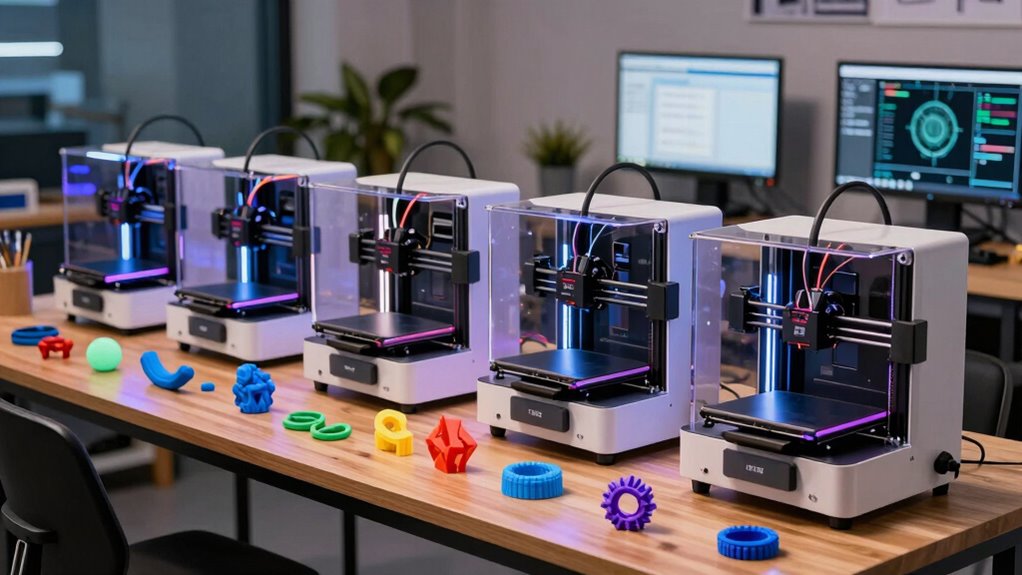

For DIY enthusiasts, choosing the right 3D printer involves balancing features, ease of use, and budget. The QIDI Plus5 Combo stands out as the best overall with its large build volume and multi-color capabilities. The ANYCUBIC Kobra X is a top pick for speed and auto-leveling, making it ideal for rapid prototyping. However, these options come with tradeoffs—some may be more complex to operate, or pricier than budget models. Keep reading to see a detailed breakdown of these top rated printers and find the best fit for your projects.

Get business pricing on garage and car supplies
- Business-only prices and quantity discounts
- Tax-exempt purchasing
- Multiple users, one account, clear invoices
Complete the kit


Key Takeaways
- Multi-color and multi-material capabilities are increasingly common among top-rated models, but they often come at a higher price and complexity.
- Large build volumes remain a key feature for DIYers working on bigger projects, with some printers offering over 300mm in each dimension.
- Ease of setup and automation, like auto-leveling, significantly reduce the learning curve and time to start printing.
- Affordable options often sacrifice advanced features, but models like the Bambu Lab P1S balance quality and value effectively.
- Choosing the right printer depends heavily on your project scope, experience level, and whether multi-color printing is a priority.
| QIDI Plus5 Combo Multi-Color 3D Printer, 320×320×300mm Large Build Volume |  | Best Overall for Large-Scale, Multi-Material Projects | Build Volume: 320×320×300mm | Max Extrusion Temperature: 370°C | Chamber Temperature: 65°C | VIEW ON AMAZON | See Our Full Breakdown |
| ANYCUBIC Kobra X Fast 3D Printer, Native 4-Color, High Speed, Auto Leveling |  | Best for Creative, Colorful Projects with Ease of Use | Print Size: 260mm x 260mm x 260mm | Color Printing: Native 4-color | Noise Level: 45dB | VIEW ON AMAZON | See Our Full Breakdown |
| Bambu Lab P2S Combo, P2S 3D Printer & AMS 2 Pro, Multi-Color 3D Printing |  | Best for Speed and Precision with Automatic Multi-Color Capabilities | Print Speed: 600 mm/s | Setup Time: 15 minutes | Filament Drying Temperature: 65 °C | VIEW ON AMAZON | See Our Full Breakdown |
| FlashForge Adventurer 5M 3D Printer, Support Multi Materials, High Precision |  | Best for Fast, Precise Multi-Material Printing in a Compact Form | Product Dimensions: 14.2 x 14.8 x 16.2 inches | Item Weight: 22 pounds | Max Travel Speed: 600mm/s | VIEW ON AMAZON | See Our Full Breakdown |
| Bambu Lab P1S 3D Printer, Ready-to-Use FDM 3D Printer |  | Best for High-Speed, Multi-Color, All-in-One Performance | Color Capabilities: Up to 16 colors | Printing Speed: 500mm/s | Auto Bed Leveling: Yes | VIEW ON AMAZON | See Our Full Breakdown |
| Bambu Lab A1 3D Printer, Ready-to-Use FDM 3D Printer for Beginners and Kids |  | Best for Ease of Use and Precise Multi-Color Printing | Acceleration: 10,000 mm/s² | Color Printing: Multi-color with AMS lite | Calibration: Full-auto calibration | VIEW ON AMAZON | See Our Full Breakdown |
| Creality K2 Plus Combo 3D Printer with Multi-Color Printing and Large Build Volume |  | Best for Large-Scale and Multi-Color Projects | Build Volume: 13.78 x 13.78 x 13.78 inches (350 x 350 x 350 mm) | Max Printing Speed: 600mm/s | Filament Compatibility: High-temp up to 350°C, ASA, PPA, engineering filaments | VIEW ON AMAZON | See Our Full Breakdown |
| Anycubic Kobra X Multicolor 3D Printer, Easy Setup, Native 4-Color |  | Best for Versatile, Multi-Color Home and Educational Use | Product Dimensions: 23 x 13 x 22 inches | Build Volume: 260mm x 260mm x 260mm | Color Support: Native 4-color, expandable to 19 | VIEW ON AMAZON | See Our Full Breakdown |
| FLASHFORGE AD5M Pro 3D Printer with 250g PLA, High Speed CoreXY, 220x220x220mm Build Volume |  | Best for Speed and Compact, High-Precision Printing | Build Volume: 220 x 220 x 220 mm | Hotend Temperature: 280°C | Hotend Sizes: 0.4mm & 0.6mm | VIEW ON AMAZON | See Our Full Breakdown |
More Details on Our Top Picks
QIDI Plus5 Combo Multi-Color 3D Printer, 320×320×300mm Large Build Volume
The QIDI Plus5 stands out for its impressive large build volume of 320×320×300mm, making it ideal for ambitious prototypes or artistic models that smaller printers like the FlashForge Adventurer 5M can’t handle. Its support for high-performance filaments and active chamber heating ensures consistent results with engineering materials like PETG and PA, a significant advantage over less robust systems. The automatic bed leveling and remote control features simplify complex multi-material printing, but the advanced features introduce a learning curve that might overwhelm beginners. Its high price reflects its professional-grade capabilities, meaning it’s best suited for serious DIYers or small production runs rather than casual hobbyists. Proper maintenance is necessary to keep multi-material operations running smoothly, especially with active filament drying.
Pros:- Large build volume suitable for big models and batch production
- Supports high-performance engineering filaments with active chamber heating
- Features automatic bed leveling and remote control via mobile app
- Multi-color and multi-material printing with active filament drying
Cons:- Complex features may require a learning curve for beginners
- High price point may be prohibitive for casual users
- Requires regular maintenance for multi-material accuracy
Best for: Enthusiasts working on large, multi-material projects who need reliable, professional results
Not ideal for: Beginners or hobbyists with limited space or budget, due to complexity and cost
- Build Volume:320×320×300mm
- Max Extrusion Temperature:370°C
- Chamber Temperature:65°C
- Print Speed:up to 600mm/s
- Acceleration:20,000mm/s²
- Filament Compatibility:PLA, ABS, PETG, TPU, PA, PC, carbon/glass-fiber composites
Our verdict“This printer is perfect for experienced DIYers focused on large-scale, multi-material printing with professional results.”
ANYCUBIC Kobra X Fast 3D Printer, Native 4-Color, High Speed, Auto Leveling
The ANYCUBIC Kobra X excels for those who want vibrant, multi-color prints without complex setup, thanks to its native 4-color printing and auto-leveling system. Its 260mm x 260mm x 260mm build volume is well-suited for creative projects, and the pre-assembled design allows for quick setup in about 15 minutes—ideal for hobbyists eager to start quickly. The quiet operation at 45dB makes it unobtrusive in a home environment, and the 49-point LeviQ 3.0 auto-leveling ensures consistent bed adhesion. Compared to the Bambu Lab P1S, it offers more straightforward multi-color capabilities, but the Kobra X’s limited filament compatibility details and potentially higher learning curve for advanced features may challenge absolute beginners. Its affordability and ease of use make it a strong choice for hobbyists focused on colorful, artistic prints.
Pros:- Native 4-color printing for vibrant, multi-color designs
- Fast, easy setup with pre-assembled parts
- Quiet operation suitable for home use
- Reliable auto-leveling with high accuracy
Cons:- Limited filament compatibility details may restrict material choices
- Not designed for large or complex multi-material projects
- Learning curve for advanced features could be steep for absolute beginners
Best for: Artists and hobbyists seeking straightforward, multi-color printing with minimal fuss
Not ideal for: Users requiring large build volumes or advanced multi-material capabilities beyond four colors
- Print Size:260mm x 260mm x 260mm
- Color Printing:Native 4-color
- Noise Level:45dB
- Auto-Leveling:LeviQ 3.0 with 49-point accuracy
- Monitoring:720P AI-powered camera
- filament Compatibility:Limited, details unspecified
Our verdict“This printer suits creative users who prioritize easy multi-color printing and quick setup for artistic projects.”
Bambu Lab P2S Combo, P2S 3D Printer & AMS 2 Pro, Multi-Color 3D Printing
The Bambu Lab P2S Combo offers high-speed printing at 600 mm/s with precise automatic calibration, making it ideal for both professionals and advanced hobbyists. Its integrated AMS 2 Pro system allows effortless multi-color and multi-material printing, but only within the Combo configuration—without the Combo, multi-color support isn’t available, which could be a limitation. The smart airflow system contributes to high-quality finishes, and setup takes about 15 minutes, appealing to users who want quick results. Compared to the QIDI Plus5, it emphasizes speed and ease of multi-color printing but sacrifices some flexibility in material types without additional accessories. The complex features may be overwhelming for absolute beginners, but experienced users will appreciate the high speed and automation.
Pros:- High-speed printing up to 600mm/s for fast production
- Automatic calibration simplifies setup
- Effortless multi-color and multi-material printing with AMS 2 Pro
- Smart airflow system enhances print quality
Cons:- Limited multi-color support without the Combo version
- Complex features may be challenging for newcomers
- Requires additional setup for multi-material versatility
Best for: Speed-focused users and professionals needing rapid, multi-color production
Not ideal for: Beginners seeking straightforward, single-material printing or those without the Combo setup
- Print Speed:600 mm/s
- Setup Time:15 minutes
- Filament Drying Temperature:65 °C
- Chamber Temperature:50 °C
- Multi-Color Support:Requires Combo version
Our verdict“This printer is best suited for users who prioritize speed and multi-color precision in professional or high-volume projects.”
FlashForge Adventurer 5M 3D Printer, Support Multi Materials, High Precision
The FlashForge Adventurer 5M combines high-precision printing with support for multiple filament types, making it a versatile choice for fast, accurate results. Its 220 x 220 x 220mm build volume is more compact than larger models like the QIDI Plus5, but still capable of handling a variety of creative and functional projects. Automatic bed leveling and remote app control streamline operation, yet the relatively heavy weight of 22 pounds reduces portability. While its maximum extruder temperature of 280°C accommodates popular filaments, it isn’t designed for high-temperature engineering materials like PEEK, unlike the QIDI Plus5. This makes it more suited for desktop-level, high-precision work rather than large-scale industrial prototypes.
Pros:- High-precision, detailed prints with multiple filament support
- Automatic bed leveling for easy setup
- Fast print speeds up to 600mm/s
- Remote control and monitoring via app
Cons:- Limited build volume for larger projects
- Heavy weight reduces portability
- Additional camera kit needed for remote monitoring
Best for: Hobbyists and small-scale professionals prioritizing speed and multi-material versatility in a compact, high-precision printer
Not ideal for: Users requiring large build volumes or working with high-temperature materials like PEEK or carbon fiber composites
- Product Dimensions:14.2 x 14.8 x 16.2 inches
- Item Weight:22 pounds
- Max Travel Speed:600mm/s
- Acceleration:20,000mm/s²
- Nozzle Diameter Options:0.25/0.4/0.6/0.8mm
- Maximum Extruder Temperature:280°C
Our verdict“This printer offers a strong balance of speed, precision, and multi-material support for small to medium projects in a compact form.”
Bambu Lab P1S 3D Printer, Ready-to-Use FDM 3D Printer
The Bambu Lab P1S provides a straightforward, ready-to-use FDM solution with multi-color and multi-material support, emphasizing high-speed printing at 500mm/s. Its enclosed design improves print stability and safety, and automatic bed leveling ensures reliable first layers, making it accessible for users at all skill levels. While it supports a wide range of filaments like PLA, PETG, and ABS, it does not handle carbon or glass fiber reinforced materials—limiting its versatility for certain advanced projects. Compared with the QIDI Plus5 and Bambu Lab P2S, the P1S shines in simplicity and speed but lacks some advanced multi-material features. Its quick setup process makes it ideal for users who want immediate results without extensive configuration.
Pros:- Vibrant multi-color/multi-material printing
- High-speed printing up to 500mm/s
- Automatic bed leveling for reliable first layers
- Enclosed design for safety and stability
Cons:- Limited compatibility with reinforced, high-temperature filaments
- Requires connection to Bambu Lab AMS for multi-color operation
- Not as versatile with advanced materials as larger systems
Best for: Enthusiasts who want a fast, multi-material printer with minimal setup and high reliability
Not ideal for: Users needing to work with high-performance composites like carbon fiber or requiring large build volumes
- Color Capabilities:Up to 16 colors
- Printing Speed:500mm/s
- Auto Bed Leveling:Yes
- Supported Filaments:PLA, PETG, ABS, PVA, PET, ASA
- Enclosure:Yes
- Setup Time:Approximately 15 minutes
Our verdict“This model is perfect for quick, multi-color printing in a compact, easy-to-use package for users seeking speed and simplicity.”
Bambu Lab A1 3D Printer, Ready-to-Use FDM 3D Printer for Beginners and Kids
The Bambu Lab A1 stands out for combining high-speed, precise printing with user-friendly features like automatic calibration and active flow rate compensation, making it an excellent choice for beginners and kids. Its support for multi-color printing with the optional AMS lite yields vibrant, detailed results, although this adds extra cost and complexity for absolute newcomers. Compared to the FlashForge AD5M Pro, which offers speed and a compact design, the A1 emphasizes ease of multi-color workflows and quiet operation, but requires some familiarity with additional accessories. This model is best suited for those who want reliable, colorful prints without extensive tinkering, yet may challenge total novices without prior experience.
Pros:- High-speed and precise printing for detailed models
- Automatic calibration simplifies setup and reduces errors
- Supports multi-color printing with vibrant results
- Quiet operation enhances workspace comfort
Cons:- Requires additional purchase of AMS lite for multi-color capability
- Some features may be challenging for absolute beginners without guidance
Best for: Beginners and parents seeking a straightforward, multi-color capable printer for educational or hobby use
Not ideal for: Complete novices or those uninterested in purchasing additional features like AMS lite, as some functions may be complex to set up
- Acceleration:10,000 mm/s²
- Color Printing:Multi-color with AMS lite
- Calibration:Full-auto calibration
- Flow Rate Compensation:Active
- Noise Level:Quiet operation
- Nozzle:1-Clip quick swap
Our verdict“This printer is ideal for users who want reliable, colorful prints with minimal fuss but are comfortable with some initial setup complexity.”
Creality K2 Plus Combo 3D Printer with Multi-Color Printing and Large Build Volume
The Creality K2 Plus Combo makes a strong impression with its massive 350x350x350mm build volume, perfect for large prototypes or batch production. Its ability to print with up to 16 colors through four CFS units offers unmatched multi-color flexibility, surpassing the native four-color system of the Anycubic Kobra X. The high-speed capability of 600mm/s and advanced automation, including dual AI cameras and 18 sensors, ensure reliable, precise results for complex projects. However, its substantial weight and large footprint demand plenty of space, and the complex setup can be intimidating for casual hobbyists. Compared to the FLASHFORGE AD5M Pro, which excels in speed and quiet operation, the K2 Plus emphasizes size and automation for professional or serious hobbyist environments.
Pros:- Enormous build volume for large or multiple models
- Supports up to 16 colors with four CFS units
- High-speed printing at 600mm/s with advanced features
- Automated monitoring with dual AI cameras and sensors
Cons:- Heavy and occupies significant space
- Complex setup may be overwhelming for beginners
- High price point for casual users
Best for: Hobbyists or small-scale producers needing large, multi-color parts and high automation
Not ideal for: Those with limited space or seeking a simple, plug-and-play device, due to its size and complexity
- Build Volume:13.78 x 13.78 x 13.78 inches (350 x 350 x 350 mm)
- Max Printing Speed:600mm/s
- Filament Compatibility:High-temp up to 350°C, ASA, PPA, engineering filaments
- Frame Material:Aerospace-grade aluminum alloy
- Sensors:18 smart sensors including dual AI cameras
- Weight:70.4 pounds
Our verdict“Perfect for experienced users demanding large-scale, multi-color printing with high automation, but less suited for small or novice setups.”
Anycubic Kobra X Multicolor 3D Printer, Easy Setup, Native 4-Color
The Anycubic Kobra X offers a compelling blend of ease and versatility, featuring a native 4-color system and expandable palette to up to 19 colors, making it a versatile choice for multi-color projects. Its fast speeds of 600mm/s and auto bed leveling with LeviQ 3.0 streamline setup, especially compared to the more complex Creality K2 Plus. Its support for multiple filament types, including PLA, PETG, and TPU, broadens potential applications from home models to educational projects. Nonetheless, the need for additional filaments and the higher price point can be barriers for casual hobbyists. This model suits those who value flexibility and speed but are prepared for some setup complexity.
Pros:- Native 4-color system with expansion up to 19 colors
- Fast printing at 600mm/s with auto bed leveling
- Supports multiple filament types for diverse projects
- Remote control compatible for convenient operation
Cons:- Filaments and printed models are not included
- Setup may be complex for users unfamiliar with multi-color systems
- Higher cost compared to single-color printers
Best for: Home users, educators, and makers wanting quick, multi-color prints with broad filament support
Not ideal for: Beginners seeking a simple, all-in-one out-of-the-box solution, as setup may require technical knowledge
- Product Dimensions:23 x 13 x 22 inches
- Build Volume:260mm x 260mm x 260mm
- Color Support:Native 4-color, expandable to 19
- Max Speed:600mm/s
- Nozzle Temperature:300℃
- Connectivity:Wi-Fi (2.4G/5G), LAN
Our verdict“Ideal for makers and educators seeking flexible, quick multi-color printing with broad filament compatibility, despite a more involved setup process.”
FLASHFORGE AD5M Pro 3D Printer with 250g PLA, High Speed CoreXY, 220x220x220mm Build Volume
The FLASHFORGE AD5M Pro offers a streamlined, high-speed CoreXY design with a 220x220x220mm build volume, making it suitable for quick prototyping and detailed models. Its max hotend temperature of 280°C enables printing with a variety of materials, though its limited filament capacity of 250g spools may restrict longer projects. The quick-swap hotend simplifies filament changes, and the built-in camera allows monitoring remotely. Compared to larger, multi-color options like the Creality K2 Plus, the AD5M Pro emphasizes speed and simplicity, but may fall short for users needing larger or multi-material setups. Its quieter operation is a plus for home environments, yet the smaller filament capacity could be limiting for sustained use.
Pros:- High-speed printing at 600mm/s for quick results
- Built-in camera for remote monitoring
- Quick-swap hotend for easier filament changes
- Quiet operation at 50dB suitable for home use
Cons:- Limited to 250g filament spools, restricting print length
- Setup may be challenging for beginners
- Hotend temperature may not support all exotic materials
Best for: Prototypers and hobbyists prioritizing speed, precision, and compact size for small to medium projects
Not ideal for: Users requiring large build volumes or multi-material/multi-color capabilities, due to size and feature limitations
- Build Volume:220 x 220 x 220 mm
- Hotend Temperature:280°C
- Hotend Sizes:0.4mm & 0.6mm
- Speed:600mm/s
- Noise Level:50dB
- Included Filament:250g PLA
Our verdict“This printer suits users who need fast, precise prints in a compact form but can accept limitations in filament capacity and material diversity.”
How We Picked
Our evaluation focused on performance, ease of use, build quality, and versatility, which are critical for DIY enthusiasts. We prioritized printers with reliable print quality, straightforward setup, and features that support creative experimentation, such as multi-color or multi-material capabilities. Value was also a key factor, ensuring that options represent a range of budgets without sacrificing essential features. To rank these printers, we compared their technical specs, user feedback, and innovation in features, aiming to highlight models that offer the best balance between cost and capability for hobbyists and advanced DIYers alike.Factors to Consider When Choosing Top Rated 3d Printers For Diy Enthusiasts
Selecting the right 3D printer for DIY projects involves more than just specs—it’s about aligning features with your project goals, experience level, and workspace. Here are key factors to consider beyond the specs listed in reviews, to help you make an informed decision and avoid costly mistakes.Build Volume and Size
Consider the size of your typical projects when choosing a build volume. Larger volumes support bigger or multiple objects but may increase the printer’s footprint and cost. Smaller printers are more manageable and often quicker to heat up, which suits hobbyists working on small parts. Balance your project needs with available space and budget to avoid ending up with a machine that’s either too cramped or unnecessarily large.
Ease of Use and Automation
Features like auto-bed leveling, filament sensors, and touchscreen interfaces can significantly reduce setup time and frustration, especially for beginners. Manual calibration can be challenging for newcomers and may lead to inconsistent results. However, highly automated models tend to come at a higher price, so weigh the benefits of convenience against your budget and willingness to learn manual processes.
Material Compatibility
Most DIYers stick with PLA, but if you’re interested in experimenting with other materials like ABS or PETG, check the printer’s compatibility. Some models support multiple filaments and materials, expanding creative options. Keep in mind that printing with tougher or specialty filaments may require additional upgrades or specific features, such as heated beds or enclosed chambers, which can add to the cost.
Multi-Color and Multi-Material Capabilities
Modern printers increasingly support multi-color printing, allowing more complex and vibrant projects. However, multi-color features often involve more setup, longer print times, and higher costs. For hobbyists focused on basic prototypes, single-color models might suffice, but for intricate designs or artistic projects, investing in multi-color capability can be worthwhile despite the added complexity.
Cost and Long-Term Value
While budget options can be appealing, consider the longevity and upgrade potential of your investment. Cheaper printers may require more maintenance or lack essential features, leading to higher costs over time. Conversely, spending more upfront on a reliable, feature-rich model can save frustration and money in the long run, especially if you plan to expand your projects or skills.
Frequently Asked Questions
Is a multi-color 3D printer worth it for a DIY hobbyist?
A multi-color 3D printer can significantly enhance your creative possibilities, especially if you want detailed, vibrant, or multi-material projects. However, these printers are generally more complex to operate and maintain, and they come at a higher price point. If you’re just starting or primarily printing simple prototypes, a single-color model might be more practical. For those ready to explore artistic or detailed models, investing in multi-color capabilities offers clear advantages.
How important is auto-leveling for a beginner?
Auto-leveling features greatly simplify the setup process and improve print consistency, making them highly valuable for beginners. Manual leveling can be tricky and time-consuming, potentially causing failed prints or surface issues. For new users, a printer with auto-leveling saves frustration and helps achieve better results while learning the basics. More experienced DIYers might prefer manual control for fine-tuning and learning calibration processes.
Should I prioritize build volume or print quality?
Both matter, but your choice depends on your typical projects. Larger build volumes enable printing bigger objects or multiple smaller items simultaneously, which is useful for certain DIY projects. However, larger printers often compromise on speed and may require more maintenance. If high detail and surface finish are your priorities, smaller, more precise printers tend to produce better quality prints, though with size limitations. Balance your project needs and workspace constraints accordingly.
Are higher-priced 3D printers worth the investment?
Higher-priced models often include advanced features like better print resolution, faster speeds, multi-material support, and enhanced reliability. If you plan to do complex projects, want consistent results, or are serious about expanding your skills, investing in a premium printer can be worthwhile. Conversely, budget models can work well for basic prototypes and learning, but may lack durability or advanced features needed for more demanding tasks.
What maintenance should I expect with a 3D printer?
Regular maintenance involves cleaning the print bed, lubricating moving parts, checking for filament jams, and replacing worn components like nozzles or belts. Some printers require more frequent calibration, especially if used intensively. Choosing a model with accessible parts and clear maintenance guides can reduce downtime. Proper upkeep ensures consistent quality and prolongs the lifespan of your machine, making it a wise investment in the long run.
Conclusion
For those new to 3D printing or working on small projects, the Bambu Lab P1S offers excellent value with easy setup and reliable performance. The QIDI Plus5 Combo is ideal for DIYers who want large-scale, multi-color printing without sacrificing quality. If budget is less of a concern and you want the best features, the Bambu Lab P2S Combo provides advanced multi-color capabilities and versatility. Ultimately, your choice depends on your project scope, experience, and whether multi-material or large-volume printing is a priority. Carefully consider these factors to find the perfect fit for your DIY ambitions in 2026.
As an affiliate, we earn on qualifying purchases.Fall Picks
fall essentials