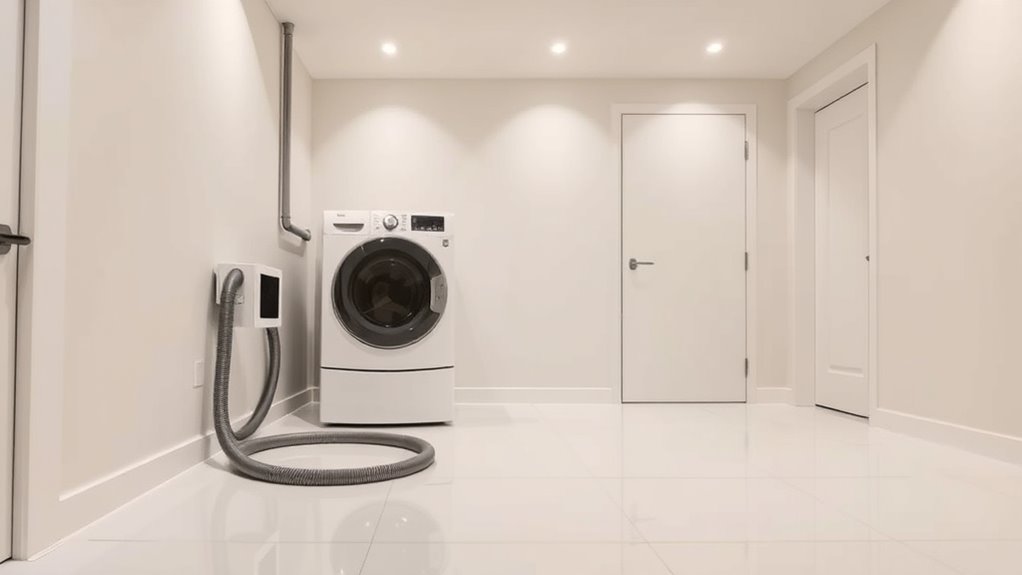

The quietest central vacuum systems for homes place the motor away from living areas, but noise still depends on installation, exhaust routing, and the unit’s design. My best overall pick is the Broan-NuTone Residential Central Vacuum System, a straightforward power unit that avoids paying for a bundled accessory kit you may not need. The Beam 475 stands out for its stated whole-home coverage and warranty, while OVO’s 700-air-watt kits suit buyers who want substantial capacity and included tools. The main tradeoff is balancing motor strength and dust capacity against sound control, installation needs, and the cost of accessories. Read on for the full comparison and a guide to choosing a setup that fits your home.

Get business pricing on garage and car supplies
- Business-only prices and quantity discounts
- Tax-exempt purchasing
- Multiple users, one account, clear invoices
Complete the kit


Key Takeaways
- Quiet depends on more than the unit. Since the motor sits away from the cleaning area, placement and exhaust routing can matter as much as the power unit itself.
- The Broan-NuTone is the simplest pick for a power-unit-first purchase. Its 550 air watts put it below the 630–750-air-watt OVO options on stated power, but it avoids bundling a long accessory kit.
- OVO’s 700-air-watt models are not identical bundles. The 40-foot kit favors reach, while the 35-foot carpet kit is aimed at homes where carpet tools are a priority.
- The Beam 475 trades some stated power for a defined coverage figure. Its listed 4,500-square-foot coverage and 10-year warranty give buyers concrete planning details absent from several other listings.
- Several OVO listings share a platform but differ in capacity, power, or included tools. Compare the 25-liter 630-air-watt units with the 35-liter 700- and 750-air-watt units before choosing by name alone.


| quietest central vacuum systems for home | Air watts | Filtration | Dimensions | Voltage |
|---|---|---|---|---|
| OVO Heavy Duty Powerful Centra | 700 | Hybrid: disposable bags or washable filter | 23 x 16 x 35 in | 120 V |
| OVO 700 Airwatts Heavy Duty Ce | 700 | Hybrid: disposable bags or washable filter | 13 x 13 x 32 in | 120 V |
| Broan-NuTone Residential Centr | 550 | Sealed HEPA filter | — | — |
| OVO Large and Powerful Central | 630 | — | — | 120 V |
| OVO Heavy Duty Powerful Centra | 700 | Hybrid: disposable bag or washable cloth filter | 23 x 16 x 35 in | — |
| Beam 475 Central Vacuum System | 659 | Hybrid, bagged or bagless | 14.1 x 14.1 x 40.1 in | 120 V |
| Prolux CV12000 Central Vacuum | — | — | 15 x 15 x 41 in | — |
| Imperium CV300 Central Vacuum | — | — | 25.75 in high x 12.875 in deep | — |
| OVO Large and Powerful Central | 630 | Hybrid, with or without disposable bags | — | 120 V |
| OVO 750 Airwatts Heavy Duty Po | — | Disposable triple-layer bag or washable filter | 12 x 12 x 32 in | 120 V AC |
More Details on Our Top Picks
OVO Heavy Duty Powerful Central Vacuum System, Hybrid Filtration (with or Without Disposable Bags) 35L (9.25 Gal), 700 Air Watts with 40-ft Deluxe Accessory Kit Included
For a large home where quieter operation and strong pickup both matter, this OVO pairs 700 air watts with an integrated muffler and foam noise reduction. Its 40-foot low-voltage hose and included accessory kit are useful across a broad layout, while eight or more inlets support whole-home installation. Compared with the Broan-NuTone PP550, it offers more stated suction and a larger 35-liter bin, but the Broan gives a clearly specified 66 dB noise figure and a HEPA filter. Hybrid filtration lets me choose a washable filter or disposable bags, though bags add an ongoing expense. The tradeoff is its large 23-by-16-by-35-inch body: this is a better fit for a roomy utility area and planned installation than a compact home with little storage space.
Pros:- 700 air watts provide strong pickup for varied floor types.
- Integrated muffler and foam are designed to reduce operating noise.
- 40-foot hose and accessory kit support cleaning across a broad layout.
- Hybrid filtration allows a choice between a washable filter and disposable bags.
Cons:- Large dimensions can complicate placement and installation.
- Disposable bags add recurring supply costs if chosen over the washable filter.
Best for: Owners of large, multi-room homes who want a long hose, high suction, and muffler-assisted noise reduction in one system.
Not ideal for: Small homes or buyers without a suitable utility space, since the 35-inch-tall unit is bulky and may need professional installation.
- Air watts:700
- Capacity:35 L (9.25 gal)
- Hose length:40 ft
- Filtration:Hybrid: disposable bags or washable filter
- Inlets:8 or more
- Noise reduction:Integrated muffler and foam
- Voltage:120 V
- Dimensions:23 x 16 x 35 in
- Warranty:10 years
Our verdict“I’d choose this OVO for a large home seeking a strong, muffler-equipped system with a particularly long included hose.”
OVO 700 Airwatts Heavy Duty Central Vacuum System, Hybrid Filtration, 35L Bottom Load Dust Bin
This OVO earns a distinct place for buyers who want a stated noise figure rather than relying only on general claims of quiet operation: the listed level is 62 dB. It also combines 700 air watts, 140.2 CFM, and a 35-liter bin, so quietness is not its only selling point for a large home. Compared with the OVO 700 Air Watts model with the 40-foot kit, this unit has a more compact listed footprint and explicit noise data, but its included accessory package and hose length are not specified here. The hybrid setup accommodates a washable filter or disposable bags. At 27 pounds, it may be easier to handle than the 55-pound OVO carpet-kit version, although it still needs a fixed installation and corded power. The published figure is helpful for comparison, but real sound in a home can also depend on installation and room placement.
Pros:- A specified 62 dB noise level makes sound comparisons more concrete.
- 700 air watts and 140.2 CFM support strong cleaning performance.
- 35-liter capacity limits how often the bin needs attention.
- Hybrid filtration offers washable-filter and disposable-bag options.
Cons:- No hose length or included accessory kit is specified in the supplied product data.
- At 27 pounds, it is still a substantial unit to handle during installation.
- Corded, indoor-only design is not suited to portable or outdoor use.
Best for: Homeowners comparing central vacuum systems by published noise level who need substantial capacity and strong airflow for a larger floor plan.
Not ideal for: Buyers who need a complete hose-and-tool kit included or want sound performance guaranteed independently of installation conditions.
- Air watts:700
- Airflow:140.2 CFM
- Noise level:62 dB
- Capacity:35 L (9.25 gal)
- Filtration:Hybrid: disposable bags or washable filter
- Inlets:8 or more
- Weight:27 lb
- Voltage:120 V
- Dimensions:13 x 13 x 32 in
Our verdict“I’d pick this OVO when a published 62 dB figure matters more than having a documented accessory kit in the box.”
Broan-NuTone Residential Central Vacuum System Power Unit 550 Air Watts
The Broan-NuTone PP550 is the more restrained choice in this group: its 550 air watts are below the 630- and 700-air-watt OVO units, but the product data gives a clear 66 dB noise level and a sealed HEPA filter. That makes it a compelling option for buyers who value specified sound output and filtration over maximum suction. Its six-gallon disposable bag also reduces how often dust needs handling, unlike the washable-filter route offered by the OVO models. The tradeoff is that replacement bags are required and sold separately. Coverage is listed up to 7,000 square feet, so it can suit a sizable home, though the stronger OVO systems may appeal more for demanding whole-house cleaning. A wall bracket and six-foot power cord simplify mounting, but the cord is not an accessory hose for cleaning.
Pros:- Specified 66 dB operating level supports clearer noise comparisons.
- Sealed HEPA filter suits buyers focused on contained filtration.
- Six-gallon bag can reduce how often dust is emptied by hand.
- Wall-mount bracket and multi-directional connection support installation flexibility.
Cons:- 550 air watts are lower than the 630- and 700-air-watt options in this batch.
- Disposable bags are sold separately and create ongoing replacement needs.
- The large bag capacity may be unnecessary for smaller homes.
Best for: Households that prefer sealed HEPA filtration and a large disposable bag, and want a stated noise level for comparing systems.
Not ideal for: Buyers prioritizing maximum listed suction or avoiding the recurring purchase and disposal of vacuum bags.
- Air watts:550
- Noise level:66 dB
- Bag capacity:6 gal
- Filtration:Sealed HEPA filter
- Coverage area:Up to 7,000 sq ft
- Power cord:6 ft
- Listing:UL Listed
- Model:PP550
Our verdict“I’d choose the PP550 for a bagged, HEPA-filtered setup with specified noise data, rather than for the highest suction in this lineup.”
OVO Large and Powerful Central Vacuum System, 630 Airwatts Hybrid Filtration (with or without Disposable Bags), Covers up to 7500 sq ft, 6.6 Gal / 25 L Bottom-Load Rolled Steel Canister
This OVO balances 630 air watts with a smaller 25-liter canister, making it a middle ground between the 550-air-watt Broan-NuTone PP550 and the 700-air-watt OVO systems. It is rated for homes up to 7,500 square feet, and its integrated muffler and foam target a quieter installation without relying on a published decibel figure. The rolled-steel, bottom-load canister adds a durable construction detail, while hybrid filtration lets me use the included washable filter or opt for disposable bags. Compared with the 35-liter OVO units, it takes up less space and holds less debris, so it may suit a moderately large home better than one with especially heavy cleaning demands. At 25 pounds, it remains a serious wall-mounted appliance, and central-system installation is not a casual plug-in setup.
Pros:- 630 air watts offer a step up from the Broan-NuTone PP550.
- Integrated muffler and foam are designed to reduce operating noise.
- 25-liter bottom-load steel canister provides a durable, space-conscious format.
- Washable filtration is included, with disposable bags available as an alternative.
Cons:- Smaller capacity than the 35-liter OVO systems means more frequent emptying.
- No specific decibel figure is provided in the supplied product data.
- Central vacuum installation can require professional setup.
Best for: Owners of medium-to-large homes who want more suction than the Broan-NuTone PP550 but do not need a 35-liter bin.
Not ideal for: Very large households with frequent heavy debris pickup, or shoppers who need a published decibel rating before choosing.
- Air watts:630
- Water lift:130 in
- Airflow:127.1 CFM
- Canister capacity:25 L (6.6 gal)
- Canister material:Rolled steel, bottom-load
- Coverage area:Up to 7,500 sq ft
- Noise reduction:Integrated muffler and foam
- Weight:25 lb
- Voltage:120 V
Our verdict“I’d choose this model for a moderately large home seeking a muffler-equipped system with strong suction and a smaller canister than the 35-liter OVO units.”
OVO Heavy Duty Powerful Central Vacuum System, Hybrid Filtration (with or Without Disposable Bags) 35L or 9.25 Gal, 700 Airwatts with 35ft Carpet Deluxe Accessory Kit Included
For homes where carpet tools matter as much as the power unit, this OVO includes a 35-foot dual-voltage hose and carpet deluxe accessory kit alongside 700 air watts. Its integrated muffler and foam address the roundup’s quiet-operation focus, while hybrid filtration gives buyers a washable-cloth option or the convenience of disposable bags. Compared with the closely related OVO carrying a 40-foot low-voltage kit, this version trades five feet of reach for a carpet-focused kit; the supplied data does not state a noise figure for either model. The 35-liter bin and stated coverage up to 8,000 square feet suit larger homes, but at 55 pounds and 23 by 16 by 35 inches, the unit needs ample installation space and careful handling. Buyers should also confirm that the included kit matches their flooring and electrical setup.
Pros:- 700 air watts support demanding carpet cleaning.
- 35-foot dual-voltage hose and carpet deluxe kit are included.
- Integrated muffler and foam are designed to reduce operating noise.
- Hybrid filtration and a 35-liter capacity give flexibility for larger homes.
Cons:- The 55-pound unit is difficult to handle during installation.
- Large dimensions need a dedicated installation area.
- The hose is shorter than the 40-foot kit included with the other listed OVO 700-air-watt model.
Best for: Owners of larger carpeted homes who want a bundled carpet accessory kit, high suction, and muffler-assisted noise reduction.
Not ideal for: Buyers with limited installation space, those who need a lighter power unit, or households that primarily have hard flooring and do not need a carpet kit.
- Air watts:700
- Capacity:35 L (9.25 gal)
- Hose length:35 ft
- Hose type:Dual-voltage
- Filtration:Hybrid: disposable bag or washable cloth filter
- Inlets:8 or more
- Noise reduction:Integrated muffler and foam
- Weight:55 lb
- Dimensions:23 x 16 x 35 in
Our verdict“I’d choose this OVO for a large, carpet-heavy home that values the included carpet kit more than the extra five feet of hose offered by its 40-foot counterpart.”
Beam 475 Central Vacuum System
The Beam 475 suits buyers who want a garage-mounted motor to keep operating noise away from living areas, plus enough capacity for homes up to 4,500 square feet. Its 659 air watts and 135.8 CFM put it ahead of the OVO Large and Powerful 630 Airwatts system on listed suction and airflow, though the OVO covers a larger area and includes a 30-foot accessory kit. The Beam’s hybrid filtration lets you choose disposable bags for contained dust or bagless operation to avoid replacement bags. Its key tradeoff is the installation burden: the 29-pound unit may call for help to mount, and its stated coverage is more limited than the OVO 750. I’d choose it for a quieter household setup, not for maximum whole-home reach.
Pros:- Garage-mounted motor helps keep operating noise away from occupied rooms.
- 659 air watts and 135.8 CFM provide strong listed suction and airflow.
- Hybrid filtration supports either disposable bags or bagless use.
- Coverage is rated for homes up to 4,500 square feet.
Cons:- At 29 pounds, the unit may need help or professional installation.
- Its stated coverage is lower than the OVO 750’s 9,000-square-foot rating.
- The supplied information does not give a measured decibel level.
Best for: Homeowners with a garage or utility space who want a quieter system for a home up to 4,500 square feet and value a choice of bagged or bagless filtration.
Not ideal for: Owners of homes larger than 4,500 square feet or buyers who need an easy, lightweight installation.
- Air watts:659
- Airflow:135.8 CFM
- Water lift:144.9 inches
- Coverage:Up to 4,500 sq ft
- Filtration:Hybrid, bagged or bagless
- Voltage:120 V
- Weight:29 lb
- Dimensions:14.1 x 14.1 x 40.1 in
- Warranty:10-year parts; 1-year labor
Our verdict“Choose the Beam 475 if a garage-mounted motor and flexible filtration matter more than maximum coverage or a light installation.”
Prolux CV12000 Central Vacuum
The Prolux CV12000 is the durability-focused choice here, with a powder-coated steel body, a 25-year body service promise, and a stated 10-year motor warranty. Its 142 CFM airflow and coverage rating of up to 8,000 square feet make it more suitable for larger layouts than the Beam 475, but its 70 dB noise specification works against a roundup centered on quiet operation. That figure is unusually useful for comparison: the Imperium CV300 is listed at 58 dB, making it the clearer pick when measured quietness takes priority. The Prolux adds dual intake ports and an included mounting bracket for flexible installation, yet its size and weight can still complicate tight utility spaces. I’d favor it for a durable, high-capacity setup where noise is secondary.
Pros:- Powder-coated steel construction is designed for durability and rust resistance.
- Coverage is rated for up to 8,000 square feet or eight outlets.
- Dual intake ports allow left- or right-side connection.
- Includes a mounting bracket, spare bag, and muffler.
Cons:- The listed 70 dB noise level makes it a weaker fit for quiet-operation priorities than the Imperium CV300.
- Its 41-inch height and 22-pound weight can make installation difficult in tight spaces.
- The 116-inch water lift is lower than the Beam 475’s listed 144.9 inches.
Best for: Homeowners with larger homes who want a steel-bodied unit, flexible intake placement, and a long stated body service promise.
Not ideal for: Noise-sensitive households or buyers installing a unit in a cramped utility area, given its listed 70 dB level and large dimensions.
- Airflow:142 CFM
- Water lift:116 inches
- Coverage:Up to 8,000 sq ft or 8 outlets
- Noise level:70 dB
- Filter type:HEPA
- Bag capacity:6.8 gallons
- Weight:22 lb
- Dimensions:15 x 15 x 41 in
- Voltage and wattage:120 V; 1,500 W
Our verdict“Pick the Prolux CV12000 for durable construction and broad coverage if its comparatively loud listed operation is acceptable.”
Imperium CV300 Central Vacuum Power Unit
At a listed 58 dB, the Imperium CV300 has the clearest noise advantage in this group of products with stated decibel figures. That makes it the standout for households trying to limit sound from the power unit, although central placement and installation still affect what people hear in the home. Its all-steel construction and 6.25-gallon dirt capacity suit regular use, while coverage of up to 7,500 square feet gives it more reach than the Beam 475. The compromise is less detail in the supplied specifications: there is no airflow or air-watt figure to compare directly with the OVO 750’s 750 air watts and 140.2 CFM. It also has no variable-speed control. I’d choose the CV300 for documented quietness, not for buyers who need the strongest published performance figures.
Pros:- Listed 58 dB noise level is lower than the Prolux CV12000’s 70 dB figure.
- All-steel construction offers a durable canister body.
- Coverage is rated for homes up to 7,500 square feet.
- Includes mounting hardware and paper bags.
Cons:- The supplied specifications do not state air watts or CFM for direct performance comparison.
- One speed limits control compared with a variable-speed system.
- Its size may require assistance during installation.
Best for: Noise-sensitive homeowners seeking a steel-bodied central vacuum for a home up to 7,500 square feet, especially when a published decibel figure matters.
Not ideal for: Buyers who want documented airflow or air-watt performance, variable-speed control, or an outdoor-use unit.
- Noise level:58 dB
- Motor power:740 air watts
- Dirt capacity:6.25 gallons
- Coverage:Up to 7,500 sq ft
- Construction:All steel
- Power:120 V
- Speeds:1
- Dimensions:25.75 in high x 12.875 in deep
- Warranty:10 years
Our verdict“Choose the Imperium CV300 if a stated 58 dB operating level matters more than published suction figures or speed adjustment.”
OVO Large and Powerful Central Vacuum System, Hybrid Filtration, 25L/6.6 Gal
The OVO Large and Powerful pairs a 30-foot hose and deluxe accessory kit with a 630-air-watt motor, so buyers get a ready-to-use cleaning setup rather than a power unit alone. Its hybrid filtration offers bagged or bagless operation, and the 6.6-gallon canister reduces how often a household needs to empty it. For quietness, though, the product data gives no decibel rating: it lists a muffler and noise-blocking foam, but that is less measurable than the Imperium CV300’s stated 58 dB. Its 5,000-square-foot coverage is also more modest than the OVO 750’s 9,000-square-foot rating. I’d favor this model when the included kit and filtration choice are useful, while buyers ranking systems primarily by verified noise data should look at the Imperium instead.
Pros:- Includes a 30-foot hose and deluxe accessory kit.
- Hybrid filtration allows bagged or bagless use.
- 6.6-gallon capacity limits frequent canister emptying.
- Muffler and noise-blocking foam are included for noise reduction.
Cons:- No measured decibel level is provided, so quietness is harder to compare with the Imperium CV300.
- Coverage is lower than the OVO 750’s stated 9,000 square feet.
- The canister is described as heavy and large.
Best for: Homeowners in homes up to 5,000 square feet who want a long hose, included accessories, and flexible bagged or bagless filtration.
Not ideal for: Buyers who require a published decibel rating or need coverage beyond 5,000 square feet.
- Air watts:630
- Airflow:127.1 CFM
- Capacity:25 L / 6.6 gallons
- Coverage:Up to 5,000 sq ft
- Filtration:Hybrid, with or without disposable bags
- Hose length:30 ft
- Canister material:Rolled steel
- Voltage:120 V
- Noise-control features:Muffler and noise-blocking foam; no dB rating supplied
Our verdict“Choose this OVO when the included 30-foot kit and hybrid filtration outweigh the lack of a published noise figure.”
OVO 750 Airwatts Heavy Duty Powerful Central Vacuum System
The OVO 750 is the high-capacity choice for larger homes: its 750 air watts, 140.2 CFM airflow, and coverage rating of up to 9,000 square feet exceed the Beam 475’s listed reach and airflow. Eight or more inlets and a 9.25-gallon bottom-load canister make it better suited to extensive cleaning with fewer capacity interruptions. For the quietness-focused buyer, its integrated muffler and foam insulation are promising, but there is no decibel figure to confirm how it compares with the Imperium CV300’s 58 dB. Hybrid filtration gives owners a bagged option for contained dust or a washable-filter setup, though installation is typically a larger project than choosing a smaller system. I’d pick it for scale and suction, accepting that its noise claims are less directly verifiable.
Pros:- 750 air watts and 140.2 CFM provide the strongest listed output in this batch.
- Coverage is rated for up to 9,000 square feet and eight or more inlets.
- Large 9.25-gallon bottom-load canister supports longer cleaning intervals.
- Hybrid filtration offers disposable bags or a washable filter.
Cons:- No decibel rating is supplied, unlike the Imperium CV300’s 58 dB specification.
- Professional installation is typically required.
- The large canister may be difficult to handle during installation and maintenance.
Best for: Owners of large homes up to 9,000 square feet who need broad inlet support, high listed airflow, and a large-capacity canister.
Not ideal for: Noise-sensitive buyers who want a measured decibel rating, or homeowners seeking a simple installation for a small home.
- Suction power:750 air watts
- Airflow:140.2 CFM
- Motor:5.7-inch, two-stage Ametek USA motor
- Coverage:Up to 9,000 sq ft
- Supported inlets:8+
- Canister capacity:35 L / 9.25 gallons, bottom-load
- Filtration:Disposable triple-layer bag or washable filter
- Dimensions:12 x 12 x 32 in
- Voltage:120 V AC
Our verdict“Choose the OVO 750 for a large home needing high output and capacity, but favor the Imperium CV300 if verified quietness is your main priority.”

How We Picked
I ranked these systems around the promise of quieter whole-home cleaning, while separating what product specifications can show from what depends on the home. A central unit’s remote placement can reduce noise heard during cleaning, but the supplied product details do not provide comparable decibel figures. I therefore did not treat air watts as a proxy for quietness. I weighed stated motor power, dust-bin capacity, filtration flexibility, coverage claims, included accessories, warranty information, and how clearly each listing supports a practical buying decision.
Products with more useful, decision-ready details and a clear fit for a particular home type ranked ahead of similar units with less information. Bundled kits earned credit for convenience, but their hose length and tool focus also affect whether the bundle suits a home. I separated closely related OVO models by capacity, stated power, and included kit rather than treating them as interchangeable. Because noise measurements, installation requirements, and sound-dampening details are not consistently supplied, buyers should confirm those points with the manufacturer or installer before purchase.
| quietest central vacuum systems for home | Filtration | Coverage |
|---|---|---|
| OVO Heavy Duty Powerful Centra | Hybrid: disposable bags or washable filter | — |
| OVO 700 Airwatts Heavy Duty Ce | Hybrid: disposable bags or washable filter | — |
| Broan-NuTone Residential Centr | Sealed HEPA filter | — |
| OVO Large and Powerful Central | — | — |
| OVO Heavy Duty Powerful Centra | Hybrid: disposable bag or washable cloth filter | — |
| Beam 475 Central Vacuum System | Hybrid, bagged or bagless | Up to 4,500 sq ft |
| Prolux CV12000 Central Vacuum | — | Up to 8,000 sq ft or 8 outlets |
| Imperium CV300 Central Vacuum | — | Up to 7,500 sq ft |
| OVO Large and Powerful Central | Hybrid, with or without disposable bags | Up to 5,000 sq ft |
| OVO 750 Airwatts Heavy Duty Po | Disposable triple-layer bag or washable filter | Up to 9,000 sq ft |
Factors to Consider When Choosing Quietest Central Vacuum Systems For Homes
Choosing a quieter central vacuum is partly a product decision and partly a system-design decision. These broader checks can prevent a powerful unit from becoming a poor fit for your floor plan or a noisy one in the wrong location.
Treat noise as an installation question, not just a motor specification
A central vacuum moves the motor away from the room where you clean, which can reduce noise in occupied spaces compared with a conventional portable vacuum. That does not make every installation equally quiet: a unit mounted beside a bedroom, a shared wall, or a frequently used room may still be audible. Ask where the power unit can be placed and whether its exhaust can be routed outdoors or away from living areas. Confirm whether the manufacturer publishes a sound measurement and how it was taken; an unsourced claim that a unit is quiet is hard to compare. Avoid choosing by air watts alone, since airflow and cleaning performance figures do not describe sound. A modestly less powerful unit in a suitable utility area may be a better noise fit than a stronger model installed near a quiet room.
Match system capacity to cleaning habits and household size
A larger dust bin means fewer trips to empty it, but it also takes up more space and may be unnecessary for a smaller household. Consider how often you vacuum, whether you have pets, and how much floor area is carpeted before paying for a larger canister. Capacity labels use different units, so compare liters or gallons directly rather than relying on terms such as heavy duty. A bottom-load bin may make emptying easier for some users, but check the clearance needed beneath the unit before installation. Reusable or hybrid filtration can offer flexibility, though it still requires regular attention to keep the system working well. Buying the largest capacity available can add bulk without improving the part of the experience you care about most: quieter cleaning.
Check the home’s pipe layout before chasing higher air watts
Air watts are one specification, not a full prediction of how a central system will perform throughout your home. Pipe length, bends, inlet placement, hose condition, and the cleaning head all shape the airflow that reaches the floor. A large house with an awkward existing network may need a professional assessment before selecting a power unit. Coverage figures can help with initial screening, but they do not prove a unit will suit every layout or floor type. Ask an installer to check the system’s compatibility and whether the proposed unit is suitable for the existing piping. This can prevent spending on extra motor power that the home’s infrastructure cannot use effectively.
Decide whether a bundled accessory kit saves effort or creates waste
Accessory bundles can simplify a first installation, but the included hose length and tools should match the home rather than simply look generous. Measure the longest route from an inlet to the farthest cleaning area, then account for stairs and furniture. A longer hose can reduce the number of inlet changes, but it may be harder to store and manage. Carpet-focused tools are useful when rugs and wall-to-wall carpet dominate; buyers with mostly hard floors should check whether the kit includes suitable floor tools instead. If you already own compatible accessories, a power-unit-only model may be a cleaner purchase. Verify compatibility before assuming a hose or tool from another system will fit.
Compare filtration upkeep and emptying before choosing bagged or bagless
Hybrid filtration gives buyers a choice between using a disposable bag and operating without one, but that flexibility only helps if the maintenance routine suits the household. Bags can make disposal tidier, while bagless use avoids replacing bags but may expose the user to more dust when emptying. Households sensitive to airborne dust should ask how the unit seals, what filters it uses, and whether the recommended disposal process limits exposure. Check how often filters need cleaning or replacement and whether that work is accessible after installation. Do not assume the word hybrid means that every configuration performs the same way. A convenient bin and filter routine can matter more over time than a small difference in stated motor power.
Pay extra for the feature that solves a real constraint
A higher-powered or larger-capacity system makes sense when the home’s size, floor types, and cleaning schedule call for it, not simply because the specification is higher. A bundled kit may justify its added cost when it provides the hose and tools needed for a new installation, but it is less compelling when those accessories will go unused. Warranty length is useful only when its coverage, exclusions, and service process are clear. Before committing, confirm electrical requirements, mounting space, exhaust options, included components, and who handles installation. For a quiet-home priority, spend effort first on a suitable unit location and sound-conscious installation. That may deliver more practical benefit than moving up a power tier without changing where or how the system is mounted.
Frequently Asked Questions
Can I tell which of these systems is quietest from the listed specifications?
Not reliably. The listings provide power, capacity, and in some cases coverage or warranty details, but they do not give a consistent set of decibel measurements. Air watts describe suction-related performance rather than sound output. Ask each manufacturer for a sound rating and the conditions under which it was measured, then compare those figures on the same basis. Installation location and exhaust routing can also change how much sound reaches living spaces.
Will replacing my existing central vacuum power unit make the system quieter?
It may help, but the result depends on the source of the noise and the condition of the existing installation. The power unit, mounting surface, exhaust path, pipework, and cleaning head can all contribute to what you hear. Before replacing it, have the unit and system checked for loose mounts, blockages, leaks, or worn parts. Confirm that a new power unit is compatible with the existing piping and electrical setup. If the motor is near a living area, relocating it may matter more than choosing a model with a different power rating.
Should I choose a 700- or 750-air-watt model for a large home?
Start with the home’s floor area, pipe layout, floor types, and the system’s coverage guidance rather than treating a higher air-watt figure as a guaranteed improvement. The roundup includes 35-liter OVO units rated at 700 and 750 air watts, but the listings do not provide a direct noise comparison between them. A professional can check whether your existing or planned piping supports the unit and whether the extra stated power is useful for your layout. Also compare capacity and included accessories, since those differences may affect day-to-day convenience more than the power gap. Ask for sound information before deciding on a model for a noise-sensitive installation.
Is a bundled accessory kit a good choice for my first central vacuum?
It can be a practical starting point if the kit includes a hose length and floor tools suited to your rooms. Measure the route from the planned inlet locations to the farthest areas, including stairs, before choosing between the included 35- and 40-foot OVO kits. Check whether the tools fit your mix of carpet and hard flooring rather than assuming a deluxe kit covers every need. A power-unit-only option may be better if you already have compatible accessories or want to select tools separately. Confirm what is actually included in the package and whether the system requires additional installation parts.
Does bagless operation make a central vacuum harder to live with?
That depends on how you prefer to handle dust and routine maintenance. Bagless operation avoids buying and replacing bags, but emptying a canister can release dust unless the process is managed carefully. A disposable bag can make waste handling tidier, though it adds an ongoing supply to keep on hand. The OVO hybrid listings offer both approaches, so check the manufacturer’s instructions for each configuration and its filter-care requirements. If anyone in the household is sensitive to dust, prioritize sealed disposal and maintenance details over the convenience of either label.
Conclusion
For the best overall power-unit-first choice, I’d start with the Broan-NuTone, especially if you want a straightforward unit and plan to choose accessories separately. The best value in a ready-to-use bundle is one of the OVO 700-air-watt kits: pick the 40-foot version for reach or the 35-foot carpet kit when its tools better suit your floors. For a premium, larger-capacity option, the OVO 750-air-watt model offers the highest stated power in this lineup, though buyers should confirm sound performance and installation fit. The best choice for beginners is a bundled system matched to the home’s inlet layout, such as an OVO kit, rather than a power unit that requires separate accessory shopping. For a specific need, the Beam 475 is a useful shortlist option when its stated 4,500-square-foot coverage and 10-year warranty align with your plans. None of these listings provides comparable noise measurements, so make unit placement and sound specifications part of the final decision.