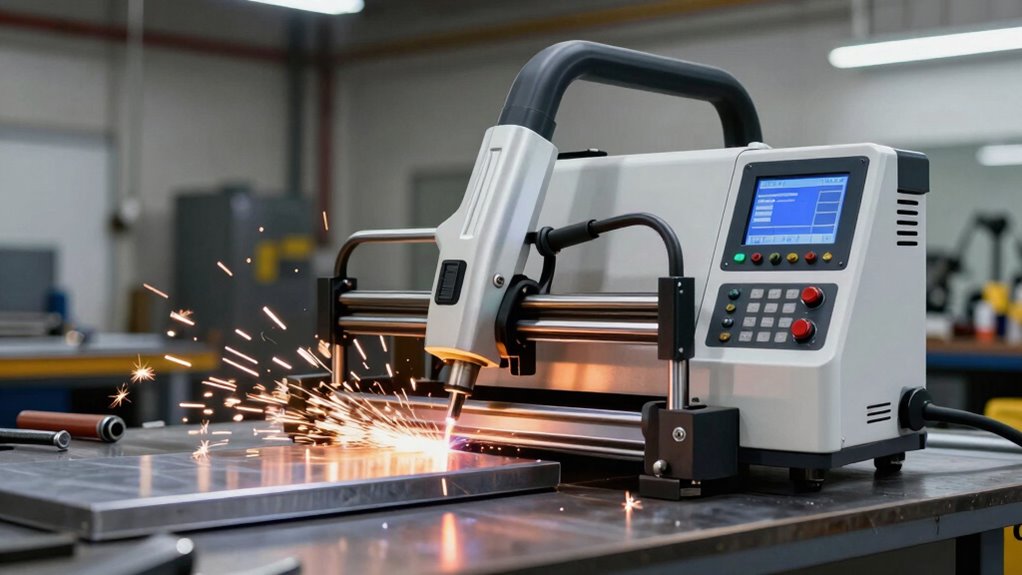

Choosing the right plasma cutter for metal fabrication depends heavily on your shop’s power infrastructure and the thickness of materials you process most often. The YESWELDER CUT-65DS PLUS stands out as the best overall pick for its versatile 4-in-1 functionality and robust 65-amp output, which handles thick steel with ease while remaining portable. For those prioritizing pure cutting speed on heavier plates, the LTP8500 85A offers superior amperage but requires strict 220V access. Meanwhile, the ARCCAPTAIN CUT55 serves as the ideal entry point for hobbyists needing reliable non-touch pilot arcs without the complexity of industrial controls. The main tradeoff in this category is balancing raw cutting capacity against portability and power supply flexibility. Continue reading to see how these models stack up in duty cycle, arc stability, and ease of use for professional fab work.

Get business pricing on garage and car supplies
- Business-only prices and quantity discounts
- Tax-exempt purchasing
- Multiple users, one account, clear invoices
Complete the kit


Key Takeaways
- Dual-voltage capability (110V/220V) is the most critical differentiator for mobile fabrication work, allowing the same unit to operate at home shops or on job sites.
- Non-touch pilot arc technology has become standard in mid-range models, significantly improving cut quality on painted or rusty metal compared to older touch-start units.
- Higher amperage (85A+) does not always mean better performance for thin gauge sheet metal; excessive heat input can cause warping, making 50-65A units more versatile for mixed-material jobs.
- Duty cycle ratings at maximum amperage are often lower than marketing materials suggest; professional fabricators should look for units rated at 60% duty cycle or higher at their working amperage.
- Integrated air filtration or robust compressor requirements vary widely; some compact units demand higher CFM than typical home compressors can provide, requiring additional investment.
| 60A Plasma Cutter, 110V/220V Dual Voltage High Frequency Contact Arc Cutting Machine |  | Best for Mixed-Voltage Workshops | Amperage: 60A | Voltage: 110V/220V Dual Voltage | Max Cutting Capacity: 19mm (0.75 inches) | VIEW ON AMAZON | See Our Full Breakdown |
| LTP8500 85A Drag-Cut HF Pilot Arc Plasma Cutter 220V |  | Best Heavy-Duty Fabrication Power | Amperage: 85A | Voltage: 220V Single Phase | Clean Cut Capacity: 1 inch (25 mm) | VIEW ON AMAZON | See Our Full Breakdown |
| Bestarc 50A Plasma Cutter Machine, Pilot Arc, IGBT 110V/220V Dual Voltage |  | Best Lightweight Portability | Amperage: 50A | Voltage: 110V/220V Dual Voltage | Max Cut (220V): 2/3 inch | VIEW ON AMAZON | See Our Full Breakdown |
| ARCCAPTAIN CUT55 55A Plasma Cutter Machine with Non-Touch Pilot Arc |  | Best for Beginner Fabricators | Amperage: 55A | Voltage: 120V/240V Dual Voltage | Max Cut Thickness: 3/4 inch | VIEW ON AMAZON | See Our Full Breakdown |
| YESWELDER CUT-65DS PLUS Plasma Cutter, 4-in-1 Non-HF Pilot Arc |  | Best Versatile 4-in-1 Tool | Amperage: 65A | Voltage: 110V / 220V | Max Cut (220V): 1 inch | VIEW ON AMAZON | See Our Full Breakdown |
| ARCCAPTAIN Plasma Cutter Machine, 55A, Non-Touch Pilot Arc, 120V/240V |  | Best for Portability and Light Fabrication | Amperage: 55A | Voltage: 120V/240V | Max Cutting Thickness: 3/4 inch | VIEW ON AMAZON | See Our Full Breakdown |
| ARCCAPTAIN iControl CUT55 MP Plasma Cutter Machine with APP Control |  | Best for Smart Connectivity and Versatility | Max Current: 55A | Input Voltage: 120V/240V | Cutting Thickness: Up to 26mm (1 inch) | VIEW ON AMAZON | See Our Full Breakdown |
| plasma cutters for metal fabrication | Weight | Amperage | Voltage |
|---|---|---|---|
| 60A Plasma Cutter | 16.48 pounds | 60A | 110V/220V Dual Voltage |
| LTP8500 85A Drag-Cut HF Pilot | 37.1 pounds | 85A | 220V Single Phase |
| Bestarc 50A Plasma Cutter Mach | 10.14 pounds | 50A | 110V/220V Dual Voltage |
| ARCCAPTAIN CUT55 55A Plasma Cu | 19.8 lbs | 55A | 120V/240V Dual Voltage |
| YESWELDER CUT-65DS PLUS Plasma | 14 lbs | 65A | 110V / 220V |
| ARCCAPTAIN Plasma Cutter Machi | 10 pounds | 55A | 120V/240V |
| ARCCAPTAIN iControl CUT55 MP P | 20.5 pounds | — | — |
More Details on Our Top Picks
60A Plasma Cutter, 110V/220V Dual Voltage High Frequency Contact Arc Cutting Machine
This 60A unit stands out for its dual voltage flexibility, allowing seamless switching between 110V and 220V outlets. Unlike the LTP8500, which is locked into 220V, this model adapts to your available power source, making it ideal for garages with mixed electrical setups. The 19mm cutting capacity is sufficient for most structural steel tasks, though it lacks the heavy-duty severance capabilities of higher-amp machines. Stable arc technology helps maintain clean cuts on painted surfaces, but the nearly 17-pound weight makes it less portable than lighter competitors. It is a solid middle-ground choice for fabricators who need reliability without committing to a single voltage standard.
Pros:- Dual voltage support (110V/220V) offers power flexibility
- 19mm maximum cutting capacity handles thick structural steel
- Stable arc technology maintains cut quality on coated metals
- Energy-efficient inverter design reduces long-term operating costs
Cons:- At 16.48 pounds, it is heavier than most portable competitors
- Requires a separate compressed air source at 50-60 PSI
- Limited user feedback makes long-term reliability harder to gauge
Best for: Fabricators working in spaces with both 110V and 220V outlets who need a reliable mid-range cutter.
Not ideal for: Users prioritizing extreme portability, as the 16.5-pound weight is cumbersome for extended handheld use.
- Amperage:60A
- Voltage:110V/220V Dual Voltage
- Max Cutting Capacity:19mm (0.75 inches)
- Weight:16.48 pounds
- Working Pressure:50-60 PSI
- Technology:High Frequency Contact Arc
Our verdict“Choose this if you need a versatile 60A cutter that adapts to your shop’s available voltage without compromising on cut depth.”
LTP8500 85A Drag-Cut HF Pilot Arc Plasma Cutter 220V
The LTP8500 is the power player in this lineup, delivering 85A of cutting force that dwarfs the 50A and 60A options. Its drag-cut control significantly reduces operator fatigue during long seams, a feature the Bestarc 50A lacks. With a 1-inch clean cut and 1.5-inch sever capacity, it handles heavy plate steel that smaller machines simply cannot. However, this power comes at a cost: the unit weighs over 37 pounds and is strictly limited to 220V power. It demands a robust air compressor capable of delivering clean, dry air at 80 PSI. This is not a tool for hobbyists; it is built for professional shops tackling thick stock daily.
Pros:- 85A output allows for 1-inch clean cuts and 1.5-inch severance
- Drag-cut control enhances precision and reduces hand fatigue
- High-frequency pilot arc ensures reliable starts on rusty metal
- 100% duty cycle at 62A supports continuous production work
Cons:- Extremely heavy at 37.1 pounds, limiting mobility
- Strictly requires 220V power, incompatible with standard household outlets
- Demands high-quality, dry compressed air to prevent consumable failure
Best for: Professional metal fabricators who regularly cut thick steel plate and have access to 220V power.
Not ideal for: Home DIYers or those with limited workshop space, as the 37-pound weight and large footprint are excessive.
- Amperage:85A
- Voltage:220V Single Phase
- Clean Cut Capacity:1 inch (25 mm)
- Sever Cut Capacity:1.5 inch (38 mm)
- Duty Cycle:60% at 85A, 100% at 62A
- Weight:37.1 pounds
- Air Pressure:80 PSI required
Our verdict“This is the definitive choice for heavy industrial fabrication where cut depth and duty cycle matter more than portability.”
Bestarc 50A Plasma Cutter Machine, Pilot Arc, IGBT 110V/220V Dual Voltage
Weighing just 10.14 pounds, the Bestarc 50A is the most portable option here, significantly lighter than the 60A unit and the ARCCAPTAIN CUT55. This makes it ideal for fabricators who move around the shop or work on large, stationary assemblies. The pilot arc technology allows for clean cuts on painted or rusty surfaces without touching the material, preserving electrode life. While its 2/3 inch maximum cut at 220V is respectable, it falls short of the 85A LTP8500’s heavy-duty capabilities. The manual air pressure adjustment requires attention, but the real-time LED display provides helpful feedback on parameters. It is a balanced choice for those who value mobility over maximum power.
Pros:- Extremely lightweight at 10.14 pounds for easy portability
- Pilot arc technology enables clean cuts on coated or rough metal
- Dual voltage operation increases accessibility in various locations
- Real-time LED display aids in monitoring cut parameters
Cons:- Manual air pressure adjustment lacks automatic stabilization
- Requires a separate air compressor purchase
- Setup and calibration can be complex for new users
Best for: Fabricators who need to move their cutter frequently or work in tight spaces where weight matters.
Not ideal for: Users cutting consistently thick steel plate over 1/2 inch, as the 50A limit restricts deep severance.
- Amperage:50A
- Voltage:110V/220V Dual Voltage
- Max Cut (220V):2/3 inch
- Weight:10.14 pounds
- Air Pressure:65 PSI
- Technology:Pilot Arc with IGBT Inverter
Our verdict“Pick this if you prioritize a lightweight, mobile cutter for general fabrication tasks under 1/2 inch thickness.”
ARCCAPTAIN CUT55 55A Plasma Cutter Machine with Non-Touch Pilot Arc
The ARCCAPTAIN CUT55 bridges the gap between hobbyist and pro with its non-touch pilot arc and intuitive 2T/4T modes. Compared to the Bestarc 50A, it offers slightly more power (55A vs 50A) and a more user-friendly interface for novices. The shoulder strap inclusion enhances portability, though at 19.8 pounds, it is not as light as the Bestarc. Its 3/4-inch maximum cut handles thicker materials than the 50A models, making it a versatile step-up. However, users must be careful when switching voltages, waiting for the fan to stop to avoid damage. This machine is designed for ease of use, reducing the learning curve for those new to plasma cutting.
Pros:- Non-touch pilot arc extends consumable life and improves cut quality
- 2T/4T modes simplify operation for users new to plasma cutting
- Dual voltage support allows use in home or industrial settings
- Includes a shoulder strap for improved portability
Cons:- Requires waiting for fan stop before voltage switching to prevent damage
- Does not include an air compressor
- 19.8-pound weight is moderate, not ideal for extended overhead work
Best for: Beginners and intermediate DIYers who want a user-friendly cutter with helpful preset modes.
Not ideal for: Production shops needing rapid voltage switching, as the mandatory cool-down wait disrupts workflow.
- Amperage:55A
- Voltage:120V/240V Dual Voltage
- Max Cut Thickness:3/4 inch
- Duty Cycle:60%
- Weight:19.8 lbs
- Air Requirement:60 PSI, 5.3 CFM
- Modes:2T/4T Operation
Our verdict“This is the smartest entry point for new fabricators seeking reliable performance with minimal learning curve.”
YESWELDER CUT-65DS PLUS Plasma Cutter, 4-in-1 Non-HF Pilot Arc
The YESWELDER CUT-65DS PLUS distinguishes itself with 4-in-1 functionality, combining cutting, gouging, marking, and grid cutting in one unit. Unlike the single-purpose ARCCAPTAIN CUT55, this machine supports carbon arc gouging, a valuable tool for weld prep and defect removal. The non-HF blow-back start prevents electrical interference, making it safer for use near sensitive electronics. With 65A power and a 1-inch cut capacity at 220V, it outperforms the 55A and 60A models in depth. The 2-year warranty and ETL certification add confidence for professional use. While it requires an external compressor, its versatility makes it a comprehensive solution for shops that need more than just a cutter.
Pros:- 4-in-1 capability includes cutting, gouging, marking, and grid cutting
- Non-HF blow-back start eliminates electrical interference risks
- 1-inch cut capacity at 220V rivals higher-amp industrial units
- 2-year warranty with US support provides strong long-term value
Cons:- Requires an external air compressor, adding to total setup cost
- 14-pound weight is heavier than the most portable competitors
- Multi-function setup may be overly complex for simple cutting tasks
Best for: Professional shops that need a single machine for cutting, gouging, and marking without switching tools.
Not ideal for: Users with very tight budgets who only need basic cutting, as the multi-function features may be unnecessary overhead.
- Amperage:65A
- Voltage:110V / 220V
- Max Cut (220V):1 inch
- Functions:4-in-1 (Cut, Gouge, Mark, Grid)
- Weight:14 lbs
- Warranty:2 Years
- Start System:Non-HF Blow-Back Pilot Arc
Our verdict“Select this if your workflow demands gouging and marking alongside cutting, offering the best feature-per-dollar ratio for pros.”
ARCCAPTAIN Plasma Cutter Machine, 55A, Non-Touch Pilot Arc, 120V/240V
This model stands out for its exceptional portability, weighing just 10 pounds, which makes it far easier to transport than bulkier units like the ARCCAPTAIN iControl CUT55 MP. The non-touch pilot arc is a critical feature for fabrication work on rusty or painted metal, allowing for clean starts without scratching the surface. While it shares the same 55A amperage as many competitors, its dual voltage support adds significant versatility for shops with mixed power availability. However, the 60% duty cycle means it requires cooling breaks during extended cutting sessions, unlike higher-end industrial models. It is an ideal entry point for hobbyists or mobile repair technicians who need reliable performance without the heft of professional-grade equipment.
Pros:- Extremely lightweight at 10 pounds for easy transport
- Non-touch pilot arc handles rusted and coated surfaces effectively
- Dual voltage support (120V/240V) offers flexible shop compatibility
- Large LED display simplifies parameter adjustments
Cons:- 60% duty cycle limits continuous cutting time
- Default preset parameters may lack fine-tuning for advanced users
- Requires precise air pressure setup for optimal cut quality
Best for: Mobile repair technicians and hobbyists who prioritize weight savings over heavy-duty continuous cutting capacity.
Not ideal for: Fabricators working with thick steel plates or those requiring continuous, high-volume production runs due to the limited duty cycle.
- Amperage:55A
- Voltage:120V/240V
- Max Cutting Thickness:3/4 inch
- Weight:10 pounds
- Duty Cycle:60%
- Arc Start Type:Non-Touch Pilot Arc
- Certification:FCC, ANSI
Our verdict“Choose this cutter if you need a lightweight, versatile tool for light fabrication and mobile work where portability is paramount.”
ARCCAPTAIN iControl CUT55 MP Plasma Cutter Machine with APP Control
This unit differentiates itself through smart app control, offering remote monitoring and parameter adjustments that traditional units like the ARCCAPTAIN 55A simply do not provide. The non-HF blowback start minimizes electromagnetic interference, making it safer for use in sensitive electronic environments. With a cutting capacity up to 1 inch, it outperforms thinner-capacity models, while the inclusion of plasma gouging expands its utility beyond simple cutting. The tradeoff is its 20.5-pound weight, which makes it significantly less portable than its sibling models. It is better suited for stationary workshop use where connectivity and multi-function capability matter more than lifting convenience.
Pros:- Smart app control enables remote operation and real-time monitoring
- Non-HF blowback start reduces electromagnetic interference
- Supports plasma gouging and rust removal functions
- Real-time air pressure detection ensures consistent cut quality
Cons:- Heavy at 20.5 pounds, limiting true portability
- Full functionality requires a smartphone connection
- 55A max current still restricts heavy industrial applications
Best for: Tech-savvy fabricators and workshop owners who value app integration, real-time monitoring, and multi-function capabilities.
Not ideal for: Users who frequently move their equipment between job sites, as the 20.5-pound weight and app dependency reduce field convenience.
- Max Current:55A
- Input Voltage:120V/240V
- Cutting Thickness:Up to 26mm (1 inch)
- Air Pressure Range:0.3–0.55 MPa
- Weight:20.5 pounds
- Warranty:3 years
- Start Type:Non-HF Blowback
Our verdict“This is the right choice for workshop-based users who want modern connectivity features and versatile cutting functions over pure portability.”

How We Picked
I evaluated these plasma cutters by analyzing their ability to handle diverse metal fabrication tasks, ranging from thin automotive sheet metal to structural steel beams. The primary criteria included cutting capacity at rated amperage, arc start reliability (specifically non-touch pilot arc performance), and power input flexibility. I prioritized models that offer dual-voltage compatibility because modern fabricators frequently move between different power environments. Additionally, I examined build quality and consumable availability, as frequent downtime waiting for parts kills productivity in a fabrication shop.
Ranking was determined by a balance of raw performance and usability. A machine with high amperage but poor arc stability on rusty metal ranked lower than a slightly less powerful unit with superior non-touch pilot technology. I also weighed the value of multi-functionality, such as the YESWELDER’s 4-in-1 design, against dedicated single-purpose cutters. The final order reflects which tools provide the most consistent results for the widest range of fabrication scenarios without requiring excessive auxiliary equipment or specialized electrical setups.
Factors to Consider When Choosing Plasma Cutters For Metal Fabrication
Selecting a plasma cutter involves more than just picking the highest number on the box. The following factors explain the technical tradeoffs that dictate real-world performance in a metal fabrication environment.Amperage vs. Duty Cycle Reality
Amperage determines the maximum thickness you can sever, but duty cycle determines how long you can work before the machine overheats. Many budget units advertise high amperage but only sustain it for a few minutes at a time, forcing frequent cool-down breaks that disrupt workflow. For professional fabrication, aim for a machine that maintains a 60% duty cycle or higher at your most frequently used amperage setting. If you cut 1/2-inch steel regularly, a 50A-65A unit running at 70% duty cycle is often more productive than an 85A unit running at 30%. Always check the duty cycle rating at the amperage you plan to use, not just the maximum output, to avoid bottlenecks during long production runs.
Pilot Arc Types: Touch vs. Non-Touch
The method used to strike the arc affects both cut quality and consumable life. Touch-start cutters require the torch to physically contact the metal, which can damage the tip if the surface is coated with paint, rust, or oil. Non-touch pilot arc models generate the arc before contact, allowing for clean cuts on contaminated or painted surfaces without damaging the electrode. This feature is particularly valuable in restoration and automotive fabrication where paint removal is tedious. While non-touch units are generally more expensive, they save time on surface prep and extend consumable life, making them a smarter long-term investment for busy shops.
Power Input and Portability Constraints
Electrical infrastructure dictates which machine you can actually use. 110V models are convenient for home workshops but typically max out around 40-50A cutting capacity. 220V models offer higher amperage and faster cuts but require a dedicated circuit. Dual-voltage units bridge this gap, allowing you to use lower amperage on 110V for thin work and switch to 220V for heavy plates. However, note that switching voltages may require manual cable changes or internal adjustments on some models. If you work on-site, verify that the generator or site power can handle the startup surge, which is often higher than the running amperage.
Compressor Requirements and Air Quality
Plasma cutting requires clean, dry, compressed air. Many users underestimate the CFM (Cubic Feet per Minute) demand of high-amperage torches, leading to poor cut quality and rapid consumable failure. A typical 50A torch may require 5-7 CFM at 90 PSI, which many small ‘pancake’ compressors cannot sustain continuously. Investing in a larger compressor or a unit with a built-in dryer/filter is often necessary. Furthermore, moisture in the air line causes rust on the electrode and nozzle, so a coalescing filter is highly recommended even if the machine has an internal regulator. Check the specific CFM requirements of the torch you plan to use, as they vary by model and manufacturer.
Consumables and Aftermarket Support
Proprietary consumables can lock you into high ongoing costs and long wait times. Before buying, verify that replacement electrodes, nozzles, and shields are readily available and reasonably priced. Some brands share consumables with industry standards, allowing you to source generic parts locally. Others use unique designs that must be ordered directly from the manufacturer. In a fabrication setting, downtime waiting for a $5 part is expensive. Look for models with a robust dealer network or those that use common consumable styles. Additionally, check if the torch is compatible with aftermarket upgrade kits, which can improve cut quality or extend life without replacing the entire unit.
Frequently Asked Questions
Can I use a plasma cutter indoors without ventilation?
No, you should never use a plasma cutter indoors without adequate ventilation. The process generates ozone, nitrogen oxides, and fine particulate matter that can cause respiratory irritation and long-term health issues. Ozone levels can build up quickly in enclosed spaces, leading to headaches and chest tightness. Always operate in a well-ventilated area or use a fume extraction system to pull contaminants away from your breathing zone. This is a safety requirement, not just a comfort preference, especially when cutting galvanized or coated metals which release toxic fumes.
Why is my plasma cutter cutting slower than the rated speed?
Slower cut speeds are usually caused by insufficient air pressure, worn consumables, or incorrect amperage settings. If the air pressure is too low, the plasma arc becomes weak and wanders, requiring multiple passes. Similarly, a worn nozzle or electrode disrupts the arc stability, reducing energy transfer to the metal. Check your air compressor’s CFM rating against the cutter’s requirements to ensure it isn’t dropping pressure during operation. Also, verify that you are using the correct consumable size for the amperage you are running; using a high-amperage nozzle at low amps can cause poor performance.
Do I need a lift table for plasma cutting?
While not strictly mandatory, a water table or slat table is highly recommended for professional results. Plasma cutting produces a significant amount of dross (molten metal residue) and sparks. Cutting on a solid surface traps heat and dross, leading to rough cut edges and potential damage to your workbench. A slat table allows dross to fall away and reduces back-flash, which can damage the underside of the workpiece. For occasional hobby use, you can cut on a raised metal grid, but for consistent fabrication work, a proper table improves cut quality and reduces cleanup time significantly.
Is a pilot arc worth the extra cost for thin metal?
Yes, a non-touch pilot arc is often worth the investment even for thin metal because it prevents material distortion. Touch-start cutters can cause the metal to warp or bend at the start point due to the physical impact and localized heating. Non-touch arcs start cleanly without touching the workpiece, allowing for precise piercing and cutting of thin gauges without deformation. This is particularly important for automotive body work or decorative metal art where surface finish matters. The time saved on surface prep and the reduction in warped parts usually offset the higher initial cost of the machine.
How often should I replace plasma cutter consumables?
Consumable life varies drastically based on maintenance, air quality, and cutting technique. A well-maintained electrode might last 10-20 hours of cutting, while a neglected one could fail in less than an hour. Signs of wear include a rough cut edge, increased dross, or a wandering arc. Inspect the electrode and nozzle for pitting or ovalization regularly. Using a coalescing filter to remove moisture and oil from your air supply is the single best way to extend consumable life. Never cut with a worn nozzle, as it can damage the electrode and the torch body itself.
Conclusion
Selecting the right plasma cutter for metal fabrication comes down to matching the machine’s capabilities with your specific workflow constraints. If you need a versatile workhorse that handles both thin sheet and thick plate with ease, the YESWELDER CUT-65DS PLUS is the best overall choice due to its 4-in-1 functionality and solid duty cycle. For those working exclusively in a 220V shop with heavy structural steel, the LTP8500 85A provides the raw power needed for fast, deep cuts, provided you have the electrical infrastructure to support it. Beginners and hobbyists will find the ARCCAPTAIN CUT55 to be the most user-friendly option, offering reliable non-touch pilot arcs and dual-voltage flexibility without a steep learning curve. If you prioritize portability and modern connectivity, the ARCCAPTAIN iControl CUT55 MP offers app-based control that simplifies setup for varied jobs. Finally, for those on a tight budget who still need reliable 50A performance, the Bestarc 50A remains a solid value pick, though it may lack some of the finer arc stability features of the premium models.