Choosing the right home ev charging stations for fast charging depends largely on your vehicle’s connector type and your electrical panel’s capacity. The Tesla Level 2 NACS 48A Hardwired 240V Wall EV Charger stands out as the best overall pick for Tesla owners due to its seamless integration and robust 48-amp output. For non-Tesla drivers, the ChargePoint HomeFlex Level 2 EV Charger offers superior smart features and app connectivity, while the Level 2 EV Charger, 48Amp/11.5KW/240V provides raw power for those needing maximum amperage on a budget. The main tradeoff in this category is between installation complexity and portability; hardwired units offer cleaner aesthetics and higher safety ratings, whereas portable plugs require dedicated circuits but allow for easier relocation. Continue reading for a detailed breakdown of these options to determine which charger fits your specific garage setup and daily driving needs.

Get business pricing on garage and car supplies
- Business-only prices and quantity discounts
- Tax-exempt purchasing
- Multiple users, one account, clear invoices
Complete the kit


Key Takeaways
- Hardwired 48-amp models like the Tesla Wall Connector deliver the fastest Level 2 charging speeds but require professional installation.
- NACS (North American Charging Standard) compatibility is becoming critical for future-proofing, even for non-Tesla vehicles.
- Portable chargers with NEMA 14-50 plugs offer flexibility but often cap out at 40 amps, slightly slower than hardwired 48-amp units.
- Smart features like Wi-Fi and app scheduling are standard on premium picks but add complexity and potential connectivity issues.
- Cable length is a major differentiator; 25-foot cables provide ample garage flexibility, while shorter cables may limit parking positions.


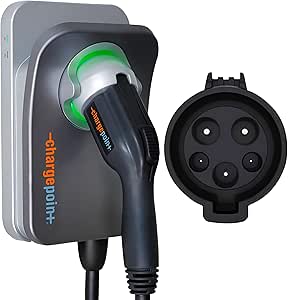


| home ev charging stations for fast charging | Connector Type | Cable Length | Voltage | Plug Type |
|---|---|---|---|---|
| Tesla Level 2 NACS 48A Hardwir | NACS (Tesla) | 25 ft | 240V | — |
| Level 2 EV Charger | J1772 | 25 ft | — | — |
| ChargePoint HomeFlex Level 2 E | J1772 | — | 240V | NEMA 14-50 |
| EVDANCE Level 2 EV Charger for | NACS | 25 ft | — | NEMA 14-50 |
| EVIQO Level 2 EV Charger J1772 | J1772 | 25 ft | 240V | NEMA 14-50 |
| EVDANCE Level 2 EV Charger | J1772 | 25 ft | 240V | NEMA 14-50P |
| ELEGRP Level 2 EV Charger 40Am | J1772 | 25 ft | 240V | NEMA 14-50 |
| EVDANCE Level 2 EV Charger 40A | J1772 | 25 ft | 240V | NEMA 14-50P |
| ChargePoint HomeFlex Level 2 E | J1772 | 23 ft | 240V | — |
| EVIQO Level 2 EV Charger J1772 | J1772 | 25 ft | 240V | — |
| AIMILER Level 2 Electric Vehic | J1772 | 25 ft | — | NEMA 14-50P |
| ChargePoint HomeFlex Level 2 E | NACS (Tesla) | — | — | — |
More Details on Our Top Picks
Tesla Level 2 NACS 48A Hardwired 240V Wall EV Charger
This charger is the definitive choice for Tesla owners who want a seamless, factory-integrated experience. Unlike the EVDANCE portable unit, which requires manual setup and lacks native app integration, this hardwired model connects directly to your Tesla app for remote scheduling and updates. The 48A output provides the fastest Level 2 speeds available, significantly reducing charging time compared to the 40A limits found on the ChargePoint HomeFlex. While it demands professional installation, the payoff is a clean, permanent setup with over-the-air firmware updates that keep the hardware current. The glow-in-the-dark holster adds a touch of convenience often missing in third-party alternatives.Pros:- Native integration with the Tesla app for remote start, stop, and scheduling
- High 48A amperage maximizes charging speed for compatible vehicles
- Weatherproof IP66/NEMA 4 rating allows for flexible indoor or outdoor mounting
- Includes over-the-air updates to maintain long-term compatibility
Cons:- Hardwired installation requires a licensed electrician, adding to upfront costs
- No built-in plug means it cannot be unplugged and taken on road trips
- Higher price point compared to portable Level 2 alternatives
Best for: Tesla owners with a dedicated garage circuit who prioritize seamless app integration and aesthetic permanence over portability.
Not ideal for: Renters, Tesla owners without a dedicated 240V circuit, or drivers of non-Tesla EVs who lack the necessary NACS adapters.
- Amperage:48A
- Voltage:240V
- Connector Type:NACS (Tesla)
- Cable Length:25 ft
- Installation Type:Hardwired
- Connectivity:WiFi (2.4 GHz)
- Warranty:3 Years
Our verdict“This is the gold standard for Tesla drivers seeking a permanent, high-speed charging solution with zero friction.”
Level 2 EV Charger, 48Amp/11.5KW/240V, UL 2594, ETL & Energy Star
The IYILO charger stands out by delivering 11.5kW of power, matching the peak speed of the Tesla Wall Connector but with universal J1772 compatibility. Compared to the ChargePoint HomeFlex, which is limited to 40A, this unit’s adjustable current up to 48A allows for faster replenishment of large batteries. It includes robust safety features like dynamic load balancing, which is critical for older homes with limited panel capacity. However, the lack of native Tesla integration means you rely on a third-party app rather than your car’s built-in interface. This model is ideal for drivers who want maximum speed without being locked into a specific brand’s ecosystem.Pros:- Delivers up to 46 miles of range per hour with 48A/11.5kW output
- Universal J1772 connector works with nearly all EVs except Tesla (without adapter)
- Includes dynamic load balancing to prevent household circuit overloads
- Certified by UL, ETL, and Energy Star for rigorous safety and efficiency
Cons:- Requires professional hardwired installation for full 48A performance
- WiFi connectivity is limited to 2.4 GHz, which may struggle in congested networks
- Does not include a Tesla adapter, requiring an additional purchase for Model 3/Y owners
Best for: Owners of non-Tesla EVs or mixed-vehicle households needing the highest possible Level 2 charging speed with universal compatibility.
Not ideal for: Tesla purists who prefer native app integration, or users with outdated electrical panels that cannot support 48A continuous loads.
- Max Power:11.5 kW
- Max Current:48A
- Connector Type:J1772
- Cable Length:25 ft
- Certifications:UL 2594, ETL, Energy Star, CSA
- Weight:13.45 lbs
- Dimensions:9.8 x 8.7 x 4.4 inches
Our verdict“A powerful, safety-focused choice for those who need maximum charging speed and universal vehicle compatibility.”
ChargePoint HomeFlex Level 2 EV Charger J1772 – NEMA 14-50 Plug
ChargePoint’s reputation for reliability shines in the HomeFlex, which offers a plug-in NEMA 14-50 design for easy installation. Unlike the hardwired Tesla Wall Connector, this unit can be unplugged and moved, offering flexibility for renters or those who want to take it on trips. While its 40A output is slightly lower than the 48A IYILO model, it is perfectly adequate for most daily driving needs. The major differentiator is access to ChargePoint’s extensive public network and 24/7 customer support, providing peace of mind that few competitors match. However, the reliance on the ChargePoint app for all features may feel restrictive for users who prefer local control.Pros:- Plug-in NEMA 14-50 design allows for easy installation and portability
- Access to ChargePoint’s vast public charging network and roaming partners
- 24/7 customer support adds a layer of security for technical issues
- Compact, sleek design fits well in modern garages
Cons:- Capped at 40A, slightly slower than 48A competitors like the Tesla Wall Connector
- Requires a dedicated 240V outlet with a NEMA 14-50 receptacle
- Full functionality depends on the ChargePoint mobile app and account
Best for: Users who value brand support, public network integration, and the flexibility of a plug-in unit over raw maximum speed.
Not ideal for: Drivers seeking the absolute fastest charging rates or those who dislike mandatory app-based management for home charging.
- Max Current:50A (rated), 40A (output)
- Connector Type:J1772
- Plug Type:NEMA 14-50
- Voltage:240V
- Weight:13.8 lbs
- Certification:UL Listed
- Compatibility:Non-Tesla EVs
Our verdict“A dependable, flexible choice for non-Tesla drivers who prioritize customer support and network connectivity.”
EVDANCE Level 2 EV Charger for Tesla (NACS), 40A/9.6kW Portable Charging Station
For Tesla drivers who need a backup charger or travel companion, the EVDANCE NACS unit is a strong contender. Unlike the hardwired Tesla Wall Connector, this portable charger plugs into a standard dryer outlet, making it instantly usable anywhere. The adjustable current settings (10A-40A) are a standout feature, allowing you to dial down power on weak circuits to prevent tripping breakers. However, it lacks the app connectivity found in the ChargePoint HomeFlex or Tesla’s own hardware, requiring manual adjustments via its TFT screen. While slower than the 48A options, its 9.6kW output is sufficient for overnight charging and provides genuine peace of mind on road trips.Pros:- Portable design with NEMA 14-50 plug requires no installation
- Adjustable amperage (10A-40A) prevents circuit overloads on older wiring
- Built-in TFT display provides real-time charging status without an app
- Includes wireless port door control for added convenience
Cons:- No smartphone app control or remote scheduling features
- Max 40A output is slower than 48A hardwired competitors
- Bulkier than smaller portable chargers due to the integrated display and controls
Best for: Tesla owners who want a portable, backup charging solution for travel or areas without hardwired infrastructure.
Not ideal for: Users who want smart app scheduling, remote monitoring, or the fastest possible charging speeds available.
- Max Power:9.6 kW
- Max Current:40A
- Connector Type:NACS
- Plug Type:NEMA 14-50
- Cable Length:25 ft
- Display:2.4″ TFT Screen
- Operating Temp:-22°F to +122°F
Our verdict“The ideal travel companion for Tesla drivers who need flexibility and safety features without relying on an app.”
EVIQO Level 2 EV Charger J1772 40A NEMA 14-50
The EVIQO charger offers a compelling balance of smart features and ease of use for non-Tesla drivers. Compared to the EVDANCE portable unit, this model includes WiFi connectivity and an app for scheduling off-peak charging, which can lead to significant energy savings. It matches the ChargePoint HomeFlex in terms of plug-in convenience but often comes in at a more accessible price point. The IP66 weatherproof rating ensures durability for outdoor installations, while the glow-in-the-dark holster adds a practical touch for nighttime use. However, like many competitors, it is limited to 40A, meaning it won’t charge large batteries as quickly as the 48A IYILO or Tesla models.Pros:- Plug-in NEMA 14-50 design eliminates the need for an electrician
- Smart app allows for remote scheduling and energy cost tracking
- Weatherproof IP66/NEMA 4 housing is safe for outdoor mounting
- Includes a glow-in-the-dark holster for easy nighttime docking
Cons:- Limited to 40A, slower than 48A high-performance competitors
- WiFi connectivity is restricted to 2.4 GHz bands
- Requires a pre-installed NEMA 14-50 outlet, which may need upgrading
Best for: Non-Tesla EV owners who want smart scheduling and outdoor durability without the cost of a hardwired installation.
Not ideal for: Tesla owners without an adapter, or drivers with very large batteries who prioritize the fastest possible charge times.
- Max Current:40A
- Voltage:240V
- Connector Type:J1772
- Plug Type:NEMA 14-50
- Cable Length:25 ft
- Connectivity:WiFi (2.4 GHz)
- Warranty:3 Years
- Weight:21 lbs
Our verdict“A smart, affordable, and durable choice for non-Tesla drivers seeking app-controlled convenience.”
EVDANCE Level 2 EV Charger (32Amp, 240V, NEMA 14-50P)
This unit serves as a solid introductory portable charger for drivers who want to escape slow Level 1 charging without committing to a high-amperage setup. While the 7.68kW output is less powerful than the ELEGRP’s 9.6kW option, it is sufficient for most daily commuting needs and places less strain on older home electrical panels. The adjustable current settings allow users to dial down the amperage if their circuit is shared with other heavy appliances, a flexibility that fixed-rate chargers lack. However, its 32A cap means it cannot take full advantage of newer vehicles capable of accepting 40A or more. It is a pragmatic choice for those prioritizing portability and lower electrical requirements over maximum charging speed.
Pros:- Adjustable amperage allows for safe use on shared circuits
- Compact and lightweight design is easy to transport
- Compatible with most non-Tesla EVs via J1772 standard
Cons:- Lower maximum power output compared to 40A models
- Requires a separate adapter for Tesla vehicles
- Weatherproofing is suitable for covered use but not prolonged heavy rain
Best for: Drivers with older electrical panels or those who primarily need a backup charger for occasional trips.
Not ideal for: Owners of high-capacity EVs who want the fastest possible overnight charging times.
- Max Power:7.68kW
- Max Amperage:32A
- Voltage:240V
- Connector Type:J1772
- Plug Type:NEMA 14-50P
- Cable Length:25 ft
- Warranty:1 Year
Our verdict“Choose this if you need a reliable, lower-power portable charger that is gentle on your home’s electrical system.”
ELEGRP Level 2 EV Charger 40Amp, J1772 Portable Electric Car Charger
For buyers seeking maximum speed in a portable form factor, this model delivers 9.6kW of power, significantly outperforming the EVDANCE 32A unit. The ETL certification adds a layer of safety assurance that some generic brands lack, while the IP67 rating offers superior protection against dust and water immersion compared to the IP66 standard found on similar competitors. Although it shares the same NEMA 14-50 plug requirement as other portable options, its 40A capacity ensures that you are charging at the upper limit of what most non-hardwired setups can provide. The tradeoff here is complexity; the current adjustment settings can be less intuitive than simpler plug-and-play devices, requiring a bit of technical comfort to optimize.
Pros:- High 9.6kW charging speed reduces wait times
- IP67 rating provides excellent weather resistance
- ETL certified for verified safety and performance
Cons:- Complex current adjustment interface
- No native Tesla support without an adapter
- Requires a dedicated 240V outlet for full performance
Best for: Tech-savvy users who want the highest possible charging speed from a portable, plug-in unit.
Not ideal for: Beginners who prefer a simple ‘plug-and-charge’ experience without adjusting amperage settings.
- Max Power:9.6 kW
- Max Amperage:40A
- Voltage:240V
- Connector Type:J1772
- Plug Type:NEMA 14-50
- Cable Length:25 ft
- Certification:ETL
Our verdict“This is the smart choice for those who want top-tier portable charging speeds and robust safety certifications.”
EVDANCE Level 2 EV Charger 40A, 240V 9.6kW Portable Electric Vehicle Charging Station
This model upgrades the standard portable experience with a 2.4-inch TFT display and a delay start timer, features typically reserved for more expensive hardwired stations. While the ELEGRP offers similar raw power, the EVDANCE 40A prioritizes user interface and scheduling flexibility, allowing owners to charge during off-peak hours to save on electricity rates. The IP66 rating is adequate for most outdoor conditions, though slightly less robust than the IP67 protection found on the ELEGRP. It remains a portable solution, meaning it relies entirely on the NEMA 14-50 outlet for installation, avoiding the need for an electrician but limiting permanent installation options. This balance of smart features and portability makes it a strong contender for rental properties or drivers who move frequently.
Pros:- Delay timer helps avoid peak electricity rates
- TFT display provides clear real-time charging data
- Portable design allows for easy transport and setup
Cons:- No hardwired installation option available
- IP66 rating is slightly less durable than IP67 alternatives
- Bulky housing compared to minimalist hardwired units
Best for: Rental property owners or drivers who want smart scheduling features without a permanent installation.
Not ideal for: Homeowners looking for a sleek, permanent wall-mounted solution that doesn’t clutter the garage floor.
- Max Power:9.6kW
- Max Amperage:40A
- Voltage:240V
- Connector Type:J1772
- Plug Type:NEMA 14-50P
- Cable Length:25 ft
- Display:2.4″ TFT
Our verdict“Ideal for those who want the convenience of smart scheduling and portability in a single unit.”
ChargePoint HomeFlex Level 2 EV Fast Charger, J1772, Smart, Hardwired, 50A
Stepping up from portable units like the ELEGRP, the ChargePoint HomeFlex offers a hardwired installation that eliminates the bulky plug and cable clutter. With a 50A rating, it supports faster charging than the 40A portable models, though actual speed depends on the vehicle’s onboard charger. The standout feature is the ChargePoint mobile app integration, which provides detailed energy usage data, reminders, and smart home connectivity—depth of control that basic LED displays cannot match. However, this premium experience requires a licensed electrician for installation and a WiFi connection for full functionality. It is a significant investment in permanence and smart ecosystem integration, ideal for homeowners who plan to keep their setup for years.
Pros:- Hardwired design offers a clean, permanent look
- Advanced app control for scheduling and energy monitoring
- 50A capacity supports high-speed charging for compatible EVs
Cons:- Requires professional installation by an electrician
- Dependent on WiFi for smart features and updates
- Higher upfront cost compared to plug-in alternatives
Best for: Homeowners who want a permanent, high-end smart charging solution with robust app support.
Not ideal for: Renters or those who cannot afford the cost of professional electrical installation.
- Max Amperage:50A
- Voltage:240V
- Connector Type:J1772
- Installation:Hardwired
- Connectivity:WiFi
- Certification:UL Certified
- Cable Length:23 ft
Our verdict“The definitive choice for homeowners seeking a permanent, app-controlled charging station with premium reliability.”
EVIQO Level 2 EV Charger J1772 48A – Hardwired 240V Wall Charging Station
For drivers needing maximum amperage in a hardwired format, this EVIQO model pushes the envelope with 48A standard output, expandable to 50A with the right electrical panel. Unlike the ChargePoint HomeFlex, which caps at 50A, this unit emphasizes raw current capacity and a glow-in-the-dark holster for nighttime convenience. The enhanced WiFi antenna is designed to maintain connectivity in basements or detached garages where signals often drop, addressing a common pain point with smart chargers. While it lacks the massive public network integration of ChargePoint, its 3-year warranty and UL/ETL certifications provide peace of mind. This is a performance-focused hardwired solution for those who prioritize charging speed and reliability over brand ecosystem features.
Pros:- High 48A-50A output for rapid charging
- Glow-in-the-dark holster for easy night access
- Enhanced WiFi antenna for better signal penetration
Cons:- Requires professional hardwired installation
- No integrated public charging network access
- Requires a dedicated 60A-70A circuit for full power
Best for: Enthusiasts with robust electrical systems who want the highest possible hardwired charging speeds.
Not ideal for: Users looking for a plug-and-play solution or those with limited panel space for a 70A circuit.
- Max Amperage:48A (up to 50A)
- Voltage:240V
- Connector Type:J1772
- Installation:Hardwired
- Cable Length:25 ft
- Warranty:3 Years
- Certification:UL, ETL, Energy Star
Our verdict“A powerful, feature-rich hardwired charger for users who demand maximum speed and reliable connectivity.”
AIMILER Level 2 Electric Vehicle (EV) Charger
This unit stands out for its plug-and-play versatility, making it a strong contender for renters or those without dedicated electrical circuits. Unlike hardwired alternatives like the ChargePoint HomeFlex Hardwired, the AIMILER connects directly to a standard NEMA 14-50 outlet, eliminating the need for professional electrician installation. Its adjustable amperage (16A to 32A) allows users to dial back power if their home’s wiring is older or if they share the circuit with other high-draw appliances. However, this convenience comes with a tradeoff: the WiFi connectivity is often reported as finicky, requiring specific 2.4GHz network settings that can frustrate less tech-savvy users. While it offers robust weather protection with a NEMA Type 4 rating, it lacks the premium build quality and extensive network features found in higher-tier smart stations. It is a practical choice for those prioritizing ease of installation over advanced software integration.
Pros:- Plug-in NEMA 14-50 design allows for easy DIY installation without an electrician
- Adjustable amperage from 16A to 32A accommodates varying home electrical capacities
- NEMA Type 4 weatherproof rating ensures durability for outdoor garage or driveway use
- Built-in GFCI protection adds a layer of safety without requiring a dedicated breaker
Cons:- Requires a separate adapter for Tesla or NACS-compatible vehicles
- WiFi setup can be unreliable and requires strict 2.4GHz network compatibility
- Cable management is less streamlined compared to hardwired units, potentially creating clutter
Best for: Renters or homeowners who already have a NEMA 14-50 outlet installed and want to avoid hardwiring costs.
Not ideal for: Tesla owners without an adapter, or users who struggle with configuring 2.4GHz WiFi networks for smart devices.
- Connector Type:J1772
- Plug Type:NEMA 14-50P
- Max Power:7.68kW
- Cable Length:25 ft
- Connectivity:WiFi App Control
- Certifications:ETL, FCC, UL 2231, UL 2594
- Compatibility:North American J1772 EVs (Tesla requires adapter)
Our verdict“Choose the AIMILER if you have an existing NEMA 14-50 outlet and want a flexible, no-installation charging solution.”
ChargePoint HomeFlex Level 2 EV Charger (NACS)
Designed specifically for the North American Charging Standard (NACS), this ChargePoint unit is the natural pairing for Tesla vehicles, eliminating the need for adapters that plague competitors like the AIMILER Level 2. Its hardwired installation ensures a permanent, secure connection capable of delivering up to 50A, providing significantly faster and more consistent charging than plug-in models. The integration with the ChargePoint network offers robust remote monitoring and smart home compatibility, appealing to users who value a cohesive digital ecosystem. However, this premium experience demands professional installation, adding to the upfront complexity and cost. Furthermore, its exclusive NACS connector renders it incompatible with most non-Tesla EVs unless you are willing to purchase a separate adapter, limiting its utility in multi-vehicle households. It is a specialized tool for Tesla drivers seeking a permanent, high-performance home charging station.
Pros:- Native NACS connector provides seamless compatibility with Tesla vehicles without adapters
- Hardwired 50A capability supports faster, more stable charging than portable units
- Extensive ChargePoint network integration offers advanced app features and remote support
- UL-certified safety standards with cold-resistant cable for reliable year-round performance
Cons:- Requires professional hardwired installation by a qualified electrician
- Native connector is not compatible with J1772 vehicles without an additional adapter
- Higher total cost of ownership due to installation requirements compared to plug-in models
Best for: Tesla owners who want a permanent, hardwired charging solution with no adapter hassle.
Not ideal for: Owners of non-Tesla EVs using J1772 connectors, or renters who cannot perform permanent electrical modifications.
- Connector Type:NACS (Tesla)
- Max Current:50 A
- Installation Type:Hardwired
- Compatibility:Tesla Vehicles (Native)
- Certification:UL Certified
- Connectivity:WiFi / ChargePoint App
- Dimensions:7.06″D x 11.19″W x 5.2″H
Our verdict“Select the ChargePoint HomeFlex NACS if you drive a Tesla and are ready to invest in a permanent, high-speed home charging infrastructure.”

How We Picked
To select the best home ev charging stations for fast charging, I evaluated each model based on amperage output, connector compatibility, build quality, and smart feature reliability. Amperage was the primary metric for speed, with 48-amp models prioritized over 32-amp or 40-amp units for their ability to deliver more power per hour. I also assessed installation requirements, distinguishing between hardwired units that need an electrician and plug-in models that utilize existing NEMA 14-50 outlets. Connector type was another key filter, ensuring a mix of J1772 for general EVs and NACS for Tesla compatibility. Finally, I examined user feedback regarding app stability and cable durability to identify models that offer long-term reliability without frustrating connectivity drops.
| home ev charging stations for fast charging | Connector Type | Plug Type |
|---|---|---|
| Tesla Level 2 NACS 48A Hardwir | NACS (Tesla) | — |
| Level 2 EV Charger | J1772 | — |
| ChargePoint HomeFlex Level 2 E | J1772 | NEMA 14-50 |
| EVDANCE Level 2 EV Charger for | NACS | NEMA 14-50 |
| EVIQO Level 2 EV Charger J1772 | J1772 | NEMA 14-50 |
| EVDANCE Level 2 EV Charger | J1772 | NEMA 14-50P |
| ELEGRP Level 2 EV Charger 40Am | J1772 | NEMA 14-50 |
| EVDANCE Level 2 EV Charger 40A | J1772 | NEMA 14-50P |
| ChargePoint HomeFlex Level 2 E | J1772 | — |
| EVIQO Level 2 EV Charger J1772 | J1772 | — |
| AIMILER Level 2 Electric Vehic | J1772 | NEMA 14-50P |
| ChargePoint HomeFlex Level 2 E | NACS (Tesla) | — |
Factors to Consider When Choosing Home Ev Charging Stations For Fast Charging
Selecting a home charger involves more than just picking the fastest number on the box. Your choice should align with your vehicle’s onboard charger limits, your local electrical code, and how you plan to park and charge your car daily.
Amperage and Circuit Capacity
Most home EV charging stations operate on 240V circuits, but the amperage they draw varies. A 48-amp charger requires a dedicated 60-amp circuit, which may necessitate a panel upgrade if your home’s electrical service is older or already heavily loaded. In contrast, a 32-amp or 40-amp charger often runs on existing 40-amp or 50-amp circuits, making them easier and cheaper to install. Match the charger to your panel’s available capacity rather than buying the highest amperage unit and paying for unnecessary electrical work. If your car’s onboard charger can only accept 32 amps, a 48-amp station won’t charge it any faster, rendering the extra power useless.
Connector Type and Future Compatibility
The industry is shifting toward the NACS connector, widely adopted by Tesla and increasingly supported by other manufacturers. If you drive a Tesla, a NACS-native charger like the Tesla Wall Connector offers the cleanest integration. For J1772 vehicles, you can use an adapter, but native J1772 units like the ChargePoint HomeFlex remain reliable. Consider whether you plan to switch to a Tesla or another NACS-compatible brand in the next few years. Buying a NACS charger now may save you from needing an adapter later, though adapters are currently inexpensive and reliable. Evaluate your long-term vehicle ownership plans before committing to a specific port type.
Hardwired vs. Plug-In Installation
Hardwired chargers are permanently attached to your electrical panel, offering a sleek look and often higher safety certifications. They require professional installation, which adds to the upfront cost. Plug-in chargers use a NEMA 14-50 outlet, allowing you to remove the charger for travel or relocation. This flexibility is valuable for renters or those who move frequently. However, plug-in units rely on the outlet’s integrity; a loose or damaged outlet can cause overheating. Hardwired units generally provide a more secure and permanent connection, reducing the risk of electrical faults over time. Decide if the convenience of a portable unit outweighs the aesthetic and safety benefits of a hardwired setup.
Smart Features and App Reliability
Modern chargers often include Wi-Fi connectivity for scheduling, energy monitoring, and remote start/stop. While these features are convenient, app reliability varies significantly between brands. Some users report connectivity drops or firmware updates that break functionality. If you primarily charge at night to take advantage of off-peak rates, a simple timer on the vehicle itself might be sufficient. Premium smart chargers are best suited for users who want detailed energy analytics or integration with home automation systems. Do not pay a premium for smart features if you do not intend to use them regularly, as they add complexity and potential maintenance headaches.
Cable Length and Parking Logistics
Standard cables range from 18 to 25 feet. A 25-foot cable provides greater flexibility, allowing you to park in different spots within your garage or driveway. Shorter cables may force you to park in a specific position, which can be inconvenient if your garage is cluttered. Measure the distance from your breaker panel or outlet to your typical parking spot before purchasing. Remember that the cable cannot be extended with standard extension cords due to safety risks and voltage drop. If your parking spot is far from the power source, a longer cable or a different mounting location is necessary.
Frequently Asked Questions
Can I use a 48-amp charger on a 40-amp circuit?
No, you cannot safely run a 48-amp charger on a 40-amp circuit. Electrical codes require that the charger draw no more than 80% of the circuit’s capacity to prevent overheating and tripping breakers. A 48-amp charger requires a dedicated 60-amp circuit. If you attempt to install it on a smaller circuit, you risk fire hazards and voiding your home insurance. Always verify your breaker size and wire gauge with a licensed electrician before installation.
Is a NACS charger better than a J1772 charger for non-Tesla cars?
Not necessarily. While NACS is becoming the standard, J1772 remains widely supported across all major EV brands. A J1772 charger works natively with most non-Tesla vehicles without an adapter. If you buy a NACS charger for a J1772 car, you will need a permanent adapter, which adds a point of failure and clutter. Choose based on your current vehicle’s port unless you are certain you will switch to a NACS-compatible car soon. Current J1772 units are perfectly adequate for existing EVs.
Do smart home EV chargers require a monthly subscription?
Most residential smart chargers, including those from ChargePoint and Tesla, do not require a monthly subscription for basic home use. Features like scheduling, energy monitoring, and over-the-air updates are typically included in the purchase price. Some commercial or fleet-focused features might require a plan, but these are irrelevant for most home owners. Check the manufacturer’s terms to confirm no hidden fees exist, but generally, you buy the hardware once and use it without recurring costs.
How much does professional installation cost for a hardwired charger?
Professional installation costs vary widely based on your home’s electrical infrastructure and local labor rates. If your panel has available capacity and is close to the garage, installation might cost a few hundred dollars. However, if you need a panel upgrade or long conduit runs, costs can rise significantly. Get multiple quotes from licensed electricians to compare pricing. Do not attempt DIY installation for hardwired units, as improper wiring poses severe safety risks and may violate local codes.
Will a 48-amp charger charge my car faster than a 32-amp charger?
Only if your car’s onboard charger can accept 48 amps. Many older EVs and some newer mainstream models have onboard chargers limited to 32 amps or 40 amps. If your car’s maximum input is 32 amps, a 48-amp home charger will still only deliver 32 amps. Check your vehicle’s specifications before buying. Buying a higher amperage charger than your car supports is a waste of money and electrical capacity. Match the charger to your car’s actual intake capability.
Conclusion
Choosing the right home ev charging stations for fast charging comes down to matching the charger’s output and connector to your specific vehicle and electrical setup. For Tesla owners, the Tesla Level 2 NACS 48A Hardwired 240V Wall EV Charger is the clear best overall choice due to its native compatibility and high power delivery. Non-Tesla drivers looking for a reliable smart option should consider the ChargePoint HomeFlex Level 2 EV Charger, which balances app features with robust build quality. If you need a flexible, plug-in solution for a standard J1772 vehicle, the Level 2 EV Charger, 48Amp/11.5KW/240V offers excellent value and raw power. Beginners or those with limited panel capacity might prefer the EVIQO Level 2 EV Charger J1772 40A NEMA 14-50 for its ease of installation and adequate speed. Ultimately, prioritize safety and compatibility over raw amperage numbers to ensure a seamless charging experience.
Fall Picks
fall essentials
As an affiliate, we earn on qualifying purchases.