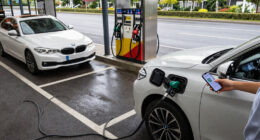
The best car power stations for road trips balance enough stored energy for your devices with a size and charging setup that suit your vehicle. I rank the BLUETTI Elite 30 V2 as the best overall for its 288Wh LiFePO4 battery and 600W output, while the VTOMAN Jump 600X stands out for drivers who want a jump-start feature alongside portable power. The EnginStar 296Wh offers the largest stated capacity among the 300W models, but its extra energy comes with more bulk to manage. Your main tradeoffs are capacity versus portability, everyday outlets versus specialized features, and upfront simplicity versus flexibility in how you recharge. Read on for the full breakdown and help matching a station to your trip.

Get business pricing on garage and car supplies
- Business-only prices and quantity discounts
- Tax-exempt purchasing
- Multiple users, one account, clear invoices
Complete the kit


Key Takeaways
- BLUETTI Elite 30 V2 is the strongest all-round balance: its 288Wh LiFePO4 battery and 600W output pair useful capacity with a higher output ceiling than the 300W units.
- VTOMAN Jump 600X has the clearest vehicle-specific role: its jump-start function may appeal to drivers who want roadside utility as well as device charging, though that feature does not replace checking the station’s actual battery capacity and compatibility.
- EnginStar leads this group on stated capacity among the 300W models: its 296Wh battery suits buyers who value more stored energy over choosing the smallest option.
- ALLWEI and BLUETTI both use LiFePO4 batteries: battery chemistry is a meaningful differentiator for buyers comparing long-term use, while capacity and output still determine what each can run on a trip.
- The compact SinKeu makes the clearest low-draw choice: at 155Wh and 200W, it is better aligned with phones and modest electronics than with power-hungry appliances.


| car power stations for road trip | Weight | Dimensions | Capacity | Continuous output |
|---|---|---|---|---|
| Portable Power Station 300W | 8.8 lb | — | 192Wh | 300W |
| ALLWEI Portable Power Station | 6.4 lb | 9.25 × 5 × 6.81 in | 256Wh | 300W |
| SinKeu 200W Portable Power Sta | 3.8 lb | 7.87 × 5.51 × 5.12 in | 155Wh | — |
| EnginStar Solar Generator | 6.5 lb | 9 × 5.5 × 7.5 in | 296Wh | 300W |
| VTOMAN Jump 600X Portable Powe | 9.9 lb | 9.4 × 8.1 × 7.2 in | — | — |
| BLUETTI Elite 30 V2 Portable P | 9.5 lb | 9.8 × 7 × 6.6 in | — | — |
More Details on Our Top Picks
Portable Power Station 300W, 600W Surge Solar Generator 192Wh
I’d choose this model when the car is the main charging source and I want to refill the station quickly between drives. Its stated one-hour recharge to 80% is a practical advantage over the EnginStar R300, which lists a seven-hour wall recharge. At 8.8 pounds, it is still manageable to move between the trunk and a campsite, though it is heavier than the ALLWEI 300W. The 192Wh capacity can cover phones, cameras, and smaller electronics, but it offers less stored energy than either the ALLWEI’s 256Wh or the EnginStar’s 296Wh. Two AC outlets and USB-C help serve several devices, while the 300W output rules out common high-draw appliances. I’d also factor in the separately sold solar panel if off-grid recharging matters.
Pros:- Reaches 80% charge in a stated one hour, limiting downtime between drives.
- LiFePO4 battery is rated for more than 4,000 charge cycles.
- Two AC outlets, USB-C, USB-A, and a car outlet support several device types.
- Built-in LED light and LCD display are useful at roadside stops or campsites.
Cons:- The 192Wh capacity is lower than the ALLWEI 300W and EnginStar R300, limiting device runtime.
- Its 300W continuous output is not suited to high-wattage appliances.
- Solar panel is sold separately.
Best for: Road-trippers who make frequent stops, need quick recharging for phones and small electronics, and value a built-in light.
Not ideal for: Travelers who want to run a coffee maker, hair dryer, or other high-wattage appliance, or need enough capacity for several days away from an outlet.
- Capacity:192Wh
- Continuous output:300W
- Surge power:600W
- Battery type:LiFePO4
- Charge cycles:4,000+
- Weight:8.8 lb
- AC recharge time:1 hour to 80%
- Output ports:2 AC, 1 USB-C PD, 2 USB-A, 1 car outlet
Our verdict“Pick this for short road trips where quick recharging matters more than maximum capacity or appliance-level power.”
ALLWEI Portable Power Station 300W, 256Wh Solar Generator LiFePO4 Battery
The ALLWEI makes a strong case for drivers who want a compact station with more stored energy than the 192Wh Portable Power Station 300W, without moving up to a heavier unit. At 6.4 pounds, it is the lightest 300W option here, and its 256Wh capacity gives phones, laptops, and small 12V devices more breathing room than that lighter-carry profile might suggest. The 60W USB-C port is useful for charging compatible laptops directly, while pass-through charging lets the station power devices as it recharges. Its 300W AC limit still excludes many kitchen and heating appliances, and the single AC outlet is less flexible than the EnginStar R300’s pair. Wall or car charging takes a stated 3.5–4 hours; dual AC-and-solar charging is quicker, but the panel is extra.
Pros:- 256Wh capacity exceeds the 192Wh Portable Power Station 300W while the unit weighs only 6.4 lb.
- 60W USB-C PD can charge compatible laptops without using the AC outlet.
- Supports pass-through charging and AC, car, solar, or combined AC-and-solar recharging.
- LiFePO4 battery is rated for 3,000 charge-discharge cycles.
Cons:- Only one AC outlet, compared with the EnginStar R300’s two.
- Wall and car charging are listed at 3.5–4 hours for a full charge.
- Solar panel is sold separately.
Best for: Drivers who want a light, easy-to-stow station for phones, laptops, cameras, and modest 12V loads, with extra capacity over the smallest options.
Not ideal for: Road-trippers who need multiple AC outlets, fast standalone wall charging, or power for appliances above 300W.
- Capacity:256Wh
- Continuous output:300W
- Peak surge:600W
- Battery type:LiFePO4
- Charge cycles:3,000
- Weight:6.4 lb
- Dimensions:9.25 × 5 × 6.81 in
- Output ports:1 AC, 2 DC5521, 1 car outlet, 1 USB-A, 1 USB-C PD
- Full recharge time:3.5–4 hours by AC or car; 2–2.5 hours with AC and solar
Our verdict“Choose the ALLWEI if low carry weight and useful laptop charging matter more than multiple AC outlets or the quickest recharge.”
SinKeu 200W Portable Power Station, 155Wh Solar Generator for Camping
For road-trippers who mostly need to keep personal electronics topped up, the SinKeu’s 3.8-pound body is the standout: it is easier to lift in and out of a car than the 6.4-pound ALLWEI and the heavier 192Wh model. That portability comes with a smaller 155Wh reserve and a lower 200W AC ceiling, so I’d treat it as a companion for phones, tablets, cameras, and lights rather than a general-purpose power source. Its modified sine wave AC output also calls for care with sensitive equipment and devices with motors; the EnginStar R300 offers pure sine wave AC for a broader range of compatible loads. USB-C is limited to 18W, which is less laptop-friendly than the ALLWEI’s 60W port. Solar, car, and wall recharging are supported, but the solar panel is not included.
Pros:- At 3.8 lb, it is substantially lighter than the other listed stations.
- Includes USB-A, USB-C, DC outputs, and an AC outlet for common travel electronics.
- Can recharge from a wall outlet, a 12V car socket, or a compatible solar panel.
- Built-in flashlight includes steady, blinking, and SOS modes.
Cons:- 155Wh capacity and 200W AC output limit runtime and the devices it can support.
- Modified sine wave AC may not suit sensitive equipment or devices with motors.
- USB-C output is limited to 18W, below the ALLWEI’s 60W port.
Best for: Solo travelers and minimalist campers who prioritize low carry weight and need to charge phones, cameras, tablets, and small compatible 12V devices.
Not ideal for: Drivers who need laptop-speed USB-C charging, longer runtimes, or AC power for motor-driven or sensitive equipment.
- Capacity:155Wh
- AC output:200W, 120V modified sine wave
- USB-C output:Up to 18W
- DC output:Two outputs; up to 126W total
- Weight:3.8 lb
- Dimensions:7.87 × 5.51 × 5.12 in
- Recharge options:Wall outlet, 12V car socket, compatible solar panel
- Solar input:DC 13–25V, up to 2.4A
Our verdict“Choose the SinKeu when easy carrying and basic device charging matter more than capacity, laptop-speed charging, or broad AC compatibility.”
EnginStar Solar Generator, 300W Portable Power Station, 296Wh Lithium Battery Backup
The EnginStar R300 suits road-trippers who want to run more than one AC-powered device at a stop. Its two pure sine wave AC outlets are a meaningful distinction from the ALLWEI, which has one, and the 296Wh capacity is the largest among the 300W models here. That extra reserve helps extend charging for small electronics, though it does not change the 300W continuous output limit: larger appliances such as heaters, microwaves, and electric grills remain out of scope. At 6.5 pounds, it is still easy to move from car to campsite. The main compromise is recharge speed: the listed full AC recharge takes seven hours, slower than the ALLWEI’s 3.5–4 hours and far slower than the fast-recharging 192Wh model. Its lithium battery is rated for 1,000 cycles, below the LiFePO4 ratings of those alternatives.
Pros:- 296Wh capacity is higher than the other listed 300W stations.
- Two pure sine wave AC outlets can serve two compatible AC devices at once.
- Eight listed outputs cover AC, USB, car, and DC device connections.
- Weighs 6.5 lb and includes a car charging cable.
Cons:- Full AC recharge is listed at seven hours, slower than the ALLWEI’s 3.5–4 hours.
- Battery is rated for 1,000 cycles, below the LiFePO4 cycle ratings of the ALLWEI and 192Wh model.
- The 300W output limit excludes many common high-draw appliances.
Best for: Couples or families who need two AC outlets for low-draw devices and want more capacity than the smaller 300W stations provide.
Not ideal for: Drivers who need fast turnaround charging, a long-cycle-life LiFePO4 battery, or power for high-wattage appliances.
- Capacity:296Wh
- Continuous output:300W
- AC outlets:2 × 110V pure sine wave
- USB-C output:18W
- Total listed outputs:8
- Weight:6.5 lb
- Dimensions:9 × 5.5 × 7.5 in
- Full AC recharge time:About 7 hours
Our verdict“Pick the EnginStar if two pure sine wave AC outlets and greater capacity matter more than quick recharging or a higher cycle rating.”
VTOMAN Jump 600X Portable Power Station 600W, 9 Ports LEP Solar Generator
The VTOMAN Jump 600X is the pick here for travelers whose gear exceeds the 300W ceiling shared by the ALLWEI and EnginStar. Its 600W running output gives compatible devices more headroom, and the stated 1,200W maximum can help with brief startup demands; it still will not run every appliance, so check each device’s running and startup watts. The unit weighs 9.9 pounds, heavier than the compact alternatives, but that is a reasonable trade for greater output when the car does the carrying. Its 50-minute recharge to 80% is quick, though the product information does not state battery capacity, making direct runtime comparisons with the 256Wh ALLWEI or 296Wh EnginStar difficult. Solar panels are sold separately, and high-draw use can drain a station quickly.
Pros:- 600W running output exceeds the 300W limit of the ALLWEI and EnginStar.
- Stated 1,200W maximum offers additional headroom for compatible startup loads.
- Recharge reaches 80% in a stated 50 minutes.
- LiFePO4 battery is rated for 3,000 cycles.
Cons:- At 9.9 lb, it is heavier than the other stations in this batch.
- Capacity is not provided in the supplied product data, making runtime comparisons difficult.
- Solar panel is sold separately, and high-power devices may use the available energy quickly.
Best for: Road-trippers carrying compatible devices that need more than 300W, and who can accept a heavier station for higher output.
Not ideal for: Minimalist travelers who mainly charge phones and cameras, or buyers who need clearly stated capacity to estimate runtime before a trip.
- Running output:600W
- Maximum output:1,200W
- Weight:9.9 lb
- Dimensions:9.4 × 8.1 × 7.2 in
- Recharge time:50 minutes to 80%
- Battery type:LiFePO4
- Total power outlets:7
Our verdict“Choose the Jump 600X if your road-trip gear needs more than 300W and you accept extra weight and an unspecified capacity.”
BLUETTI Elite 30 V2 Portable Power Station 288Wh 600W LFP Solar Generator
The BLUETTI Elite 30 V2 suits road trippers who want a small station for phones, laptops, lights, and a compact car fridge without hauling a heavier unit. Its 288Wh capacity is more than the SinKeu’s 155Wh, while the listed 600W continuous output gives it more room for higher-draw devices than the 300W-class options in this roundup. At 9.5 pounds, it is still practical to move between a car and a campsite.
Its standout advantage is 380W wall charging, with a claimed 0–80% recharge in 45 minutes when an outlet is available; that can make a short stop at lodging more useful. The tradeoff is its modest capacity: running a kettle or toaster in Power Lifting Mode may drain it quickly, and the 1500W lifting figure is not the same as 1500W continuous output. I’d choose the larger-capacity VTOMAN Jump 600X for longer power needs, but the BLUETTI is the more compact pick for brief trips and quick top-ups.
Pros:- 288Wh capacity exceeds the SinKeu 155Wh and the 192Wh 300W model in this roundup.
- 600W continuous output supports a broader range of small devices than 300W-class alternatives.
- Claimed 0–80% wall recharge in 45 minutes helps when a brief stop offers access to an outlet.
- Compact 9.8 × 7 × 6.6-inch body and listed 9.5-pound weight are practical for car-to-campsite carrying.
Cons:- 288Wh is limited for extended use or sustained appliance loads.
- The 1500W Power Lifting figure is a surge or lifting mode, not continuous output.
- Fast wall charging depends on access to an outlet; the product data does not specify a solar recharge time.
Best for: Road trippers who prioritize a lightweight station, quick outlet recharging, and power for electronics, lights, or a small fridge.
Not ideal for: Travelers needing to run high-wattage appliances for long periods or power several devices through an extended off-grid stay; 288Wh limits runtime.
- Battery capacity:288Wh
- Continuous AC output:600W
- Power Lifting output:1500W
- Weight:9.5 lb
- Dimensions:9.8 × 7 × 6.6 in
- AC voltage:120V
- AC wall charging:380W; claimed 0–80% in 45 minutes
- Charging options:AC, solar, car, lead-acid, and generator
- Ports:9 total power outlets
Our verdict“Choose the BLUETTI Elite 30 V2 for a compact road-trip station with quick wall charging, but pick a higher-capacity model for longer off-grid use.”

How We Picked
I ranked these stations around the demands of real road-trip use: charging phones, cameras, laptops, and other small gear during stops or at camp, with enough output for compatible devices. I compared stated battery capacity, continuous output and surge information where provided, outlet availability, battery chemistry, and features that change how useful a unit is in a vehicle. A higher wattage rating does not by itself mean longer runtime, so I treated output and stored energy as separate measures.
The ranking favors balance and clear use cases over the biggest number on a label. BLUETTI takes the lead for pairing 288Wh with 600W output and an LFP battery; VTOMAN follows for its distinctive jump-start role, while EnginStar earns a place for its 296Wh capacity and two pure sine wave AC outlets. ALLWEI is a LiFePO4 option at 256Wh and 300W, the 192Wh model is a straightforward small-load pick, and SinKeu is the light-capacity choice. Product details supplied do not establish weight, recharge times, or real-world runtime, so I avoid ranking on those unverified claims.
Factors to Consider When Choosing Car Power Stations For Road Trips
Choosing a station is less about finding the biggest capacity figure and more about matching its limits to the gear you will carry. I would start with a list of devices, how long you expect to use them, and how you plan to recharge between stops.
Match Watt-Hours to Your Trip, Not Your Wish List
Battery capacity, measured in watt-hours, gives a rough sense of how much energy is stored; it does not tell you exactly how long every device will run. Add up the watt-hours your gear uses over the time you expect to be away from a wall outlet, then leave room for conversion losses and charging overhead. A phone-only trip can call for far less capacity than a weekend with a laptop, camera batteries, and a small cooler. A common mistake is treating the station’s advertised capacity as fully usable energy. If your plans include overnight use, favor extra capacity over a small bump in output wattage.
Check Both Continuous Output and Surge Needs
The wattage rating describes what a station can power at once, while surge capacity relates to short startup demands from some devices. Compare the station’s continuous rating with the actual input draw printed on each appliance, not just its product name or size. A 600W station may handle more compatible gear than a 200W or 300W unit, but it will not automatically run every kitchen appliance or heating device. Add together devices you expect to run at the same time, since the combined load can exceed the station limit. When a device has a motor or compressor, check its startup requirement as well as its normal draw.
Plan How You Will Recharge Between Stops
A station only helps on a multi-day drive if you can put energy back into it. Check which charging inputs are supported and whether your intended car or solar charging method requires a separate cable or accessory. Do not assume that a solar-generator label means a panel is included, or that a vehicle outlet will refill a depleted battery quickly. Estimate charging time from the manufacturer’s stated input rate and your available stop length. For frequent road trips, a practical charging plan can matter more than a modest increase in battery capacity.
Treat Portability as a Vehicle-Fit Question
Capacity and output often come with a larger enclosure, but the product details here do not provide comparable weights or dimensions. Before choosing, check those measurements and decide where the unit will ride, how easily you can lift it, and whether it can be secured while driving. A station that fits behind a seat may be more useful than a larger model that crowds luggage or is awkward to move to a campsite. Keep it ventilated and follow the maker’s instructions for storage and operation inside a vehicle. If you will carry it beyond the car, portability deserves more weight in your decision.
Choose Outlets Around the Gear You Actually Carry
Count the devices you will charge at the same time and identify whether each needs AC, USB, or a vehicle-style output. Multiple AC outlets can be useful for several compatible plugs, but they do not increase battery capacity or total available wattage. USB charging can avoid running the AC inverter for devices that accept direct USB power, which may reduce wasted energy. Do not buy extra ports just because they are available; prioritize the connectors your equipment uses. Carrying the right cables can prevent a station with suitable output from becoming inconvenient on the road.
Decide Whether a Specialty Feature Earns Its Space
Features such as a jump-start function can add value for a driver who wants one device to serve more than one roadside role. They also make it important to confirm vehicle compatibility and understand the manufacturer’s operating instructions before an emergency. Compare that specialized use with ordinary charging needs: if you mainly need power for phones and a laptop, added functions may not justify extra size or complexity. Battery chemistry is another longer-term consideration, but it should sit alongside capacity, output, warranty terms, and care guidance rather than replace them. Pay more for a feature only when it solves a problem you expect to face.
Frequently Asked Questions
Can a 200W or 300W power station run a car fridge overnight?
It depends on the fridge’s average draw, startup demand, ambient temperature, and how often its compressor runs. The 200W SinKeu and 300W models may have enough output for some compact fridges, but their capacity figures alone cannot confirm overnight runtime. Compare the fridge’s energy use over a full day with the station’s usable capacity, and check its startup requirement against the station’s output limits. For a longer stop, plan a way to recharge or choose more stored capacity. Avoid relying on a wattage rating alone to predict runtime.
Is the VTOMAN Jump 600X a substitute for a separate jump starter?
The Jump 600X is the option in this lineup with a jump-start feature, but that does not establish compatibility with every vehicle or every battery condition. Check the manufacturer’s supported vehicle types, connection instructions, and operating limits before treating it as roadside backup. A jump-start function also does not tell you how much energy remains for charging devices afterward. If reliable emergency starting is your main concern, compare the unit’s specified jump-start capability with a dedicated jump starter. Keep a separate backup plan if your vehicle’s needs fall outside the stated support.
Should I choose LiFePO4 over a larger battery capacity for road trips?
Not automatically: battery chemistry and capacity answer different questions. LiFePO4 can appeal to buyers focused on battery longevity, and both the ALLWEI and BLUETTI in this roundup use it. A larger capacity may matter more for a trip where you need to run devices longer between charging stops, while output determines which devices can run at all. Compare the manufacturer’s cycle-life details and warranty with your expected use, rather than assuming chemistry alone settles the choice. If your loads are modest and your trips are short, capacity and portability may matter more to you.
Can I recharge a power station from my car while driving?
Only if the model supports vehicle charging and you have the required connection and a suitable vehicle outlet. Charging speed depends on the station’s accepted input and the vehicle’s available power, so a short drive may add only part of the energy you used. Check the manual for allowed charging conditions and cable requirements; do not assume a solar input doubles as a car-charging input. For multi-day trips, consider how driving hours, campground access, and solar availability fit together. A backup charging route helps if one source is slower than expected.
How much capacity should I bring for a weekend road trip?
Start with a device-by-device estimate for the full weekend, including phones, laptops, cameras, and any small appliances you plan to use. The 155Wh SinKeu is the lowest-capacity choice here, while the 296Wh EnginStar has the largest stated capacity; that gap may matter if you have several devices or long stretches without recharging. Actual runtime will vary with device draw, conversion losses, and charging habits, so leave a margin rather than planning to use every watt-hour. If you can recharge regularly during the trip, a smaller station may be enough. If you cannot, prioritize capacity and verify the station’s output can support your gear.
Conclusion
For most road-trippers, I recommend the BLUETTI Elite 30 V2 as the best overall because its 288Wh capacity, 600W output, and LFP chemistry form a balanced combination. The best value depends on the gear you need to power: choose the EnginStar 296Wh if stored energy and two pure sine wave AC outlets matter most within the 300W group, or the SinKeu 155Wh for a simpler low-draw setup. Beginners who mainly need to charge small electronics can start with the straightforward 192Wh, 300W station, after checking its ports and charging inputs against their devices. For a premium-style choice centered on higher output and LFP chemistry, the BLUETTI is the clearest fit in this lineup. Drivers seeking roadside versatility should compare the VTOMAN Jump 600X with their vehicle’s jump-start requirements; buyers who prize LiFePO4 at 300W should look closely at the ALLWEI. Match the final choice to your load, charging plan, and available vehicle space.