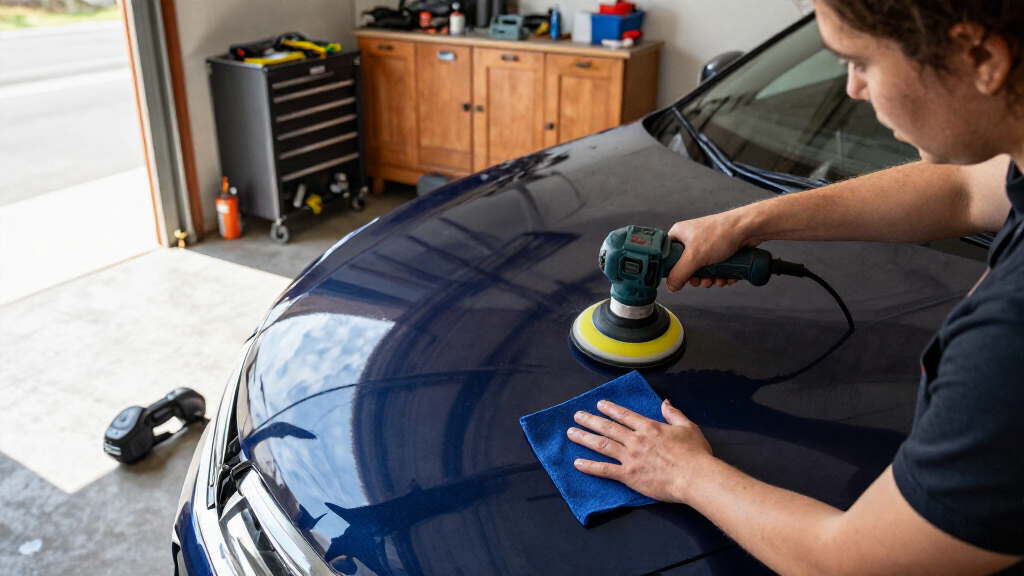
Cordless car polishers range from compact machines for tight spots to full-size tools for polishing entire panels. My best overall pick is the Milwaukee M18 FUEL 7-inch polisher, a strong fit for buyers already invested in Milwaukee batteries who want a full-size tool. The DEWALT 20V MAX XR is the premium alternative for DeWalt users, while the SPTA 12V Mini stands out for targeted work around trim and smaller panels. The main tradeoffs are battery-platform compatibility, rotary versus dual-action motion, and the balance between full-size coverage and compact control. Read on for the full breakdown and help matching a polisher to your car, experience, and existing batteries.

Get business pricing on garage and car supplies
- Business-only prices and quantity discounts
- Tax-exempt purchasing
- Multiple users, one account, clear invoices
Complete the kit


Key Takeaways
- Battery-platform fit separates the major tool-only picks: Milwaukee and DeWalt owners can use their existing ecosystems, while buyers without compatible batteries should compare complete kits.
- Full-size polishers and mini polishers solve different problems: the Milwaukee and DEWALT tools suit broad panel work, while the SPTA 12V Mini and AUTIWOZ mini RO/DA focus on confined areas and spot correction.
- Motion type matters as much as cordless power: rotary models can suit experienced users seeking direct cutting action, while dual-action or orbital designs offer a more forgiving path for general paint care.
- Included batteries can outweigh a long accessory list: several options include two batteries, but attachment counts alone do not show pad quality, runtime, or whether the kit matches a buyer’s jobs.
- Similar-looking listings still require close comparison: the three Protmex color variants and multiple SPTA models differ by kit or format, so buyers should verify the exact configuration rather than choosing by appearance.


| cordless car polisher | Speed range | Speed settings | Model | Weight |
|---|---|---|---|---|
| Milwaukee M18 FUEL 18V Brushle | — | — | 2738-20 | 7.5 lb |
| VERVEWAVE 6-Inch Cordless Orbi | 1,800–5,500 RPM | 6 | WT8634 | — |
| QIJIAA Cordless Car Buffer Pol | 2,800–6,000 RPM | 8 | AM-CCP-GR | 3.3 lb |
| VERVEWAVE 6-Inch Cordless Orbi | 1,800–5,500 RPM | 6 | WT8633-01 | — |
| SPTA 12V Cordless Mini Car Pol | 1,000–5,000 oscillations per minute | — | SP-DA1US | — |
| Protmex Cordless Car Buffer Po | 2,800–5,500 rpm | 6 | — | 3.3 lb |
| Protmex Cordless Car Buffer Po | 2,800–5,500 rpm | 6 | 21V Car Polisher-Red | 3.3 lb including battery |
| SPTA Cordless Car Buffer Polis | 2,500–5,000 RPM | 6 | LD601US-MIX | 1.9 kg |
| AUTIWOZ Cordless Mini RO/DA Ca | 2,000–5,500 RPM | 6 | — | — |
| Niusken Cordless Dual-Action C | 2,800–5,800 RPM | 6 | PGJ-21V | 3.3 lb |
| NOVARHOME Cordless Car Buffer | 2,800–6,000 RPM | 8 | KL7021 | 3 lb |
| DEWALT 20V MAX XR Cordless Rot | 800–2,200 RPM | — | — | 4.8 lb |
| Avhrit 6-Inch Cordless Car Buf | 2,500–6,000 RPM | 6 | — | 3 lb |
| Protmex Cordless Car Buffer Po | 2,800–5,500 RPM | 6 | — | 3.3 lb with battery |
| SPTA 12V Cordless Mini Car Pol | 2,000–4,500 oscillations per minute | — | LD104US | — |
More Details on Our Top Picks
Milwaukee M18 FUEL 18V Brushless Cordless 7-Inch Variable-Speed Polisher (Tool Only)
The Milwaukee M18 FUEL is the full-size choice here for buyers who want a cordless polisher built around a 7-inch pad and a brushless motor. Its variable-speed control and listed maximum speed of 2,200 rpm suit broader automotive polishing work, while its 7.5-pound weight makes it a more substantial tool than the SPTA 12V Mini, which is aimed at tight spots rather than large panels. The key tradeoff is the tool-only setup: the battery and charger are not listed as included, so this makes the most sense for existing M18 owners. Compared with the QIJIAA, it offers a larger pad and a platform-specific path, but no included batteries or accessory assortment. I’d choose it for a familiar battery system and full-size format, not an all-in-one starter kit.
Pros:- 7-inch pad covers more area than the 6-inch pads on the VERVEWAVE and QIJIAA models.
- Brushless motor and variable-speed control.
- 18V battery platform suits buyers already using Milwaukee M18 tools.
- Designed for automotive polishing and demanding applications.
Cons:- Battery and charger are not listed as included.
- At 7.5 pounds, it is heavier than the listed QIJIAA and less suited to extended overhead work.
- No polishing pads or other accessories are listed as included.
Best for: M18 tool owners who need a full-size cordless polisher for automotive work across larger panels.
Not ideal for: First-time cordless-polisher buyers without M18 batteries, or anyone prioritizing a lighter tool and included battery kit.
- Model:2738-20
- Power source:Battery powered
- Voltage:18V
- Motor:Brushless
- Pad size:7 inches
- Maximum speed:2,200 rpm
- Weight:7.5 lb
- Included configuration:Polisher only; battery and charger not listed
Our verdict“Choose the Milwaukee M18 FUEL if you already own M18 batteries and want a full-size cordless polisher rather than a bundled starter kit.”
VERVEWAVE 6-Inch Cordless Orbital Polisher Kit for Milwaukee 18V/M18 Batteries, 6-Speed, Tool Only
The VERVEWAVE WT8634 gives Milwaukee 18V/M18 battery owners a 6-inch orbital option with polishing pads and sandpaper included. Its six settings span 1,800–5,500 RPM, giving buyers more listed speed steps than the Milwaukee M18 FUEL’s variable-speed specification, while the extended handle and lock switch support a controlled grip during longer sessions. The accessory mix also makes it more ready for varied surface work than the Milwaukee, which is listed as polisher-only. The catch is that this is still a tool-only purchase and requires a compatible battery; the description specifies select M18 batteries, so compatibility should be checked before buying. Compared with the DeWalt-battery VERVEWAVE WT8633-01, the tool’s main distinction is its battery platform, not a different stated speed range or accessory approach.
Pros:- Six speed settings cover a stated range of 1,800–5,500 RPM.
- Includes sponge, wool, and waxing pads plus sanding discs.
- Brushless motor with an ergonomic extended handle and lock switch.
- 6-inch orbital format is more suited to general panel work than the SPTA 1-inch mini polisher.
Cons:- Battery and charger are not included.
- Requires select compatible Milwaukee 18V/M18 batteries.
- Accessory assortment adds versatility but does not include a power source.
Best for: Detailers who already have compatible Milwaukee 18V/M18 batteries and want pads and sanding discs in the same purchase.
Not ideal for: Buyers without a compatible M18 battery, or those seeking a complete cordless kit with battery and charger included.
- Model:WT8634
- Polisher type:Cordless orbital
- Pad size:6 inches
- Compatible batteries:Select Milwaukee 18V/M18 lithium-ion batteries
- Motor:Brushless
- Speed settings:6
- Speed range:1,800–5,500 RPM
- Battery and charger:Not included
- Included accessories:Polishing pads, wool and waxing pads, 8 sanding discs, user manual
Our verdict“Pick this VERVEWAVE when you already own compatible M18 batteries and want a 6-inch orbital tool with a broad accessory assortment.”
QIJIAA Cordless Car Buffer Polisher with Two 21V Batteries and 8-Speed Control
Unlike the Milwaukee and VERVEWAVE tool-only options, the QIJIAA arrives with two 21V 2.0Ah batteries and a fast charger, making it the clearest pick here for buyers starting without a compatible tool battery. It pairs a 6-inch backing plate with a 9 mm orbit and eight speed settings, with a listed range of 2,800–6,000 RPM. That combination and its 3.3-pound listed weight make it a more portable, ready-to-start alternative to the heavier 7-inch Milwaukee M18 FUEL. It also includes pads and sanding accessories for different tasks. One caveat: the description and product information give differing accessory counts, so I would not choose it based on an exact attachment total. Its 21V batteries also do not offer the platform compatibility of the VERVEWAVE models.
Pros:- Includes two rechargeable 21V 2.0Ah batteries and a fast charger.
- Eight speed settings with a stated range of 2,800–6,000 RPM.
- 6-inch backing plate and 9 mm orbit suit general car-detailing tasks.
- Listed weight of 3.3 pounds is lower than the Milwaukee M18 FUEL’s listed 7.5 pounds.
Cons:- Accessory counts differ between the description and product information.
- Batteries are specific to this kit rather than the Milwaukee or DeWalt platforms featured here.
- The listed 2.0Ah battery capacity may require swapping or charging during longer work.
Best for: First-time cordless-polisher buyers who want batteries, a charger, and a selection of pads in one package.
Not ideal for: Owners committed to Milwaukee M18 or DeWalt 20V batteries, or buyers who need certainty about the exact accessory count.
- Model:AM-CCP-GR
- Motor power:900 W
- Speed settings:8
- Speed range:2,800–6,000 RPM
- Backing plate:6 inches
- Orbit size:9 mm
- Batteries:Two 21V 2.0Ah rechargeable batteries
- Weight:3.3 lb
- Included components:Polisher, pads, bonnets, sanding discs, fast charger
Our verdict“Choose the QIJIAA if you want a ready-to-use cordless kit with two batteries instead of buying a tool-only model for an existing battery platform.”
VERVEWAVE 6-Inch Cordless Orbital Car Polisher for DeWalt 20V Batteries, Variable Speed, 17-Piece Kit (Tool Only)
For buyers already invested in DeWalt 20V batteries, the VERVEWAVE WT8633-01 offers the same practical mix of a 6-inch orbital format, six speed settings, and included polishing and sanding accessories as its M18-compatible counterpart. Its stated 1,800–5,500 RPM range gives it room for different polishing and surface-preparation tasks, while the brushless motor and ergonomic grip suit repeated use. The advantage over the QIJIAA is access to an existing DeWalt battery platform; the disadvantage is that the QIJIAA includes two batteries and a charger, while this VERVEWAVE does not. I’d treat the 17-piece assortment as a useful start, not a complete power package. Buyers should confirm their battery is compatible and account for the separate battery and charger before choosing it.
Pros:- Uses DeWalt 20V lithium-ion batteries.
- Six speed settings across a stated 1,800–5,500 RPM range.
- Brushless motor and ergonomic grip with a lock switch.
- Includes polishing, waxing, and sanding accessories.
Cons:- DeWalt battery and charger are not included.
- Requires a compatible DeWalt 20V battery.
- Compared with the QIJIAA, it lacks an included battery-and-charger package.
Best for: DeWalt 20V tool owners who want a 6-inch orbital polisher and included pads without adding another battery platform.
Not ideal for: New cordless-tool buyers who need a battery and charger included, or people whose DeWalt battery compatibility is uncertain.
- Model:WT8633-01
- Polisher type:Cordless orbital
- Battery compatibility:DeWalt 20V lithium-ion batteries
- Pad size:6 inches
- Motor:Brushless
- Speed settings:6
- Speed range:1,800–5,500 RPM
- Battery and charger:Not included
- Included accessories:5 #80 sanding discs, 3 #120 sanding discs, polishing pads, wool pad, waxing pad, user manual
Our verdict“This VERVEWAVE is a sensible platform match for DeWalt 20V owners who can supply their own battery and charger.”
SPTA 12V Cordless Mini Car Polisher
The SPTA 12V Mini serves a different job from the 6-inch VERVEWAVE and QIJIAA polishers: its 1-inch backing plate is built for confined areas such as around emblems and body lines, not for polishing whole panels efficiently. Variable speed from 1,000–5,000 oscillations per minute gives detailers control in smaller work zones, and the dual-action design is intended for paint correction and detailing. Its stated runtime is up to one hour at maximum speed, which is useful for focused touch-ups but makes it a less natural choice for long sessions across a vehicle. The listing includes the polisher only, unlike the QIJIAA kit with two batteries, charger, and multiple attachments. Choose this SPTA as a specialized companion tool, not as a substitute for a full-size cordless polisher.
Pros:- 1-inch backing plate reaches confined areas that 6-inch models cannot handle as precisely.
- Dual-action operation is designed for paint correction and detailing.
- Variable speed from 1,000–5,000 oscillations per minute.
- Cordless design avoids managing an extension cord around small work areas.
Cons:- The 1-inch plate is inefficient for large panels.
- Runtime is listed as up to one hour at maximum speed.
- Only the polisher is listed as included; battery and accessories are not specified.
Best for: Detailers who need a compact cordless tool for tight areas, trim-adjacent paint, emblems, and body lines.
Not ideal for: Drivers looking for one polisher to cover broad panels, or buyers who want batteries and accessories included.
- Model:SP-DA1US
- Power source:Battery powered
- Voltage:12V
- Power:80W
- Backing plate:1 inch
- Speed range:1,000–5,000 oscillations per minute
- Battery runtime:Up to 1 hour at maximum speed
- Included components:Polisher
Our verdict“Choose the SPTA 12V Mini for precise work in tight spots, but pair it with a full-size polisher for broad vehicle panels.”
Protmex Cordless Car Buffer Polisher with 2 Batteries, Orange
The Protmex Orange is a practical pick for buyers who want a cordless polisher plus enough pads to tackle more than one kind of job. Its two 21V batteries let you keep a spare ready while working, and the six-speed range of 2,800–5,500 rpm gives you room to use gentler settings for waxing and higher settings for more involved polishing. At 3.3 lb, it is lighter than many full-size tools, though it still takes arm effort during extended sessions. Compared with the SPTA LD601US-MIX, this Protmex offers higher voltage and a wider accessory selection, while SPTA adds an 8 mm orbit and two backing-plate sizes. The tradeoff is that this listing does not specify orbit size or battery runtime, so buyers who want those details should look elsewhere. Plan to charge both batteries before starting.
Pros:- Two 21V, 2,000mAh batteries provide a spare for longer work sessions
- Six speed settings cover a range of waxing and polishing tasks
- Includes multiple foam, wool, cloth, and sanding accessories
- 3.3 lb listed weight supports easier handling than a heavier full-size tool
Cons:- Battery runtime and charging time are not specified
- Orbit size and backing-plate dimensions are not listed
- Both batteries should be fully charged before work begins
Best for: DIY owners seeking a lightweight, cordless polisher with two batteries and pads for routine car care and occasional work on other surfaces
Not ideal for: Detailers who need a stated orbit size, verified runtime, or backing-plate options for matching specific paint-correction tasks
- Type:Cordless eccentric polisher
- Power source:Battery powered
- Voltage:21V
- Batteries:2 × 2,000mAh
- Speed settings:6
- Speed range:2,800–5,500 rpm
- Weight:3.3 lb
- Warranty:2 years
Our verdict“Choose the Protmex Orange for a flexible, accessory-rich cordless kit, but pick the SPTA LD601US-MIX if stated orbit and backing-plate details matter more.”
Protmex Cordless Car Buffer Polisher with Two 21V Batteries, Red
The Protmex Red suits buyers who want a cordless polisher kit ready for varied detailing and sanding tasks, rather than a bare tool. It shares the Orange Protmex’s 21V platform, six speeds, and 3.3 lb weight, but its listed bundle adds a storage bag, apron, and glove alongside the batteries, charger, pads, covers, and sandpapers. That makes it a more complete package for someone starting without detailing accessories. Compared with the Niusken PGJ-21V, it offers a similarly equipped 21V setup, but Niusken adds an LED speed and battery display and specifies an 8 mm orbit. The Red Protmex does not state runtime, charging time, or orbit size, which makes planning longer paint-correction sessions harder. Its two batteries help, but they still need to be charged before use.
Pros:- Two 21V, 2,000mAh batteries and a charger are included
- Bundle lists pads, discs, covers, sandpapers, an apron, a glove, and a storage bag
- Six speed settings offer flexibility across polishing and sanding tasks
- Listed 3.3 lb weight includes the battery
Cons:- Runtime and charging time are not specified
- Orbit size and backing-plate dimensions are not provided
- Batteries should be fully charged before use
Best for: New DIY detailers who want a broad accessory bundle, two batteries, and a storage bag for car and household polishing tasks
Not ideal for: Buyers who need a stated orbit size, battery-runtime information, or an on-tool display to monitor settings and charge
- Model:21V Car Polisher-Red
- Power source:Battery powered
- Batteries:2 × 21V, 2,000mAh
- Speed settings:6
- Speed range:2,800–5,500 rpm
- Weight:3.3 lb including battery
- Included components:Batteries, charger, polishing and sanding accessories, apron, storage bag, and glove
- Warranty:2 years
Our verdict“Pick the Protmex Red if you value a broad ready-to-use bundle, while the Niusken is a better fit if an LED display and stated orbit size matter more.”
SPTA Cordless Car Buffer Polisher Kit with Two 12V Batteries
The SPTA LD601US-MIX stands out for buyers who want more defined polishing setup choices than the Protmex kits provide. Its 8 mm random orbit is specified, and the included 5- and 6-inch backing plates let you match the working area to broad panels or more confined sections. Six speeds span 2,500–5,000 RPM, while two 12V, 2.0Ah batteries keep the tool cordless and provide a spare. Compared with the AUTIWOZ Mini RO/DA, SPTA is the more natural choice for general paintwork across larger areas; AUTIWOZ is designed around tight spots and small plates. The tradeoff is a lower-voltage battery system and limited stated capacity, so extended sessions may require a battery swap. Runtime and charging time are not specified, making it harder to plan a long detailing day.
Pros:- Specified 8 mm random orbit for a clearly defined polishing motion
- Two backing-plate sizes suit different work areas
- Two 12V, 2.0Ah batteries are included
- Six speed settings provide a range for polishing and waxing
Cons:- The 2.0Ah batteries may need swapping during extended work
- Battery runtime and charging time are not specified
- Less suited to tight spot work than the compact AUTIWOZ Mini RO/DA
Best for: Car owners who want a cordless random-orbital tool for regular paintwork and value interchangeable 5- and 6-inch backing plates
Not ideal for: Detailers focused on headlight-sized spots, or buyers who need documented battery runtime for long sessions
- Model:LD601US-MIX
- Power source:Battery powered
- Voltage:12V
- Batteries:2 × 2.0Ah
- Speed settings:6
- Speed range:2,500–5,000 RPM
- Orbit:8 mm random orbit
- Backing plates:5 and 6 inches
- Weight:1.9 kg
Our verdict“Choose the SPTA for cordless polishing across larger paint areas with useful plate-size options, not for compact spot correction or long sessions without battery changes.”
AUTIWOZ Cordless Mini RO/DA Car Polisher
The AUTIWOZ Mini RO/DA fills a different niche from the full-size Protmex and SPTA kits: it is built for small areas such as headlights, mirror caps, and spoilers. Its compact plates measure 1 and 3 inches, and the tool switches between dual-action and rotary modes, giving detailers more ways to approach confined work. Six speeds from 2,000 to 5,500 RPM and two 12V batteries round out a kit aimed at spot correction, not fast coverage across an entire vehicle. Compared with the SPTA LD601US-MIX, AUTIWOZ is easier to match to tight spaces, while SPTA’s 5- and 6-inch plates make more sense for broad panels. A key limitation is that the 3-inch plate works only with the 12 mm orbital drive; only one eccentric module is included, so buyers should check the included configuration carefully.
Pros:- Dual-action and rotary modes support different spot-polishing approaches
- 1-inch and 3-inch plates suit confined areas and small surfaces
- Six speed settings span 2,000–5,500 RPM
- Two 12V batteries are included
Cons:- The 3-inch backing plate works only with the 12 mm orbital drive
- Only one eccentric module is included
- Small plates cover large vehicle panels more slowly than the SPTA’s 5- and 6-inch plates
Best for: Detailers who regularly polish headlights, mirror caps, spoilers, and other small or hard-to-reach painted areas
Not ideal for: Buyers seeking one cordless machine for efficient polishing across large body panels, or expecting the 3-inch plate to work in rotary mode
- Power source:Battery powered
- Polishing modes:Dual-action (orbital) and rotary
- Speed settings:6
- Speed range:2,000–5,500 RPM
- Backing plates:1 inch and 3 inches
- Batteries:2 × 12V
- 3-inch plate compatibility:12 mm orbital drive only
- Warranty:2 years
Our verdict“Choose the AUTIWOZ for small-area detailing and mode flexibility, but use a larger-plate polisher such as the SPTA for broad paint panels.”
Niusken Cordless Dual-Action Car Buffer Polisher Kit with Two Batteries
The Niusken PGJ-21V is a strong fit for buyers who want more feedback while polishing: its LED display shows speed and battery level, so settings and remaining charge are easier to track than on the Protmex Orange or Red listings. The 8 mm random orbit and six speeds up to 5,800 RPM give it a defined dual-action setup, while two 21V batteries and a fast charger support cordless work. Compared with the Protmex Red, Niusken provides the display and states its orbit diameter; Protmex’s listed bundle adds items such as an apron and glove. Niusken’s 3.3 lb weight is manageable, but it may shut off after more than 20 minutes of continuous high-speed use while cooling. Its battery system also does not work with DeWalt batteries, so it is a separate platform rather than an add-on for existing DeWalt tool owners.
Pros:- LED display shows speed and battery level during operation
- Specified 8 mm random orbit and six speed settings
- Two 21V, 2,000mAh batteries and a fast charger are included
- Accessory set includes polishing and sanding items for varied tasks
Cons:- Battery system is not compatible with DeWalt batteries
- May shut off after more than 20 minutes of continuous high-speed use while cooling
- Listed 3.3 lb weight may feel tiring over longer polishing sessions
Best for: DIY detailers who want a stated 8 mm orbit, an on-tool battery display, and two batteries for cordless paint care
Not ideal for: DeWalt battery owners hoping to share packs, or users who need uninterrupted high-speed polishing beyond the stated thermal limit
- Model:PGJ-21V
- Polisher type:Random orbital, dual action
- Motor:Pure copper brushed motor
- Speed settings:6
- Speed range:2,800–5,800 RPM
- Orbit diameter:8 mm
- Batteries:2 × 21V, 2,000mAh
- Weight:3.3 lb
- Battery compatibility:Not compatible with DeWalt batteries
Our verdict“Choose the Niusken if battery visibility and a specified 8 mm orbit are priorities, but skip it if you need DeWalt pack compatibility or uninterrupted high-speed operation.”
NOVARHOME Cordless Car Buffer Polisher, 8-Speed, with Two 21V Batteries and 18 Attachments
The NOVARHOME stands out for drivers who want more speed choices in a lightweight cordless package. Its eight settings from 2,800 to 6,000 RPM offer finer adjustment than the Avhrit’s six settings, while the LED display makes speed and battery level easy to check during a job. At 3 lb, it is also a manageable choice for routine polishing without a cord. The kit includes two 2.0 Ah batteries and 18 attachments, but the listed battery capacity is modest and no runtime or charging time is provided. Compared with the DEWALT DCM849B, this is a more complete kit for someone starting without batteries, though the DEWALT offers a brushless rotary design and a larger 7-inch plate. I’d choose NOVARHOME for adjustable general-purpose polishing, not sustained heavy correction.
Pros:- Eight speed settings provide more adjustment steps than the six-speed Avhrit and Protmex.
- LED display shows speed and battery level while working.
- Two batteries and 18 attachments make it a ready-to-use kit.
- Three-pound weight supports easier handling than heavier large-plate polishers.
Cons:- Each included battery is only 2.0 Ah.
- Runtime and charging time are not specified.
- The provided details do not state a backing-plate size or orbit measurement.
Best for: DIY car owners who want a lightweight cordless polisher with several speed steps and included batteries and pads.
Not ideal for: Detailers polishing multiple vehicles in one session who need confirmed long runtime or a tool designed for sustained correction.
- Motor power:300 W
- Speed settings:8
- Speed range:2,800–6,000 RPM
- Battery:Two 21 V, 2.0 Ah batteries
- Weight:3 lb
- Attachments:18
- Model:KL7021
Our verdict“Choose NOVARHOME if you value detailed speed adjustment and an included cordless kit more than verified runtime or heavy-duty correction capacity.”
DEWALT 20V MAX XR Cordless Rotary Polisher, Variable Speed, 7-Inch, Tool Only (DCM849B)
The DEWALT DCM849B is the lineup’s clearest fit for someone who already owns compatible batteries and wants a 7-inch rotary polisher. Its brushless motor and variable-speed trigger and dial give the operator control across 800–2,200 RPM, while the side and bail handles offer different ways to steady the tool. That rotary format is a different proposition from the dual-action NOVARHOME and Avhrit: it suits buyers seeking a more direct polishing approach, but calls for more control and care than a random-orbit machine. The tradeoff is plain: this is tool only, with no battery or charger included. At 4.8 lb, it is also heavier than the 3 lb Avhrit. I’d favor it for a DEWALT 20V owner who wants a larger plate, not a new cordless user seeking a complete kit.
Pros:- Brushless motor is designed for efficient operation.
- Variable-speed trigger and dial allow speed control while polishing.
- Seven-inch backing plate covers more area than the SPTA mini polisher.
- Side and bail handles provide alternate grip options.
Cons:- Battery and charger are not included.
- Rotary action demands more operator control than the dual-action Avhrit.
- At 4.8 lb, it is heavier than the 3 lb NOVARHOME and Avhrit.
Best for: Experienced DIY detailers or tradespeople who own DEWALT 20V batteries and want a large-plate rotary polisher.
Not ideal for: New polishers without DEWALT batteries, or buyers who prefer a lighter dual-action tool with batteries and pads in the box.
- Motor:Brushless
- Voltage:20 V
- Speed range:800–2,200 RPM
- Backing plate:7 in
- Weight:4.8 lb
- Included handles:Side handle and bail handle
- Warranty:1 year on material and workmanship
Our verdict“Pick the DEWALT if you already have its 20V batteries and want a controlled, large-plate rotary tool; skip it if you need a complete kit or beginner-friendly dual action.”
Avhrit 6-Inch Cordless Car Buffer Polisher Kit with Two 21V Batteries
The Avhrit makes a practical case as a straightforward cordless dual-action kit: it pairs a 6-inch backing plate and 8 mm random orbit with two batteries, a charger, and several pad types. That defined orbit and plate size make it easier to match the tool to ordinary vehicle panels than the SPTA mini, whose small plates are aimed at tight detail work. Its six speed settings, spanning 2,500–6,000 RPM, provide a useful working range, though the NOVARHOME gives you eight steps and adds an LED readout. The Avhrit’s listed 3 lb weight is manageable, but the same weight can become tiring over longer sessions, and its batteries are 2.0 Ah each with no runtime listed. I’d shortlist it for buyers wanting a conventional, ready-to-polish setup, rather than those seeking more speed increments or a specialized compact tool.
Pros:- Six-inch plate suits broader body panels better than the SPTA mini’s detail-sized plates.
- Eight-millimeter random orbit provides dual-action polishing.
- Two batteries and a charger support portable use and battery swaps.
- Includes foam, waffle foam, and wool pads for different tasks.
Cons:- Both batteries are 2.0 Ah, and runtime is not specified.
- Six speed settings provide fewer adjustment steps than NOVARHOME’s eight.
- Three-pound listed weight may cause fatigue during extended polishing.
Best for: First-time DIY detailers who want a conventional 6-inch dual-action polisher with batteries, charger, and varied pads included.
Not ideal for: Buyers needing long, uninterrupted polishing sessions or a compact tool for badges, narrow body lines, and small trim areas.
- Motor power:300 W
- Speed settings:6
- Speed range:2,500–6,000 RPM
- Orbit:8 mm random orbit
- Backing plate:Approximately 6 in
- Battery:Two 21 V, 2.0 Ah batteries
- Weight:3 lb
- Warranty:1 year
Our verdict“Choose Avhrit for a conventional 6-inch dual-action kit with useful included pads, but favor NOVARHOME for more speed settings or SPTA for tight-area work.”
Protmex Cordless Car Buffer Polisher with Two 21V Batteries, Blue
Protmex is the accessory-heavy option for buyers who want a cordless polisher kit that extends beyond paint finishing. Alongside two 21V, 2,000mAh batteries and a charger, it includes polishing pads and discs, sandpaper, cloth covers, a storage bag, an apron, and a glove. The six speed settings from 2,800 to 5,500 RPM cover a useful range, and temperature protection is listed as part of the design. Compared with the Avhrit, Protmex adds sanding materials and a longer stated warranty, but Avhrit specifies an 8 mm random orbit and an approximately 6-inch plate, giving buyers clearer information about its polishing setup. Protmex weighs 3.3 lb with a battery, slightly more than the 3 lb Avhrit, and its runtime and charging time are unspecified. I’d choose it for mixed surface tasks, not for buyers who need precise orbit or plate details.
Pros:- Two 21V batteries and a charger are included.
- Temperature protection is listed as a feature.
- Accessory set includes polishing materials, sandpaper, and a storage bag.
- Two-year warranty is longer than the Avhrit’s stated one-year warranty.
Cons:- Battery capacity is 2,000mAh per battery, with no runtime or charging time specified.
- At 3.3 lb with battery, it is slightly heavier than the Avhrit and NOVARHOME.
- The product details do not specify its backing-plate size or orbit.
Best for: DIY owners who want one cordless kit for car polishing plus occasional sanding or work on wood, ceramic, and metal.
Not ideal for: Buyers who need a clearly specified backing-plate size or orbit, or who need documented runtime for larger jobs.
- Motor:Copper motor
- Speed settings:6
- Speed range:2,800–5,500 RPM
- Battery:Two 21 V, 2,000 mAh batteries
- Weight:3.3 lb with battery
- Included accessories:Polishing pads and discs, sandpaper, cloth covers, storage bag, apron, and glove
- Warranty:2 years
- Color:Blue
Our verdict“Pick Protmex if you want a broad accessory bundle and plan to polish or sand varied surfaces, but choose Avhrit for clearer plate and orbit specifications.”
SPTA 12V Cordless Mini Car Polisher Kit
For emblems, narrow body lines, and other spots a full-size polisher can struggle to reach, the SPTA mini is the specialist pick. Its 25 mm, 50 mm, and 80 mm backing plates, extension shafts, and double-action and rotary attachments let buyers tailor the setup to small areas and different tasks. That flexibility is unlike the 6-inch Avhrit, which is better suited to covering broad panels efficiently. SPTA also supplies two 2,000mAh batteries and a large assortment of accessories, but the 12V format and small plates are not a substitute for a full-size car polisher when working across an entire vehicle. The stated speed range is 2,000–4,500 oscillations per minute, and runtime is not specified. I’d buy it as a detail-focused tool, or as a complement to a larger cordless polisher, rather than as the only machine for full-body polishing.
Pros:- Three small backing-plate sizes suit tight areas that a 6-inch Avhrit cannot reach as easily.
- Double-action and rotary attachments support different polishing and cleaning tasks.
- Two batteries are included for swapping during a job.
- Extension shafts and assorted accessories expand access to recessed areas.
Cons:- Small plates make it inefficient for polishing large vehicle panels.
- Battery runtime is not specified.
- Its 12V platform is distinct from the 20V DEWALT and 21V full-size kits in this lineup.
Best for: Detailers who regularly polish emblems, body creases, narrow trim, and other areas that need small backing plates.
Not ideal for: Drivers looking for one cordless polisher to cover large panels efficiently, since its plates are designed for detail work.
- Voltage:12 V
- Battery capacity:2,000 mAh
- Batteries included:2
- Speed range:2,000–4,500 oscillations per minute
- Backing plate sizes:25 mm, 50 mm, and 80 mm
- Drive attachments:Double-action and rotary
- Extension shafts:2
- Model:LD104US
Our verdict“Choose the SPTA mini for precise work on tight automotive details, but pair it with a larger polisher if you need to finish broad panels.”
How We Picked
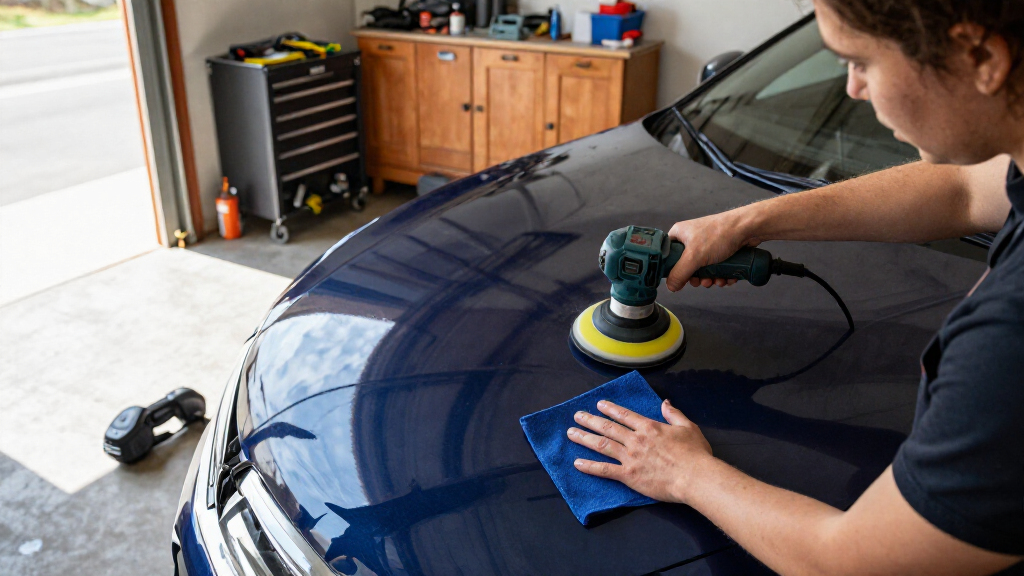
I ranked these cordless car polishers by how clearly each one fits a real detailing job: full-panel polishing, careful paint correction, spot work, or use with an existing battery platform. I weighed tool type and intended motion, size, speed control, battery arrangements, included accessories, and the practical difference between a tool-only listing and a ready-to-use kit. I also gave weight to how much a product’s stated setup helps a buyer choose confidently, rather than treating a large attachment count as proof of better performance.
The order favors options with a distinct advantage for a recognizable buyer. The Milwaukee M18 FUEL leads as a full-size pick for existing M18 users; DEWALT follows as a premium platform-specific alternative. Compact SPTA and mini RO/DA options rank higher for confined work, while bundled 21V and 12V kits suit shoppers who need batteries included. Similar models and color variants are separated by their stated format and kit details, not by unsupported claims about durability or polishing results.
Factors to Consider When Choosing Cordless Car Polishers
Before choosing from this lineup, decide what kind of polishing you actually plan to do. A tool that makes sense for occasional spot correction may be tiring or slow across an entire vehicle, while a powerful full-size machine can feel unwieldy around mirrors and trim. These factors help identify the right setup before you compare individual listings.
Match the Polisher Motion to Your Skill and Goal
Rotary and dual-action or orbital machines do not handle paint in the same way, so the label matters more than a broad claim about power. Rotary polishers spin directly, which can suit experienced detailers working on correction but calls for careful technique and pad management. Dual-action and orbital movement adds a more forgiving pattern for many general-use jobs, though it is not a substitute for learning safe polishing habits. Do not assume that every tool called a buffer is dual-action; check the listed motion before buying. If you are new to paint correction, prioritize control and practice on a test area over maximum speed. Experienced users may accept a steeper learning curve for the motion and output they prefer.
Choose a Size for the Panels You Will Actually Polish
A larger backing plate can cover broad panels with fewer passes, but it is harder to position neatly around tight curves and small trim pieces. Mini polishers trade coverage for access, making them useful for bumpers, pillars, and localized defects. Many owners need both kinds of work, yet buying a mini tool as the only polisher can make a full vehicle take longer. Conversely, a full-size machine may be awkward for a first-time user trying to reach narrow areas. Consider the shape of your vehicle as well as its size: deep body contours and compact panels can affect handling. Choose based on the proportion of your work that is broad-panel polishing versus spot detailing.
Check Battery Compatibility Before Comparing Kit Contents
A tool-only polisher can be a sensible choice if you already own compatible batteries and a charger, but the battery family must match exactly. Milwaukee M18 and DeWalt 20V tools are platform-specific, and a similar voltage label does not make batteries interchangeable. A bundled kit is often easier for a buyer starting from scratch, though its batteries and charger may add equipment that will not serve other tools. Check whether the listing includes batteries, a charger, and the required accessories rather than relying on the word “kit.” Also account for how you plan to manage charging during a long detailing session. Choosing the battery system first can narrow the field more effectively than comparing speed settings.
Think About Runtime, Heat, and Breaks as a System
Battery count alone does not tell you how long a polisher will run under load. Runtime varies with battery capacity, pressure, speed, pad choice, and the task, so a two-battery bundle is not a guarantee of uninterrupted work. Heavy pressure can also slow progress and build heat at the pad and paint surface. Plan on using controlled passes and allowing breaks rather than trying to compensate for a cordless power source by pressing harder. If you regularly polish an entire vehicle, battery availability and charging time deserve as much attention as the tool’s speed range. For occasional small jobs, a compact setup may be easier to manage than extra batteries you rarely use.
Treat Speed Settings as Control, Not a Performance Score
More speed settings can help tailor a machine to spreading polish, working a compound, or refining a finish, but the number of settings is not a direct measure of polishing quality. A useful speed range only helps when the controls are easy to adjust and the tool remains manageable at the setting you need. New users often make the mistake of starting fast or applying too much pressure, which can make paint work harder to control. Begin conservatively and follow the pad and polish maker’s guidance. Check whether speed is variable or presented as fixed steps, and whether the listing explains the control method clearly. A simpler range can be preferable if it makes the machine easier to handle consistently.
Judge Accessories by Usefulness, Not Quantity
A large accessory count can look appealing, but it does not reveal whether the pads suit your paint, correction goal, or backing plate. Confirm the plate size and attachment compatibility before buying replacement pads, since a mismatch can leave included accessories unusable. You may also need separate compounds, finishing polish, microfiber towels, and masking materials that a polisher kit does not provide. A smaller, relevant set can be more useful than a crowded bundle of generic attachments. If you already have detailing supplies, avoid paying attention to duplicates and focus on battery and tool compatibility. Buyers starting fresh should map out the consumables they will need before treating a kit as complete.
Frequently Asked Questions
Should I buy a tool-only polisher or a kit with batteries?
A tool-only model is usually the more practical route when you already own batteries and a charger from the exact compatible platform. In this lineup, the Milwaukee and DEWALT tool-only options make the clearest sense for owners already invested in those systems. If you do not have compatible batteries, compare a complete kit and check that it includes the charger and any parts needed to start polishing. Do not assume that batteries from another brand or voltage family will fit. Count the value of equipment you can reuse, not just the number of items in the box.
Is a mini cordless polisher enough for an entire car?
A mini polisher can handle smaller areas, tight contours, and localized correction, but its smaller working area can make whole-car polishing slow. If most of your work involves doors, hoods, and roofs, a full-size machine is generally a better primary tool. A mini model makes more sense as a specialist tool or for owners who mainly work on small vehicles and spot defects. Pad size and access matter, but so do the time and effort required to cover broad panels. Decide whether the compact format is your main need or a useful companion to a larger polisher.
Which type of cordless polisher is more forgiving for a beginner?
Many beginners find dual-action or orbital motion easier to manage for general paint care than a rotary, but technique still matters. A polisher’s motion does not prevent damage if you use the wrong pad, hold the tool in one place, or apply excessive pressure. Start with a mild polishing combination on a low-risk test area and learn how the tool responds before attempting correction. Compact tools can feel easier to place but may be less suitable for covering large panels. Choose a machine that you can control comfortably, then build skill gradually rather than relying on speed settings alone.
Can I use a cordless car polisher for paint correction, not just waxing?
Many polishers can apply wax or polish, and some can also support paint correction when paired with suitable pads and compounds. Correction depends on the tool’s motion, the condition and hardness of the paint, and the operator’s technique—not simply whether the polisher is cordless. A rotary can suit experienced users, while a dual-action or orbital design may offer a more forgiving starting point. Test a small area first, use the least aggressive combination likely to work, and inspect the finish before continuing. For deep defects or uncertain paint, professional advice can help avoid removing too much clear coat.
Why are there several similar Protmex and SPTA models in this roundup?
Similar product names can refer to different kit configurations, formats, or included battery arrangements. The Protmex entries are listed in different colors, while the SPTA options distinguish a mini tool from a kit format. Those labels do not, by themselves, establish that one version performs better. Compare the exact listing for battery count, included charger, tool size, attachment compatibility, and any stated specifications before ordering. If two variants appear otherwise identical, choose the one whose confirmed contents fit your existing equipment and intended job.
Conclusion
For most buyers already on Milwaukee’s battery platform, I recommend the Milwaukee M18 FUEL as the best overall full-size option in this lineup. The DEWALT 20V MAX XR is my best premium choice for DeWalt users who want a 7-inch cordless rotary tool, while buyers seeking a more budget-conscious bundled setup should compare the included batteries and accessories on the QIJIAA, Protmex, and Avhrit kits rather than choosing by attachment count alone. Beginners who mainly need small-area work can start with the SPTA 12V Mini, while experienced detailers may prefer a full-size tool suited to their established technique. For tight spots and localized correction, the AUTIWOZ mini RO/DA or an SPTA mini model is a more targeted fit than a 7-inch machine. My final advice: pick your battery platform and work area first, then choose the motion and kit that match your skill and routine.