
Car battery jump starters have quietly become one of the most useful tools you can keep in a glovebox, replacing the old routine of flagging down a stranger with jumper cables. After comparing 15 of the most popular models, the OXILAM Jump Starter 6000A stands out as the best overall pick thanks to its high cranking power, clear LED display, and generous engine coverage up to 12L diesel. Budget-minded buyers should look at the S ZEVZO ET03, which balances 4000A output with a bundled storage case at a lower price, while anyone who hates dealing with a separate tire pump will want the GOOLOO A3 or one of the other combo units with a built-in 150 PSI compressor. The main tradeoff in this category is simple: raw starting power versus portability, and a second decision layer of whether you want an all-in-one emergency kit or a dedicated jump box. Professional-grade lead-acid units like the Clore JNC660 still make sense for shops, but most drivers are better served by compact lithium packs. Keep reading for the full breakdown of all 15 models.

Get business pricing on garage and car supplies
- Business-only prices and quantity discounts
- Tax-exempt purchasing
- Multiple users, one account, clear invoices
Complete the kit


Key Takeaways
- Peak amp ratings are wildly inconsistent across brands — the budget 5000A generic units did not clearly outperform the better-built 4000A models from S ZEVZO and Trekure, so build quality and clamps matter as much as the number on the box.
- Built-in air compressors are the biggest differentiator in this lineup: the GOOLOO A3, the 5000A/150 PSI model, the 4500A unit, and the 10-in-1 kit all replace a second gadget, but they add noticeable weight and cost.
- The Trekure lineup spans three tiers (4000A, 5000A, 8000A), and the 8000A/26800mAh model is the strongest power-bank-first option for people who also want device charging on road trips.
- The Clore Jump-N-Carry JNC660 is the only lead-acid unit here — heavier and one-trick, but its 1700 peak amps of sustained cranking power make it the workshop favorite where daily, back-to-back jumps are routine.
- Diesel and large-engine drivers should not shop below 4000A; every model rated under that threshold, like the AstroAI S8 at 1500A, is realistically a small-gas-engine-only tool despite marketing language suggesting otherwise.
| Trekure Car Battery Jumper Starter Portable 5000A |  | Best Compact Powerhouse | Peak Current: 5000A | Battery Type: Lithium Polymer | Battery Capacity: 7200 mAh | VIEW LATEST PRICE | See Our Full Breakdown |
| Jump Starter Car Battery Booster Pack 5000A Peak with USB-C Quick Charge |  | Best Value Pick | Peak Current: 5000A | Battery Type: Lithium | Battery Capacity: 6000 mAh | VIEW LATEST PRICE | See Our Full Breakdown |
| GOOLOO A3 12V 3000A Portable Jump Starter with Air Compressor |  | Best Two-in-One Emergency Tool | Peak Current: 3000A | Voltage: 12V | Max Engine Size: 9.0L gas / 6.5L diesel | VIEW LATEST PRICE | See Our Full Breakdown |
| Sharmeal Car Jump Starter 7000A |  | Best for Big Diesels | Peak Current: 7000A | Battery Type: Lithium Ion | Battery Capacity: 8000 mAh | VIEW LATEST PRICE | See Our Full Breakdown |
| 5000A Jump Starter with Air Compressor and 150 PSI Tire Inflator |  | Best Road Trip Kit | Peak Current: 5000A | Max Air Pressure: 150 PSI | Airflow: 30L/min | VIEW LATEST PRICE | See Our Full Breakdown |
| OXILAM Jump Starter 6000A | 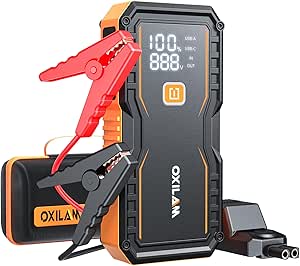 | Best All-Rounder for Mixed Fleets | Peak Current: 6000A | Voltage: 12V | Battery Type: Lithium Ion | VIEW LATEST PRICE | See Our Full Breakdown |
| Trekure Car Battery Jump Starter 8000A 26800mAh | 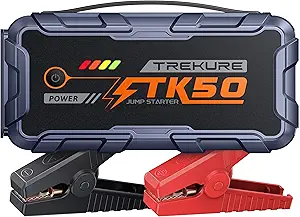 | Best for Large Diesel Engines | Peak Current: 8000A | Battery Capacity: 26800mAh | Input Charging: 18W | VIEW LATEST PRICE | See Our Full Breakdown |
| H50 Jump Starter – 5000A with LCD Display |  | Best Readouts for Nervous First-Timers | Peak Current: 5000A | Engine Support: Up to 10.0L gas / 8.0L diesel | Display: 3.0-inch LCD | VIEW LATEST PRICE | See Our Full Breakdown |
| S ZEVZO ET03 Car Jump Starter 4000A |  | Best Value Pick | Peak Current: 4000A | Battery Capacity: 20000mAh | Battery Type: Lithium Ion | VIEW LATEST PRICE | See Our Full Breakdown |
| Clore Automotive Jump-N-Carry JNC660 |  | Best Shop-Grade Workhorse | Peak Amps: 1700A | Battery: 22Ah lead-acid | Voltage: 12V | VIEW LATEST PRICE | See Our Full Breakdown |
| Car Battery Jump Starter with Air Compressor 4500A 150PSI |  | Best All-in-One Emergency Tool | Peak Current: 4500A | Air Pressure: 150 PSI | Inflation Modes: 5 modes with auto memory and shut-off | VIEW LATEST PRICE | See Our Full Breakdown |
| AstroAI S8 Car Battery Jump Starter 1500A |  | Best Budget Pick | Peak Current: 1500A | Battery Type: Lithium-ion | Voltage: 12V | VIEW LATEST PRICE | See Our Full Breakdown |
| Trekure Portable Car Battery Jump Starter 4000A | 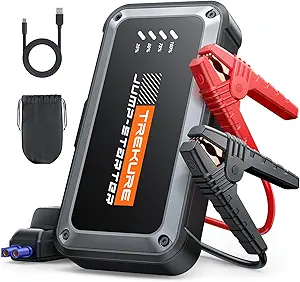 | Best for Outdoor and Weather-Exposed Use | Peak Current: 4000A | Battery Capacity: 16800mAh | Engine Compatibility: Up to 8.0L gas / 6.5L diesel | VIEW LATEST PRICE | See Our Full Breakdown |
| Povasee Jump Starter 5000A, Model A30 |  | Best Cold-Weather Performer | Peak Current: 5000A | Engine Capacity: Up to 10L gas / 8L diesel | Battery Capacity: 74 Wh | VIEW LATEST PRICE | See Our Full Breakdown |
| 6000A Jump Starter with Air Compressor, 10-in-1 Portable Car Emergency Kit |  | Best Maximum Power Pick | Peak Current: 6000A | Air Pressure: 150 PSI | Engine Compatibility: Up to 10.0L gas / 8.0L diesel | VIEW LATEST PRICE | See Our Full Breakdown |
| car battery jump starter | Peak Current | Battery Capacity | Voltage |
|---|---|---|---|
| Trekure Car Battery Jumper Sta | 5000A | 7200 mAh | 12V |
| Jump Starter Car Battery Boost | 5000A | 6000 mAh | 12V |
| GOOLOO A3 12V 3000A Portable J | 3000A | — | 12V |
| Sharmeal Car Jump Starter 7000 | 7000A | 8000 mAh | 12V |
| 5000A Jump Starter with Air Co | 5000A | — | — |
| OXILAM Jump Starter 6000A | 6000A | — | 12V |
| Trekure Car Battery Jump Start | 8000A | 26800mAh | — |
| H50 Jump Starter | 5000A | — | — |
| S ZEVZO ET03 Car Jump Starter | 4000A | 20000mAh | 12V |
| Clore Automotive Jump-N-Carry | — | — | 12V |
| Car Battery Jump Starter with | 4500A | — | — |
| AstroAI S8 Car Battery Jump St | 1500A | — | 12V |
| Trekure Portable Car Battery J | 4000A | 16800mAh | — |
| Povasee Jump Starter 5000A | 5000A | 74 Wh | — |
| 6000A Jump Starter with Air Co | 6000A | Not specified | — |
More Details on Our Top Picks
Trekure Car Battery Jumper Starter Portable 5000A
At just 0.42 kg, this Trekure model is the lightest serious jump starter in the lineup, yet it still claims 5000A of cranking power and support for engines up to 10L gas or 8L diesel. That combination of featherweight portability and big-engine capability is unusual — the similarly rated 5000A Jump Starter with Air Compressor trades away that lightness to add a tire inflator. Here, the Trekure focuses on doing one job well, with a magnetic LED light that attaches to the hood so both hands stay free during a nighttime jump.
The tradeoff is capacity. Its 7200mAh battery means fewer jump attempts per charge than the Sharmeal 7000A and its 8000mAh cell, so drivers in very cold climates may want more reserve. Safety documentation is also thinner than established brands like GOOLOO, which matters for nervous first-time users.
Pros:- Lightest 5000A-class unit in the lineup at under half a kilogram
- Magnetic light mounts to the hood for hands-free nighttime work
- Covers large engines up to 10L gas and 8L diesel
- Doubles as a power bank for phones and small devices
Cons:- 7200mAh reserve limits the number of jump attempts per charge
- Safety features are less thoroughly documented than rival brands
- Higher price per amp than value-focused competitors
Best for: Drivers and motorcyclists who want maximum starting power in a glovebox-sized unit they’ll actually carry everywhere
Not ideal for: Buyers who want a documented safety track record and deep reserve capacity for repeated cold-weather starts
- Peak Current:5000A
- Battery Type:Lithium Polymer
- Battery Capacity:7200 mAh
- Voltage:12V
- Max Engine Size:10.0L gas / 8.0L diesel
- Compatible Vehicles:Car, truck, motorcycle, lawnmower, boat
- Weight:0.42 kg
Our verdict“This pick makes the most sense for anyone who prioritizes grab-and-go portability without giving up large-engine starting power.”
Jump Starter Car Battery Booster Pack 5000A Peak with USB-C Quick Charge
This no-name-brand booster delivers the same headline 5000A peak current as the Trekure above it, but at a friendlier price, and it’s rated for engines up to 7.0L gas and 5.5L diesel — enough for the vast majority of passenger vehicles on the road. Compared with the Trekure 5000A, you give up some portability and the magnetic light, but you gain USB-C quick charge for faster top-ups of both the unit and your devices.
The real cost of the lower price shows in maintenance demands: it needs recharging every 2-3 months to protect the lithium cell, a chore the casual owner will forget. And its boxy dimensions make it less glovebox-friendly than slimmer rivals. Still, for a driver who wants dependable starting power for a sedan or SUV without paying brand-name premiums, this is the smartest spend.
Pros:- 5000A peak current at a lower price than brand-name equivalents
- USB-C quick charge for both the unit and connected devices
- Multiple built-in safety protections
- LED flashlight with multiple emergency modes
Cons:- Requires recharging every 2-3 months to preserve battery health
- Bulkier than slim rivals like the Sharmeal, reducing glovebox appeal
- Lower diesel engine ceiling than competing 5000A units
Best for: Budget-conscious sedan and SUV owners who want 5000A muscle without brand-name pricing
Not ideal for: Diesel truck owners — the 5.5L diesel ceiling rules out most heavy-duty pickups
- Peak Current:5000A
- Battery Type:Lithium
- Battery Capacity:6000 mAh
- Voltage:12V
- Max Engine Size:7.0L gas / 5.5L diesel
- Charging:USB-C quick charge
- Dimensions:4.21″D x 7.99″W x 3.62″H
Our verdict“The best bang-for-buck choice for typical passenger-car owners who will remember the periodic recharge.”
GOOLOO A3 12V 3000A Portable Jump Starter with Air Compressor
The GOOLOO A3 stands out for solving the two most common roadside failures at once: a dead battery and a flat tire. Its built-in compressor pushes up to 150 PSI at 35L/min, enough for truck tires, and the digital pressure gauge with preset modes removes the guesswork that cheaper inflators demand. Compared with the generic 5000A Jump Starter with Air Compressor, the A3’s lower 3000A rating is offset by a more established brand, clearer safety documentation, and a 1000+ charge cycle rating that suggests real longevity.
Those added functions mean a steeper learning curve — first-time users will need to read the manual to get the most from the inflation modes. And 3000A, while plenty for engines up to 9.0L gas, sits below the 5000A-7000A heavy hitters in this lineup for stubborn, deeply discharged batteries.
Pros:- Integrated 150 PSI air compressor with digital gauge and preset modes
- Over 1000 rated charge cycles for long service life
- Works from -4°F to 140°F for year-round reliability
- Established brand with clearly documented safety protections
Cons:- 3000A peak is lower than dedicated jumpers like the Sharmeal 7000A
- Multiple functions create a learning curve for beginners
- No published charging time
Best for: Road-trippers and daily commuters who want one trunk-ready device for both dead batteries and slow leaks
Not ideal for: Drivers who only need raw starting power — the compressor adds cost, weight, and complexity they won’t use
- Peak Current:3000A
- Voltage:12V
- Max Engine Size:9.0L gas / 6.5L diesel
- Max Air Pressure:150 PSI
- Inflation Flow:35L/min
- Battery Cycles:Over 1000
- Temperature Range:-4°F to 140°F
- Protections:Short circuit, overcurrent, reverse connection, overheating, overcharge
Our verdict“The smartest single purchase for drivers who’d rather carry one device than a separate jump starter and tire inflator.”
Sharmeal Car Jump Starter 7000A
When the job is a cold-soaked diesel, amps matter most, and the Sharmeal’s 7000A peak output tops every lithium unit in this batch, rated for all gas engines and diesels up to 12.0L. That puts it ahead of the Trekure 5000A for heavy-duty pickups and work trucks, and its 8000mAh cell offers more jump attempts between charges than the Trekure’s 7200mAh. Despite that muscle, the 1.1-inch-thin body slips into a door pocket rather than hogging trunk space.
The flip side of buying raw power from a newer brand is uncertainty: long-term durability data is thin, and it lacks the compressor or LCD display that rivals at similar prices include. If your truck starts reliably and your needs are modest, the value-priced 5000A booster covers the same basics for less.
Pros:- Highest peak current in this batch at 7000A
- Handles diesels up to 12.0L
- Slim 1.1-inch profile despite the power output
- 8000mAh capacity supports multiple jumps and device charging
Cons:- Limited track record on long-term reliability compared with GOOLOO or Clore
- No air compressor or advanced display at this price point
- Overkill for compact cars and small engines
Best for: Owners of diesel pickups, boats, and large-displacement engines who need maximum cranking authority
Not ideal for: Small-car owners — paying a premium for 7000A they’ll never come close to needing
- Peak Current:7000A
- Battery Type:Lithium Ion
- Battery Capacity:8000 mAh
- Voltage:12V
- Max Engine Size:All gas / 12.0L diesel
- Dimensions:3″D x 7″W x 1.1″H
Our verdict“The clear choice when the vehicle is a big diesel and nothing less than maximum amps will turn it over.”
5000A Jump Starter with Air Compressor and 150 PSI Tire Inflator
This unit takes the two-in-one formula of the GOOLOO A3 and raises the starting power: 5000A against the GOOLOO’s 3000A, covering engines up to 10.0L gas and 8.0L diesel. For road-trip households towing trailers or hauling gear, that extra margin matters when a battery is deeply drained. The full accessory bundle — smart jumper cables, pump tube, air nozzles, and a storage box — means it arrives road-ready rather than requiring add-on purchases.
Two limits deserve attention. The compressor runs at 30L/min, slower than the GOOLOO’s 35L/min, and it shouldn’t be run continuously, so airing up four trailer tires takes patience. Like every lithium jumper here, it also needs periodic recharging to stay rescue-ready. Buyers who want the fastest inflation or the simplest operation should lean toward the GOOLOO instead.
Pros:- 5000A output covers large gas and diesel engines
- Built-in 150 PSI compressor handles tires, balls, and inflatables
- Complete accessory kit including storage box and air nozzles
- Safety protections against sparks and misconnection
Cons:- Compressor cannot run continuously and inflates slower than the GOOLOO A3
- Requires periodic recharging to stay ready
- Hard engine-size limits make it unsuitable for oversized diesels
Best for: Families and towers who want a complete trunk kit for long trips — jumps, tire inflation, and device charging in one box
Not ideal for: Anyone wanting a pure jump starter — the compressor adds bulk and price with no benefit for battery-only needs
- Peak Current:5000A
- Max Air Pressure:150 PSI
- Airflow:30L/min
- Max Engine Size:10.0L gas / 8.0L diesel
- Temperature Range:-4°F to 140°F
- Functions:Jump starter, tire inflator, USB charger, LED flashlight
- Accessories:Smart jumper cable, USB-C cable, storage box, pump tube, air nozzles, manual
Our verdict“The most complete out-of-the-box road-trip package for drivers who want jump and inflation coverage in a single purchase.”
OXILAM Jump Starter 6000A
The OXILAM 6000A splits the difference between the brute-force Trekure 8000A and the more modest ZEVZO ET03, and that middle position is exactly what makes it appealing. With 6000A of peak current rated for all gas engines and up to 12L diesels, it covers everything from a commuter sedan to a one-ton pickup without paying for capacity you’ll never use. The power bank and LED light functions match what the category leaders offer, so nothing feels stripped away. The tradeoff is fussiness: it wants at least 50% charge before you attempt a jump, and the 60-jump ceiling per charge means fleet users will be topping it off constantly. Still, for a household with a mixed driveway, this is the least compromised pick in this batch.
Pros:- 6000A peak current handles all gas and 12L diesel engines
- Doubles as a power bank and LED flashlight
- Safety protections cover short circuits and reverse polarity
- Compact enough to live in a glovebox or door pocket
Cons:- Requires over 50% charge before it will jump a vehicle
- Capped at roughly 60 jump starts per full charge
Best for: Households with several vehicles of varying engine sizes, from motorcycles to full-size diesel trucks
Not ideal for: Shop or fleet users who need all-day repeated starting — the 60-jump limit and 50% charge requirement slow you down
- Peak Current:6000A
- Voltage:12V
- Battery Type:Lithium Ion
- Engine Support:All gas / up to 12L diesel
- Dimensions:8.7″D x 4.7″W x 3.5″H
- Extras:LED light, USB and Type-C power bank
Our verdict“Buy this if one unit needs to cover a mixed driveway of cars, trucks, and toys; skip it if you’re running a shop.”
Trekure Car Battery Jump Starter 8000A 26800mAh
When the priority is raw cranking authority, the Trekure 8000A out-muscles everything else here, including the OXILAM 6000A and the Sharmeal 7000A in the wider roundup. That extra headroom matters most on cold mornings with a big diesel, where a marginal unit cranks slowly or not at all. The 26800mAh battery also gives it the longest run as a pure power bank of this group, and the 18W charging keeps phones topped up at reasonable speed. Three lighting modes including SOS round out the emergency kit. The catch: connection order matters, and sloppiness that a forgiving unit might shrug off can cause real problems. There’s also little long-term durability data compared with established options like the Clore JNC660.
Pros:- Class-leading 8000A peak current for stubborn engines
- Huge 26800mAh battery doubles as a serious power bank
- 18W fast charging for devices
- Built-in handle and 18% smaller footprint than comparable models
Cons:- Strict connection order required to avoid vehicle electrical issues
- Limited owner feedback on long-term battery lifespan
Best for: Owners of large diesel trucks, boats, or tow rigs who need maximum starting power and cold-weather margin
Not ideal for: Casual drivers of small cars — the extra amps cost money and size you’ll never benefit from
- Peak Current:8000A
- Battery Capacity:26800mAh
- Input Charging:18W
- Lighting Modes:Steady, Strobe, SOS
- Safety:10 built-in protections
- Operating Range:-4°F to 140°F
Our verdict“The pick for big diesel owners who’d rather have power to spare than save a few dollars.”
H50 Jump Starter – 5000A with LCD Display
What separates the H50 from similarly rated 5000A boxes like the Povasee A30 is its 3.0-inch LCD display, which shows charge state and status at a glance instead of leaving you guessing with cryptic LED blinks. For someone who’s never jumped a car before, that visibility genuinely reduces mistakes. Its 5000A output covers engines up to 10.0L gas or 8.0L diesel — plenty for most passenger vehicles, though a notch under the OXILAM’s 12L diesel rating. The 18W Type-C input recharges reasonably fast, and Quick Charge output keeps it useful between emergencies. Frustratingly, the manufacturer doesn’t publish battery capacity, so you can’t directly compare runtime with the ZEVZO ET03’s stated 20000mAh, and it needs periodic recharges to stay healthy.
Pros:- Large 3.0-inch LCD makes charge and status obvious
- 5000A handles up to 10.0L gas / 8.0L diesel engines
- Quick Charge output and 18W Type-C input
- Multiple safety protections against misconnections
Cons:- Battery capacity not disclosed by manufacturer
- Hard engine limit — not for anything beyond stated sizes
- Needs regular top-ups to maintain battery health
Best for: First-time jump starter buyers who want clear on-screen feedback before connecting clamps
Not ideal for: Spec-driven shoppers who want published battery capacity before committing
- Peak Current:5000A
- Engine Support:Up to 10.0L gas / 8.0L diesel
- Display:3.0-inch LCD
- Input:18W Type-C
- Output:USB 5V 2.4A, Quick Charge 5V/9V/12V
- Operating Range:-4°F to 140°F
Our verdict“The most reassuring choice for a nervous first-timer, as long as an unpublished battery spec doesn’t bother you.”
S ZEVZO ET03 Car Jump Starter 4000A
The ZEVZO ET03 wins on honest, verifiable numbers: 4000A, a stated 20000mAh capacity, up to 50 jumps per charge, and a two-year warranty — transparency the H50 can’t match with its undisclosed battery size. For cars, vans, motorcycles, and even tractors up to 8.0L gas, 4000A is genuinely enough, and paying for the Trekure’s 8000A is wasted money if you drive a sedan. Dual USB ports and a multi-mode flashlight add everyday utility, and the included storage case is a small touch that competitors often skip. The tradeoffs are practical: it wants a full recharge before tackling a truly dead battery, and at 1.4 pounds with a 7.5-inch footprint it’s not the pocket-sized option in the lineup.
Pros:- Fully disclosed specs including 20000mAh capacity
- Two-year warranty backs the purchase
- Up to 50 jump starts per charge
- Storage case and dual USB ports included
Cons:- Needs a full recharge before jumping a fully dead battery
- Bulkier and heavier than compact rivals
Best for: Budget-conscious owners of standard cars, vans, and motorcycles who want clear specs and a warranty
Not ideal for: Owners of large diesel trucks — 8.0L gas / 7.0L diesel limits are real, not generous
- Peak Current:4000A
- Battery Capacity:20000mAh
- Battery Type:Lithium Ion
- Voltage:12V
- Engine Support:Up to 8.0L gas / 7.0L diesel
- Weight:1.4 lbs
- Warranty:2 years
Our verdict“The smart money pick for ordinary vehicles — you give up some muscle, not any peace of mind.”
Clore Automotive Jump-N-Carry JNC660
The JNC660 is the outlier in this lineup: a 22Ah lead-acid battery in a rugged case with 46-inch #2 AWG cables, versus the lipstick-sized lithium packs like the ZEVZO ET03. That architecture gives it two things lithium can’t match — sustained cranking power for repeated jumps and cables long and stiff enough to reach awkward battery terminals on trucks and equipment. The built-in voltmeter tells you the actual state of charge rather than a rough estimate, and the DC outlet runs accessories. You pay for it in portability: it’s heavy, boxy, and belongs in a garage or service truck, not a glovebox. For mechanics, farmers, and fleet yards, though, that durability beats convenience every time.
Pros:- 22Ah lead-acid battery sustains repeated jump starts without sagging
- 46-inch heavy-duty #2 AWG cables reach buried terminals
- Built-in voltmeter gives a true charge reading
- Proven shop-grade durability over decades of use
Cons:- Heavy and bulky compared to any lithium option
- Requires significantly more storage space
- No USB power bank functionality
Best for: Mechanics, fleet operators, and farmers who jump vehicles daily and need sustained cranking power
Not ideal for: Everyday drivers wanting glovebox portability — it’s heavy, boxy, and built for the shop
- Peak Amps:1700A
- Battery:22Ah lead-acid
- Voltage:12V
- Cables:46″ #2 AWG heavy-duty
- Features:Built-in voltmeter, DC accessory outlet
- Best Use:Heavy-duty and repeated starting
Our verdict“Buy it for a garage or service truck where it will earn its keep; leave it there, because it’s not traveling with you.”
Car Battery Jump Starter with Air Compressor 4500A 150PSI
Buyers who want more than a jump box will appreciate how this model folds a 150 PSI tire inflator, power bank, and 500-lumen emergency lighting into a single unit. Compared with the AstroAI S8, which handles jumps only, this one covers the two most common roadside failures — a dead battery and a slow tire — without carrying extra gear. The five inflation modes with auto shut-off mean you can set a target pressure and walk away, a genuine convenience the S8 can’t match. The tradeoff is transparency: the manufacturer doesn’t publish battery capacity, so it’s harder to predict how many jumps or inflation sessions you’ll get per charge. It also needs regular top-ups if it sits in a trunk for months.
Pros:- Genuine 8-in-1 functionality eliminates the need for a separate tire inflator
- Auto shut-off inflation prevents overfilling and guesswork
- Bright 500-lumen light doubles as a safety beacon with SOS mode
- V0 fireproof housing with 10 built-in protections
- Starts fully dead batteries even in cold conditions
Cons:- No published battery capacity, making real-world endurance hard to judge
- Requires recharging every few months even when idle
- Operating range bottoms out at -4°F, limiting extreme winter use
Best for: Road-trippers and daily commuters who want jump starting and tire inflation handled by one glovebox-sized device
Not ideal for: Buyers in extreme-climate regions, since the -4°F floor is tighter than cold-rated rivals like the Povasee A30
- Peak Current:4500A
- Air Pressure:150 PSI
- Inflation Modes:5 modes with auto memory and shut-off
- LED Brightness:500 lumens
- Display:3.3-inch smart display
- Operating Temperature:-4°F to 140°F
- Safety:10 protections, V0 fireproof housing
Our verdict“This pick makes the most sense for drivers who’d rather carry one emergency device than three, provided they don’t face deep-freeze winters.”
AstroAI S8 Car Battery Jump Starter 1500A
The AstroAI S8 stands out as the value play in this lineup. At under a pound and roughly the size of a paperback, it does the core job — restarting a 6.0L gas or 3.0L diesel engine — without the premium pricing of the Trekure 4000A or Povasee A30. Compared with those higher-amp rivals, it’s honest about its limits: this is for cars, sedans, and small trucks, not big diesel pickups. That restraint is exactly why it costs less. The power bank and flashlight functions are genuinely useful rather than checkbox features, though cold-weather cranking power drops noticeably, and the 12V-only limitation rules out anything with a larger battery system.
Pros:- Very affordable entry point for jump starter ownership
- Featherweight at 0.95 lbs — easy to store in any glovebox
- Doubles as a power bank and LED flashlight
- Comprehensive safety protections despite the low price
Cons:- Cold-weather performance is noticeably weaker than premium rivals
- 12V vehicle batteries only — no versatility beyond cars and light trucks
- Instructions must be read carefully to use safely
Best for: First-time jump starter owners and budget-conscious drivers of standard gas cars who want simple, no-frills reliability
Not ideal for: Diesel truck owners or anyone in harsh winter climates, since 1500A may not crank large or cold engines reliably
- Peak Current:1500A
- Battery Type:Lithium-ion
- Voltage:12V
- Size:7.9 x 4.5 x 3.7 inches
- Weight:0.95 lbs
- Engine Compatibility:Gas up to 6.0L, diesel up to 3.0L
Our verdict“If you drive a typical gas car and want cheap insurance against a dead battery, the S8 delivers the essentials without paying for power you’ll never use.”
Trekure Portable Car Battery Jump Starter 4000A
Where most jump starters in this roundup are fair-weather tools, the Trekure 4000A is built for rain, dust, and trunk neglect. Its weatherproof housing and ten protection systems make it the natural choice for boat owners, off-roaders, and anyone whose gear lives in a truck bed. Compared with the AstroAI S8, it brings nearly three times the peak current — enough for 8.0L gas and 6.5L diesel engines — plus a published 16800mAh capacity for honest power-bank duty. The catches are real, though: it demands at least 50% charge before jumping, and it wants a recharge every three months. Skip the maintenance and you may find it flat when you need it most.
Pros:- Weatherproof construction suited to outdoor and marine storage
- 4000A handles up to 8.0L gas and 6.5L diesel engines
- 16800mAh power bank capacity is clearly specified
- Four lighting modes including orange strobe for roadside visibility
Cons:- Requires at least 50% charge before it will jump start
- Needs recharging every 3 months during storage
- Somewhat bulky despite the sub-pound weight claim
Best for: Boaters, campers, and off-road drivers who need a rugged unit that shrugs off rain and handles large engines
Not ideal for: Set-and-forget buyers who won’t follow the 3-month recharge schedule and 50% minimum charge rule
- Peak Current:4000A
- Battery Capacity:16800mAh
- Engine Compatibility:Up to 8.0L gas / 6.5L diesel
- Weight:0.8 lbs
- Lighting Modes:Flashlight, white strobe, orange strobe, SOS
- Weatherproof:Yes
- Safety:10 protections including short circuit, overheating, overvoltage
Our verdict“This model is better suited to people who actually use their gear outdoors and will maintain it, not drivers who want zero-effort trunk insurance.”
Povasee Jump Starter 5000A, Model A30
The Povasee A30 earns its spot with a -22°F temperature rating, the coldest in this batch, making it the obvious pick for northern-climate drivers. Its 5000A peak output covers engines up to 10L gas or 8L diesel, putting it ahead of the Trekure 4000A for big trucks while adding dual USB fast charging that the Trekure’s single-purpose design undersells. The included storage case is a thoughtful touch that protects the clamps — something the bare-bones 4500A compressor model above skips. Two frustrations hold it back: there’s no AC adapter in the box, so you’ll charge from a USB brick or car port, and the 60-jump-per-charge ceiling is finite for fleet or frequent-use buyers.
Pros:- Rated to -22°F, the best cold-weather tolerance in this group
- 5000A covers engines up to 10L gas / 8L diesel
- Dual USB ports with fast-charge output for phones and tablets
- Includes a protective storage case for clamps and cables
Cons:- AC adapter not included — charging relies on your own USB gear
- Capped at 60 jump starts per full charge
- Requires careful terminal connection for safe operation
Best for: Drivers in frigid climates and owners of large gas or diesel trucks who need guaranteed cold-cranking power
Not ideal for: Fleet operators or frequent users who will burn through the 60-jump-per-charge limit and dislike sourcing their own charger
- Peak Current:5000A
- Engine Capacity:Up to 10L gas / 8L diesel
- Battery Capacity:74 Wh
- USB Ports:2 (5V/2.4A and 5V/3A, 9V/2A, 12V/1.5A)
- LED Light:400 lumens, 3 modes
- Weight:2.2 lbs
- Temperature Range:-22°F to 140°F
Our verdict“If winters where you live regularly dip below zero, the A30’s cold rating alone justifies choosing it over warmer-climate rivals.”
6000A Jump Starter with Air Compressor, 10-in-1 Portable Car Emergency Kit
For buyers who simply want the most capable device money can buy, this 6000A unit tops the batch in raw output. It edges out the Povasee A30 on peak amps and matches its 10L gas / 8L diesel engine ceiling, while adding a 150 PSI smart compressor the A30 lacks — arguably the strongest combination of jump power and inflation in this roundup. Compared with the 4500A compressor model above, it supports larger engines and packs more emergency functions into the 10-in-1 chassis. The honest downsides: the unspecified battery capacity makes endurance claims impossible to verify, it’s heavier than pure jump boxes like the Trekure 4000A, and charging-time details are thin. Raw power isn’t free.
Pros:- Highest peak current in this batch at 6000A
- Built-in 150 PSI air compressor with smart inflation modes
- Supports engines up to 10.0L gas and 8.0L diesel
- Ten integrated emergency functions in a single device
Cons:- Battery capacity is not disclosed, so endurance is unverified
- Heavier than dedicated jump-only units
- No published charging-time figures
Best for: Owners of heavy-duty trucks, RVs, or tow rigs who want maximum cranking power plus tire inflation in one kit
Not ideal for: Small-car owners and weight-conscious buyers — the power is overkill and the heft is wasted on a sedan
- Peak Current:6000A
- Air Pressure:150 PSI
- Engine Compatibility:Up to 10.0L gas / 8.0L diesel
- LED Brightness:400 lumens
- Battery Capacity:Not specified
Our verdict“This pick makes the most sense for big-engine vehicle owners who refuse to compromise on power, as long as they accept the unknowns around battery capacity.”
How We Picked
My ranking starts with real-world starting capability, which I judged by peak amp rating, engine-size coverage (gas and diesel), and the quality of the clamps and cables — a thin-gauge cable with weak clamps wastes amps no matter what the box claims. From there I weighed safety features, including reverse-polarity protection, spark-proof clamps, and short-circuit safeguards, because a jump starter is a device you use in a stressful moment, often in the dark or rain. Everyday usability came next: display clarity, audible error warnings, flashlight quality, and how easy the unit is to store in a car rather than a garage.
I also scored versatility and value. Models that added a functional air compressor, USB-C charging, or power-bank capacity earned credit only when those extras performed well — a weak compressor bolted onto a jump starter is not a bonus, it is a liability. Finally, I penalized models with vague branding, unclear warranty terms, or amp claims that seemed inflated relative to battery capacity. The ranking order reflects a blend of these factors rather than raw power alone: a reliable 3000A unit with excellent protection circuits beats an unverifiable 7000A claim from a no-name brand.
Factors to Consider When Choosing Car Battery Jump Starters
Choosing a jump starter is mostly about matching the tool to your engine and your habits, not chasing the biggest amp number. These are the factors that actually change how a purchase performs over years of ownership.Engine Size and Cold Cranking Reality
The single biggest mistake buyers make is underbuying for their engine. A 1500A unit like the AstroAI S8 will start a four-cylinder sedan all day, but a cold V8 truck or a diesel with high compression needs 4000A or more of peak output — and diesels are the least forgiving because their compression ratio demands far more current per crank. Manufacturers list gas and diesel engine limits on the box, and you should size up rather than down: if you drive an 8L gas engine, buy the model rated for 10L. Cold weather compounds this, since a weak battery in January needs more help than the same battery in July. Also remember that peak amps are a marketing figure; sustained cranking ability matters more, which is why the lead-acid Clore JNC660 can out-crank higher-rated lithium packs in repeated-use scenarios. When in doubt, buy one tier above your engine size so the unit is not maxed out on its first use.
Lithium Packs Versus Lead-Acid Units
Nearly every model in this roundup is a lithium jump pack, and for good reason: they weigh two to four pounds, hold a charge for months, and fit under a seat. The exception, the Clore Jump-N-Carry JNC660, uses an old-school lead-acid battery that weighs around 18 pounds and needs regular recharging, but delivers long, sustained cranking that lithium packs cannot match. That makes it the right choice for mechanics, fleet operators, or anyone who jumps multiple vehicles in a week. For everyone else, lithium is the practical answer — just know that lithium packs can struggle in extreme cold, so store yours inside the cabin rather than the trunk during winter. A common buyer error is treating these as interchangeable; they are not. Pick lithium for portability and occasional use, lead-acid for durability and daily duty cycles.
Is a Built-In Air Compressor Worth It?
Four models in this comparison bundle a tire inflator, and this is the feature that divides buyers most cleanly. If you already own a standalone compressor, the combo models mostly add weight and cost for something you will not use. But if your trunk is empty except for a spare tire iron, an all-in-one like the GOOLOO A3 or the 10-in-1 emergency kit genuinely replaces two devices and simplifies your roadside kit. Quality varies widely here: the better combo units hit a real 150 PSI with auto-shutoff presets, while cheaper implementations are slow and loud with gauges you cannot trust. There is also a capacity tradeoff — the compressor and its motor eat internal space that could hold a larger jump battery, so combo models sometimes lag dedicated jumpers in cranking power per dollar. Decide based on how often you actually top off tires, not on how good the feature sounds in a listing.
Safety Circuitry and Clamp Quality
Connecting a battery pack to your car’s electrical system is where cheap units reveal themselves. Look explicitly for reverse-polarity protection, spark-proof clamps, and short-circuit cutoff — these prevent the two most common disasters: welding the clamps to the wrong terminals or feeding a surge into your ECU. The unnamed-brand entries in this space often list safety features in the bullet points but ship with thin clamps and stiff cables that struggle to reach recessed battery terminals, which is exactly when mistakes happen. Clamp quality also affects performance directly; a strong jaw with good contact transfers more current than a weak spring-loaded clip. This is why the better-built 4000A models ranked above some generic 5000A units in my ordering. Never buy a jump starter with no named manufacturer behind it, because warranty support and replacement cables matter when the unit is three years old.
Battery Capacity and Secondary Features
Capacity, measured in mAh, determines two things: how many jumps you get per charge and how useful the unit is as a power bank. A 16800mAh model like the compact Trekure 4000A can deliver several jumps and still charge a phone twice, while the 26800mAh Trekure 8000A is closer to a camping power station that also jumps cars. USB-C input with fast charging is now standard on the better models and makes top-offs painless; units that still charge over an old barrel connector feel dated. LED flashlights with SOS modes are genuinely useful during a nighttime roadside stop, and LCD screens that show remaining percentage beat vague four-dot indicators. My advice: treat these extras as tiebreakers, not decision drivers. A jump starter’s first job is starting your car, and paying extra for a big screen on a unit with mediocre clamps is spending money in the wrong place.
Maintenance Habits That Extend the Purchase
A jump starter that is dead when you need it is worse than no jump starter at all, and this is the category’s most overlooked failure mode. Lithium packs self-discharge over several months, so the standard guidance is to top them off every two to three months and never store them fully drained. Check the unit’s charge level before winter and before long road trips — those are the two moments a dead battery is most likely. Temperature also matters: prolonged trunk storage in summer heat degrades lithium cells faster, so cabin storage is kinder to the battery year-round. Lead-acid units like the JNC660 need even more attention, with monthly charging recommended to prevent sulfation. Buyers who follow a simple quarterly charging habit routinely get five or more years from a pack, while neglected units die in two. Build the habit before you need the rescue.
Frequently Asked Questions
Can a 1500A jump starter actually start a truck or SUV?
Not reliably, and this is where marketing causes the most buyer regret. A 1500A unit like the AstroAI S8 is rated for four-cylinder and small six-cylinder gas engines; it may crank a warm V6 in mild weather, but a large SUV or any diesel will demand more current than the pack can sustain, especially when the battery is cold and deeply discharged. The realistic floor for full-size trucks is 4000A peak, and for diesel engines you want 5000A or higher with verified engine-size ratings. If your household has one small car and one truck, buy for the truck — the unit will still start the small car without breaking a sweat. Undersized packs may also overheat or trip their protection circuits mid-attempt, which leaves you stranded twice.
Is a jump starter with a built-in air compressor a good idea, or should I buy separate devices?
It depends entirely on how much you value trunk space versus peak performance. Combo units like the GOOLOO A3 and the 4500A/150 PSI model genuinely handle both duties well and cost less than buying a quality jump starter plus a quality standalone compressor. The tradeoff is that the compressor hardware adds weight, and the internal battery must split its capacity between two jobs, which can mean fewer jumps per charge compared with a dedicated jump pack at the same price. If you check tire pressure monthly and have room for two devices, separate tools will outperform a combo in both categories. But for occasional-emergency buyers who want one box that handles a dead battery and a slow leak, the combo approach is the smarter use of money and space.
Why do professional shops still use old lead-acid units like the Jump-N-Carry?
Because sustained cranking power and duty cycle beat portability in a workshop setting. Lead-acid units like the JNC660 deliver long, heavy current draws repeatedly throughout a day without overheating, while lithium packs typically need recovery time between jumps and lose effectiveness after two or three back-to-back uses. Lead-acid units are also more forgiving of daily recharging, have replaceable clamps and cables, and tolerate rough shop handling better than compact lithium cases. The cost is weight and maintenance: roughly 18 pounds and a monthly charge habit. For a household user who jumps a car once a year, that tradeoff makes no sense — but for a mechanic, fleet yard, or farm with multiple vehicles, the old technology is still the working professional’s choice.
How do I know if the advertised peak amps are real or inflated?
Cross-check the amp claim against battery capacity and engine ratings rather than taking the headline number at face value. A pack advertising 7000A from a small internal battery, like some no-name 7000A listings, should raise an eyebrow when reputable brands achieve similar ratings from visibly larger cells. Look for concrete engine-size coverage — a legitimate 5000A unit will state it handles 10L gas and 8L diesel engines, and third-party reviews will confirm real-world starts. Named brands such as GOOLOO, OXILAM, and S ZEVZO have reputations and warranty support to protect, which keeps their claims closer to reality. Generic brands with model numbers instead of names are the most likely to inflate specs. My ranking leaned toward verifiable performance over headline numbers, which is why some lower-amp units placed above higher-amp generics.
Will a jump starter work in freezing winter temperatures?
Yes, but with conditions worth knowing before winter arrives. Lithium chemistry loses output in extreme cold, so a pack that starts your car easily in autumn may struggle at zero degrees Fahrenheit — this is another reason to buy one tier above your engine size if you live in a cold climate. Storing the unit inside the cabin rather than the trunk or garage keeps the battery warmer and dramatically improves cold-weather performance when you carry it out to use. Most quality packs also have a small residual charge you can draw to warm the cells, and cranking in shorter bursts prevents tripping thermal protection. Charge the unit fully before the first hard freeze, since a partially discharged lithium battery performs worst in cold. Drivers in northern states should treat the jump starter like a winter tire — checked and topped off before the season, not during the first storm.
Conclusion
After comparing all 15 models, the right pick comes down to what you drive and how you use it. For best overall, the OXILAM Jump Starter 6000A earns the top spot with power headroom for nearly any consumer engine, a clear display, and well-rounded safety engineering. The S ZEVZO ET03 is my best value pick — 4000A of verifiable output with a storage case at a price that undercuts similarly rated rivals. Buyers who want premium capability should look at the Trekure 8000A/26800mAh, which doubles as a serious power bank for road trips and camping. For beginners, the H50 with its LCD display removes guesswork by showing exactly what the unit is doing, making a stressful moment simpler. Specific needs round out the list: the GOOLOO A3 and the 10-in-1 emergency kit for drivers who want a built-in tire inflator, the compact Trekure 4000A for small cars and tight storage, the AstroAI S8 as a minimal budget option for four-cylinder engines only, and the Clore JNC660 for shops and multi-vehicle work sites. Whatever you choose, buy one tier above your engine size, keep it charged quarterly, and store it where winter cold cannot drain it.
Fall Picks
fall essentials
As an affiliate, we earn on qualifying purchases.