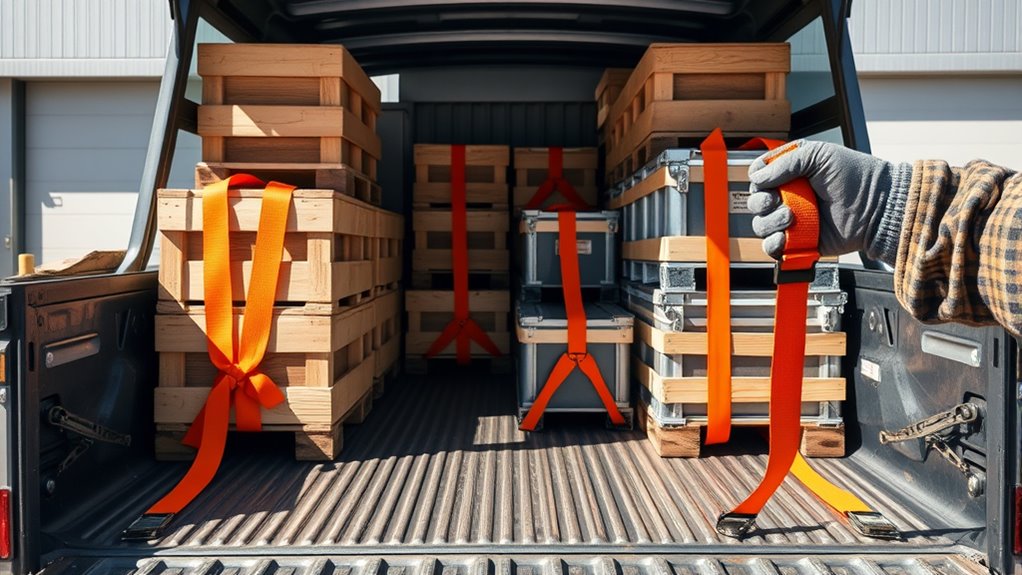

To secure cargo safely in your truck bed, start by placing heavy items on the bottom and closer to the cab for better stability. Use quality straps or ropes, anchoring them to the designated points, and tighten them snugly without damaging fragile items. Crisscross straps diagonally for extra security and regularly check that everything stays tight during your drive. Properly securing your load keeps you safe on the road—keep going to learn more effective techniques.
Key Takeaways
- Place heavy items on the bottom and near the cab to maintain balance and stability.
- Use quality straps or ropes to securely anchor cargo to designated tie-down points.
- Crisscross straps diagonally over the load for even force distribution and extra security.
- Utilize edge protectors and specialized anchors for delicate or irregularly shaped cargo.
- Double-check all tie-downs and ensure the load is balanced before starting your trip.

Loading your truck bed properly is essential for safety and efficiency. When you’re hauling cargo, how you distribute the weight and secure the load can make all the difference. Proper weight distribution ensures your vehicle remains balanced, improves handling, and prevents unnecessary strain on your suspension and tires. To achieve this, start by placing heavier items on the bottom and closer to the cab, evenly spreading the weight across the bed. This helps keep the center of gravity low and maintains stability during transit. Avoid stacking all the weight in the front or back, as uneven loads can lead to swaying or even loss of control. Be mindful of the payload capacity specified by your truck’s manufacturer to prevent overloading, which can compromise safety and cause damage.
Once the heavy items are in place, focus on securing the cargo with effective tie down techniques. Using quality straps, ropes, or bungee cords, make sure each piece is firmly anchored to the tie-down points in your truck bed. Crisscrossing straps diagonally over the load creates a secure hold, preventing items from shifting during turns or sudden stops. Tighten the straps so they’re snug but not so tight that they damage fragile items. For larger or irregularly shaped objects, consider using specialized anchors or anchor points designed for heavy-duty loads. Regularly check your tie downs during transit; even the best straps can loosen over time or due to vibrations. Adjust and tighten as needed to keep everything secure. Additionally, understanding the field‑of‑view and imaging‑scale examples in deep-sky imaging can help you plan your load distribution for optimal stability.
It’s also wise to use edge protectors if you’re securing delicate or sharp-edged cargo, preventing damage to your straps and your load. If your truck bed has side rails or multiple tie-down points, utilize them to distribute the securing force evenly, reducing strain on any single point. Keep in mind that proper tie down techniques aren’t just about preventing your load from falling off; they’re about ensuring your safety and the safety of others on the road. An unsecured or poorly secured load can shift unexpectedly, causing accidents or damage to your vehicle. Take the time to double-check your setup before hitting the road, and make sure all straps are tight, the load is balanced, and nothing can move during transit.
Frequently Asked Questions
What Are the Best Types of Cargo Nets for Truck Beds?
You should choose cargo nets based on durability and your cargo type. Mesh nets offer excellent durability and are great for securing smaller items, while strap nets provide flexibility and strength for larger or irregular loads. Consider mesh vs. strap nets for your needs, ensuring the net’s durability matches your cargo’s weight and size. Both options keep your load safe, but pick the one that best fits your truck bed and cargo.
How Do Weight Limits Affect Cargo Security?
Weight limits directly impact your cargo security because exceeding them affects weight distribution and the truck’s center of gravity. When you overload your truck, it becomes harder to control, increasing the risk of shifting or falling cargo. To keep your load secure, always stay within the weight limits, evenly distribute weight, and guarantee the cargo’s center of gravity remains low and balanced. This helps maintain stability during transit and prevents accidents.
Are There Specific Safety Tips for Hauling Fragile Items?
Think of hauling fragile items as walking a tightrope—balance is key. You should handle fragile item handling with care, using cushioning techniques like foam, blankets, or bubble wrap to absorb shocks. Secure everything tightly to prevent movement and protect your cargo from sudden stops or bumps. Always double-check your straps and padding, ensuring your delicate cargo stays steady and safe throughout the journey.
How Often Should Truck Bed Tie-Downs Be Inspected?
You should inspect your truck bed tie-downs before every trip and periodically during long hauls. Regular inspection frequency guarantees that your tie-downs are secure and in good condition, preventing cargo from shifting or falling. Conduct tie-down maintenance as needed, tightening or replacing any worn or damaged straps. Staying diligent with inspection frequency and tie-down maintenance keeps your cargo safe and your trips worry-free.
What Legal Regulations Govern Cargo Securement?
Ever wonder if you’re following the right rules for cargo safety? Federal regulations set clear cargo securement standards you must obey, including proper tie-downs and weight limits. These laws are designed to keep your load safe and prevent accidents. Always check the latest updates to federal regulations, such as FMCSA rules, to guarantee you’re compliant and protecting yourself, others, and your cargo on the road.
Conclusion
Now that you know how to secure your cargo properly, you’ll drive with confidence, knowing your load is as steady as a rock. Think of it like anchoring a boat—you want everything tight and in place to avoid any surprises on the road. Remember, a little effort upfront keeps you safe and prevents costly accidents later. So, take the time to secure your truck bed carefully—you’ll thank yourself every mile you travel.