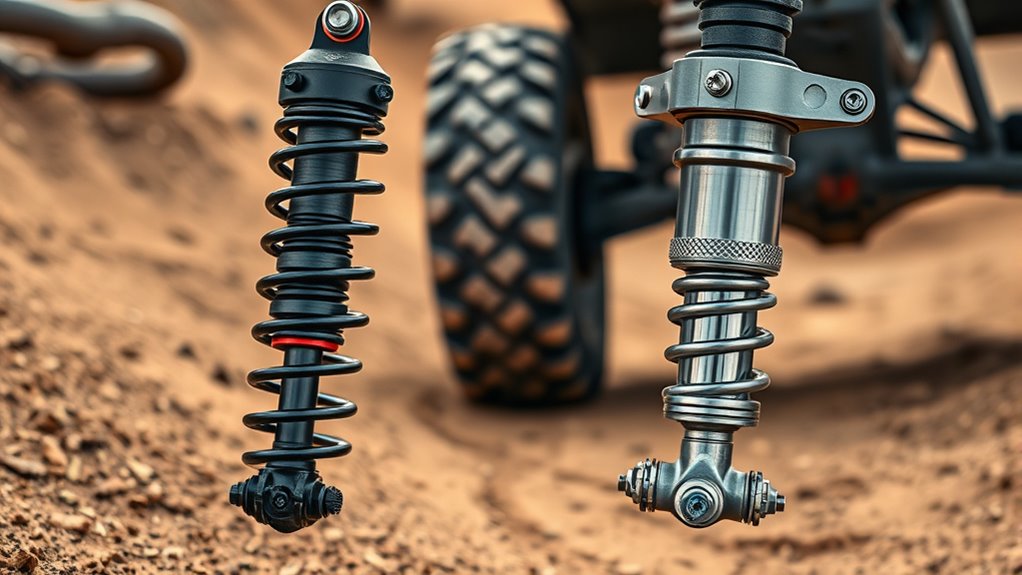

If you often tackle tough off-road trails, upgraded reservoir shocks are worth considering because they offer better heat dissipation, durability, and terrain response than standard shocks. They keep your vehicle stable, improve handling, and prevent overheating during extended or aggressive drives. If you’re only occasionally off-road, standard shocks might be enough. To learn more about how to choose the right shocks for your adventures, keep exploring your options.

Get business pricing on garage and car supplies
- Business-only prices and quantity discounts
- Tax-exempt purchasing
- Multiple users, one account, clear invoices
Key Takeaways
- Reservoir shocks provide better heat dissipation and durability for frequent, intense off-road use.
- Standard shocks are sufficient for casual driving and less demanding terrains.
- Upgraded shocks improve traction, stability, and control on rough, rocky, or deep-rutted trails.
- Proper suspension tuning enhances shock performance, regardless of shock type.
- Investing in reservoir shocks benefits vehicles regularly tackling challenging off-road conditions.
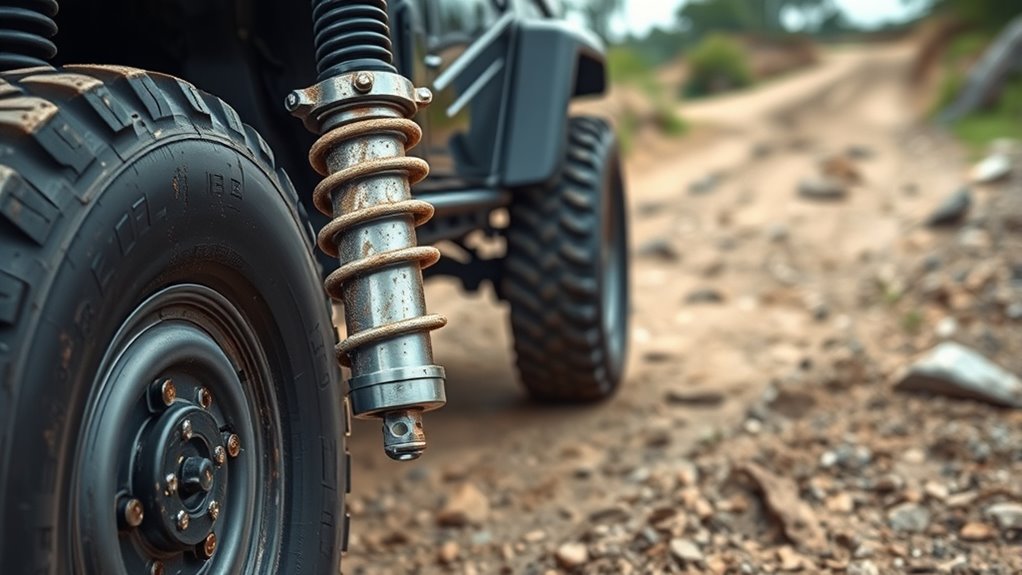
Have you ever wondered how off-road vehicles handle rough terrain so smoothly? The secret lies in suspension tuning and advanced shock absorber technology. When you’re steering through rocky trails, deep ruts, or uneven surfaces, your vehicle’s shocks absorb the impact, maintaining stability and comfort. Upgrading to reservoir shocks or fine-tuning your suspension can make a significant difference in how your vehicle performs off-road.
Suspension tuning involves adjusting your vehicle’s shocks to optimize performance for specific terrains. Standard shocks are designed for everyday driving, offering a decent balance between comfort and control. However, off-road conditions demand more specialized solutions. Reservoir shocks are engineered to handle continuous, heavy-duty use. They feature a separate reservoir that holds extra shock fluid, which helps dissipate heat more effectively. This prevents the shocks from overheating during long, aggressive off-road sessions, keeping performance consistent.
Reservoir shocks dissipate heat effectively, preventing overheating during rugged off-road adventures.
Shock absorber technology plays a vital role here. Reservoir shocks typically incorporate advanced damping systems that allow for better control over rough terrain. They respond more precisely to bumps and dips, reducing body roll and improving traction. This means you can maintain better control of your vehicle, even when the trail gets gnarly. Standard shocks, while adequate for regular roads, often struggle to cope with the intense demands of off-road driving. They tend to overheat and lose damping capability, leading to a harsher ride and diminished handling.
Choosing the right shocks depends on the kind of off-roading you plan to do. If you’re tackling challenging trails regularly, reservoir shocks offer superior durability and performance. They’re built to handle the constant pounding, providing a smoother experience and protecting your suspension components. On the other hand, if your off-road adventures are occasional or less extreme, upgraded standard shocks might suffice, especially if you want to improve ride quality without a hefty investment.
Ultimately, whether you need upgraded shocks comes down to your specific needs and how much you want to push your vehicle. Proper suspension tuning ensures your shocks work at their best, maximizing comfort and control. Reservoir shocks exemplify the latest shock absorber technology, offering enhanced cooling and damping capabilities that can transform your off-road experience. If you’re serious about conquering tough terrain, investing in these advanced shocks is a smart move to keep your vehicle performing at its peak. Additionally, understanding the energy efficiency benefits of modern shock systems can contribute to overall vehicle sustainability and performance.
reservoir shocks for off-road vehicles
As an affiliate, we earn on qualifying purchases.
As an affiliate, we earn on qualifying purchases.
Frequently Asked Questions
How Often Should Off-Road Shocks Be Inspected or Replaced?
You should inspect your off-road shocks every 3,000 to 5,000 miles, or after rough terrain runs, to check their shock durability. Look for leaks, dents, or diminished performance. Replace them if you notice decreased damping or uneven wear. Regular inspections help maintain ideal handling and safety, ensuring your shocks perform well and last longer. Don’t ignore signs of wear; timely replacements keep your off-road adventures smooth and secure.
Are Reservoir Shocks Compatible With All Off-Road Vehicles?
Reservoir shocks aren’t compatible with all off-road vehicles, especially if you have specific suspension setups or vehicle modifications. You need to verify shock compatibility carefully before upgrading. Factors like your vehicle’s make, model, and any modifications can affect fitment and performance. Always consult your vehicle’s manual or a professional to ensure reservoir shocks are suitable, so you get the best ride quality and durability on your off-road adventures.
What Is the Cost Difference Between Standard and Reservoir Shocks?
The cost difference between standard and reservoir shocks usually ranges from $100 to $300 per shock, depending on brand and features. When considering shock installation, reservoir shocks tend to be pricier due to their advanced design. Keep in mind, upgraded shocks may also affect warranty coverage, so check if your vehicle’s warranty includes them. Investing in reservoir shocks can improve off-road performance, but weigh the cost against your driving needs first.
Can Upgraded Shocks Improve Fuel Efficiency?
Upgraded shocks can improve your fuel efficiency by providing better shock material and precise shock tuning, which reduces energy loss during suspension movement. When your shocks are properly tuned, they absorb impacts more efficiently, minimizing unnecessary engine strain and improving mileage. Reservoir shocks, in particular, often feature advanced shock materials and tuning options, helping your vehicle operate more smoothly and economically on rough terrains or daily drives.
Do Reservoir Shocks Require Special Maintenance or Fluid Replacement?
Reservoir shocks are like a well-oiled machine, needing regular upkeep. You should check their shock fluid levels and top off when needed, especially if you notice performance issues. Also, keep an eye on reservoir capacity to prevent leaks or overflows. Regular maintenance ensures the shocks stay effective and last longer, so don’t overlook these simple tasks—they’re key for ideal off-road adventures.
heavy-duty off-road shock absorbers
As an affiliate, we earn on qualifying purchases.
As an affiliate, we earn on qualifying purchases.
Conclusion
When you’re hitting the trails, think of shocks as the heartbeat of your ride—pumping life into every bump and turn. Reservoir shocks are like a seasoned drummer, steady and powerful, handling the roughest terrains with finesse. Standard shocks are your reliable rhythm, but sometimes, you need that extra beat to keep your adventure smooth. So, choose wisely; upgrade when your ride demands more, and let your off-road journey sing with confidence and control.
As an affiliate, we earn on qualifying purchases.
off-road suspension upgrade kits
As an affiliate, we earn on qualifying purchases.
As an affiliate, we earn on qualifying purchases.
Fall Picks
fall essentials
As an affiliate, we earn on qualifying purchases.