If you mostly drive off-road in mud, snow, or loose soil, mud-terrain tires are your best choice because of their aggressive lugs and deep treads that dig in and clean out debris. If you switch between pavement and rough terrain, all-terrain tires offer a good balance of traction, comfort, and longevity. Understanding your driving habits, terrain, and priorities helps you pick the right tires, and there’s more to contemplate if you keep exploring.
Key Takeaways
- Mud-terrain tires excel in deep mud, snow, and loose surfaces but are louder and wear faster on pavement.
- All-terrain tires offer a balanced performance for off-road and on-road use, providing smoother rides and quieter operation.
- Durability and longevity favor all-terrain tires due to tougher compounds; mud tires require more frequent replacements.
- Cost and fuel efficiency typically favor all-terrain tires, which are generally more economical and have lower rolling resistance.
- Choose mud tires for extreme off-road adventures; select all-terrain tires for versatile, year-round driving needs.
Differences in Tread Design and Pattern

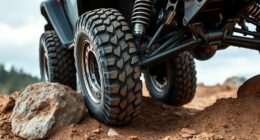
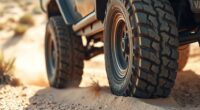
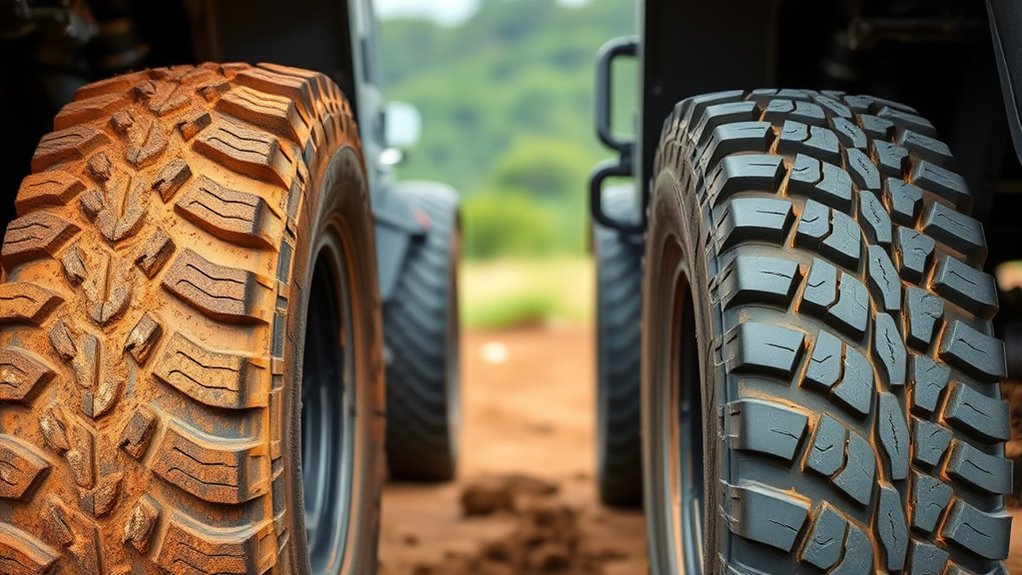
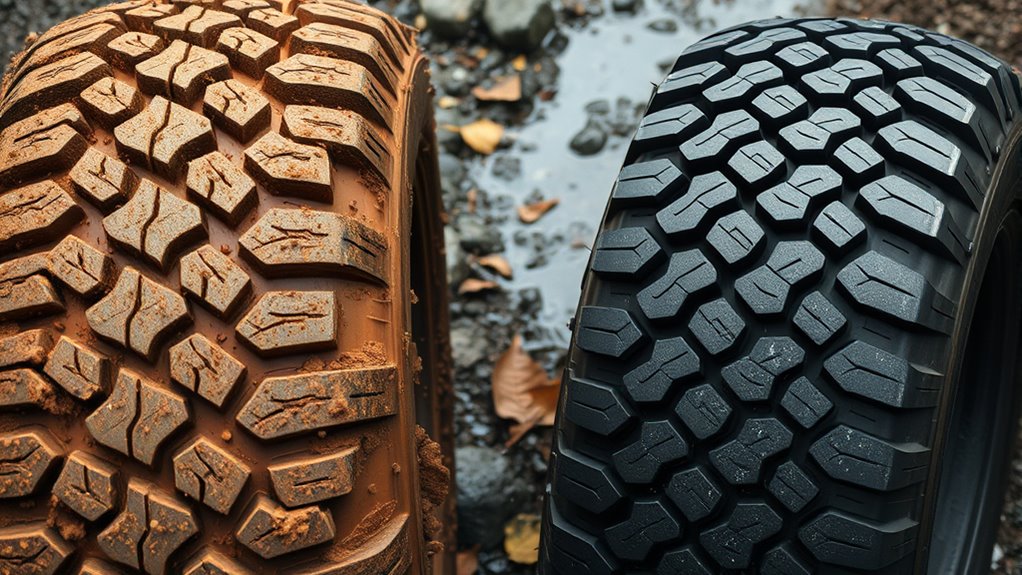
The main difference between mud-terrain and all-terrain tires lies in their tread design and pattern. Mud-terrain tires feature large, aggressive lugs with deep voids, creating a rugged tread pattern that excels at digging through mud and loose soil. This design maximizes grip off-road but can be noisy on pavement. In contrast, all-terrain tires have a more balanced tread pattern with smaller, more closely spaced lugs, providing versatility across various surfaces. The rubber composition also varies; mud-terrain tires typically use a softer rubber to enhance grip in off-road conditions, which can wear faster on pavement. Meanwhile, all-terrain tires employ a tougher rubber mix for durability and a smoother ride. These differences in tread pattern and rubber composition directly influence their performance in different environments.
Performance in Off-Road Conditions
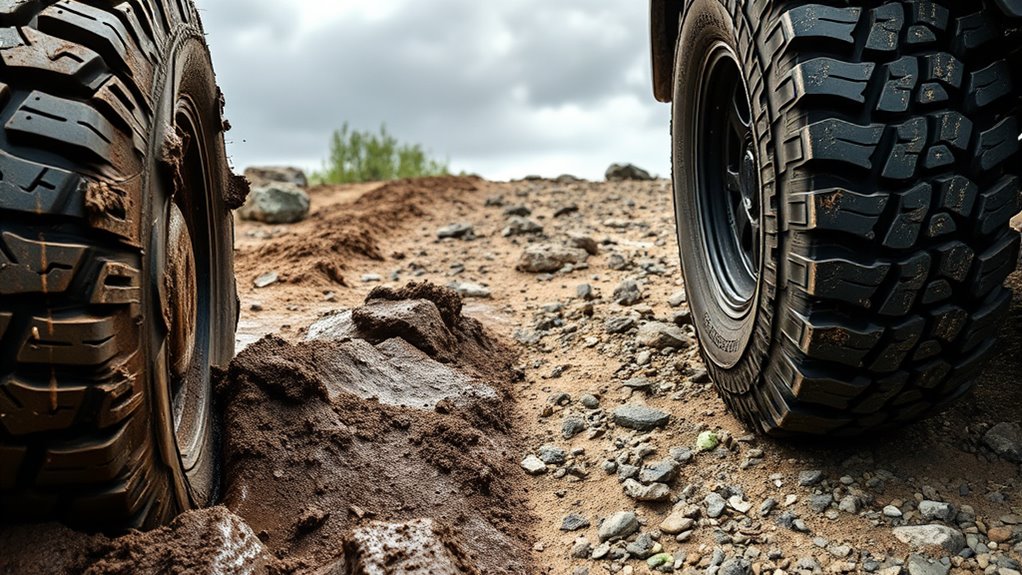
When tackling challenging off-road terrains, mud-terrain tires generally deliver superior performance thanks to their aggressive tread design. Mud tires excel in deep mud, loose soil, and snow by providing exceptional grip and self-cleaning abilities. Their large, chunky lugs dig into soft surfaces, preventing your vehicle from getting stuck. All terrain tires, on the other hand, offer a balanced approach, performing well on a variety of off-road surfaces without sacrificing too much on other terrains. While they may not match mud tires in extreme conditions, all terrain tires still provide reliable traction, making them versatile for different environments. If off-road performance is your priority, mud tires will give you the edge, but if you need more flexibility, all terrain tires are a solid choice. Additionally, understanding tire construction can help you select the most durable and effective option for your specific off-road adventures. Recognizing the design features of each tire type can further guide your decision to match your off-road needs. For example, tire durability is a key factor that influences how well the tires withstand rough terrains over time. Considering traction performance can help ensure you choose tires that will perform reliably in various off-road conditions. Moreover, evaluating off-road terrain compatibility is essential to ensure your tires are suitable for the typical environments you encounter.
On-Road Comfort and Noise Levels
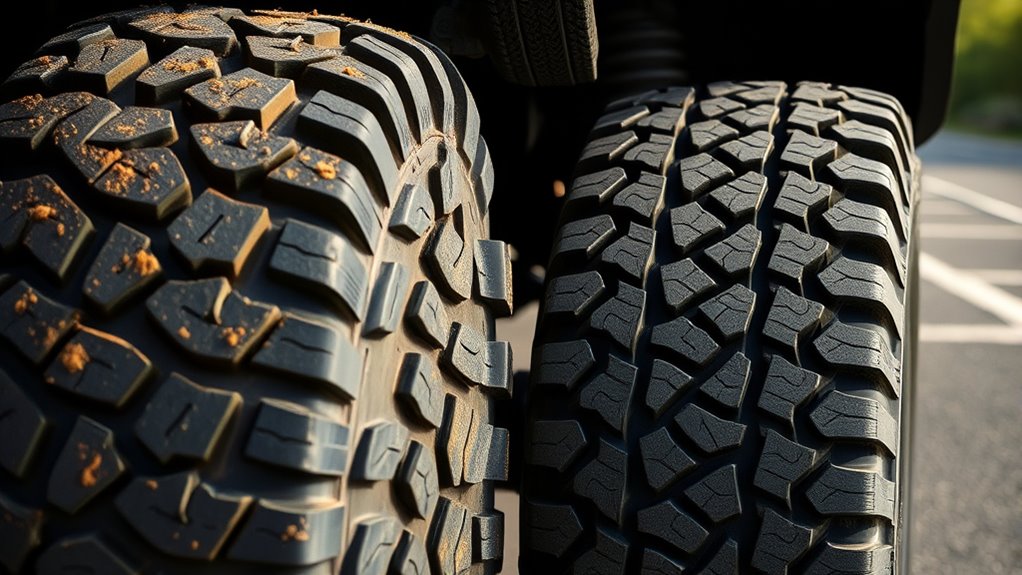
While mud-terrain tires excel off-road, their aggressive tread patterns can make on-road driving less comfortable. Expect louder noise levels and a firmer ride, which can be distracting during daily commutes. All-terrain tires, often from reputable tire branding, balance off-road capability with on-road comfort, making them a popular choice for mixed driving. They typically produce less road noise and provide a smoother experience, especially on highways. Keep in mind seasonal suitability, as certain tires perform better in specific conditions; for example, all-terrain tires work well year-round, but mud-terrain tires may be less comfortable in wet or cold weather. Additionally, tread pattern design plays a crucial role in how a tire performs on different surfaces. Your choice depends on your driving habits, but if comfort and noise are priorities, all-terrain tires generally offer a more pleasant on-road experience. For optimal tire performance, understanding these factors can help you select the best tires for your needs. A thorough understanding of road surface types can further enhance your decision-making process. Moreover, considering seasonal conditions can help determine the most suitable tire type for year-round driving. Being aware of tire technology advancements can also aid in making a more informed choice.
Durability and Wear Characteristics

The tread compound composition directly affects how well your tires resist wear over time. All-terrain tires usually have a balance that offers decent durability, while mud-terrain tires tend to wear faster due to their softer compounds. Understanding these differences helps you choose tires that maximize longevity and meet your driving needs. Additionally, red flags such as signs of poor quality or manufacturer issues can impact tire performance and safety. Recognizing wear patterns can also help in assessing tire condition and planning replacements effectively. Being aware of manufacturing standards ensures you select tires that meet safety and durability benchmarks.
Tread Compound Composition
Tread compound composition directly impacts a tire’s durability and wear characteristics, shaping how well it withstands rough terrains and prolonged use. The tread compound, made from specific formulations of tire rubber, determines the balance between grip and longevity. Mud-terrain tires typically feature a softer tread compound, providing excellent traction but wearing faster due to increased flexibility. All-terrain tires usually use a more durable tread compound, offering better resistance to cuts and abrasions while maintaining decent traction. The type of rubber used influences how quickly the tread wears down and how well it resists environmental factors like heat and moisture. Additionally, understanding tire rubber formulations can help in selecting the optimal compound for your driving conditions. Choosing the right tread compound means understanding your driving needs—whether you prioritize durability or enhanced off-road grip.
Wear Resistance Levels
Wear resistance levels determine how well a tire can withstand prolonged use and rough terrain without deteriorating quickly. Your tire’s durability depends on factors like tread pattern and sidewall strength. A deeper, more aggressive tread pattern generally offers better wear resistance on rugged surfaces but may wear faster on highways. Stronger sidewalls help prevent cuts and punctures, extending tire life. Additionally, utilizing European cloud innovation in manufacturing processes can improve material quality and enhance overall wear resistance. Proper tire construction and rubber compounds also play a crucial role in enhancing durability, ensuring your tires last through tough conditions.
Impact on Longevity
Durability and wear characteristics directly influence how long your tires will perform effectively in demanding conditions. Mud-terrain tires often have deeper tread depths, which can enhance longevity on rough terrain but may wear faster on pavement. All-terrain tires balance tread depth and sidewall strength for versatile durability. Sidewall strength is vital; stronger sidewalls prevent cuts and punctures, extending lifespan. Consider this table:
| Feature | Impact on Longevity |
|---|---|
| Tread Depth | Deeper tread resists wear but may wear faster if not maintained |
| Sidewall Strength | Stronger sidewalls resist damage, prolonging life |
| Terrain Type | Harsh terrains reduce tire lifespan |
| Maintenance | Proper inflation and rotation extend life |
| Driving Habits | Aggressive driving accelerates wear |
Additionally, understanding the wear characteristics of different tire types can help you choose the most durable option for your needs. For example, tire composition can significantly influence wear resistance and overall longevity, especially when considering the impact of material quality on tire performance. Regular inspection and proper maintenance are essential to maximize tire lifespan. Proper tire pressure management can prevent uneven wear and extend the life of your tires, ensuring they remain effective under various conditions. Choose based on your typical terrain and driving style for maximum longevity.
Fuel Efficiency and Driving Economy
While mud-terrain tires are excellent off-road performers, they often compromise fuel efficiency due to their aggressive tread patterns and higher rolling resistance. This means you’ll notice a decrease in miles per gallon compared to all-terrain tires. Factors influencing this include:
- Tire branding: Reputable brands may optimize for balance, but aggressive tread designs still increase resistance.
- Manufacturing processes: Tires with specialized rubber compounds or unique manufacturing techniques can slightly improve fuel economy.
- Tread design and material: Deeper, more aggressive treads create more friction, requiring more energy to roll, which affects your driving economy. Additionally, tread pattern design can influence the level of rolling resistance. Innovations in tire materials also contribute to better fuel efficiency by reducing internal energy loss. The tire shape can also impact how smoothly the tire rolls, affecting overall fuel consumption.
- Tire construction: The tire composition and internal structure also play a role in rolling resistance and fuel efficiency. Advances in tire technology have led to designs that better balance off-road capability with fuel savings.
Choosing the right tire involves understanding how these elements impact fuel consumption and overall efficiency during your drives.
Cost and Maintenance Considerations
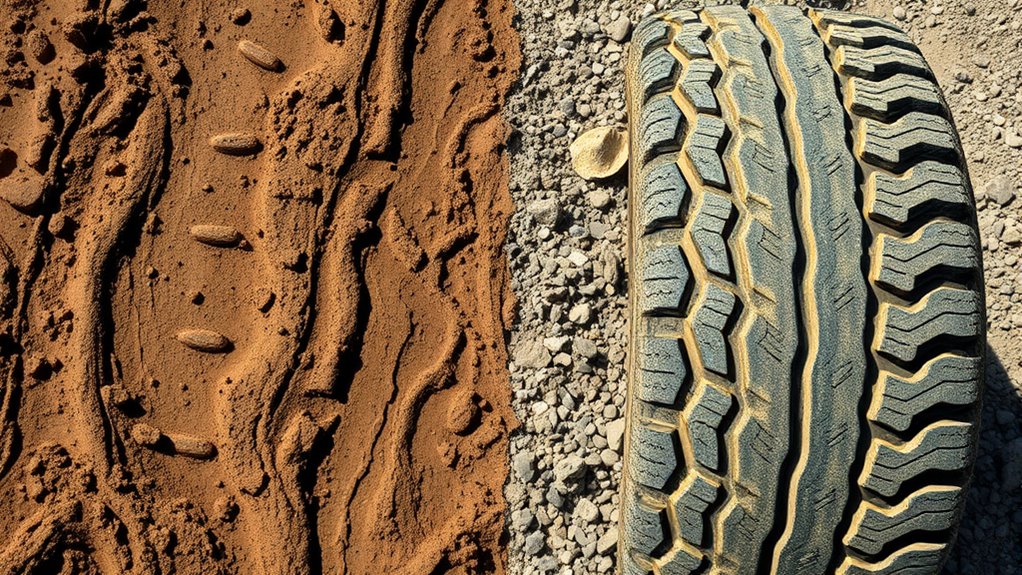
When choosing between mud-terrain and all-terrain tires, you’ll notice a difference in purchase prices and long-term upkeep costs. Mud-terrain tires tend to cost more upfront and may require more frequent replacements, increasing maintenance expenses. Considering these factors helps you decide which option fits your budget and driving needs best. Additionally, understanding the performance characteristics of each tire type can influence your decision based on your typical driving conditions.
Purchase Price Differences
Purchasing mud-terrain tires typically requires a higher upfront investment compared to all-terrain tires, and their maintenance can also be more costly. The initial price often reflects the brand reputation, with premium brands costing more but offering better durability. Additionally, warranty coverage varies; some brands include extensive warranties, adding value but increasing initial costs. To give you a clearer picture:
- Mud-terrain tires generally cost 20-30% more than all-terrain tires.
- Premium brands may charge a premium for improved durability and performance.
- The higher purchase price can be offset by longer-lasting warranties and reputation for quality.
Ultimately, your choice depends on balancing initial costs with expected longevity and performance.
Long-term Upkeep Costs
Long-term upkeep costs play a significant role in choosing between mud-terrain and all-terrain tires. Tire branding affects durability and longevity, influencing how often you’ll need replacements. Mud-terrain tires often wear faster on paved roads, leading to increased replacement costs over time. All-terrain tires tend to offer better lifespan and smoother wear, reducing long-term expenses. Warranty coverage is another important factor; some brands provide extensive warranties that can save you money if tires fail prematurely. Keep in mind that specialized tires like mud-terrain models may have limited warranty options, raising your maintenance costs. Ultimately, understanding these costs helps you weigh initial investment against ongoing expenses, ensuring you select tires that align with your driving habits and budget.
Choosing the Right Tire Based on Your Needs
Choosing the right tire depends heavily on your specific driving conditions and how you plan to use your vehicle. To make the best choice, consider these factors:
- Off-road versus on-road driving frequency, which affects tire durability and traction needs
- The importance of tire sidewall strength, especially if you encounter rough terrains or obstacles
- The brand reputation, ensuring you select a reliable manufacturer known for quality and performance
If you prioritize aggressive off-road adventures, mud-terrain tires with stronger sidewalls might be ideal. For mixed use, all-terrain tires offer versatility. Always check reviews and brand reputation to gauge long-term reliability, while considering sidewall strength helps prevent damage during tough terrains. Your specific needs will guide the best tire choice.
Frequently Asked Questions
How Do Mud-Terrain and All-Terrain Tires Compare in Wet Road Safety?
Mud-terrain tires generally offer better mud clearance but may perform less effectively in rain because their aggressive tread can cause hydroplaning. All-terrain tires provide more balanced rain performance, thanks to their moderate tread design, which helps channel water away safely. For wet road safety, consider your typical driving conditions—if you encounter lots of mud, mud-terrain tires excel, but for regular rain, all-terrain tires deliver better grip and stability.
Can All-Terrain Tires Handle Extreme Off-Road Trails Better Than Mud-Terrain Tires?
All-terrain tires handle extreme off-road trails well, but they struggle more with rock crawling and mud tearing compared to mud-terrain tires. You might find all-terrain tires offer a balanced mix of traction and durability, yet mud-terrain tires excel in challenging terrains like deep mud and rocky paths. For serious off-road adventures, especially involving rugged rock crawling, mud-terrain tires give you the edge you need.
Which Tire Type Offers Better Longevity in Harsh Off-Road Environments?
All-terrain tires tend to offer better longevity in harsh off-road environments because of their balanced tire durability and versatile off-road performance. They’re designed to withstand rough terrains while maintaining a longer lifespan than mud-terrain tires, which prioritize off-road performance over durability. If you want tires that last longer and handle a variety of off-road conditions reliably, all-terrain tires are your best choice.
Are There Specific Vehicle Types That Benefit More From One Tire Type?
You’ll find that vehicle compatibility and seasonal considerations greatly influence which tire type benefits you most. If you drive a pickup or SUV tackling tough off-road trails, mud-terrain tires offer superior grip. For all-season use on light off-road or paved roads, all-terrain tires suit most vehicles. Consider your climate and typical driving conditions to choose the best option, ensuring safety and performance year-round.
How Do Tire Brands and Warranties Influence Overall Tire Choice?
Choosing tires is like picking a reliable partner—you want trust and assurance. Brand reputation matters because well-known brands often deliver quality and dependability. Warranties serve as a safety net, protecting your investment from unforeseen issues. When comparing tire brands, consider their warranty coverage and customer reviews. A solid warranty indicates confidence in the product, helping you make a smarter, more confident decision for your vehicle’s needs and your peace of mind.
Conclusion
Think of tires as your vehicle’s shoes—mud-terrain shoes for rugged trails and all-terrain shoes for versatile walks. Choosing the right pair means matching their spirit to your journey’s purpose. Whether you crave adventure or everyday comfort, your decision shapes your path—like a compass guiding you through wild landscapes or smooth streets. Select wisely, and your tires will carry you confidently, turning every mile into a story of resilience and exploration.